
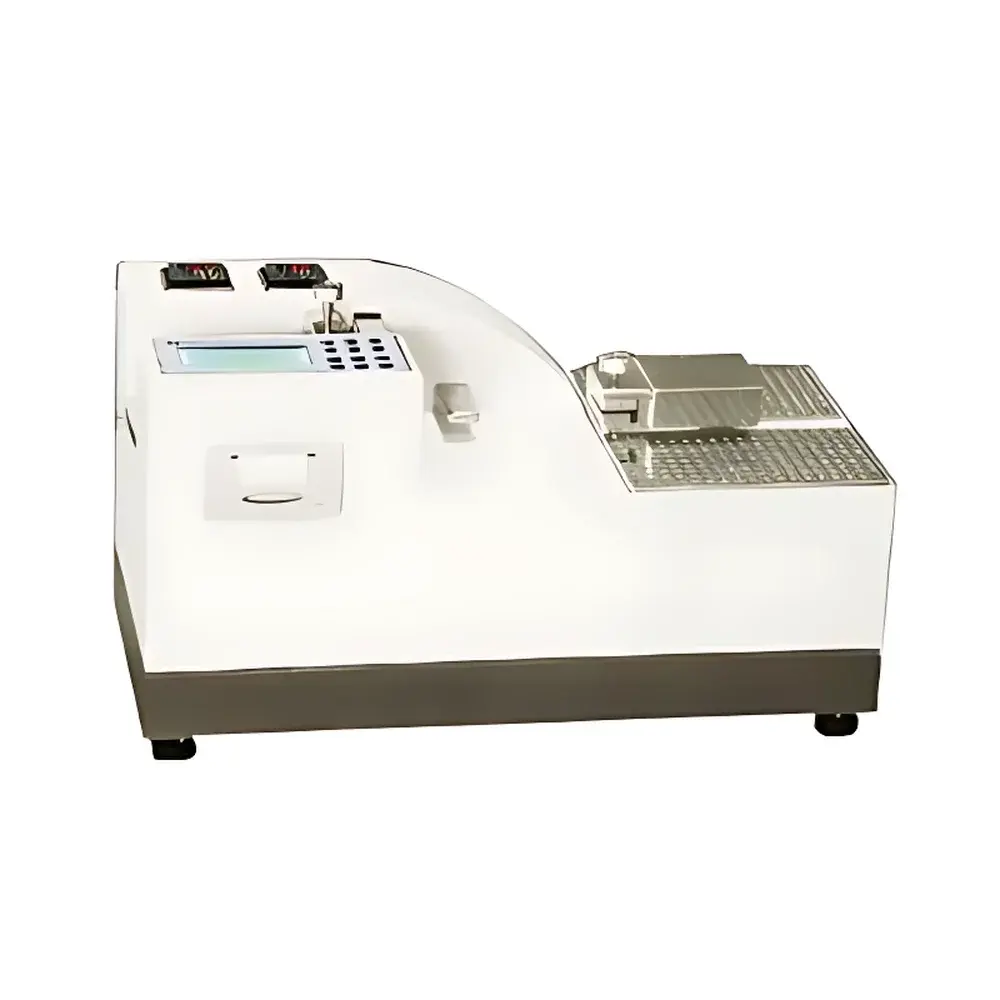
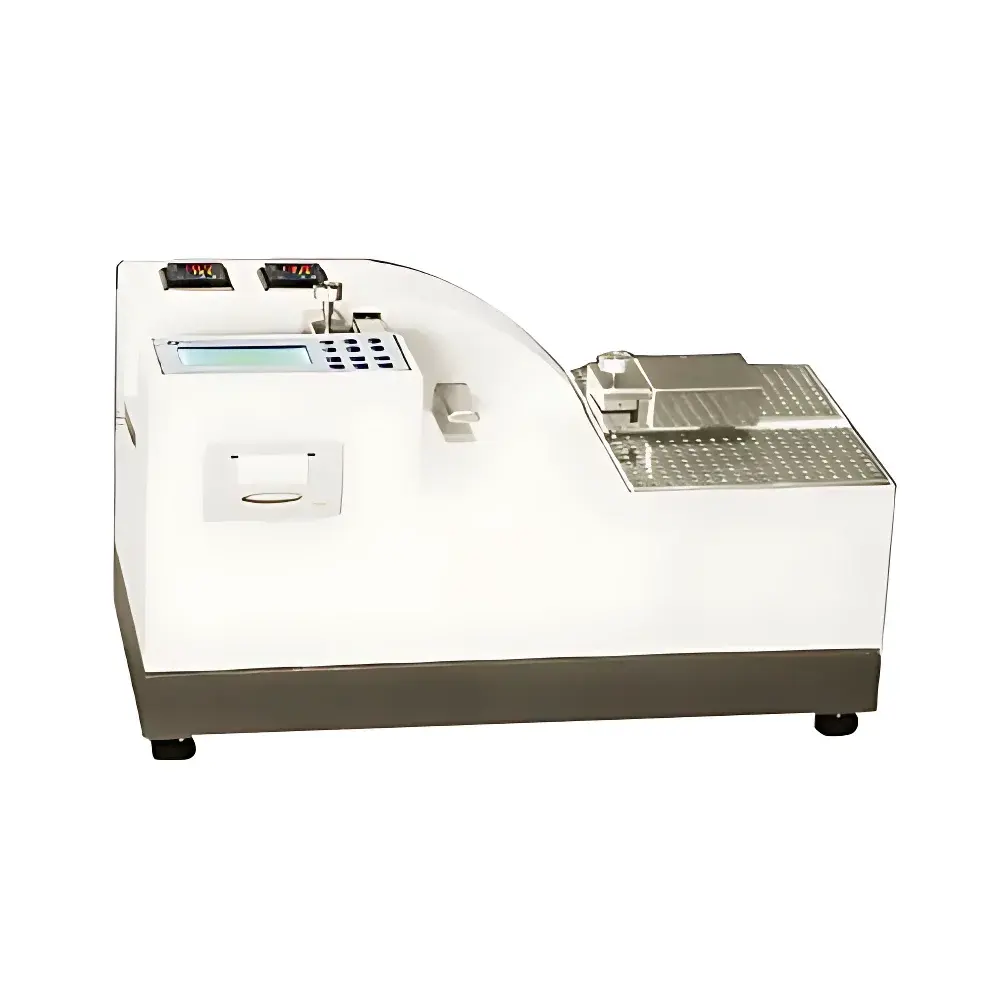
GBPI GBR Advanced Hot Tack Tester
| Brand | GBPI |
|---|---|
| Origin | Guangdong, China |
| Manufacturer Type | Direct Manufacturer |
| Country of Origin | China |
| Model | GBR |
| Pricing | Available Upon Request |
| Temperature Range | Ambient to 250 °C |
| Temperature Control Accuracy | ±0.2 °C |
| Hot Seal Pressure | 0.04–0.8 MPa |
| Hot Tack Time | 0–99 s |
| Power Supply | 220 VAC, 50 Hz |
| Dimensions (L×W×H) | 600 × 300 × 220 mm |
| Specimen Length | 200 mm |
| Force Measurement Range | 0–300 N |
| Compliance Standards | ASTM F1921, ASTM F2029, QB/T 2358, YBB00122003 |
Overview
The GBPI GBR Advanced Hot Tack Tester is an engineered instrumentation system designed for quantitative evaluation of hot tack strength—the transient cohesive strength developed in thermoplastic polymer films immediately after heat sealing and before full solidification. Based on the controlled dynamic separation principle, the instrument replicates real-world packaging line conditions by subjecting freshly sealed film specimens to rapid tensile separation under defined thermal, pressure, and dwell time parameters. Unlike static peel or tensile tests performed post-cooling, hot tack measurement captures interfacial adhesion kinetics during the critical 0.1–5 second window after seal bar release—where seal integrity is most vulnerable to mechanical disruption during high-speed filling and handling. This makes the GBR tester indispensable for optimizing heat seal parameter windows (temperature, pressure, dwell time), validating sealant layer compatibility, and ensuring robustness against downstream process stresses.
Key Features
- Precise PID-based temperature control with ±0.2 °C stability across a 0–250 °C operating range, enabling reproducible simulation of low-temperature seal initiation and high-temperature melt-phase cohesion.
- Adjustable pneumatic hot seal pressure (0.04–0.8 MPa) with calibrated digital regulation, supporting evaluation of both thin-gauge flexible laminates and heavy-duty industrial pouches.
- Programmable hot tack dwell time from 0 to 99 seconds in 0.1-second increments, facilitating kinetic profiling of tack development versus cooling rate.
- High-resolution force transducer (0–300 N range) integrated into a rigid dual-clamp tensile actuation system, delivering repeatable impact-style separation at consistent velocity profiles.
- Backlit LCD interface with intuitive menu navigation, real-time parameter monitoring, and on-device data storage for up to 100 test records.
- Modular specimen holder accommodating standard 200 mm-length film strips, compatible with ASTM-compliant sample preparation protocols.
Sample Compatibility & Compliance
The GBR tester supports single-layer and multilayer polymeric films—including LDPE, LLDPE, PP, PET, metallized substrates, and coextruded sealant structures—commonly used in vertical form-fill-seal (VFFS), horizontal form-fill-seal (HFFS), and pouch-making applications. It is validated for use with both symmetrical and asymmetrical seal configurations. All operational parameters align with internationally recognized test methodologies: ASTM F1921 (hot tack testing of flexible barrier materials), ASTM F2029 (hot tack of plastic films using constant-rate-of-extension equipment), QB/T 2358 (Chinese national standard for plastic film heat seal strength), and YBB00122003 (Chinese pharmaceutical packaging standard for heat seal integrity). The system architecture supports traceable calibration and meets foundational requirements for GLP-compliant laboratories conducting packaging validation per ICH Q5C and ISO 11607-2.
Software & Data Management
While the base GBR model features embedded firmware with local display and memory, optional PC connectivity via RS-232 enables export of raw force–time curves and peak separation force values in CSV format. Data files include timestamp, test ID, setpoint parameters (temperature, pressure, dwell), and measured maximum load (N). When deployed in regulated environments, the instrument can be integrated into laboratory information management systems (LIMS) for automated audit trail generation. Though not natively 21 CFR Part 11 compliant, its deterministic control logic, non-volatile parameter logging, and uneditable test record timestamps support retrospective validation and FDA inspection readiness when paired with documented SOPs and user access controls.
Applications
- Optimization of heat seal parameter matrices for new film formulations or converted packaging structures.
- Comparative assessment of sealant resin performance under accelerated aging or humidity exposure.
- Root-cause analysis of seal failures observed on production lines (e.g., “leakers” or “puckers”) by correlating hot tack deficits with thermal profiles.
- Validation of cold-seal alternatives versus conventional heat-activated systems in ambient-fill applications.
- Supporting packaging qualification packages required for medical device sterilization (ISO 11607-1/2) and pharmaceutical primary packaging (USP ).
- Research into polymer interdiffusion kinetics at the seal interface using variable dwell-time sweeps.
FAQ
What physical quantity does the GBR tester measure, and how is it reported?
It measures peak separation force (in newtons, N) required to rupture the hot tack bond immediately after sealing. Results are reported as maximum load during dynamic separation, consistent with ASTM F1921 definitions.
Can the GBR accommodate non-standard specimen widths or thicknesses?
Yes—while optimized for 200 mm length and standard film widths (15–30 mm), custom jaw inserts and alignment fixtures can be fabricated to support wider or narrower samples without compromising force vector alignment.
Is calibration traceable to national standards?
Force transducers are factory-calibrated using NIST-traceable deadweight standards; temperature sensors are verified against PT100 reference probes certified to ISO/IEC 17025-accredited labs.
How does hot tack differ from ultimate heat seal strength?
Hot tack reflects early-stage interfacial cohesion during the molten-to-viscoelastic transition; ultimate heat seal strength (per ASTM F88) measures fully cooled, equilibrium bond strength—two distinct material states requiring separate test protocols.
Does the instrument support automated pass/fail decision logic?
Not in standalone mode; however, exported CSV data can be processed via external scripts or statistical software to apply predefined acceptance thresholds based on product specifications or internal quality limits.






