
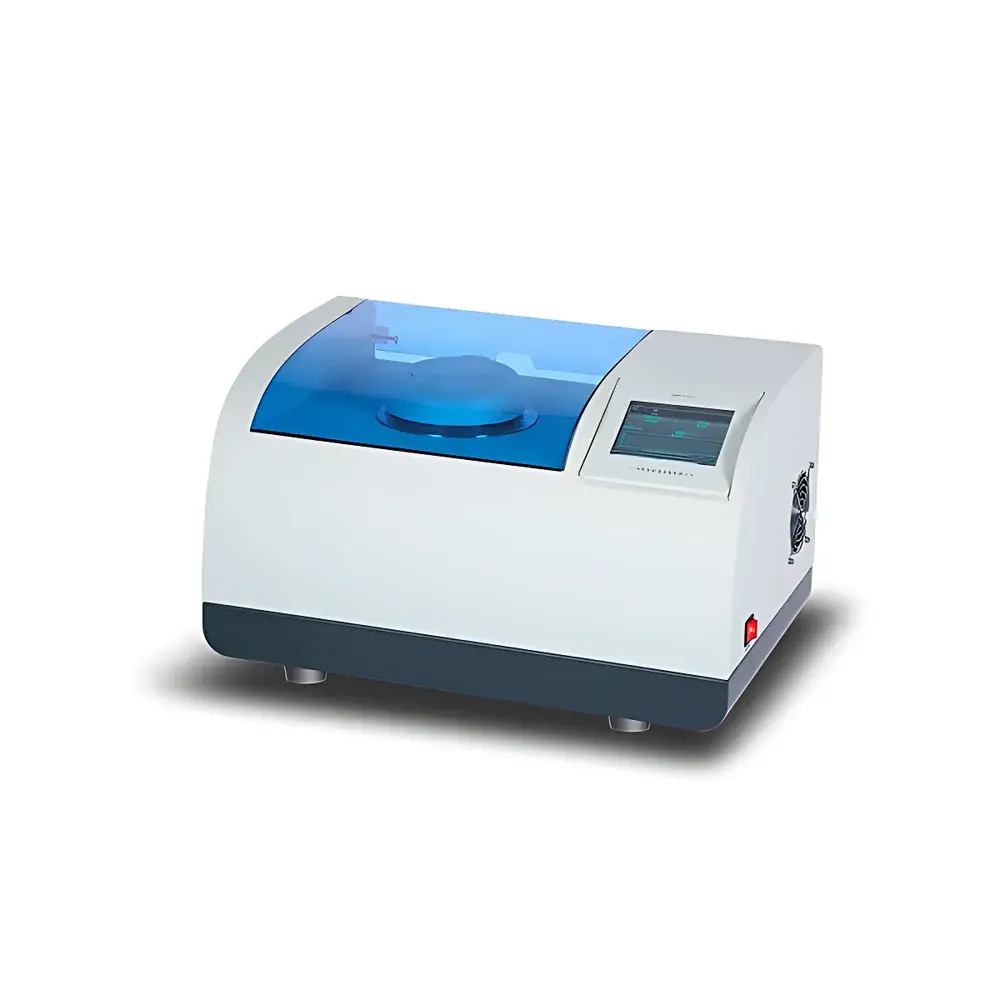
GBPI Y110-T Oxygen Transmission Rate (OTR) Analyzer
| Brand | GBPI |
|---|---|
| Origin | Guangdong, China |
| Manufacturer Type | OEM Manufacturer |
| Country of Origin | China |
| Model | Y110-T |
| Price Range | USD 14,000 – 70,000 |
| Test Range | 0.02–16,500 cm³/(m²·24h) (up to 260,000 cm³/(m²·24h) with mask accessory) |
| Accuracy | 0.001 cm³/(m²·24h) |
| Temperature Control | 15–45 °C ±0.1 °C |
| Humidity Control | 30–90 %RH ±1 %RH |
| Permeation Area | 50.24 cm² (down to 0.785 cm² with optional fixtures) |
| Specimen Size | Ø100 mm |
| Max Thickness | ≤3 mm |
| Sample Quantity | 1 pc |
| Carrier Gas Pressure | ≥0.1 MPa |
| Gas Inlet | Φ3 mm tubing / 1/8″ NPT |
| Dimensions | 600 × 400 × 330 mm |
| Weight | 80 kg |
| Power | 750 W, AC 220 V, 50 Hz |
Overview
The GBPI Y110-T Oxygen Transmission Rate (OTR) Analyzer is a gravimetric- and coulometric-based instrument engineered for precise, traceable measurement of oxygen permeation through planar and three-dimensional packaging materials under controlled temperature and relative humidity conditions. It operates on the principle of dynamic gas transmission analysis: oxygen diffuses across a conditioned test specimen mounted in a diffusion cell; the transmitted O₂ is swept by high-purity nitrogen carrier gas to an electrochemical oxygen sensor, where its concentration is quantified in real time. The system calculates OTR in standard units (cm³/(m²·24h)) using Fick’s first law of diffusion, corrected for pressure, temperature, and sensor calibration traceability. Designed for compliance-critical environments, the Y110-T supports both flat film/sheet testing and container-level OTR evaluation (e.g., bottles, pouches, trays) via configurable fixtures — making it suitable for R&D validation, quality control, and regulatory submission support in pharmaceutical, food, medical device, and advanced electronics packaging sectors.
Key Features
- High-resolution coulometric oxygen sensor with long-term stability and auto-range protection against sensor overexposure.
- Electromagnetic programmable temperature control system achieving ±0.1 °C uniformity across the test chamber.
- Dual-stream humidity generation (dry + saturated gas blending) delivering stable, repeatable RH control from 30–90 %RH at ±1 %RH accuracy.
- ARM-based embedded controller enabling standalone operation without PC dependency; full test execution, data logging, and real-time curve visualization supported on integrated LCD interface.
- Windows-style software with role-based user management (Administrator, Operator, Viewer), compliant with Annex 11 and FDA 21 CFR Part 11 requirements for electronic records and signatures.
- Comprehensive audit trail functionality covering system events, method changes, and data modifications — all timestamped, user-identified, and non-erasable.
- Modular hardware architecture facilitating field service, component replacement, and calibration verification without full-system downtime.
Sample Compatibility & Compliance
The Y110-T accommodates rigid and flexible barrier materials including polymer films (LDPE, PET, PP, EVOH), metallized substrates (Al foil, vacuum-deposited Al), laminates, coated papers, ceramics, and elastomeric sheets. With optional container fixtures, it measures OTR of molded plastic containers, blister packs, and sealed pouches per ASTM F1307 and ISO 15105-2. All measurements are traceable to national reference standards: GBPI holds CNAS-accredited Standard Substance Certification (GBW(E)130497/8) issued by the General Administration of Quality Supervision, Inspection and Quarantine of P.R. China. Instrument validation conforms to GB/T 19789–2005, YBB00082003–2015, ASTM D3985, ASTM F2622, ASTM F1927, DIN 53380-3, and JIS K-7126-B. Data integrity meets GLP and GMP documentation requirements for regulated laboratories.
Software & Data Management
The proprietary OTRControl™ software provides intuitive workflow configuration, multi-curve real-time monitoring (OTR, O₂ concentration, temperature, RH), and customizable report generation in PDF, Excel, or Word formats. Database architecture supports SQL-based query, historical trend analysis, and batch comparison. Calibration routines integrate both certified reference films and standard gases; users perform routine verification by entering known OTR values into the interface — no external tools required. All data files include embedded metadata (operator ID, method version, environmental logs) and are digitally signed upon export. Backup and restore functions ensure continuity during system maintenance or migration.
Applications
- Pharmaceutical packaging: Quantifying OTR of blister lidding foils, sachet laminates, and vial stopper seals to ensure drug shelf-life stability per USP & Ph. Eur. monographs.
- Food packaging development: Optimizing multilayer barrier structures for coffee, nuts, and ready-to-eat meals under accelerated aging protocols.
- Medical device packaging: Validating sterility maintenance of Tyvek®-based pouches and thermoformed trays per ISO 11607-1.
- Electronics encapsulation: Measuring moisture/oxygen ingress rates in OLED backsheet films and flexible display barrier layers.
- Regulatory submissions: Generating auditable test reports for NMPA, FDA, EMA, and PMDA dossier packages.
FAQ
What gas sources are required for operation?
High-purity nitrogen (≥99.999%) as carrier gas and oxygen (≥99.999%) for sensor calibration and system verification. Both must be supplied via regulated pressure lines (0–0.4 MPa output).
Can the instrument measure containers directly?
Yes — with optional container test fixtures (sold separately), the Y110-T evaluates OTR of rigid and semi-rigid packaging such as PET bottles, aluminum cans, and formed trays per ASTM F1307.
Is third-party calibration support available?
GBPI provides NIST-traceable calibration services and issues ISO/IEC 17025-compliant calibration certificates upon request. On-site verification and IQ/OQ documentation packages are also offered.
How is data security ensured in regulated environments?
Role-based access control, electronic signature enforcement, immutable audit trails, and encrypted local database storage satisfy FDA 21 CFR Part 11 and EU Annex 11 requirements for computerized systems.
What maintenance is recommended for long-term sensor stability?
Annual sensor performance verification using certified reference films is advised. The oxygen sensor has a typical service life of 24–36 months under normal use; GBPI offers sensor refurbishment and replacement kits with factory recalibration.




