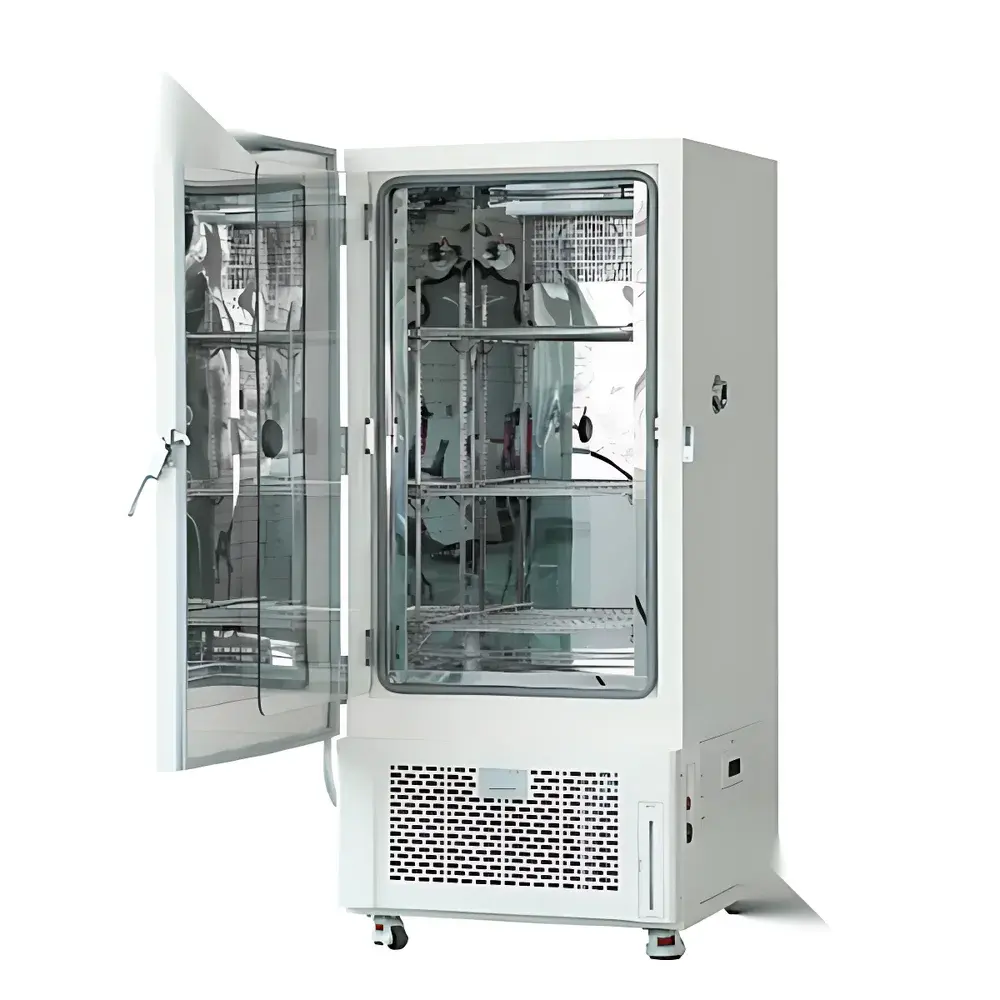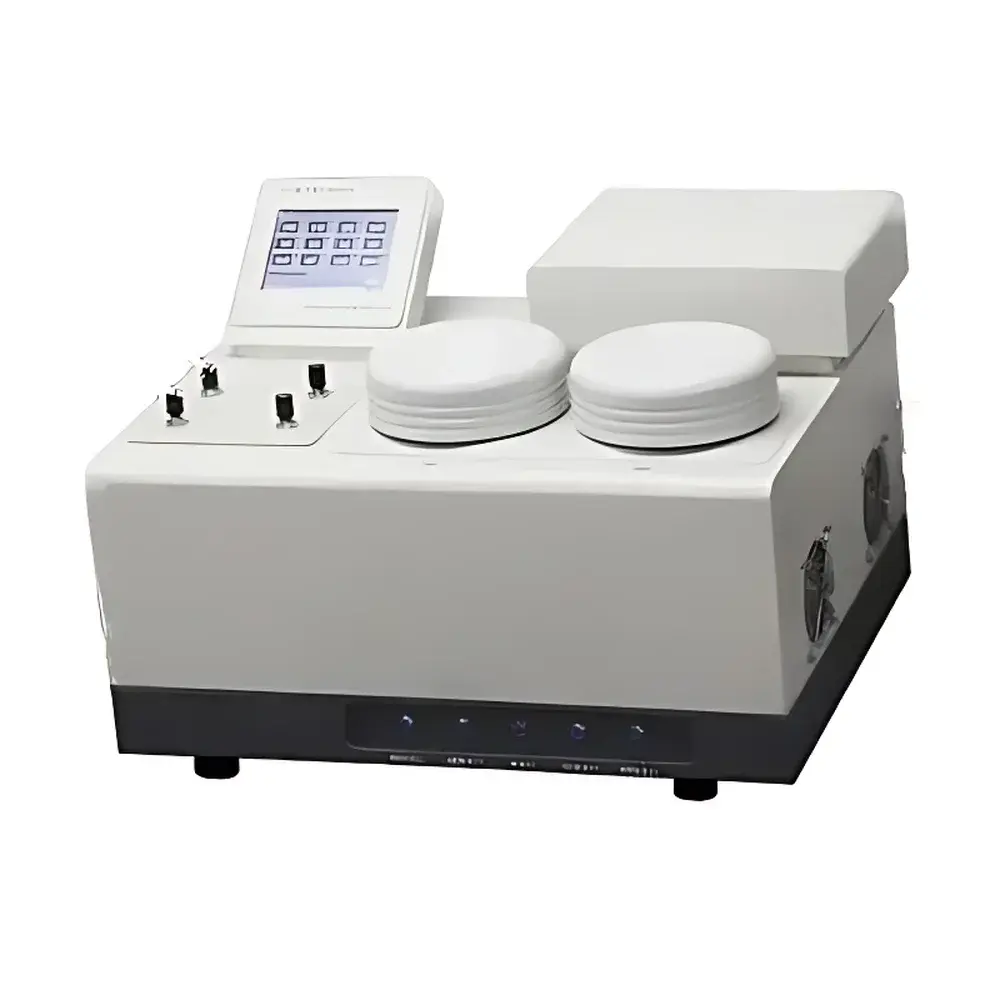
GBPI Y210 Oxygen Permeation Analyzer
| Brand | GBPI |
|---|---|
| Origin | Guangdong, China |
| Manufacturer Type | Direct Manufacturer |
| Model | Y210 |
| Measurement Principle | Coulometric Sensor (Electrochemical Oxygen Detection) |
| Standards Compliance | GB/T 19789–2005, ASTM D3985, ASTM F2622, ASTM F1927, ASTM F1307, ISO 15105-2, YBB00082003, DIN 53380-3, JIS K-7126-B |
| Oxygen Transmission Rate (OTR) Range | 0.02–16,500 cm³/(m²·24 h) for films |
| Accuracy | ±0.001 cm³/(m²·24 h) |
| Temperature Control Range | 15–45 °C |
| Temperature Stability | ±0.1 °C |
| Humidity Control Range | 0 %RH (dry), 30–90 %RH, and 100 %RH |
| Humidity Stability | ±1 %RH |
| Test Area | 50.24 cm² (Φ80 mm) |
| Sample Thickness Limit | ≤2 mm |
| Sample Quantity | 2 specimens per test cycle |
| Operating Pressure | 0.2–0.3 MPa |
| Carrier Gas Interface | 1/8″ stainless steel tubing |
| Calibration Options | Certified reference films and standard gases |
Overview
The GBPI Y210 Oxygen Permeation Analyzer is a precision-engineered instrument designed for quantitative determination of oxygen transmission rate (OTR) through polymeric packaging materials—including flexible films, rigid sheets, blister foils, pouches, bottles, and preformed containers. It operates on the coulometric sensor principle, an internationally standardized electrochemical detection method defined in ASTM D3985 and ISO 15105-2. In this configuration, a test specimen is sealed between two isolated chambers: the upstream side is flushed with high-purity oxygen (≥99.999%), while the downstream side is purged continuously with ultra-high-purity nitrogen (≥99.999%). Oxygen molecules permeating across the sample are carried by the nitrogen stream to a solid-state coulometric oxygen sensor, which generates a current proportional to the molar flow rate of O₂. The instrument calculates OTR in real time using Faraday’s law and calibrated sensor response, delivering traceable, reproducible results under controlled temperature and humidity conditions.
Key Features
- Integrated dual-chamber pressure-balancing system ensures stable transmembrane differential pressure (0.2–0.3 MPa), minimizing mechanical stress on low-modulus films and eliminating manual pressure adjustment.
- Advanced electromagnetic temperature control with programmable ramping profiles achieves ±0.1 °C stability across 15–45 °C—no external chiller or heater required.
- Dual-stream humidity generation delivers precise, drift-free RH control from desiccated (0 %RH) to saturated (100 %RH) states, with ±1 %RH accuracy—eliminating reliance on bulky external humidifiers.
- Dual-mode calibration support: certified reference films (e.g., NIST-traceable PET or EVOH standards) and certified gas mixtures enable cross-verification and long-term measurement integrity.
- Automated test logic includes real-time leak detection, auto-termination upon signal stabilization, and fail-safe shutdown if chamber integrity is compromised.
- Modular software architecture separates baseline acquisition, calibration execution, and sample testing—ensuring audit-ready workflow separation per GLP and FDA 21 CFR Part 11 requirements.
- Expandable platform: optional fixtures support OTR measurement of 3D packaging (e.g., HDPE bottles, aluminum-laminated pouches) and high-permeability specialty membranes (e.g., silicone hydrogel contact lenses).
Sample Compatibility & Compliance
The Y210 accommodates flat specimens up to 2 mm thick and 80 mm in diameter (50.24 cm² effective area), conforming to the geometric conventions of ASTM F1307 and ISO 15105-2. For non-planar samples, dedicated fixtures maintain uniform clamping force and diffusion path geometry without edge leakage. All operational parameters—including temperature setpoint, RH profile, carrier gas flow rates, and sensor zeroing intervals—are logged with timestamps and user identifiers. The system supports full compliance with regulatory frameworks governing packaging validation: GB/T 19789–2005 (China), YBB00082003 (Chinese pharmaceutical packaging), ASTM D3985 (film testing), ASTM F1927 (moisture-sensitive barrier evaluation), and EU Pharmacopoeia Chapter 3.2.1. Data export formats include CSV and PDF reports compliant with internal QA review and external regulatory submissions.
Software & Data Management
GBPI’s proprietary OTRControl™ software provides a validated, password-protected interface supporting multi-level user roles (Operator, Supervisor, Administrator). All measurements are recorded with full metadata: environmental conditions, calibration history, operator ID, instrument serial number, and raw sensor output curves. Real-time plotting displays OTR, O₂ concentration, temperature, and RH synchronously—enabling correlation analysis (e.g., Arrhenius modeling of temperature dependence or moisture-induced permeability shifts). Audit trails meet FDA 21 CFR Part 11 requirements, including electronic signatures, immutable records, and change logs. Data can be exported to LIMS via ODBC or integrated into enterprise quality management systems (QMS) using configurable API endpoints.
Applications
- Development and QC of food packaging laminates (e.g., PET/Alu/PE, PP/EVOH/PP) to ensure shelf-life prediction accuracy.
- Pharmaceutical primary packaging qualification—blister foils, cold-forming films, and vial stoppers—per USP and ICH Q5C stability guidelines.
- Barrier coating performance evaluation for flexible electronics encapsulation and OLED substrate films.
- Accelerated aging studies correlating OTR with accelerated temperature/humidity stress conditions.
- Supplier qualification and incoming material inspection against contractual OTR specifications.
- Research into novel biopolymer barriers (e.g., PLA, PHA, cellulose nanocrystal composites) under variable RH environments.
FAQ
What gases are required for operation?
High-purity oxygen (≥99.999%) and nitrogen (≥99.999%) are mandatory. Both must be supplied via dedicated lines with stainless-steel regulators and particulate filters.
Is the instrument suitable for testing medical device packaging?
Yes—compliant with ISO 11607-1 and ASTM F1927 for sterile barrier systems; optional validation protocols available for IQ/OQ/PQ documentation.
Can OTR data be correlated with shelf-life models?
Absolutely—the instrument outputs mass-normalized OTR values in SI-compatible units (cm³/m²·day·kPa), enabling direct input into diffusion-based shelf-life algorithms per ASTM F1249 and ISO 2556.
Does the system support unattended overnight testing?
Yes—fully automated cycles with auto-shutdown, email alerts on completion or fault, and uninterruptible power supply (UPS) compatibility.
How often does calibration verification need to be performed?
Daily zero-check with nitrogen purge; weekly span verification using certified reference film; annual full calibration with NIST-traceable gas standards recommended.