
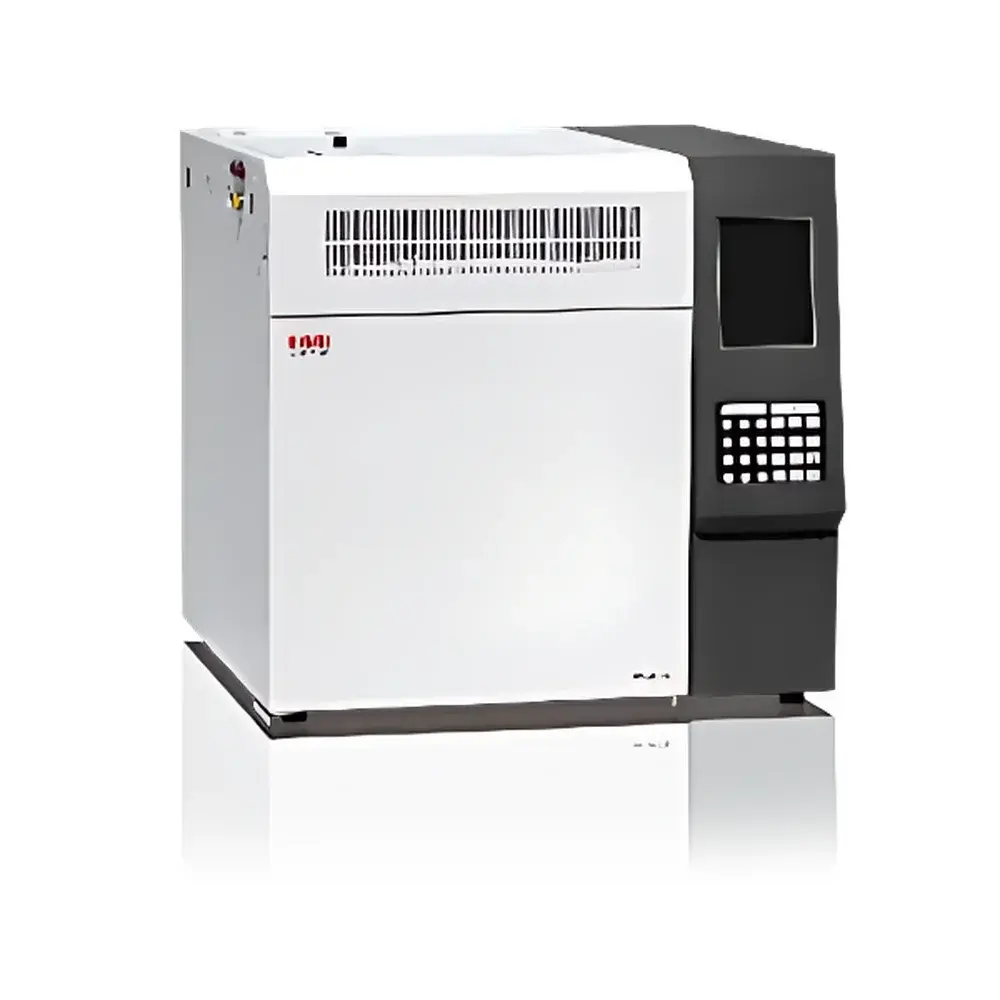
GC-4008B Coal Mine Laboratory Gas Chromatograph
| Origin | Beijing, China |
|---|---|
| Manufacturer Type | Authorized Distributor |
| Origin Category | Domestic (PRC) |
| Model | GC-4008B |
| Instrument Type | Benchtop Laboratory Gas Chromatograph |
| Application Domain | Coal Mining Safety & Spontaneous Combustion Monitoring |
| Detection Systems | TCD, Dual FID, ECD, FPD |
| Column Configuration | Four Dedicated Capillary/Packed Columns |
| Temperature Program | 10-Stage Programmable Ramp |
| Carrier Gases | Helium (TCD), Hydrogen/Air (FID), Nitrogen (ECD/FPD) |
| Minimum Detectable Concentrations | CO, C₂H₂ ≤ 0.5 ppm |
Overview
The GC-4008B Coal Mine Laboratory Gas Chromatograph is a purpose-engineered analytical system designed exclusively for gas safety monitoring in underground coal mining environments. It operates on the principle of gas-phase separation via temperature-programmed capillary and packed column chromatography, coupled with selective detection using multiple complementary detectors—thermal conductivity (TCD), dual flame ionization (dual-FID), electron capture (ECD), and flame photometric (FPD) detection. This multi-detector architecture enables simultaneous quantification of permanent gases (H₂, O₂, N₂), toxic and combustible species (CO, CO₂, CH₄), and critical spontaneous combustion marker gases (C₂H₂, C₂H₄, C₂H₆, C₃H₈) across concentration ranges spanning sub-ppm to percent levels. The instrument meets functional requirements aligned with China’s AQ 1019–2018 and MT/T 757–2020 standards for mine gas analysis, and supports method development traceable to ASTM D1945 (analysis of natural gas) and ISO 6974 (gas chromatographic determination of hydrocarbon composition).
Key Features
- Modular detector configuration: Integrated TCD (helium carrier) for H₂, O₂, N₂, CH₄; dual-FID with methane converter for C₁–C₄ hydrocarbons; ECD optimized for SF₆ tracer gas detection in ventilation studies; FPD calibrated for sulfur-containing compounds (H₂S, SO₂) at low ppb-level sensitivity.
- Four-channel parallel flow path architecture with four independently controlled six-port valves, enabling automated sequential injection and column switching without manual intervention.
- 10-stage programmable oven temperature control (range: 30–400 °C, ramp rate up to 40 °C/min), ensuring precise retention time reproducibility for complex mine air matrices.
- Dedicated column set: Molecular sieve 5A (permanent gases), Porapak Q (CO, CO₂), Al₂O₃/KCl (C₁–C₄ olefins/paraffins), and fused-silica PLOT column (acetylene, ethylene resolution).
- Explosion Triangle Analysis Module: Embedded software algorithm computes flammability limits (LEL/UEL), inerting thresholds, and ternary mixture explosion risk indices per ISO 80079-20-1, using real-time GC-derived mole fractions of CH₄, H₂, CO, and O₂.
Sample Compatibility & Compliance
The GC-4008B accepts gaseous samples collected via Tedlar® bags, stainless-steel canisters, or direct line sampling from mine boreholes or sealed-off areas. Sample introduction is compatible with standard 1–10 mL gas-tight syringes or automated valve-based loop injectors (0.25–5 mL). All analytical methods support GLP-compliant data integrity: audit trails, user access levels, electronic signatures, and raw data archiving conform to FDA 21 CFR Part 11 requirements when operated with validated LIMS integration. System validation documentation includes IQ/OQ protocols aligned with ISO/IEC 17025:2017 for testing and calibration laboratories.
Software & Data Management
The instrument is controlled via GC-Studio v3.2, a Windows-based chromatography data system (CDS) certified for 64-bit OS environments. It provides fully customizable reporting templates for mine safety dashboards—including trend plots of C₂H₂/C₂H₄ ratios, CO/CH₄ quotients, and O₂ depletion rates—and exports structured CSV, XML, and PDF reports compliant with national coal safety information platforms. Peak integration uses valley-to-valley baseline correction with adaptive noise thresholding; retention time locking ensures cross-run comparability over 12-month intervals. Data backup supports NAS and encrypted cloud storage with AES-256 encryption.
Applications
- Early warning of spontaneous coal oxidation through time-series tracking of C₂H₄ evolution and C₂H₂ emergence during heating cycles.
- Post-fire atmosphere assessment: Quantitative profiling of CO₂/CO ratio, H₂ generation, and unsaturated hydrocarbon profiles to determine fire severity and smoldering stage.
- Ventilation efficiency verification via SF₆ tracer gas decay kinetics measured by ECD.
- Pre-entry gas hazard evaluation prior to re-opening sealed districts, including explosive limit calculations and inert gas dilution modeling.
- Calibration verification against NIST-traceable gas standards (e.g., Scott-Marrin Certified Mixtures) for regulatory reporting under GB/T 13610–2020.
FAQ
What carrier gases are required for routine operation?
Helium is mandatory for TCD analysis of permanent gases; hydrogen/air mixtures power the dual-FID; nitrogen serves as makeup gas for ECD and FPD. Optional helium recovery modules are available for cost-sensitive long-term deployment.
Is the system compatible with existing mine safety management software?
Yes—GC-Studio supports OPC UA and Modbus TCP protocols for seamless integration into SCADA-based ventilation monitoring systems and enterprise-level EHS platforms.
How is detector performance verified between calibrations?
The system includes automated diagnostic routines: TCD filament resistance self-check, FID ignition status logging, ECD baseline stability monitoring, and FPD sulfur response drift tracking—all logged with timestamps and user annotations.
Can the GC-4008B be deployed in mobile labs or surface monitoring stations?
It is rated for IP20 indoor use with ambient operating conditions of 15–35 °C and ≤80% RH non-condensing; optional shock-mounted chassis and extended-range power supplies (100–240 VAC, 50/60 Hz) enable transportable deployment.
Does the explosion triangle module meet international mining safety standards?
The algorithm implements the Le Chatelier mixing rule and ASTM E681 flammability database, generating outputs consistent with IEC 60079-10-1 zoning requirements and MSHA-approved hazard classification workflows.




