
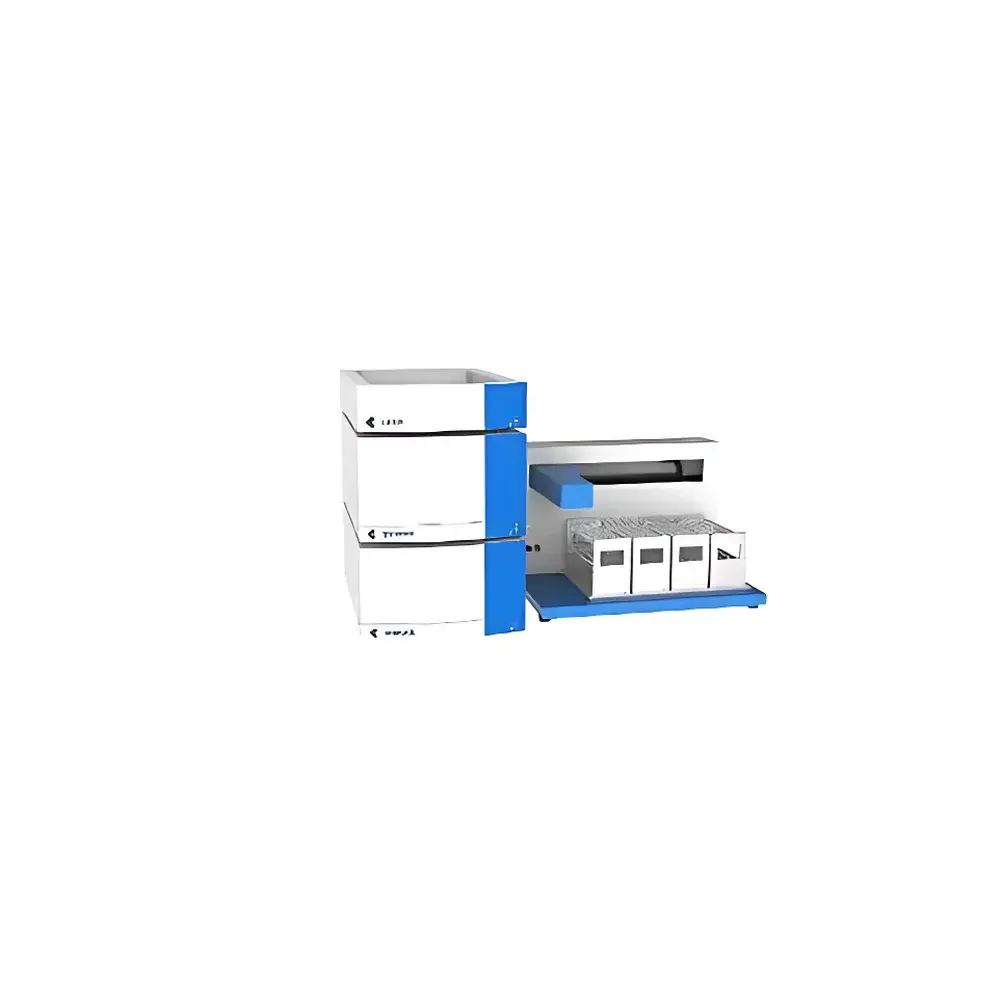
GelMaster-2000 Economic Gel Permeation Chromatography (GPC) Cleanup System
| Brand | KEZHE SHANGHAI |
|---|---|
| Origin | Shanghai, China |
| Manufacturer Type | Direct Manufacturer |
| Model | GelMaster-2000 |
| Flow Rate Range | 0–10 mL/min |
| Maximum Pressure | Not Specified |
| Flow Stability | High (Dual-Piston Pump Architecture) |
| UV Detector Wavelength Range | 190–800 nm |
| GPC Column | 20 × 300 mm, Bio-Beads S-X3 (200–400 mesh), Eluent: Ethyl Acetate/Cyclohexane (3:7 v/v) |
| Fraction Collector | Standard 160-position rack for 20 mL tubes |
| Compliance | AOAC 984.21, EPA SW-846 Method 3640A, FDA 2905A, EN 12393, EN 1528 |
Overview
The GelMaster-2000 Economic Gel Permeation Chromatography (GPC) Cleanup System is a purpose-built, modular laboratory instrument engineered for high-efficiency removal of macromolecular interferences—such as lipids, proteins, pigments, and polymeric residues—from complex biological and environmental extracts. Based on the fundamental principle of size-exclusion chromatography, the system separates analytes by hydrodynamic volume in solution: smaller molecules penetrate the pores of the cross-linked polystyrene-divinylbenzene gel matrix (Bio-Beads S-X3), while larger macromolecules elute earlier in the void volume. This orthogonal cleanup step significantly enhances downstream analytical integrity—particularly for LC-MS, GC-MS, and HPLC quantification of trace-level small-molecule contaminants in food, pharmaceutical, agricultural, and environmental matrices.
Key Features
- Modular architecture with rigid stainless-steel frame ensures mechanical stability and long-term alignment integrity across pump, detector, column, and fraction collector modules.
- Dual-piston preparative HPLC pump delivers precise, pulse-free flow across 0–10 mL/min range, optimized for reproducible gradient or isocratic elution under variable solvent viscosity conditions.
- Full-spectrum UV-Vis detector equipped with deuterium-tungsten dual-lamp source enables wavelength selection from 190 to 800 nm—critical for monitoring both aromatic contaminants (e.g., PAHs, PCBs) and non-UV-absorbing compounds via indirect detection strategies.
- Stainless-steel GPC column (20 × 300 mm) packed with Bio-Beads S-X3 (200–400 mesh) provides robust chemical resistance to chlorinated and aromatic solvents, supporting extended column lifetime and consistent resolution of target analytes from co-extracted macromolecules.
- Manual high-pressure 6-port injection valve offers operational flexibility and eliminates cost and complexity associated with automated injectors—ideal for laboratories performing routine, standardized cleanup protocols with fixed sample volumes.
- Configurable fraction collector accommodates multiple vessel formats: standard 160-position rack for 20 mL test tubes; optional 40-position rack for 80 mL tubes; or specialized 12- or 8-position trays for 150–300 mL concentration vessels compatible with KEZHE’s VNH-series vacuum concentrators and nitrogen evaporators.
- Integrated solvent recovery three-way valve enables selective diversion of clean eluent fractions back to solvent reservoirs—reducing consumable costs and minimizing hazardous waste generation per sample batch.
- Intuitive Chinese-language control interface coordinates all hardware modules (pump, detector, collector, valve) with real-time status feedback and method storage—designed for rapid operator training and minimal procedural deviation.
Sample Compatibility & Compliance
The GelMaster-2000 is validated for extraction matrices including animal tissue homogenates, soil slurries, plant tissues, edible oils, and herbal decoctions. It effectively removes triglycerides, chlorophylls, carotenoids, phospholipids, and humic substances that otherwise suppress ionization efficiency or foul analytical columns. The system meets method requirements specified in internationally recognized regulatory standards: AOAC Official Method 984.21 (pesticide residue cleanup in food), U.S. EPA SW-846 Method 3640A (cleanup of organic extracts prior to instrumental analysis), FDA Chemistry Laboratory Manual (CLM) Procedure 2905A, and European Standards EN 12393 (PAHs in food) and EN 1528 (pesticide residues in animal fat). All operational parameters—including flow rate, injection volume (standard 5 mL loop, customizable), and fraction timing—are fully documentable to support GLP-compliant audit trails.
Software & Data Management
While the GelMaster-2000 operates via embedded firmware with local touchscreen control, its method parameters and collection events are exportable in CSV format for integration into LIMS or electronic lab notebook (ELN) systems. The system supports time-based or peak-triggered fraction collection, with configurable start/stop thresholds and delay times to accommodate detector response lag. No proprietary software license is required; however, raw UV chromatograms and collection logs may be archived manually for internal QA/QC review. The architecture does not include 21 CFR Part 11 compliance features (e.g., electronic signatures, audit trail encryption), making it suitable for research, routine QC, and pre-regulatory development environments where full GMP validation is not mandated.
Applications
- Pesticide residue analysis in fruits, vegetables, and cereals
- Veterinary drug and antibiotic quantification in meat, milk, and honey
- Polycyclic aromatic hydrocarbon (PAH) determination in smoked foods and soil
- Polychlorinated biphenyl (PCB) profiling in fish oil and sediment
- Mycotoxin isolation (e.g., aflatoxins, ochratoxin A) from grain and feed extracts
- Chlorophyll and carotenoid removal prior to vitamin A/D/E analysis
- Removal of phospholipids from plasma extracts for targeted metabolomics workflows
FAQ
What types of samples is the GelMaster-2000 optimized for?
It is designed for lipid-rich, pigment-heavy, or polymer-contaminated extracts derived from food, environmental, and biological sources—especially where macromolecular interference compromises downstream detection sensitivity.
Can the system be integrated with automated concentrators or SPE workstations?
Yes. The fraction collector accepts standardized tube and cup formats compatible with KEZHE’s VNH-1200/VNH-1500 vacuum concentrators and SPE-8600 solid-phase extraction system—enabling seamless transfer without manual repipetting.
Is column regeneration or cleaning supported?
Bio-Beads S-X3 columns tolerate repeated flushing with THF, chloroform, or toluene. Recommended conditioning protocol includes 3 column volumes of eluent at 1 mL/min prior to each analytical run.
What solvent systems are validated for use?
The primary system is ethyl acetate/cyclohexane (3:7 v/v), but the pump and wetted components are compatible with common GPC solvents including tetrahydrofuran (THF), dichloromethane, and toluene—subject to pressure and viscosity limits.
Does the system support method validation documentation?
All hardware parameters (flow rate, UV wavelength, collection timing) are logged and exportable. Users must maintain separate records for column performance checks, system suitability tests, and blank assessments per ISO/IEC 17025 or internal SOP requirements.



