
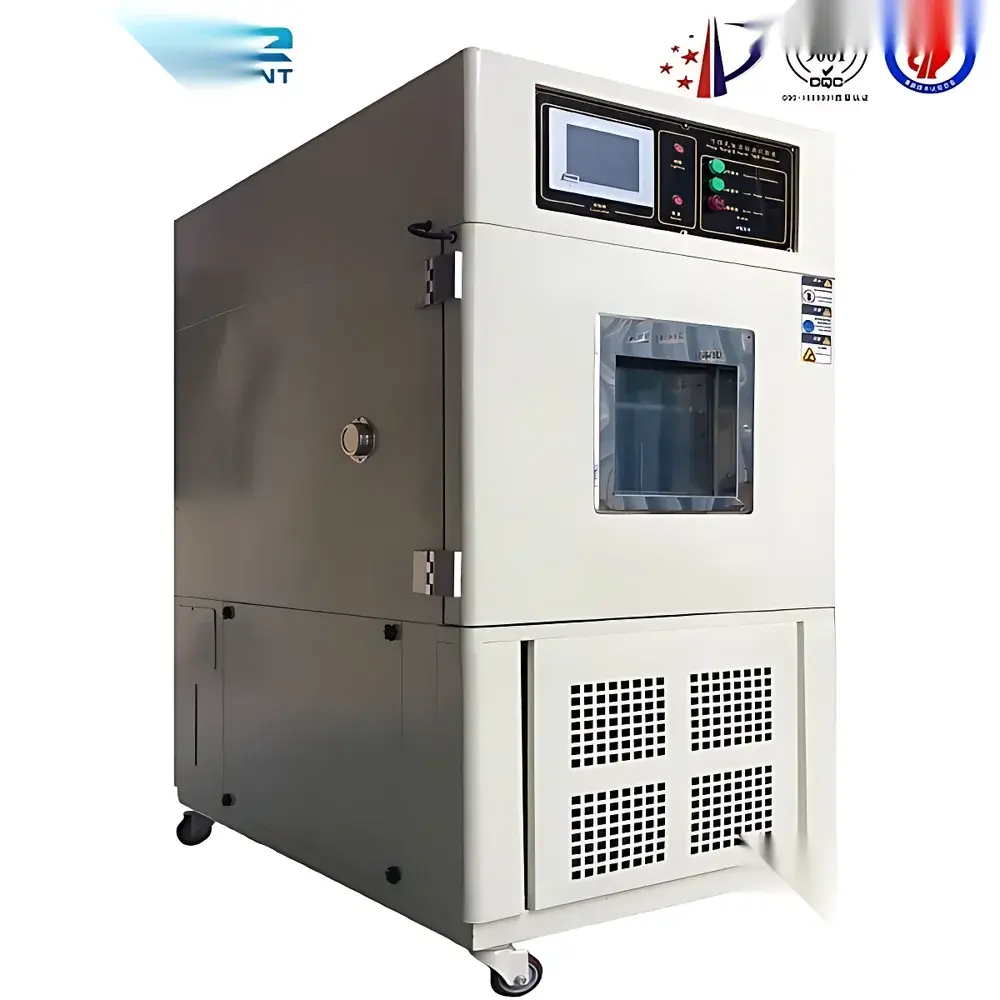
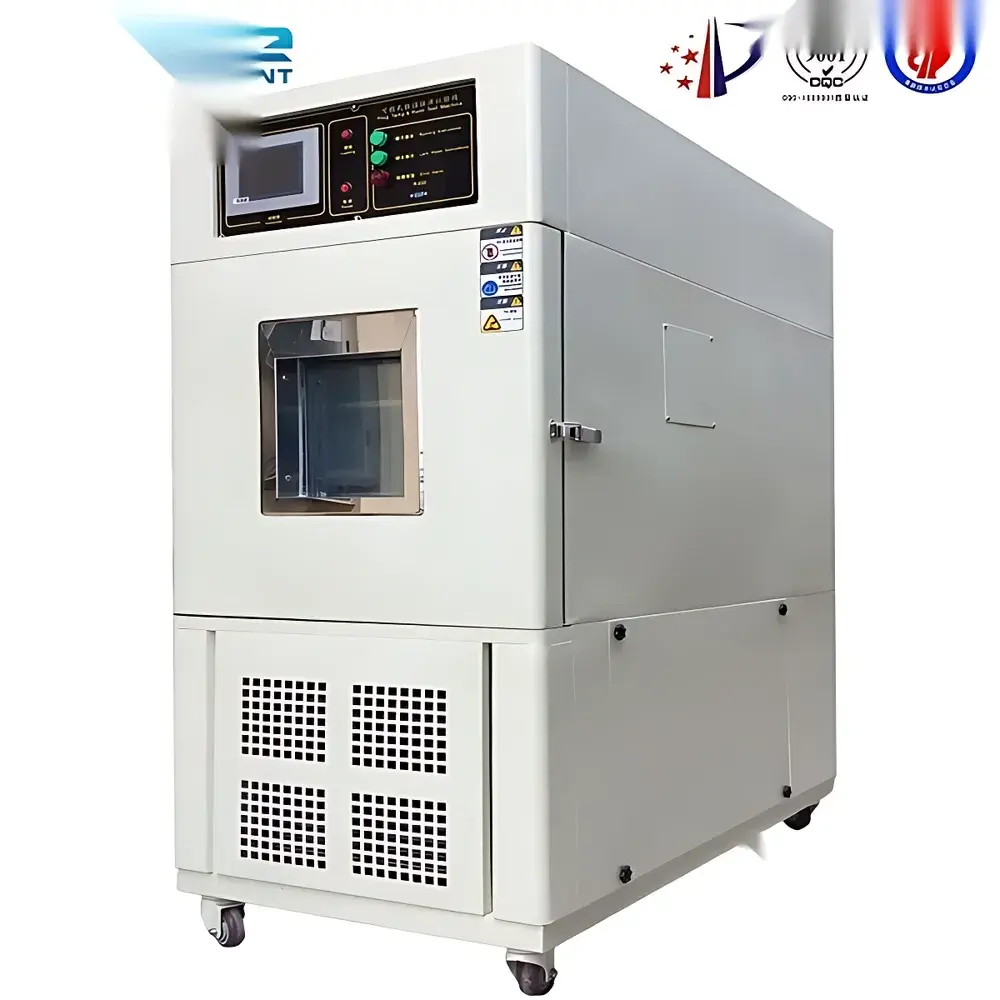
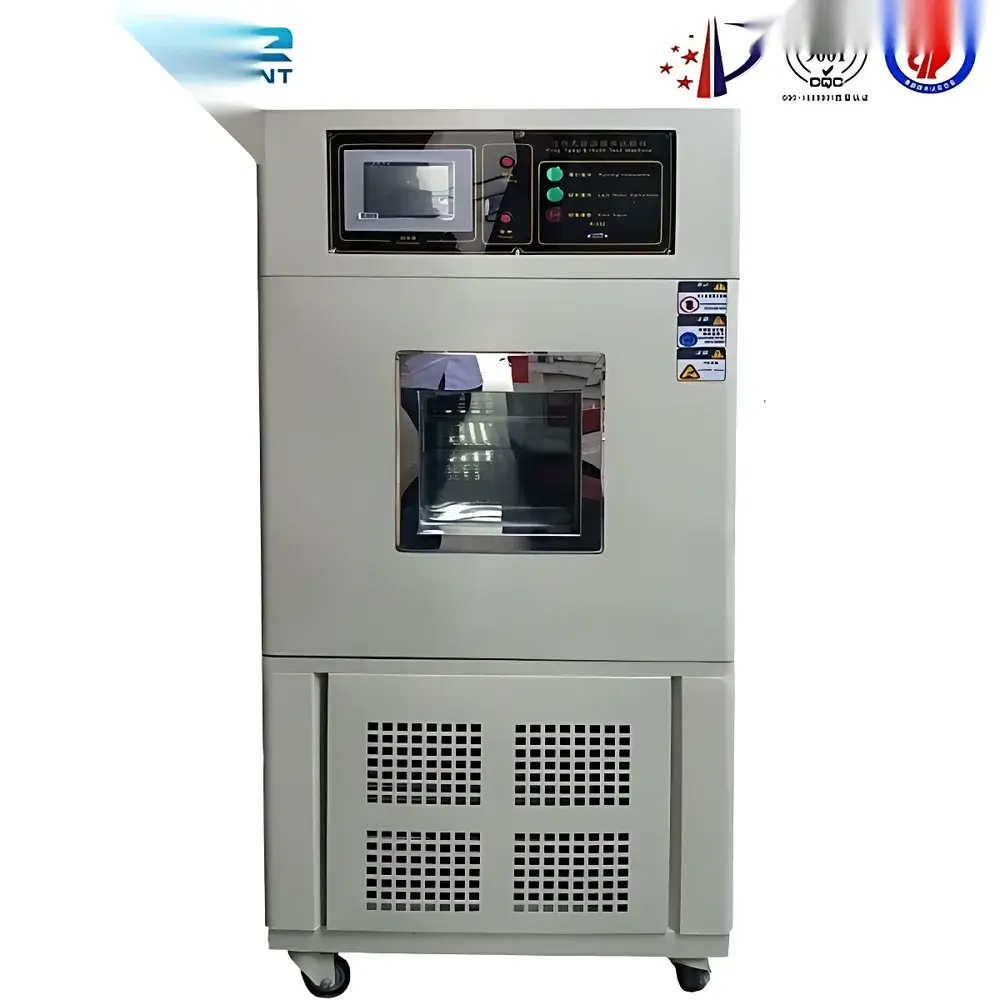
Generic High-Low Temperature Cycling Chamber
| Brand | Other Brands |
|---|---|
| Origin | Imported |
| Manufacturer Type | Authorized Distributor |
| Price Reference | USD 3,100 (ex-factory, indicative only) |
Overview
The Generic High-Low Temperature Cycling Chamber is a precision-engineered environmental test system designed to subject materials, components, and finished products to controlled, repeatable thermal stress profiles across defined temperature extremes. Operating on the principle of forced-air convection with dual-stage refrigeration and electric heating, the chamber delivers stable, uniform thermal environments compliant with fundamental thermodynamic control requirements for accelerated aging, qualification testing, and reliability validation. It supports programmable ramp-and-soak cycles between –40 °C and +150 °C (typical standard range; exact limits depend on configuration), enabling simulation of real-world storage, transportation, and operational conditions encountered in aerospace, automotive electronics, consumer appliances, and medical device manufacturing. Its architecture prioritizes thermal homogeneity (±1.5 °C within working volume per IEC 60068-3-5), minimal temperature overshoot during transitions, and long-term stability under continuous operation—critical for adherence to time-dependent failure mode analysis protocols.
Key Features
- Smooth, ergonomic curved cabinet design with matte-finish stainless steel exterior and flat, non-reactive door handle for intuitive, fatigue-free access.
- Hermetically sealed chamber structure with high-efficiency centrifugal circulation fan and low-noise scroll-type refrigeration unit—ensuring acoustic emission <58 dB(A) at 1 m distance.
- Integrated anti-vibration mounting pads beneath chassis to suppress mechanical resonance and maintain positional stability during dynamic thermal cycling.
- Standard 24 VDC/5 A power feed-through terminals (optional 110/220 VAC configurable) enabling live-load testing of powered devices under thermal stress without external breakout boxes.
- Double-glazed observation window with Philips LED interior lighting and built-in resistive heater film to prevent condensation and ensure unobstructed visual monitoring throughout all test phases.
- Comprehensive safety redundancy: over-temperature cut-off, compressor high-pressure shutdown, phase-loss protection, door interlock, and ground-fault circuit interruption (GFCI).
Sample Compatibility & Compliance
The chamber accommodates samples up to 500 mm × 500 mm × 500 mm (W×D×H) with standard internal volume of 125 L. It supports both passive and active sample configurations—including PCB assemblies, lithium-ion battery modules, polymer enclosures, and sealed electronic housings—without compromising thermal uniformity or airflow integrity. All performance verifications conform to internationally recognized metrological standards: GB/T 5170.2–2017 (equivalent to IEC 60068-3-5), GB/T 10592–2008 (corresponding to ISO 16750-4 Annex A), and MIL-STD-810G Method 501.6 / 502.6 for high- and low-temperature operational testing. Calibration traceability follows ISO/IEC 17025 requirements via third-party accredited laboratories, and routine verification aligns with ASTM E2293–22 for thermal chamber qualification.
Software & Data Management
Equipped with an embedded 7-inch TFT touchscreen controller supporting multi-segment ramp-hold profiles (up to 99 steps, 99 cycles), the system logs real-time chamber temperature, setpoint, and elapsed time at user-defined intervals (1–600 sec). Data export is available via USB 2.0 to CSV format for post-processing in MATLAB, Excel, or statistical process control (SPC) platforms. Optional Ethernet connectivity enables remote monitoring and integration into centralized lab management systems. Audit trail functionality meets GLP and GMP documentation requirements, including operator ID logging, parameter change history, and timestamped event records—all compliant with FDA 21 CFR Part 11 when paired with validated user access controls and electronic signature modules.
Applications
This chamber serves as a foundational tool in quality assurance and R&D workflows: thermal shock pre-screening of solder joints per JEDEC JESD22-A104; high-temperature burn-in of semiconductor packages; cold-start validation of automotive ECUs per ISO 16750-4; shelf-life acceleration studies for pharmaceutical packaging; and compliance verification against IEC 60529 IPX7/IPX8 thermal preconditioning sequences. It is routinely deployed in Tier-1 supplier labs, contract testing facilities, and university reliability engineering centers conducting failure mechanism identification (FMI) and physics-of-failure (PoF) modeling.
FAQ
Is this chamber certified to UL or CE standards?
The unit is supplied with CE marking per EMC Directive 2014/30/EU and Low Voltage Directive 2014/35/EU. UL 61010-1 certification is available upon request for specific configurations.
Can the temperature range be extended beyond ±40 °C to +150 °C?
Yes—custom variants support –70 °C to +180 °C using cascade refrigeration and upgraded heating elements, subject to lead time and validation protocol alignment.
What is the typical calibration interval recommended for ISO/IEC 17025 compliance?
Annual calibration is standard; however, users operating under stringent GxP environments may implement quarterly verification using NIST-traceable PT100 probes.
Does the controller support Modbus RTU or Profibus DP for PLC integration?
Standard configuration includes RS485 Modbus RTU interface; Profibus DP and EtherNet/IP gateways are available as optional add-ons.
Are spare parts and service support available globally?
Yes—authorized distributor networks provide technical support, preventive maintenance contracts, and genuine component replacement kits with documented service life cycles.



