
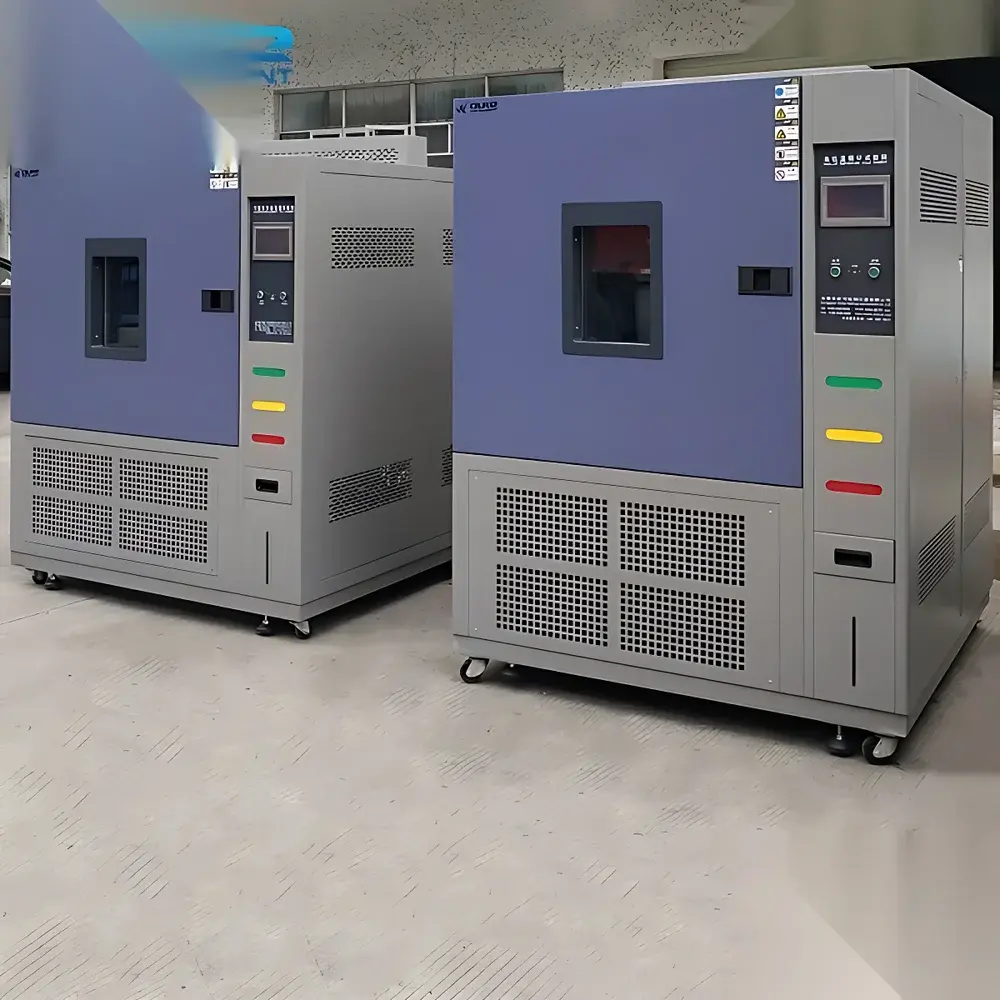
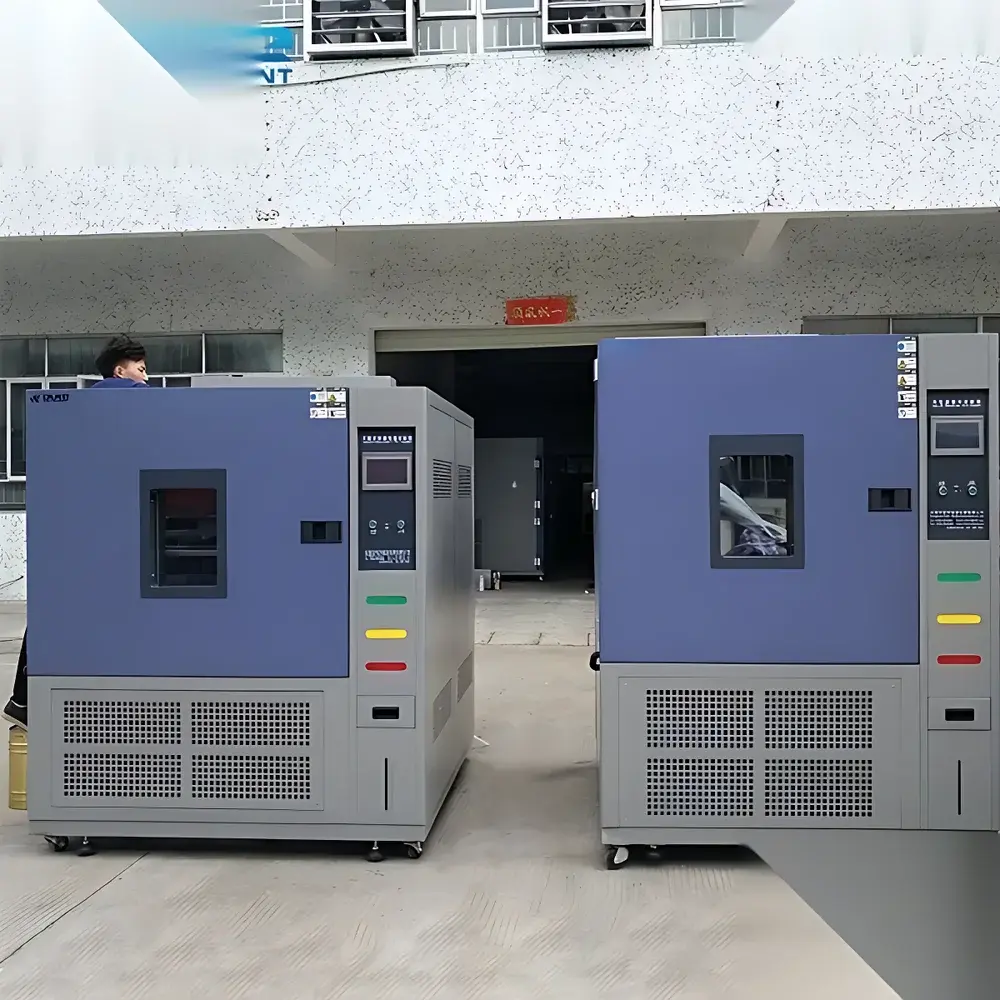
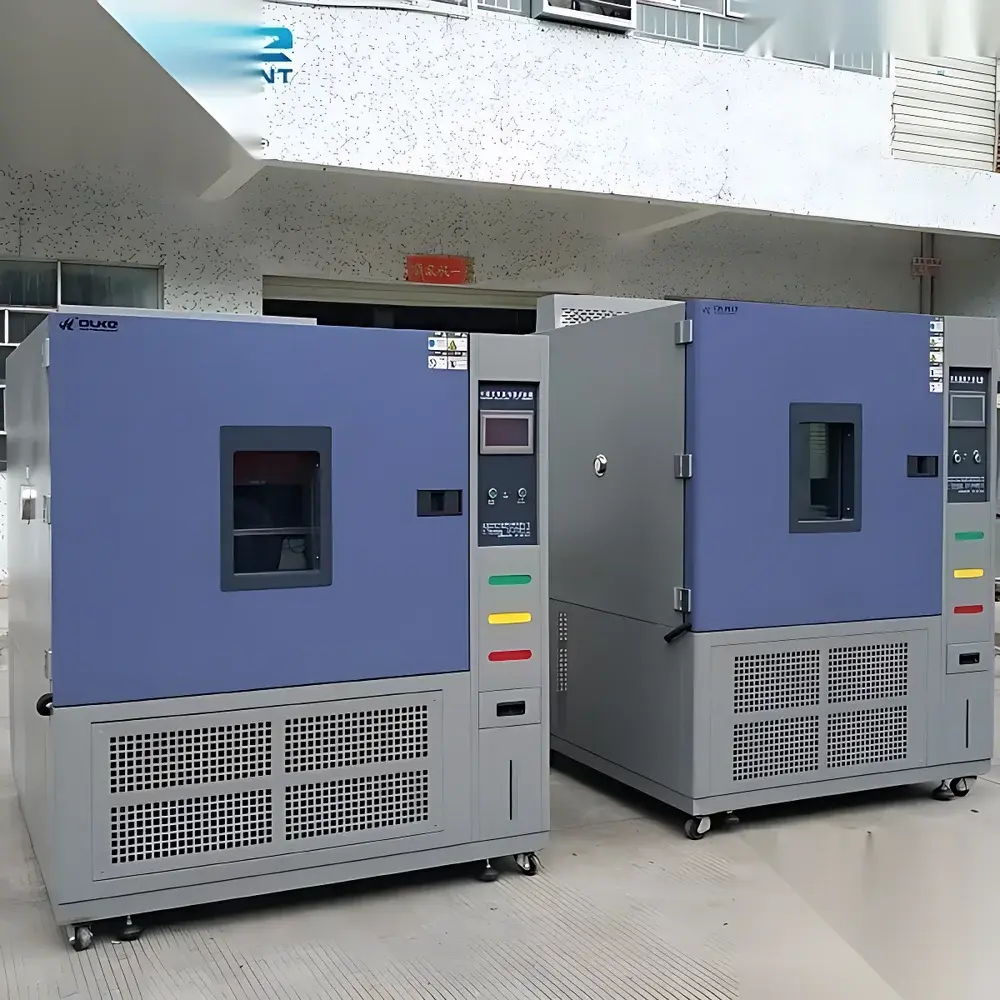
Generic High-Low Temperature Cycling Test Chamber
| Brand | Other Brands |
|---|---|
| Origin | Imported |
| Manufacturer Type | Authorized Distributor |
| Price Reference | USD 3,100 (ex-factory, indicative only) |
Overview
The Generic High-Low Temperature Cycling Test Chamber is an engineered environmental simulation system designed to evaluate the thermal stability, functional integrity, and material behavior of electronic components, automotive parts, aerospace hardware, and industrial materials under controlled, programmable temperature extremes. Operating on a forced-air convection principle with dual-zone refrigeration and heating circuits, the chamber delivers precise, repeatable thermal profiles across a typical operating range of –70 °C to +180 °C (configurable per model), with ramp rates adjustable between 1 °C/min and 10 °C/min. Its architecture conforms to fundamental thermodynamic design principles for uniformity and stability—achieving ±0.5 °C temperature uniformity within the working volume and ±0.3 °C control accuracy under steady-state conditions. The chamber is intended for laboratory-based reliability validation, qualification testing, and pre-compliance screening in R&D and quality assurance environments.
Key Features
- Smooth-radius exterior housing with matte-finish stainless steel cladding and ergonomic, non-reactive flat-panel door handles for safe, intuitive operation.
- Hermetically sealed inner chamber constructed from SUS304 stainless steel, minimizing thermal leakage and corrosion susceptibility.
- High-efficiency, low-noise centrifugal circulation motor coupled with optimized air baffle geometry ensures uniform airflow distribution and minimizes turbulence-induced thermal gradients.
- Integrated anti-vibration mounting pads reduce mechanical transmission to adjacent lab infrastructure, maintaining operational silence (<65 dB(A)) during continuous cycling.
- Optional load-power interface (standard 220 VAC / 16 A, IEC 60320 C14 inlet) enables real-time electrical performance monitoring of DUTs under thermal stress without chamber interruption.
- Double-glazed observation window with Philips LED interior lighting and built-in resistive defogging elements (operating up to 150 °C) allows unobstructed visual inspection throughout all test phases.
- Multi-layer safety architecture including over-temperature cut-off, compressor high-pressure shutdown, phase failure protection, and door-open interlock circuitry.
Sample Compatibility & Compliance
The chamber accommodates standard test specimens up to 500 mm × 500 mm × 500 mm (W×D×H), with optional internal shelf configurations supporting stacked or suspended mounting. It supports both non-powered and powered device-under-test (DUT) configurations, including PCB assemblies, sensors, battery modules, and sealed enclosures. Regulatory alignment includes full traceability to GB/T 5170.2–1996 (Temperature Testing Equipment Verification), GB/T 10592–2008 (Specifications for High/Low Temperature Chambers), and GB/T 2423.2–2008 (Environmental Testing – Part 2: Tests – Test Bb: Dry Heat), which are harmonized with IEC 60068-2-2 and MIL-STD-810G Method 501.4. While not certified to ISO/IEC 17025 as a calibration laboratory, its verification protocol supports GLP-compliant test documentation when used with validated procedures and external NIST-traceable reference sensors.
Software & Data Management
Equipped with a 7-inch TFT-LCD touchscreen controller featuring embedded PID algorithm tuning, multi-segment program storage (up to 99 programs, each with 99 steps), and real-time graphing of chamber setpoint vs. measured temperature. Data logging is performed at user-defined intervals (1 s to 60 min) and exported via USB 2.0 to CSV format. Optional Ethernet connectivity enables remote monitoring and integration into centralized MES or LIMS platforms. Audit trail functionality—including operator ID, parameter changes, alarm events, and manual overrides—is available in compliance-ready firmware versions meeting FDA 21 CFR Part 11 requirements (electronic signature, data immutability, and role-based access control).
Applications
This test chamber serves critical roles in thermal shock pre-screening for semiconductor packaging, accelerated life testing of polymer seals and adhesives, validation of thermal management systems in EV power electronics, and environmental stress screening (ESS) of avionics modules prior to HALT/HASS. It is routinely deployed in QC labs of Tier-1 automotive suppliers, defense subcontractors performing MIL-STD-810 qualification, and academic research groups investigating thermo-mechanical fatigue in composite laminates. Its robustness and configurability make it suitable for both standardized compliance testing and custom thermal profile development.
FAQ
Is this chamber suitable for thermal shock testing with rapid transitions?
Yes—when configured with liquid nitrogen (LN2) assist or cascade refrigeration, ramp rates exceeding 15 °C/min can be achieved; standard air-cooled models support up to 10 °C/min.
Can the chamber operate continuously at –70 °C?
Continuous operation at –70 °C requires optional deep-cold package including enhanced insulation, triple-stage compressors, and low-temperature lubricants—standard configuration supports sustained operation down to –40 °C.
Does the controller support custom test profiles compliant with JEDEC JESD22-A104?
Yes—the programming interface allows stepwise definition of dwell times, ramp slopes, and cycle counts fully aligned with JESD22-A104E (Temperature Cycling) and JESD22-A106B (Highly Accelerated Temperature and Humidity Stress Test).
What calibration documentation is provided upon delivery?
A factory-as-built verification report is included, listing chamber uniformity, stability, and control accuracy results measured using three NIST-traceable PT100 probes per IEC 60068-3-5. Full ISO/IEC 17025 calibration must be arranged separately via accredited third-party labs.
Is remote diagnostics supported out-of-the-box?
Basic remote status viewing is enabled via Ethernet; full remote control, firmware updates, and predictive maintenance analytics require optional IoT gateway module and cloud subscription service.



