
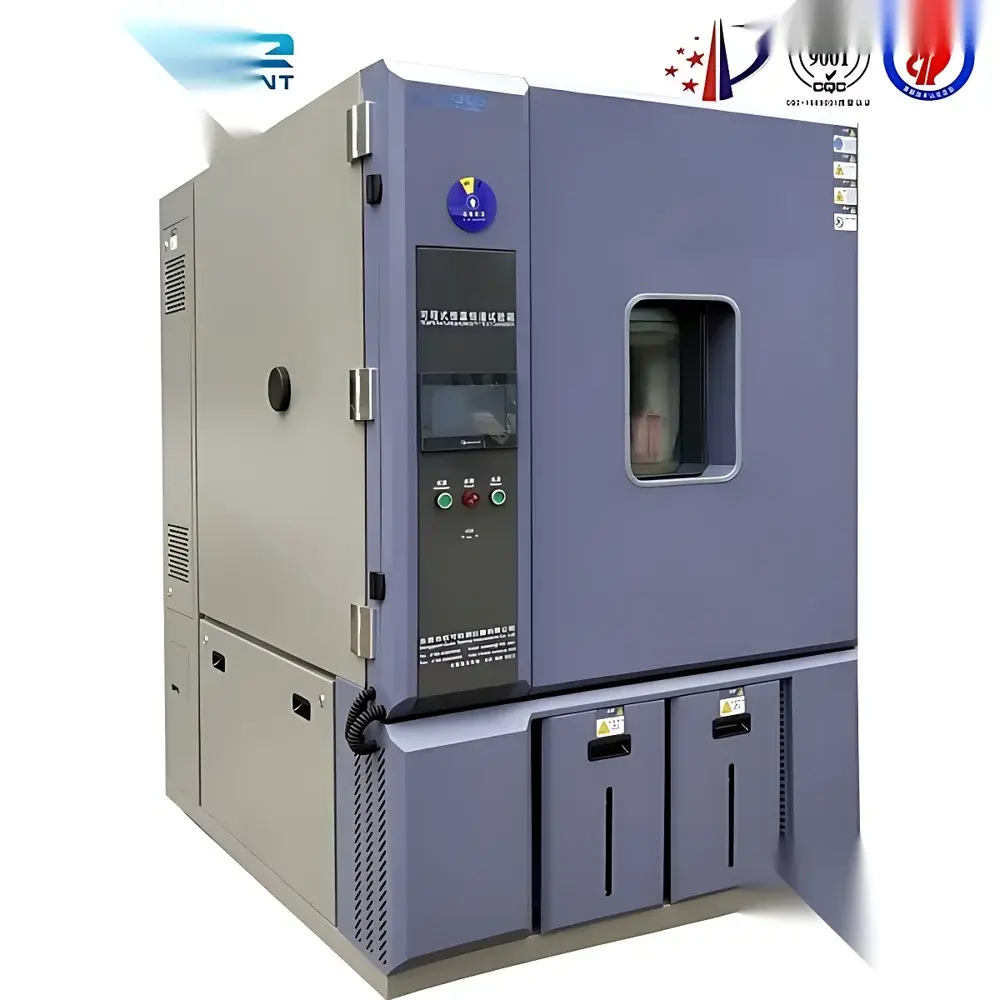
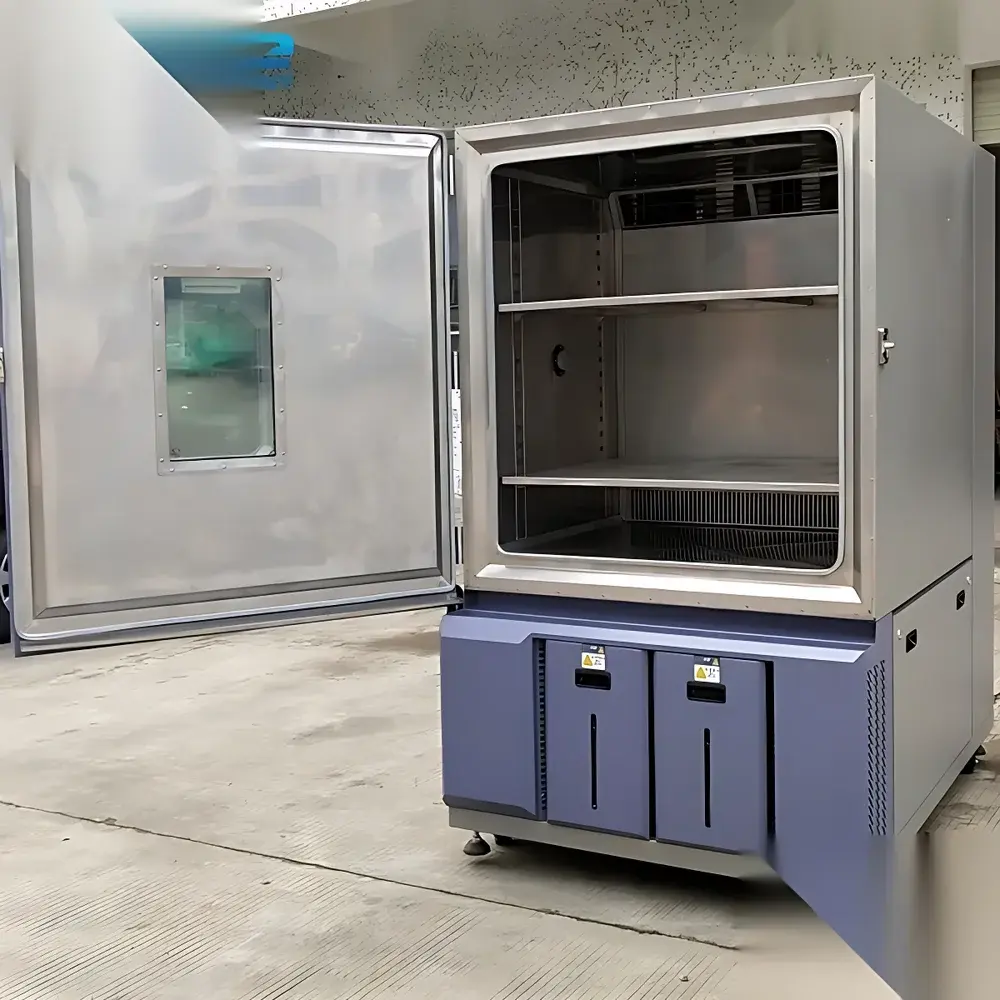
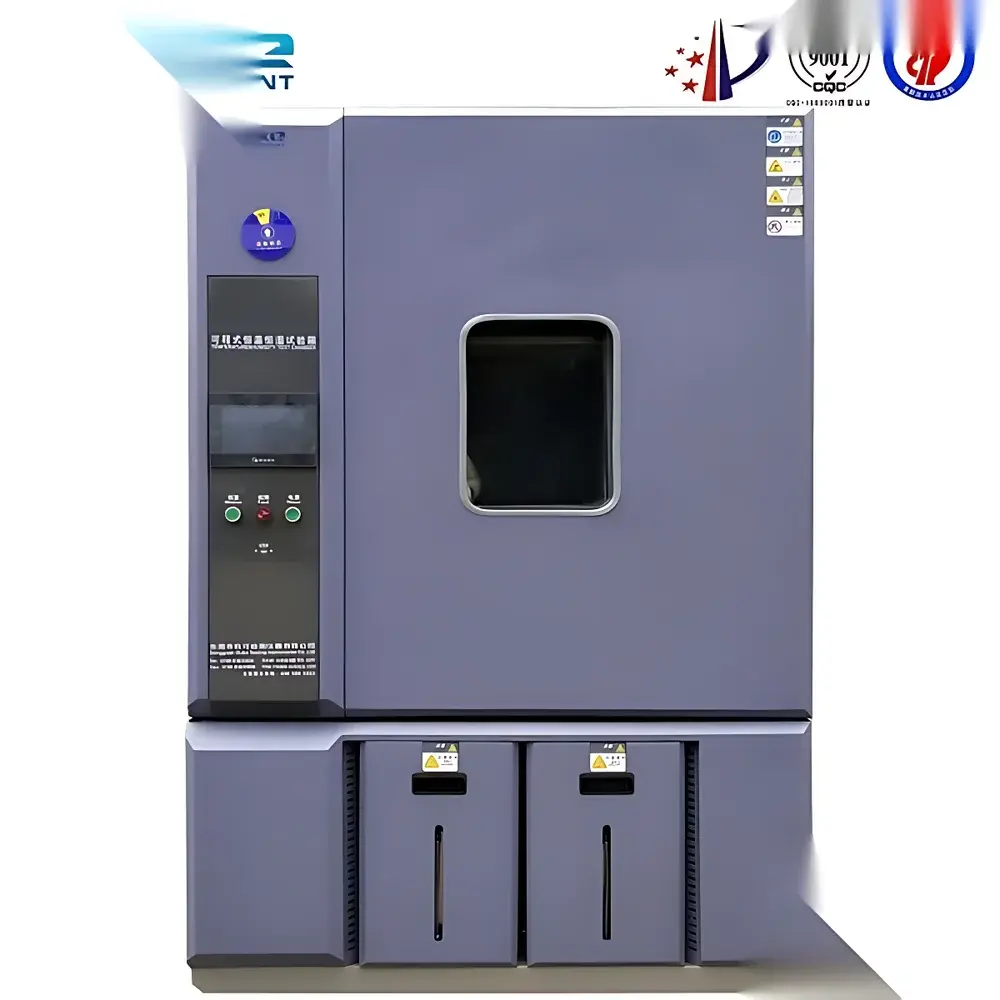
Generic High-Low Temperature Environmental Test Chamber
| Brand | OEM/Third-Party Manufacturer |
|---|---|
| Origin | Imported |
| Supplier Type | Authorized Distributor |
| Temperature Range | -20°C to +150°C, -40°C to +150°C, -60°C to +150°C, or -70°C to +150°C (configurable) |
| Temperature Uniformity | ≤ ±2.0°C (down to ±0.5°C optional) |
| Temperature Stability | ≤ ±0.5°C (down to ±0.1°C optional) |
| Humidity Range | 30–98% RH (customizable) |
| Humidity Accuracy | +2% / −3% RH |
| Heating Rate | 2–3°C/min (up to >10°C/min optional) |
| Cooling Rate | 0.7–1.0°C/min (up to >10°C/min optional) |
| Noise Level | ≤65 dB(A) |
| Construction | Cold-rolled steel outer shell with phosphate & electrostatic powder coating |
| Interior | SUS304 stainless steel 2B finish |
| Insulation | Ultra-fine glass fiber (low thermal conductivity, non-flammable) |
| Door Seal | Dual-layer high-temp/low-temp resistant silicone rubber gasket |
Overview
The Generic High-Low Temperature Environmental Test Chamber is a precision-engineered climatic simulation system designed for rigorous evaluation of material and component performance under controlled thermal and hygrothermal stress conditions. Based on forced-air convection and PID-controlled refrigeration/heating cycles, the chamber delivers stable, repeatable temperature and humidity profiles across wide operational ranges. It adheres to fundamental thermodynamic principles of heat transfer and moisture diffusion, enabling standardized environmental stress screening in accordance with international test protocols. This chamber serves as a foundational tool for reliability engineering, qualification testing, and accelerated aging studies—particularly where thermal shock, condensation resistance, or long-term thermal cycling behavior must be quantified under reproducible laboratory conditions.
Key Features
- Modular temperature range options: standard configurations include −20°C to +150°C, −40°C to +150°C, −60°C to +150°C, and −70°C to +150°C—each validated for continuous operation at extreme setpoints.
- High-fidelity climate control: dual PID algorithms govern independent heating and refrigeration circuits, ensuring temperature stability ≤ ±0.5°C (optional ≤ ±0.1°C) and uniformity ≤ ±2.0°C (optional ≤ ±0.5°C) across the working volume.
- Humidity capability: integrated steam humidification and dehumidification systems support programmable RH profiles from 30% to 98%, with traceable accuracy of +2% / −3% RH per IEC 60068-3-5 calibration guidelines.
- Robust mechanical architecture: cold-rolled A3 steel outer enclosure with phosphating and electrostatic epoxy-polyester coating; interior chamber fabricated from mirror-finished SUS304 stainless steel (2B grade) for corrosion resistance and cleanability.
- Thermal integrity design: multi-layer ultra-fine glass fiber insulation (≥100 mm thickness) combined with dual-section silicone door gaskets rated for −70°C to +150°C service life ensures minimal thermal leakage and energy efficiency.
- Low-noise operation: optimized air circulation ducting and vibration-damped compressor mounting maintain acoustic output ≤65 dB(A) at 1 m distance—critical for shared lab environments.
Sample Compatibility & Compliance
The chamber accommodates diverse sample types—including PCB assemblies, automotive ECUs, medical device housings, polymer components, and packaged consumer electronics—without compromising thermal homogeneity. Its internal dimensions are fully customizable to meet user-defined payload and fixture requirements. The system complies with core environmental test standards including GB/T 2423.1–2023 (Cold Testing), GB/T 2423.2–2023 (Dry Heat Testing), and GB/T 2423.3–2016 (Damp Heat, Steady State), which align with IEC 60068-2-1, IEC 60068-2-2, and IEC 60068-2-78 equivalencies. While not pre-certified to ISO/IEC 17025 or accredited to GLP/GMP Annex 11, its controller logs support audit-ready data capture when configured with optional timestamped event logging and password-protected parameter access.
Software & Data Management
Equipped with an embedded 7-inch TFT touchscreen HMI, the chamber supports intuitive profile programming (ramp-hold-soak sequences), real-time trend visualization, and alarm history review. Optional Ethernet or RS485 interfaces enable integration into centralized LabVantage or Siemens Desigo CCMS platforms. Data export is available in CSV format for post-processing in MATLAB, JMP, or Minitab. For regulated environments, firmware upgrade paths exist to support 21 CFR Part 11-compliant electronic signatures, audit trails, and user role-based permissions—subject to validation documentation provided by the end-user’s QA department.
Applications
This chamber is routinely deployed in QC laboratories for incoming material verification (e.g., thermal expansion coefficient screening of adhesives), in R&D for failure mode analysis of battery modules under thermal cycling, and in manufacturing for burn-in validation of IoT sensors. It supports MIL-STD-810H Method 501.7 (High Temperature), Method 502.7 (Low Temperature), and Method 507.6 (Humidity) preconditioning steps. Academic users apply it to study phase transitions in shape-memory alloys or moisture-induced degradation kinetics in biodegradable packaging films.
FAQ
What is the standard warranty coverage for this chamber?
Standard warranty includes 12 months parts-and-labor coverage for all electromechanical components, excluding consumables (e.g., humidity wicks, filter elements). Extended service contracts up to 5 years are available.
Can the chamber be validated per IQ/OQ protocols?
Yes—factory-supplied validation templates (including sensor calibration certificates traceable to NIST standards) and empty protocol shells are provided. Full PQ execution requires site-specific installation and operational conditions.
Is remote monitoring supported out-of-the-box?
Basic SNMP status polling is enabled via Ethernet; full SCADA-level telemetry (e.g., Modbus TCP, OPC UA) requires optional firmware licensing and gateway configuration.
Does the chamber meet CE or UKCA marking requirements?
Units supplied through EU/UK distribution channels include CE Declaration of Conformity (2014/30/EU EMC Directive, 2014/35/EU LVD Directive); UKCA marking is available upon request for post-Brexit compliance.
How often does preventive maintenance need to be performed?
Recommended intervals: refrigerant circuit inspection every 24 months; humidity system descaling every 6 months; air filter replacement every 3 months under continuous operation.



