
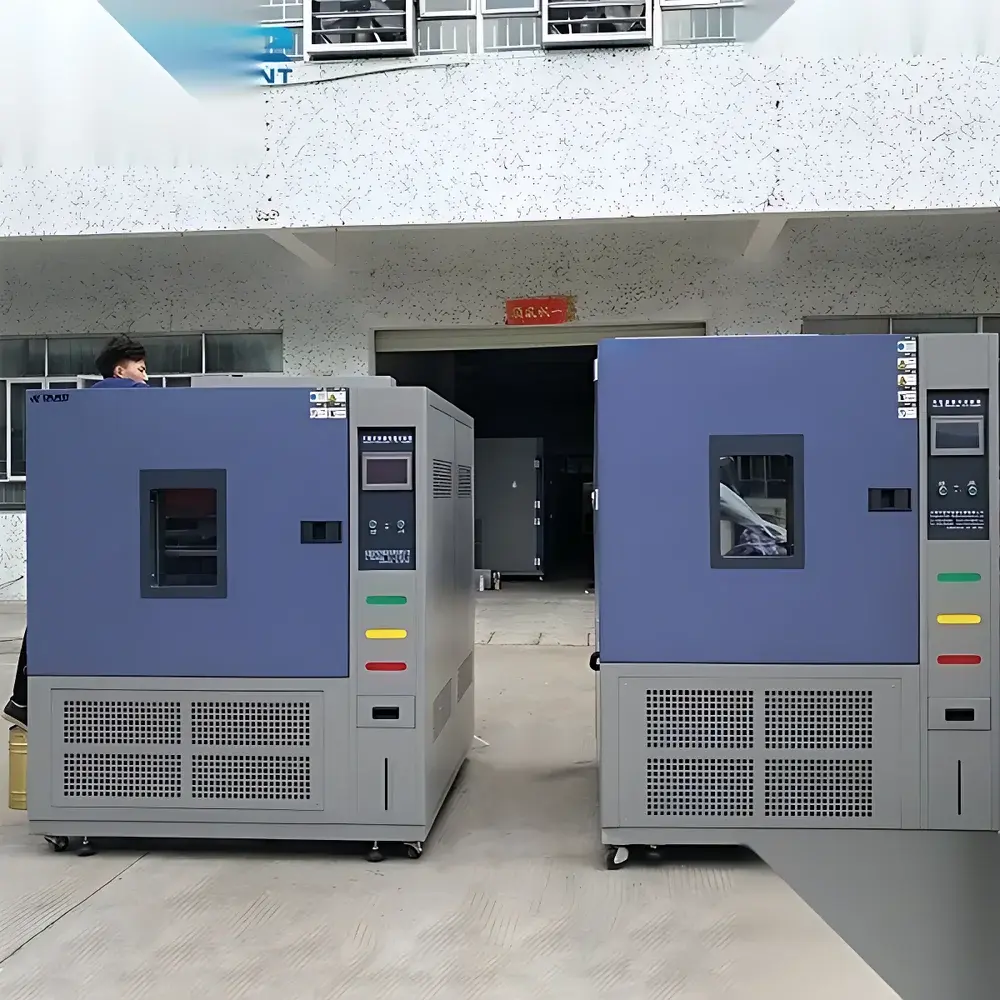
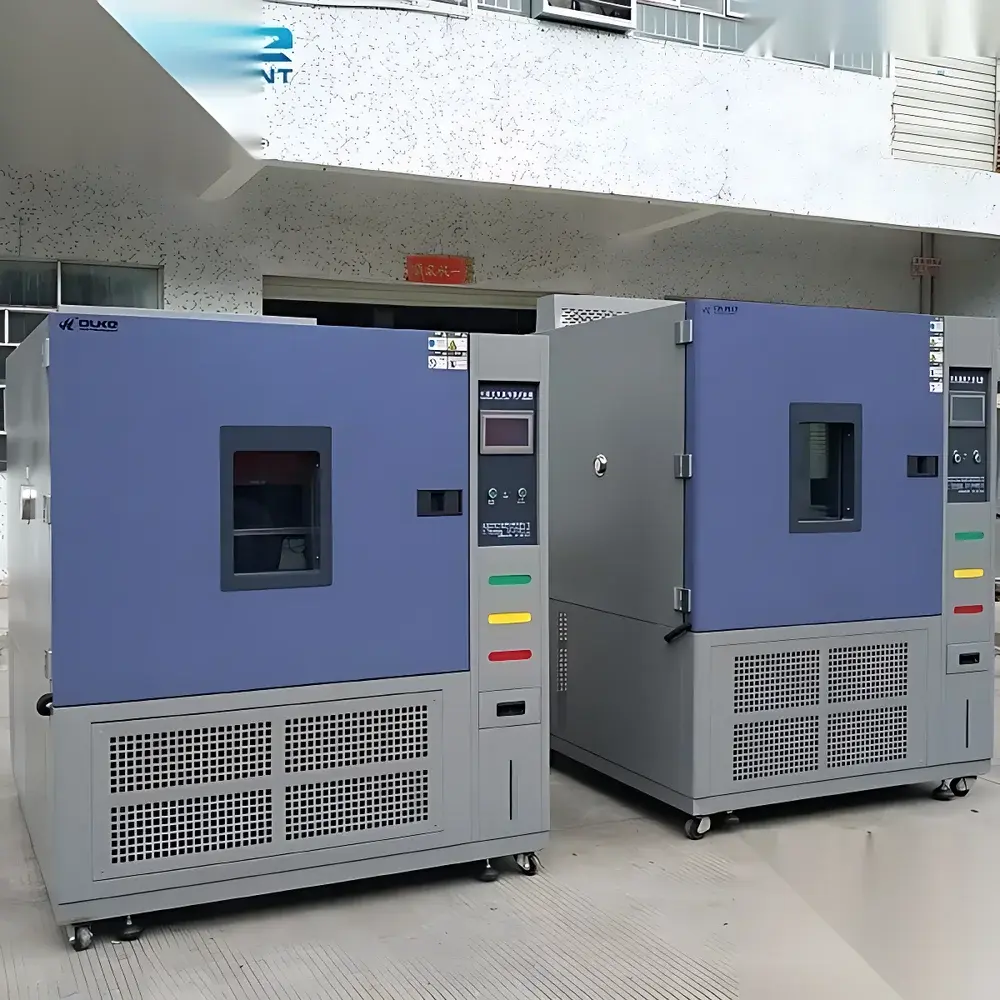
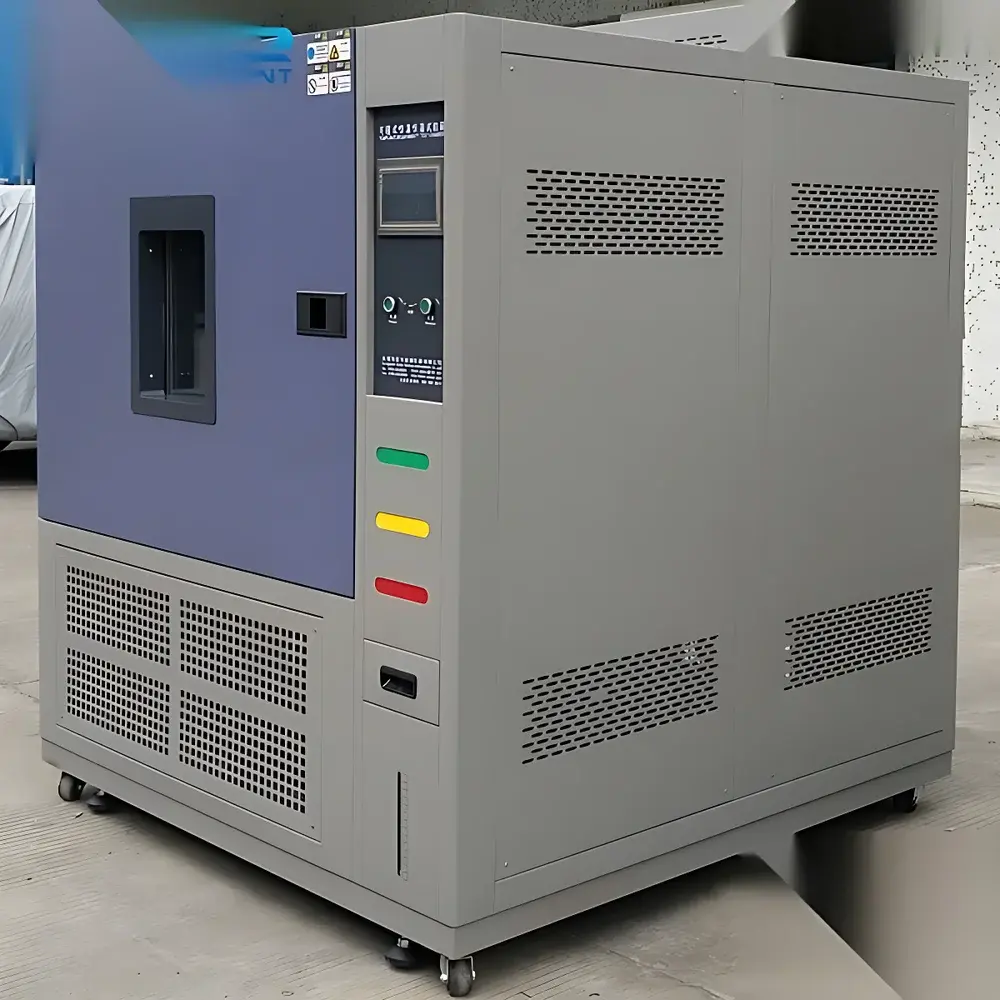
Generic High-Low Temperature Rapid Thermal Cycling Chamber
| Brand | Other Brands |
|---|---|
| Origin | Imported |
| Manufacturer Type | Authorized Distributor |
| Price Reference | USD 3,100 (ex-works, indicative only) |
Overview
The Generic High-Low Temperature Rapid Thermal Cycling Chamber is an engineered environmental test system designed to subject electronic components, automotive parts, aerospace materials, and industrial assemblies to precisely controlled and accelerated temperature transitions. Based on forced-air convection with dual-stage refrigeration and high-efficiency electric heating, the chamber delivers rapid thermal ramp rates—typically up to 10 °C/min (depending on load mass and setpoint range)—while maintaining tight uniformity (±1.5 °C) and stability (±0.5 °C) across the working volume. Its architecture complies with fundamental thermal test principles defined in IEC 60068-3-5 (Methods for determining changes in temperature), enabling repeatable simulation of real-world thermal stress profiles encountered during storage, transportation, and operational life cycles.
Key Features
- Smooth, arc-shaped stainless-steel exterior with matte-finish surface treatment and ergonomic flat non-reactive door handles for intuitive, vibration-free operation
- Hermetically sealed chamber structure with low-noise, high-torque centrifugal circulation motor and optimized air duct design for uniform airflow distribution
- Integrated anti-vibration mounting pads to suppress mechanical resonance and ensure stable platform performance during dynamic thermal cycling
- Load-power capability: provision for external power feedthroughs (up to 250 VAC / 10 A) enabling functional testing of powered devices under temperature stress (e.g., PCB burn-in, sensor calibration validation)
- Philips-grade observation window lighting combined with built-in high-temperature-resistant anti-fogging heater film for continuous visual monitoring without condensation interference
- Multi-layer safety protection: independent over-temperature cut-off, compressor high-pressure shutdown, phase-sequence fault detection, door interlock, and ground-fault circuit interruption
Sample Compatibility & Compliance
The chamber accommodates samples up to 450 mm × 450 mm × 450 mm (W×D×H) with unrestricted access via front-hinged double-glass insulated door. It supports standard test specimens including printed circuit boards (PCBs), lithium-ion battery modules, LED lighting arrays, and polymer housings. The system meets foundational metrological requirements outlined in GB/T 5170.2–1996 (Temperature Testing Equipment Verification Methods), GB 10592–1993 (Technical Specifications for High/Low Temperature Chambers), and aligns with international test methodology standards including IEC 60068-2-1 (Cold Test), IEC 60068-2-2 (Dry Heat), MIL-STD-810G Method 501.6 (High Temperature), and MIL-STD-810G Method 502.6 (Low Temperature). While not certified to ISO/IEC 17025 or accredited per ILAC-MRA, it is suitable for internal R&D screening, pre-compliance verification, and process qualification under GLP-aligned laboratory practices.
Software & Data Management
The embedded controller provides real-time display of chamber temperature, ramp rate, dwell time, and cycle count via a 7-inch TFT touchscreen interface. Data logging is performed at user-selectable intervals (1 s to 60 min) and stored internally (≥10,000 data points) or exported via USB to CSV format. Optional RS485/Modbus RTU or Ethernet TCP/IP connectivity enables integration into centralized lab management systems. For regulated environments, optional software add-ons support audit-trail generation, electronic signature capture, and basic 21 CFR Part 11 compliance features—including user role-based access control and immutable log archiving—when deployed with validated third-party SCADA platforms.
Applications
- Thermal shock screening of solder joints and conformal coatings per IPC-J-STD-020
- Accelerated aging of elastomeric seals and adhesives under cyclic temperature extremes
- Functional validation of automotive ECUs and infotainment units across –40 °C to +150 °C ranges
- Pre-qualification testing of consumer electronics prior to formal IEC 60068-2 series certification
- Material coefficient-of-thermal-expansion (CTE) correlation studies using dimensional metrology tools mounted inside the chamber
- Stress screening of newly manufactured batches in manufacturing quality assurance workflows
FAQ
What is the typical temperature range of this chamber?
Standard configuration operates from –40 °C to +150 °C; extended-range variants (–70 °C to +180 °C) are available upon request with modified refrigerant circuitry and insulation.
Does the chamber support programmable multi-step thermal profiles?
Yes—the controller supports up to 99 segments per program, including ramp, soak, and loop functions, with automatic restart after power interruption.
Is calibration documentation included with shipment?
A factory-as-received temperature uniformity report (per GB/T 5170.2) is provided; NIST-traceable calibration certificates require separate arrangement with an ISO/IEC 17025-accredited provider.
Can the chamber be integrated into an automated test cell?
Yes—digital I/O terminals and Modbus-compatible communication allow synchronization with robotic handlers, power supplies, and DAQ systems.
What maintenance is required for long-term reliability?
Quarterly inspection of air filters, annual refrigerant pressure verification, and biannual cleaning of condenser coils are recommended to sustain specified thermal performance.



