
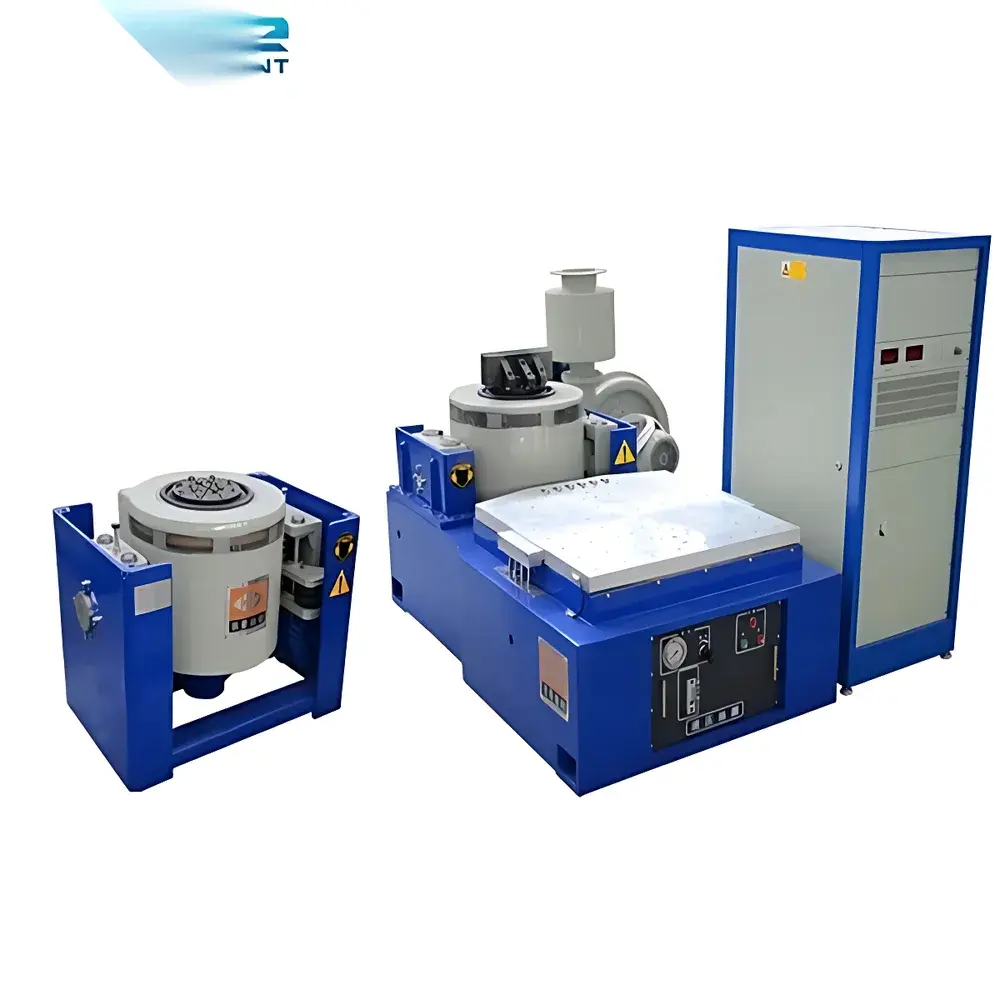
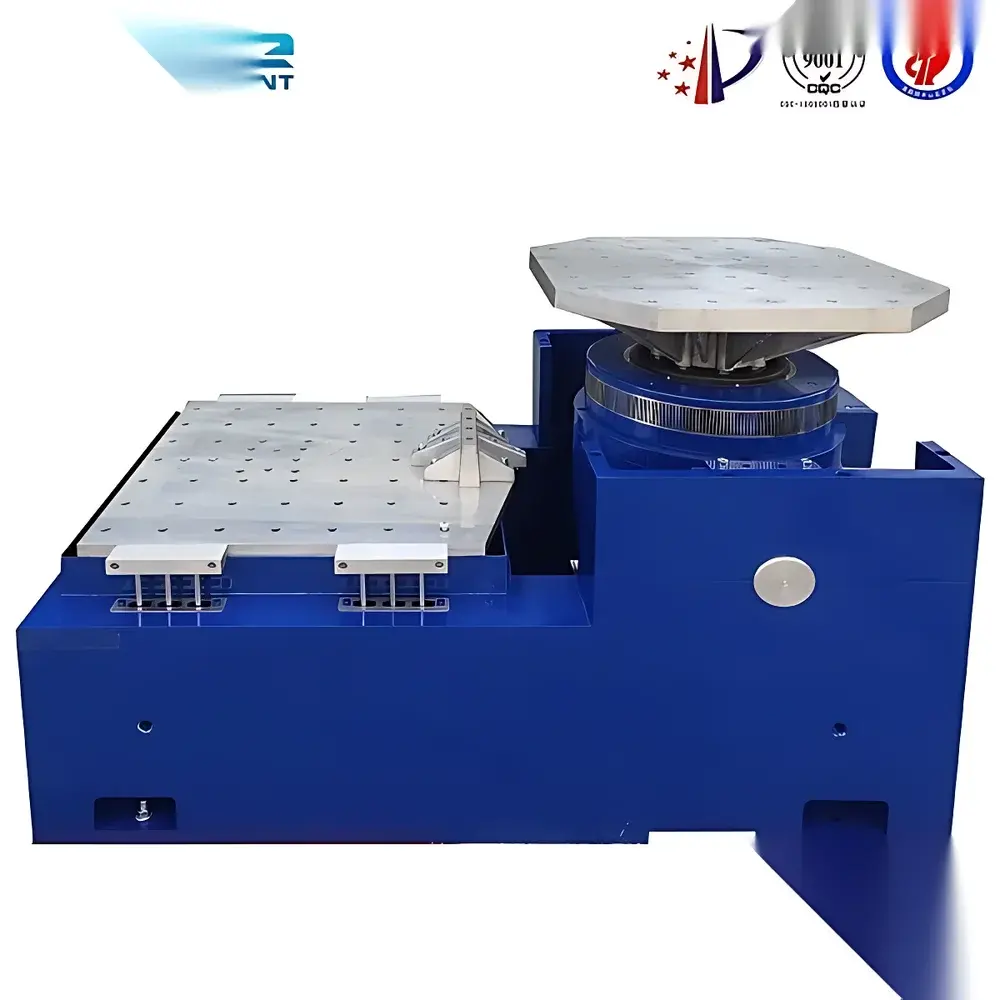
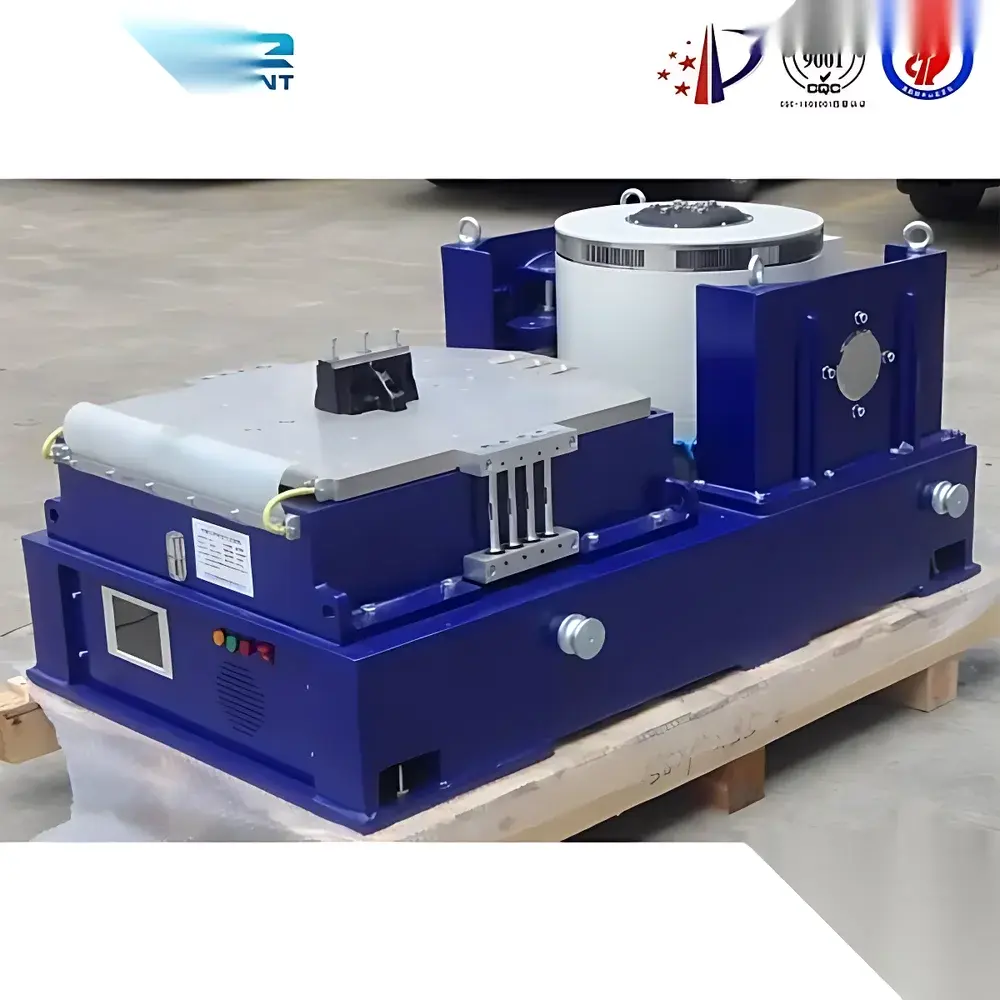
Generic Vibration Shaker System for Environmental and Mechanical Stress Testing
| Brand | OEM/Third-Party Manufacturer |
|---|---|
| Origin | Imported |
| Supplier Type | Authorized Distributor |
| Price | USD 21,000 (FOB) |
| Frequency Range | 5–3000 Hz (model-dependent) |
| Max. Force | Up to 160 kN |
| Max. Displacement | 25.4 mm peak-to-peak |
| Acceleration Capacity | 3–20 g (depending on configuration) |
| Axes | Uniaxial, Biaxial, or Triaxial Options Available |
| Control Architecture | Closed-loop (electrodynamic & electrohydraulic models), Open-loop (mechanical models) |
Overview
The Generic Vibration Shaker System is an engineered platform for controlled mechanical excitation of test specimens under laboratory and production-line conditions. Based on electromagnetic (electrodynamic), electrohydraulic, or mechanical actuation principles, these shakers generate reproducible sinusoidal, random, shock, or transient vibration profiles to evaluate structural integrity, fatigue resistance, and functional reliability of components across aerospace, automotive, electronics, medical device, and packaging industries. Unlike single-purpose fixtures, this system family supports standardized test protocols defined in ISO 10816, ASTM D999, IEC 60068-2-6, MIL-STD-810H, and GB/T 2423.10—enabling compliance verification for qualification, acceptance, and accelerated life testing. The core architecture integrates a rigid reaction mass, high-fidelity force sensor feedback (in closed-loop variants), and precision motion control to ensure traceable amplitude, frequency, and phase response across operational bandwidths.
Key Features
- Modular design supporting electrodynamic (ED), electrohydraulic (EH), and mechanical shaker configurations—each optimized for distinct frequency-force-displacement envelopes
- Closed-loop servo control with real-time accelerometer or load cell feedback for amplitude stability within ±1.5 dB over full dynamic range
- Programmable waveform generation: sine sweep, resonant dwell, random PSD (power spectral density), classical shock (half-sine, trapezoidal), and time-history replay
- Multi-axis capability: uniaxial vertical, dual-axis (vertical + horizontal), or triaxial simultaneous excitation with cross-axis coupling compensation
- Integrated slip table and head expander options for large-footprint or high-inertia payloads (up to 1000 kg)
- Compliance-ready data logging: timestamped, calibrated channel data with metadata per test segment per IEC 61508 and FDA 21 CFR Part 11 audit trail requirements
Sample Compatibility & Compliance
The system accommodates rigid and semi-rigid specimens ranging from microelectronic packages (<50 g) to automotive ECUs (≤50 kg) and industrial control cabinets (≤1000 kg). Fixture design follows ASTM D4728 guidelines for mounting interface stiffness and mass ratio. All electrodynamic and electrohydraulic variants meet CE Machinery Directive 2006/42/EC, RoHS 2011/65/EU, and EMC Directive 2014/30/EU. Test reports generated via certified software modules support GLP/GMP documentation workflows—including electronic signatures, version-controlled test templates, and deviation tracking aligned with ISO/IEC 17025 accreditation criteria.
Software & Data Management
Control and analysis are performed using vendor-agnostic, Windows-based software compliant with IEEE 1588-2019 Precision Time Protocol for synchronized multi-channel acquisition. The platform supports import/export of common formats (MATLAB .mat, Universal File Format .uff, CSV), real-time FFT and coherence calculation, and automated pass/fail evaluation against user-defined spectral masks or acceleration-time thresholds. Raw data archives include calibration certificates, environmental chamber telemetry (if integrated), and hardware configuration logs—structured for long-term retention and regulatory review. Optional cloud synchronization enables remote monitoring and centralized fleet management across distributed R&D sites.
Applications
- Electronics: solder joint fatigue assessment, connector retention validation, PCB resonance mapping
- Automotive: ECU vibration endurance, battery module structural screening, infotainment system shock survivability
- Packaging: ISTA 3A/3E simulation, palletized load stability under transport spectra
- Medical Devices: ISO 14971 risk mitigation for handheld diagnostic tools and implantable electronics
- Aerospace: Component-level DO-160 Section 8 qualification, avionics box modal survey preparation
- Industrial Equipment: Bearing life prediction, gearbox housing resonance suppression, motor mount optimization
FAQ
What standards does this shaker system support out-of-the-box?
Preconfigured test templates cover ISO 10816 (vibration severity), ASTM D999 (package vibration), IEC 60068-2-64 (random vibration), and MIL-STD-810H Method 514.7 (vibration testing). Custom profiles can be imported via UFF or MATLAB scripts.
Can the system perform simultaneous multi-axis testing?
Yes—tri-axial electrodynamic shaker tables provide independent or correlated excitation across X, Y, and Z axes with phase alignment accuracy better than ±2° at 1 kHz.
Is third-party calibration certification included?
Each unit ships with NIST-traceable factory calibration report; optional annual recalibration services are available with ISO/IEC 17025-accredited certificates.
How is data integrity ensured during long-duration tests?
The embedded controller implements cyclic redundancy checking (CRC-32) on all acquired frames, automatic file segmentation every 2 hours, and redundant local + network-attached storage mirroring.
What maintenance intervals are recommended for electrohydraulic models?
Hydraulic fluid analysis and filter replacement every 1,000 operating hours; servo valve inspection every 5,000 hours—documented in the provided maintenance logbook and digital service portal.



