
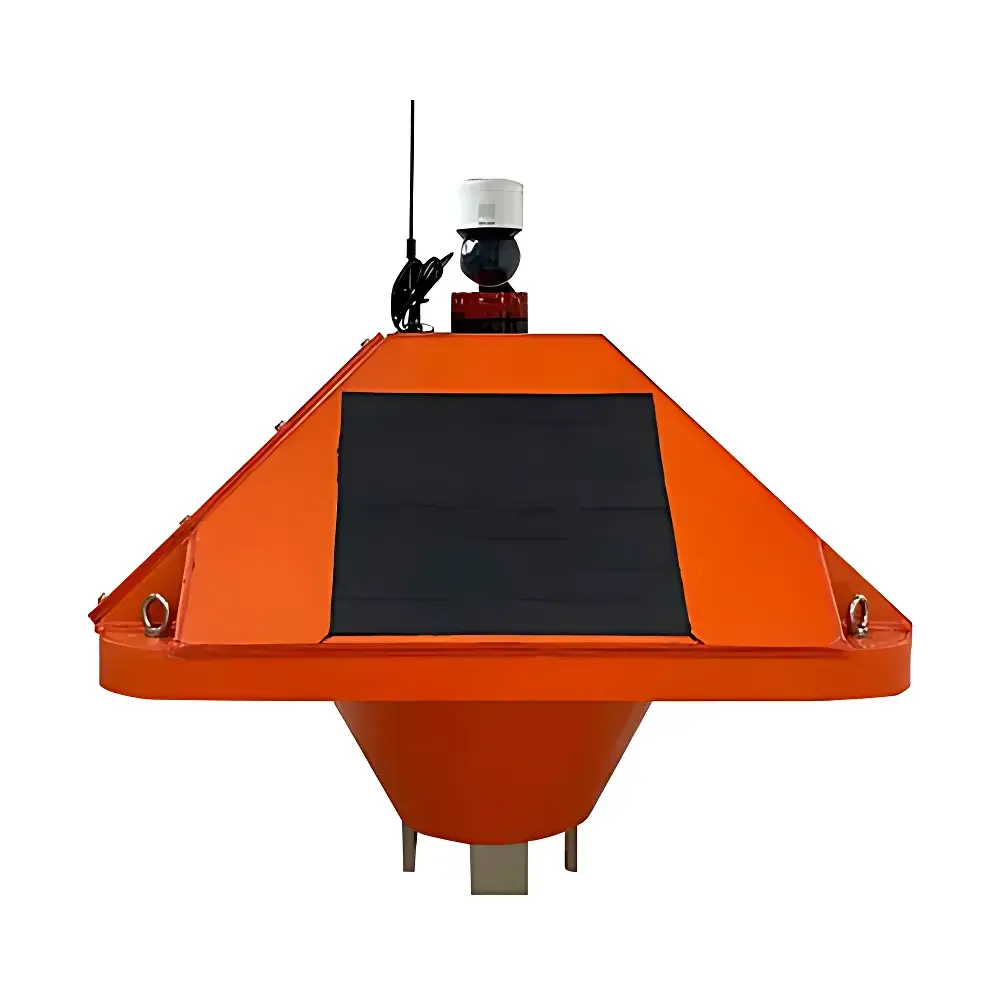
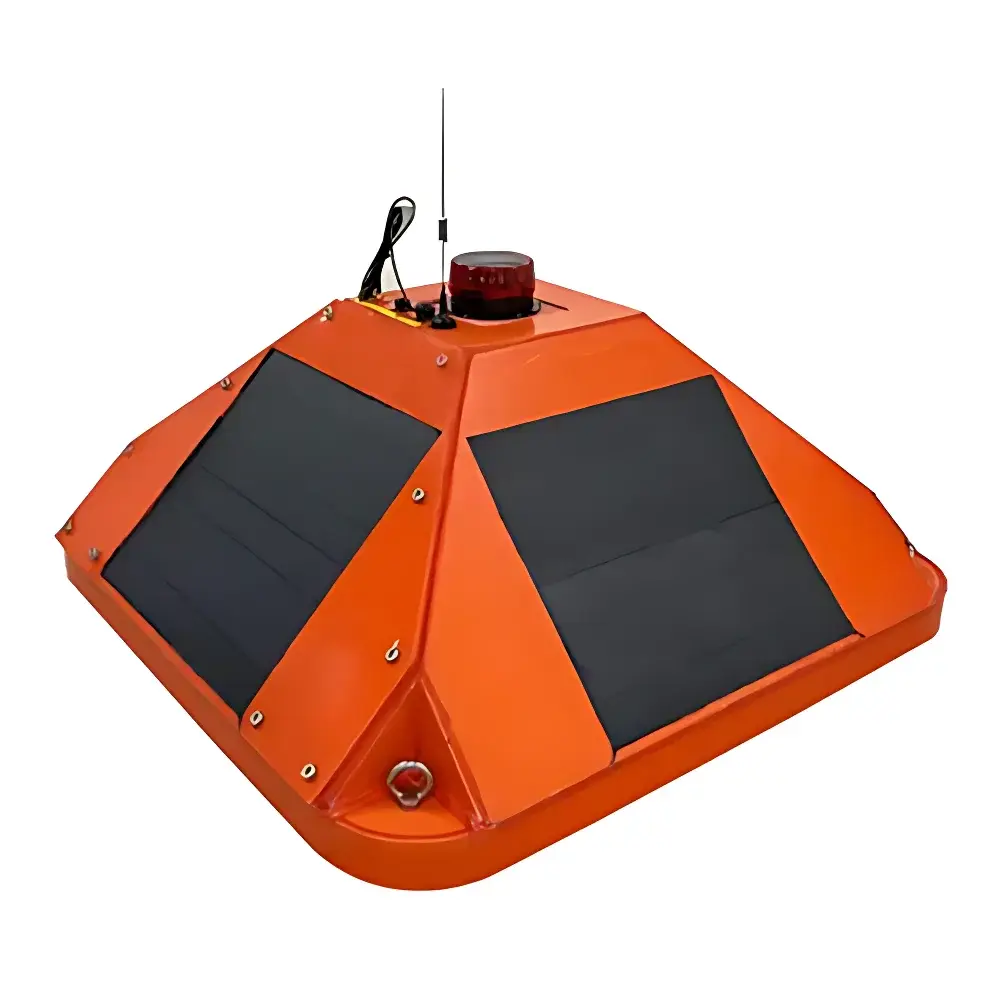
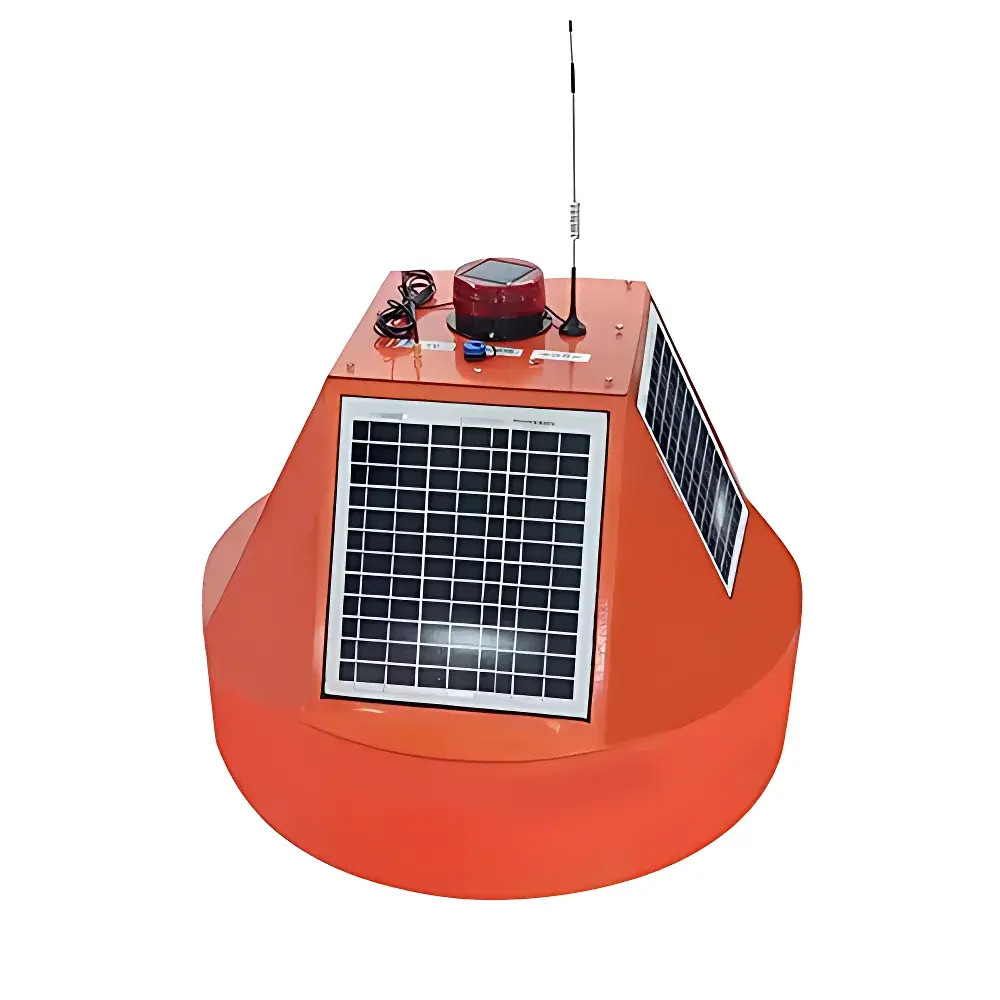
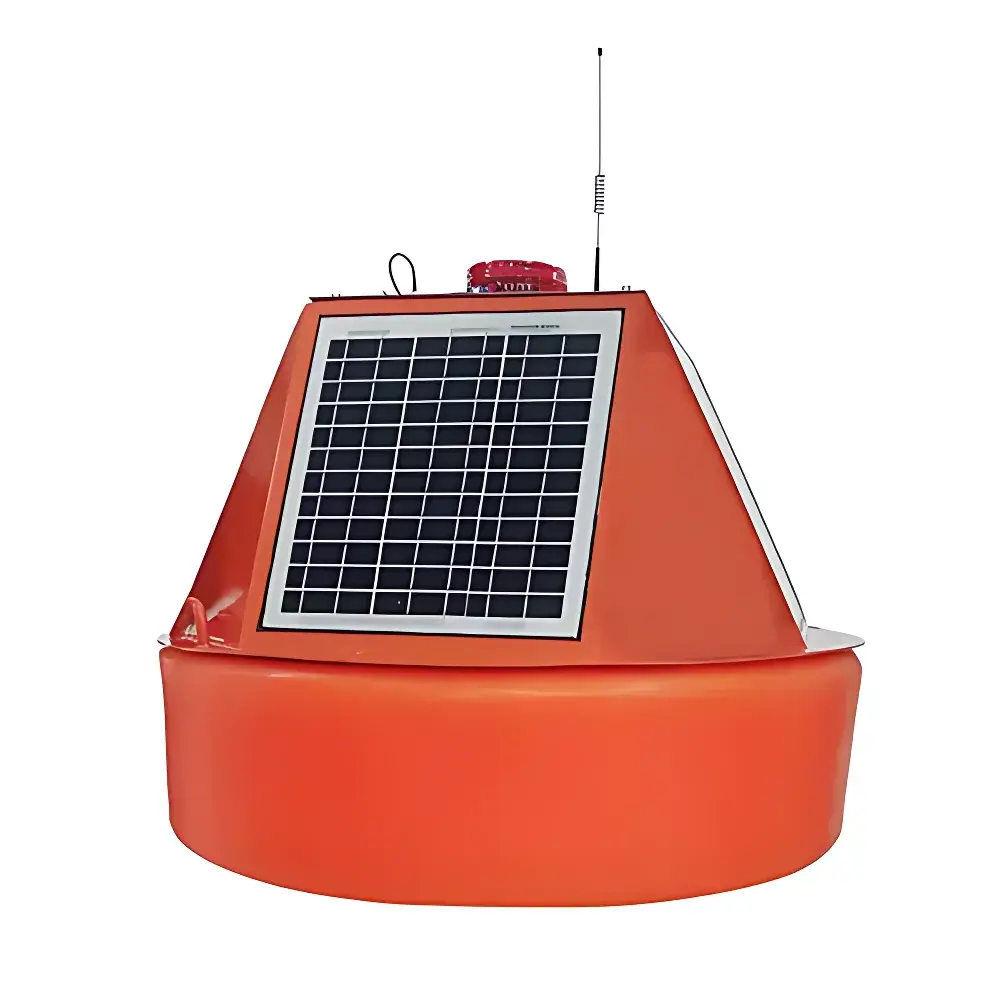
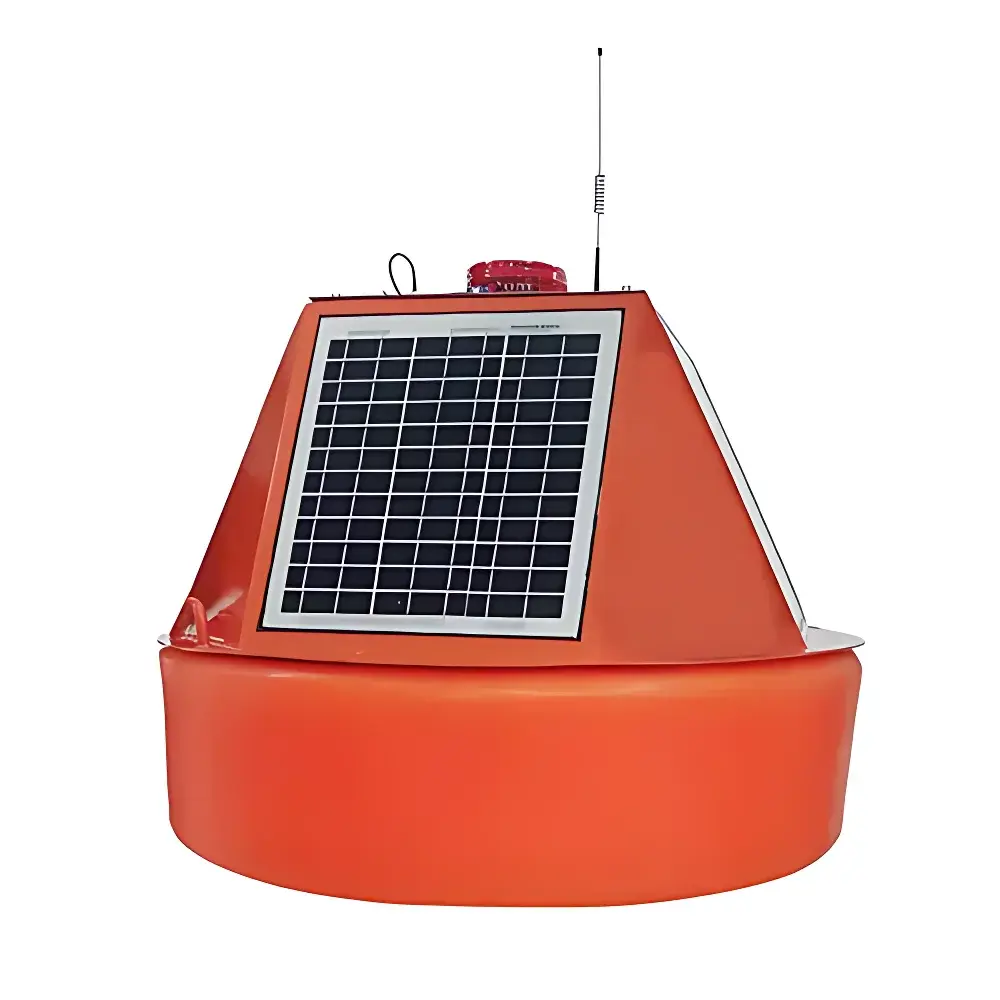
GENESITE GNST-227FP Environmental Water Quality Monitoring Buoy System
| Brand | GENESITE |
|---|---|
| Origin | Henan, China |
| Manufacturer Type | OEM/ODM Producer |
| Product Type | Domestic |
| Model | GNST-227FP |
| Instrument Category | Online Real-time Monitoring System |
| Operating Temperature Range | 0–50 °C |
| pH Range | 0–14 pH |
| Dissolved Oxygen (DO) Range | 0–20 mg/L |
| Conductivity Ranges | 0–5000 µS/cm and 0–200 mS/cm |
| Turbidity Ranges | 0–100 NTU and 0–1000 NTU |
| Power Supply | 12 VDC Li-ion battery (60 Ah), 12 V/80 W solar panel |
| Buoy Dimensions | 550 mm × 550 mm × 1200 mm |
| Weight | 20 kg |
| Buoyancy Capacity | 40 L |
| Peak Power Consumption | 10 W |
| Sensor Power Consumption | 0.2 W per unit |
| Communication Interface | RS-485 (Modbus RTU protocol) |
| Wireless Transmission | Cellular (LTE-M/NB-IoT) + optional LoRaWAN |
| Video Module | 1080P IP camera with 355° pan-tilt rotation |
| GPS Positioning | Integrated |
| Enclosure Material | SUS304 stainless steel filtration housing |
| Environmental Protection | IP68-rated sensor housing, marine-grade corrosion resistance |
| Relay Outputs | 8 independent programmable relays |
| Remote Control Capability | Sensor activation/deactivation, camera control, scheduled cycling, firmware OTA updates |
| Cloud Platform | Web-based dashboard with multi-user role management |
| Mobile Access | iOS/Android native app with real-time alerts and historical trend visualization |
| Battery Autonomy | ≥15 days under intermittent operation during overcast/rainy conditions |
| Compliance | Designed to meet ISO 5667-16 (water quality sampling—field instrumentation), ASTM D888 (dissolved oxygen measurement), and IEC 60529 (IP rating) standards |
Overview
The GENESITE GNST-227FP Environmental Water Quality Monitoring Buoy System is an integrated, solar-powered, autonomous field platform engineered for long-term, unattended deployment in open water bodies—including rivers, lakes, reservoirs, aquaculture ponds, irrigation canals, and wastewater outfalls. Built upon a robust marine-grade buoy architecture, the system employs multi-sensor fusion to concurrently acquire high-fidelity measurements of five core water quality parameters—pH, dissolved oxygen (DO), electrical conductivity (EC), turbidity, and temperature—alongside optional extended analytes such as ORP, ammonia nitrogen, chlorophyll-a, phycocyanin, CODeq, free chlorine, and chloride ion. Data acquisition follows the Modbus RTU protocol over RS-485, ensuring deterministic timing and noise immunity in electrically noisy environments. All sensor readings are time-stamped, validated, and transmitted via cellular (LTE-M or NB-IoT) or LoRaWAN networks to a secure, ISO 27001-aligned cloud infrastructure. The system’s design prioritizes metrological traceability, environmental resilience, and operational autonomy—enabling continuous monitoring under variable light, temperature, and hydrodynamic conditions without manual intervention.
Key Features
- Solar-rechargeable power architecture with 12 V/80 W photovoltaic panel and 60 Ah lithium iron phosphate battery, delivering ≥15 days of operational autonomy during prolonged low-light periods
- IP68-rated, SUS304 stainless steel sensor filtration housing resistant to biofouling, sediment abrasion, and chloride-induced corrosion
- Eight independently programmable industrial-grade relays supporting remote actuation of auxiliary devices (e.g., aerators, dosing pumps, warning beacons)
- 1080P HD IP camera with motorized 355° pan-tilt-zoom capability and onboard video buffering for event-triggered streaming
- Integrated GPS module with geotagging and geo-fencing support; LED status indicators synchronized to ambient light levels
- Firmware-over-the-air (FOTA) update capability, enabling remote configuration changes, calibration parameter loading, and diagnostic diagnostics
- Real-time battery voltage, solar input current, and internal temperature monitoring with predictive low-power state management
Sample Compatibility & Compliance
The GNST-227FP is designed for direct immersion in natural and anthropogenically impacted freshwater systems. Its sensor suite complies with established methodological frameworks for in-situ water quality assessment: DO sensors adhere to ASTM D888-22 principles for membrane-based amperometric detection; pH and ORP electrodes conform to ISO 10523 and ISO 7888 respectively; conductivity measurements follow ISO 7888-3 for two-electrode cell geometry and temperature compensation (±0.5 °C); turbidity sensors satisfy ISO 7027-1 requirements for near-infrared 90° scatter detection. The system’s data integrity architecture supports audit-ready logging aligned with GLP and GMP documentation practices, including immutable timestamping, user-access logs, and change history tracking. While not certified for regulatory submission under EPA Method 160.1 or ISO/IEC 17025, it meets technical prerequisites for screening-level compliance monitoring, trend analysis, and early-warning system integration.
Software & Data Management
Data from the GNST-227FP is ingested into a cloud-native platform compliant with GDPR and HIPAA-compliant data handling protocols (for non-healthcare deployments). The web dashboard provides configurable dashboards with real-time parameter overlays, multi-parameter correlation heatmaps, and automated threshold-based alerting (SMS/email/push). Historical datasets are stored in time-series optimized databases with retention policies adjustable by administrator. All raw sensor values undergo on-device validation—rejecting outliers beyond ±3σ from rolling 24-hour median—and applying NIST-traceable temperature compensation algorithms prior to transmission. The mobile application enables field technicians to view live camera feeds, manually trigger sensor readings, verify GPS position accuracy, and download CSV exports compliant with ASTM E2500-22 data packaging conventions. Role-based access control (RBAC) enforces separation of duties between operators, analysts, and administrators.
Applications
- Aquaculture management: Continuous DO and temperature profiling to prevent hypoxia events and optimize feeding cycles
- Municipal wastewater discharge monitoring: Regulatory pre-compliance verification at outfall points using pH, EC, turbidity, and residual chlorine
- Irrigation water quality assurance: Detection of salinity intrusion (via EC), suspended solids load (turbidity), and nutrient leaching proxies (ammonia, nitrate)
- Ecological baseline studies: Long-term trend analysis of trophic state indicators (chlorophyll-a, turbidity, DO saturation) in eutrophication-sensitive lakes
- Industrial effluent surveillance: Early detection of process upsets through multivariate anomaly detection across pH, ORP, and conductivity
- Emergency response deployment: Rapid buoy deployment following chemical spills or algal bloom reports, supported by geolocated video evidence
FAQ
What communication protocols does the GNST-227FP support for data transmission?
It natively supports LTE-M and NB-IoT cellular connectivity with fallback to LoRaWAN. All telemetry uses TLS 1.2 encryption and MQTT-SN for bandwidth-constrained networks.
Can the system operate in saline or brackish water?
Yes—the SUS304 housing and titanium-plated conductivity cells are rated for continuous exposure to waters with up to 35,500 mg/L chloride ion concentration.
Is calibration traceable to national standards?
Field calibration is performed using NIST-traceable buffer solutions (pH 4.01/7.00/10.01) and certified DO saturation standards; calibration certificates include uncertainty budgets per ISO/IEC 17025 Annex A.
How is sensor fouling mitigated in long-term deployments?
The system includes automatic wiper mechanisms for turbidity and optical sensors, plus periodic ultrasonic cleaning pulses for pH and ORP electrodes—configurable via the cloud interface.
Does the platform support third-party sensor integration?
Yes—through its open Modbus RTU register map and documented API endpoints, enabling integration with legacy or specialized sensors meeting RS-485 physical layer specifications.







