
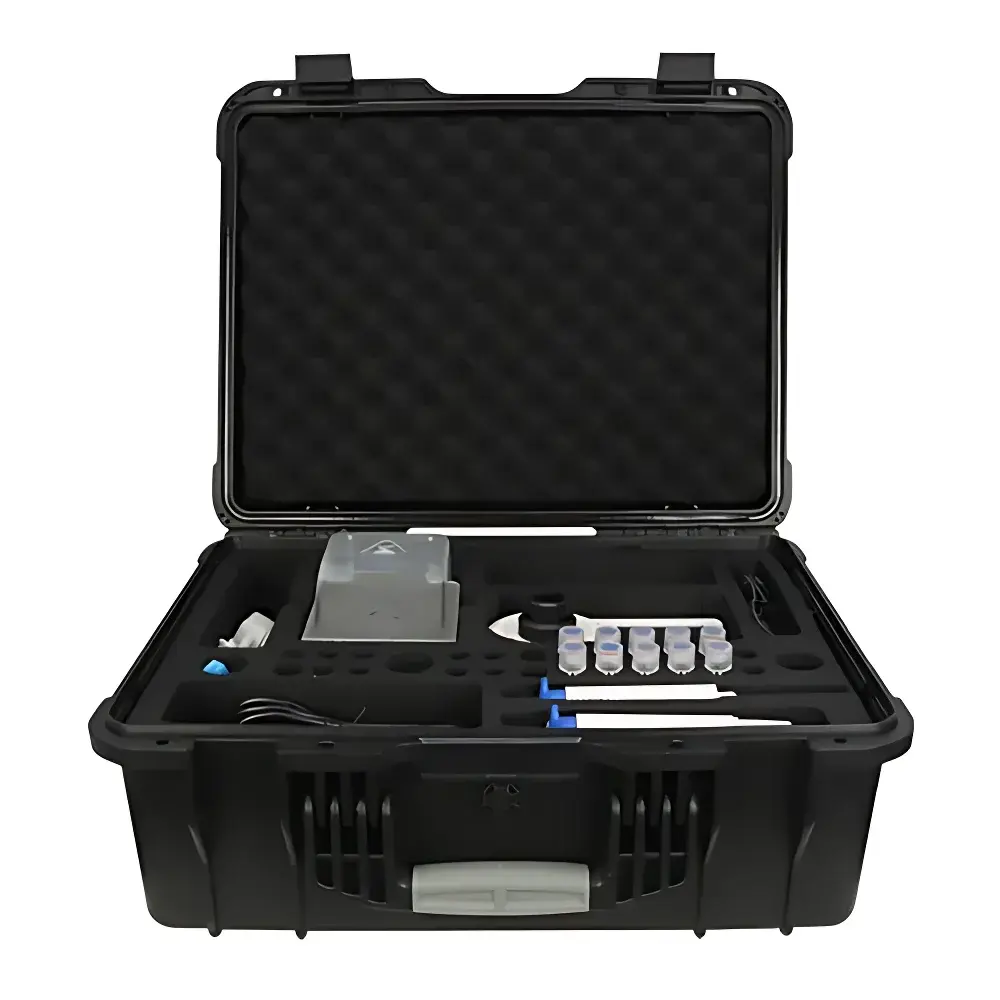
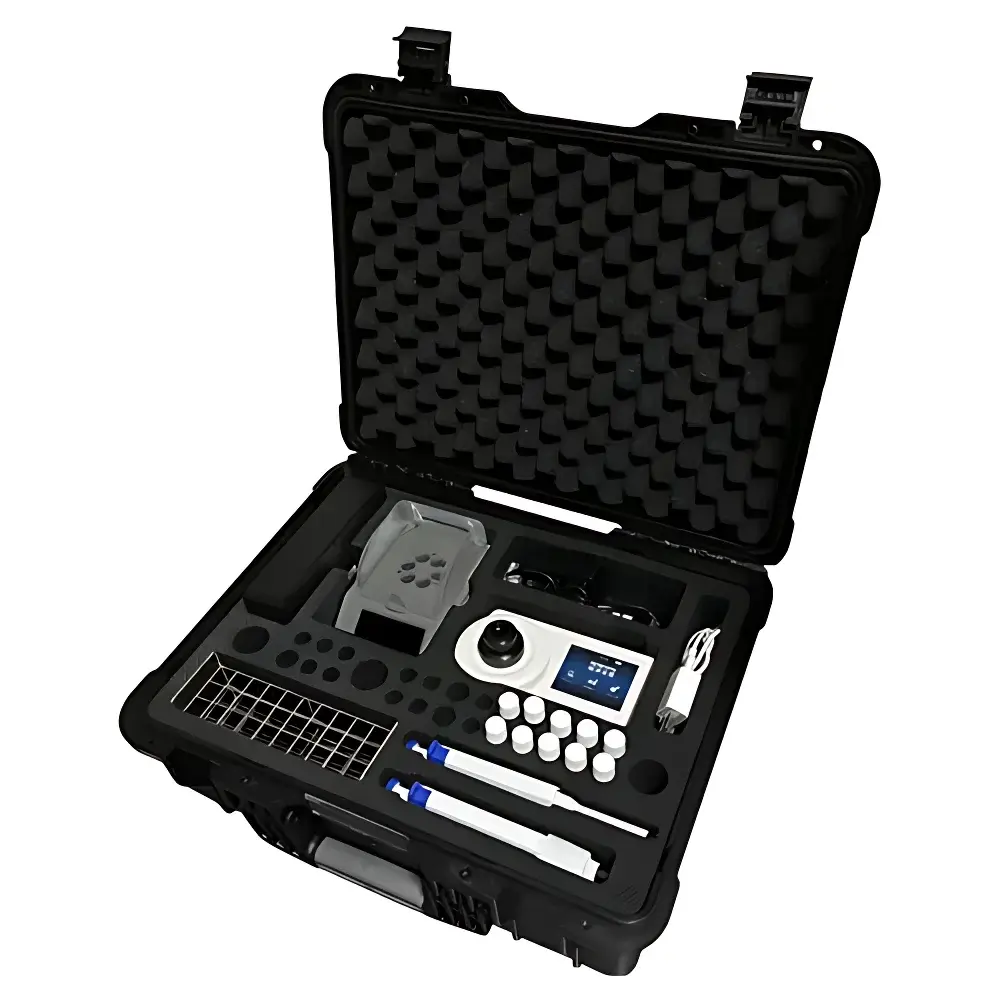
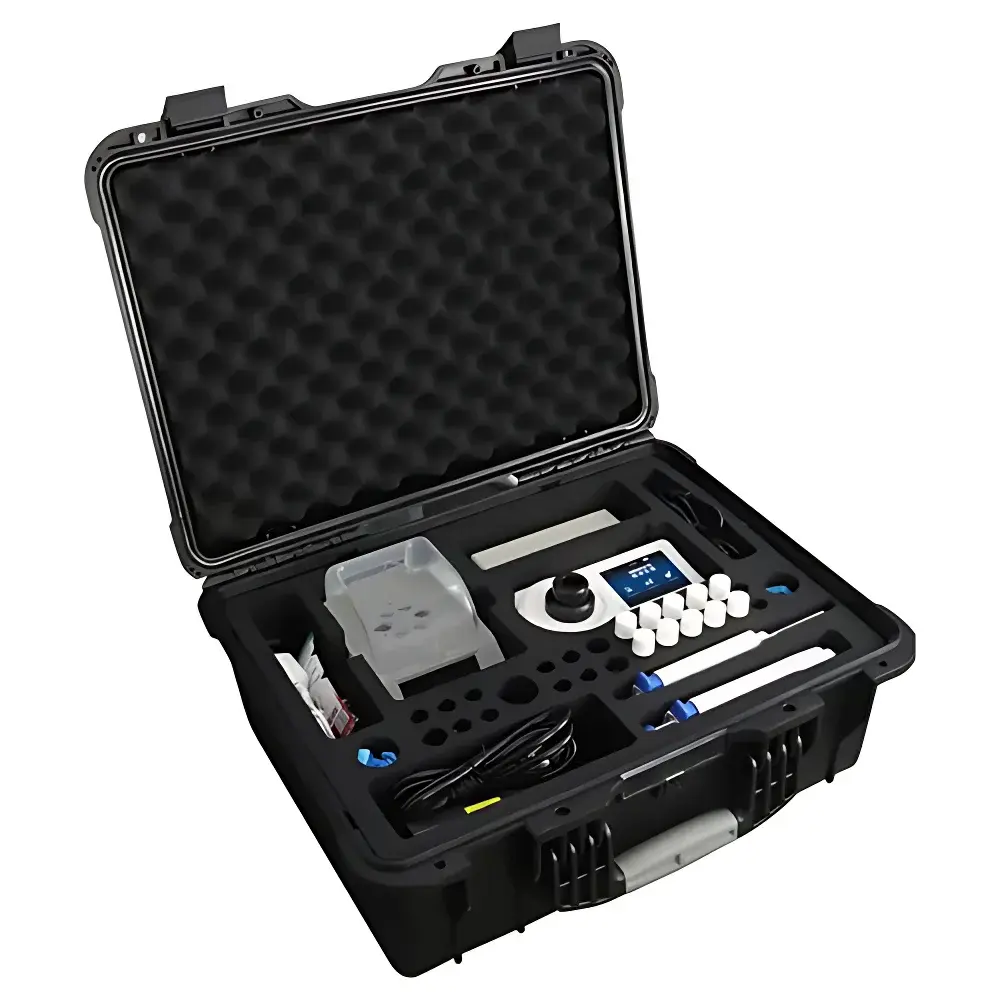
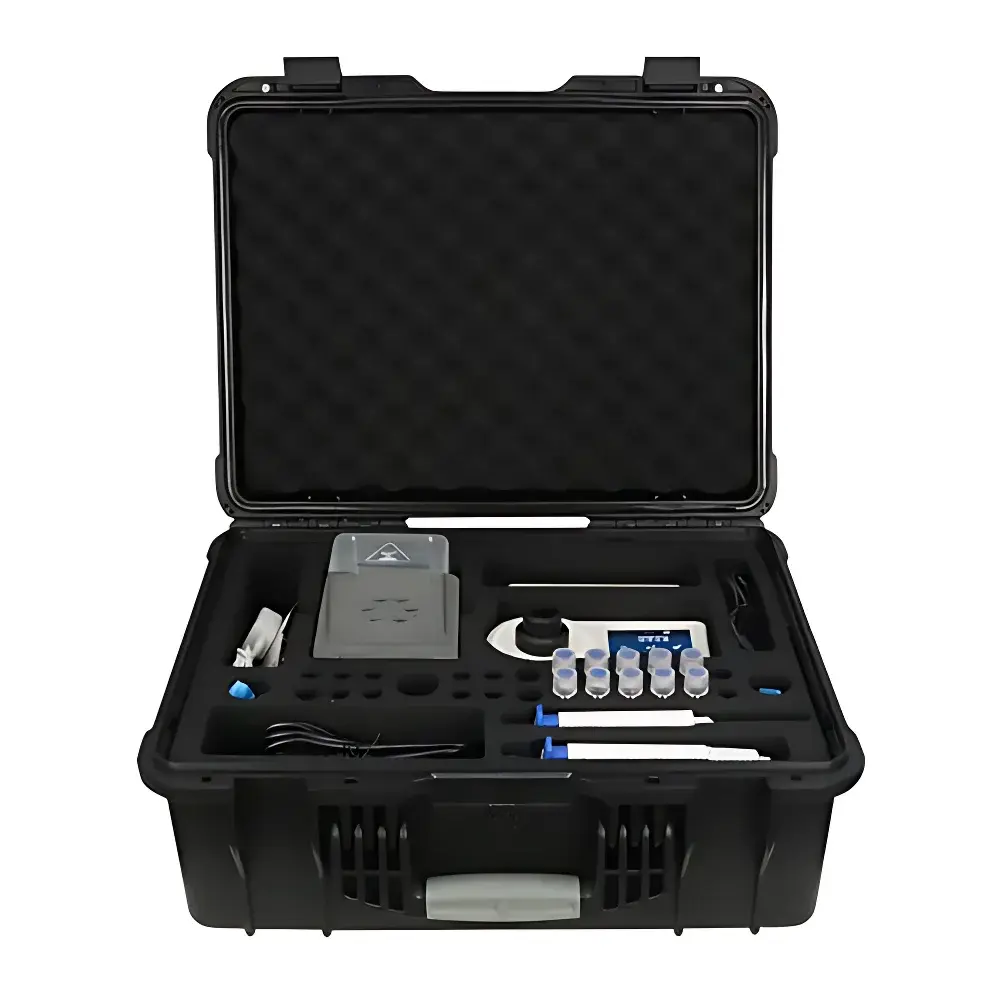
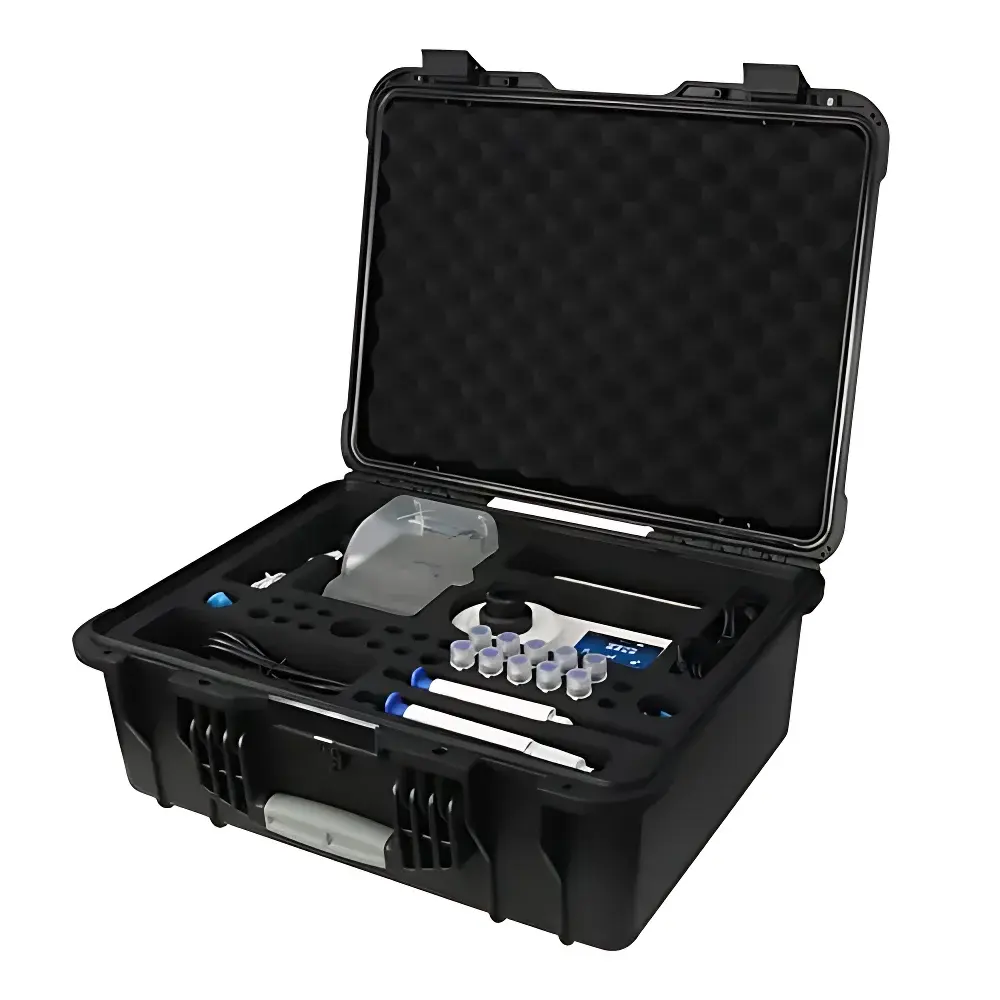
GENESITE SJ-D80 Portable Ammonia Nitrogen (NH₃-N) Analyzer
| Brand | GENESITE |
|---|---|
| Origin | Henan, China |
| Manufacturer Type | Direct Manufacturer |
| Country of Origin | China |
| Model | SJ-D80 NH₃-N |
| Instrument Type | Portable |
| Measurement Principle | Nessler Reagent Colorimetry (per HJ 535–2009) |
| Measurement Range | 0–150 mg/L NH₃-N |
| Accuracy | ±5% FS |
| Measurement Time | ≤10 min per sample |
| Sample Throughput | 1 sample per run |
| Display | 3.5″ TFT color touchscreen (320×480 px) |
| Optical Resolution | 0.001 Abs |
| Photometric Stability | ±0.003 Abs/30 min |
| Power Supply | 4 × AA alkaline batteries or 220 V AC adapter |
| Dimensions (L×W×H) | 192 × 96 × 103 mm |
| Weight | 0.5 kg (instrument only) |
| Data Export | SD card (FAT32 formatted, up to 32 GB) |
| Calibration Options | Built-in standard curve library + user-defined curve generation |
Overview
The GENESITE SJ-D80 Portable Ammonia Nitrogen (NH₃-N) Analyzer is a field-deployable photometric instrument engineered for rapid, on-site quantification of ammonia nitrogen in natural waters, wastewater effluents, and process streams. It operates on the Nessler reagent colorimetric principle—fully compliant with China’s national standard HJ 535–2009, “Water Quality – Determination of Ammonia Nitrogen – Nessler Reagent Spectrophotometric Method.” This method relies on the formation of a yellow-brown colloidal complex between ammonium ions and alkaline Nessler reagent (K₂HgI₄ in KOH), with absorbance measured at 420 nm. The SJ-D80 integrates a precision optical path, temperature-stabilized LED light source, and solid-state photodiode detector to deliver reproducible absorbance readings under variable ambient conditions. Designed for environmental monitoring workflows requiring immediate data capture—such as river basin surveys, drinking water source assessments, or municipal wastewater compliance checks—the analyzer eliminates the need for laboratory-based spectrophotometers or manual calibration curve preparation.
Key Features
- Compact, rugged housing (192 × 96 × 103 mm; 0.5 kg) optimized for field portability and single-operator deployment.
- Pre-calibrated, factory-validated Nessler reagent test tubes (16 mm OD) enabling direct sample introduction—no standard solution preparation or curve plotting required for routine analysis.
- 3.5-inch high-contrast TFT color touchscreen with intuitive Chinese-language GUI, supporting real-time absorbance display, result logging, and parameter configuration.
- Onboard calibration engine capable of generating linear or quadratic regression curves from user-entered standards; automatically applies slope/intercept corrections during measurement.
- Dual power architecture: operable via four standard AA alkaline batteries (≥8 hours continuous use) or universal 220 V AC input—ensuring operational continuity across remote sampling sites and fixed laboratories.
- SD card interface (FAT32, up to 32 GB) for bulk export of measurement records—including date/time stamp, sample ID, absorbance value, calculated concentration, and operator notes—in CSV format compatible with LIMS and QA/QC reporting systems.
Sample Compatibility & Compliance
The SJ-D80 accepts clarified or filtered aqueous samples with turbidity < 5 NTU and residual chlorine < 0.5 mg/L. Interference from heavy metals (e.g., Fe³⁺, Cu²⁺) and suspended solids is mitigated by built-in masking agents in the Nessler reagent formulation and optional sample pretreatment protocols outlined in HJ 535–2009. The analyzer meets functional equivalence requirements for field screening under ISO 15839:2003 (Water quality — Instruments for measuring in-situ concentrations of chemical parameters — Performance criteria and testing procedures) and supports GLP-aligned data integrity when used with audit-trail-enabled SD logging. While not certified to US EPA Method 350.1 or ASTM D1426, its methodology aligns with internationally recognized colorimetric principles for NH₃-N determination.
Software & Data Management
Instrument firmware supports timestamped data storage (up to 1,000 results internally), with full export capability via SD card. Each record includes: measurement ID, date/time (RTC-backed), operator code (user-definable), raw absorbance (A), calculated NH₃-N concentration (mg/L), and pass/fail flag against user-set action limits. No proprietary software installation is required for data retrieval—CSV files open natively in Excel, LibreOffice Calc, or statistical packages (e.g., R, Python pandas). For regulated environments, the device permits manual entry of analyst initials and site codes, fulfilling basic 21 CFR Part 11 documentation prerequisites when paired with controlled access to SD cards and procedural SOPs.
Applications
- Field verification of ammonia nitrogen levels in surface water bodies (rivers, lakes, reservoirs) during ecological monitoring campaigns.
- Routine effluent testing at municipal wastewater treatment plants prior to discharge authorization.
- Source water assessment for drinking water utilities—particularly in rural or decentralized supply systems lacking permanent lab infrastructure.
- Industrial process water monitoring in food processing, pharmaceutical manufacturing, and aquaculture facilities where NH₃-N toxicity thresholds must be maintained.
- Educational use in environmental science curricula for hands-on instruction in colorimetric analysis and water quality parameter correlation.
FAQ
Does the SJ-D80 require daily calibration with standard solutions?
No—factory-loaded calibration curves are pre-installed and validated. Users may perform optional verification using certified reference materials (e.g., NIST-traceable NH₃-N standards); recalibration is recommended only after reagent lot changes or quarterly for GLP compliance.
Can the instrument measure other parameters besides ammonia nitrogen?
The SJ-D80 is dedicated solely to NH₃-N quantification per HJ 535–2009. It does not support multi-parameter expansion or interchangeable optical modules.
What is the shelf life of the included Nessler reagent tubes?
Unopened reagent tubes retain stability for 18 months when stored at 2–8 °C in darkness. Once opened, use within 30 days under refrigerated, dry conditions.
Is the device suitable for saline or brackish water samples?
Yes—matrix tolerance has been verified for salinity up to 10 g/L NaCl. For higher salinity, dilution with deionized water and correction for dilution factor is required.
How is photometric drift compensated during extended field use?
The optical system incorporates automatic zero-tracking via dark-current compensation before each measurement cycle, minimizing baseline drift induced by battery voltage fluctuation or ambient thermal variation.
Related Products







