
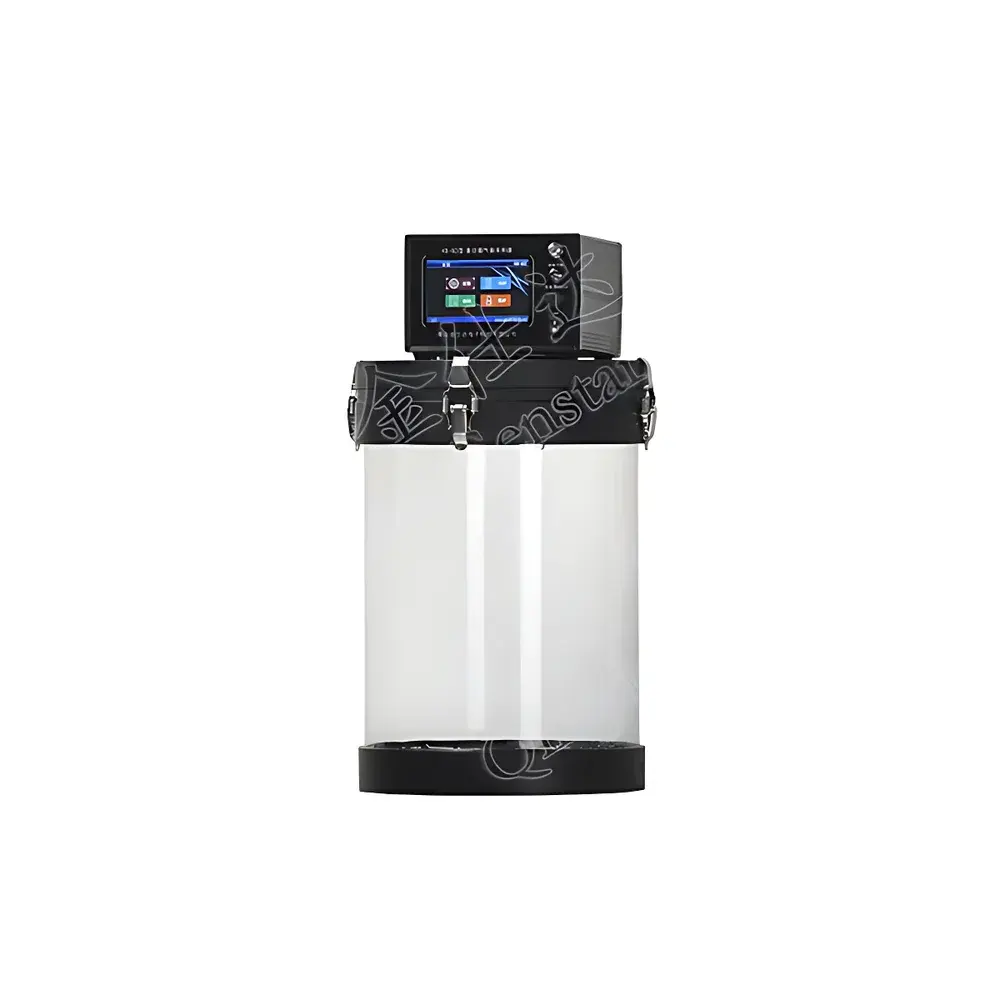
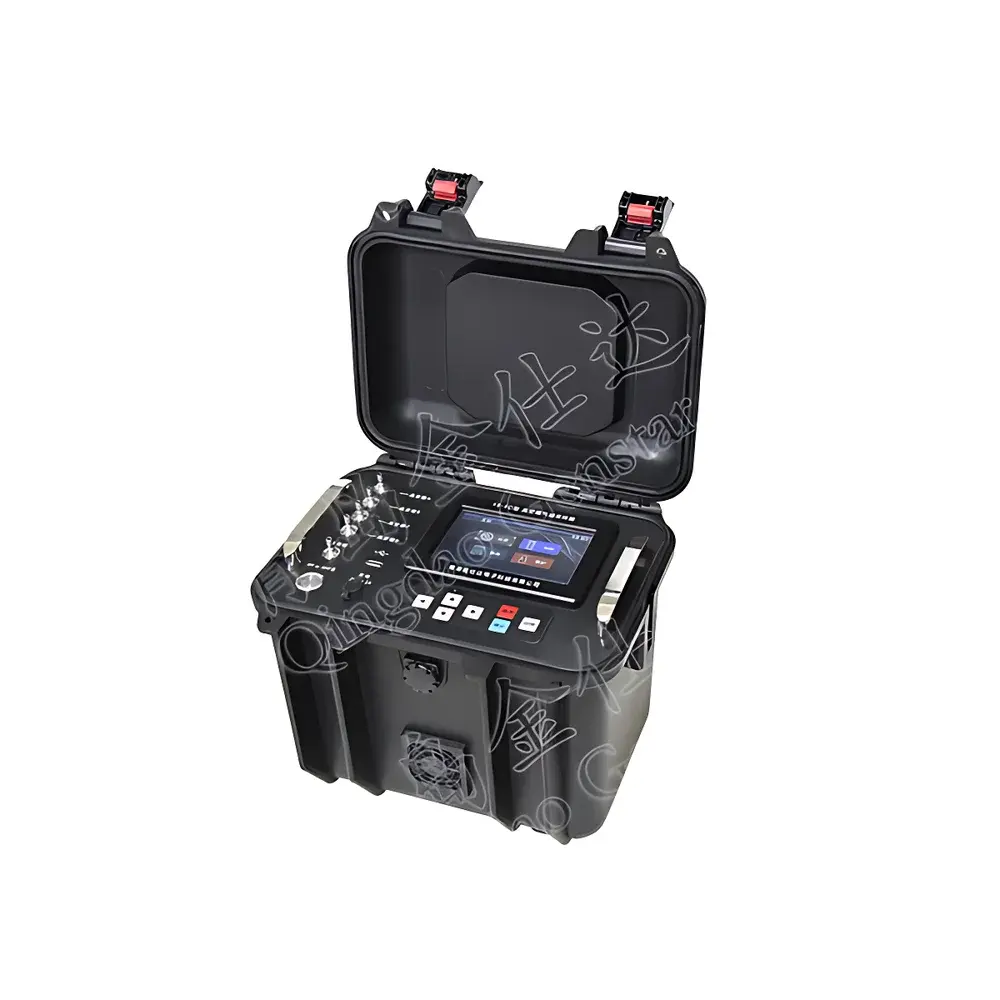
Genetec KB-6D Dual-Channel / Quad-Channel Vacuum Gas Sampling Bag System
| Brand | Genetec |
|---|---|
| Origin | Shandong, China |
| Manufacturer Type | Direct Manufacturer |
| Country of Origin | China |
| Model | KB-6D |
| Flow Rate Range | 1–6 L/min |
| Flow Resolution | 0.1 L/min |
| Flow Accuracy | ±5% |
| Response Time | 1 s |
| Instrument Type | Portable |
| Configuration | Integrated VOC Sampling System |
| Compliance Standards | HJ 732–2014, HJ 38–2017, HJ 604–2017 |
Overview
The Genetec KB-6D Dual-Channel / Quad-Channel Vacuum Gas Sampling Bag System is a field-deployable, portable sampling instrument engineered for quantitative collection of gaseous environmental samples—particularly volatile organic compounds (VOCs), non-methane hydrocarbons (NMHC), and total hydrocarbons—from fixed emission sources and ambient air. Unlike active sampling systems relying on continuous pump-driven aspiration, the KB-6D employs a controlled vacuum-assisted passive sampling methodology: a pre-evacuated gas-tight sampling bag is connected to the system, and sample introduction occurs via regulated negative pressure generated by an integrated diaphragm pump. This design minimizes flow-induced turbulence, prevents sample dilution with ambient air, and eliminates internal catalytic or adsorptive artifacts common in heated metal or silicone-based pathways. The system operates on the principle of volumetric displacement under calibrated suction, enabling reproducible, time-integrated grab sampling compliant with Chinese national standards HJ 732–2014 (gas bag sampling for stationary source VOC emissions), HJ 38–2017 (GC determination of total hydrocarbons, methane, and NMHC in stack gas), and HJ 604–2017 (direct-injection GC analysis of ambient air hydrocarbons).
Key Features
- Configurable dual-channel or quad-channel operation for parallel sampling across multiple points or redundancy verification
- Vacuum chamber-assisted positive-pressure purge and negative-pressure draw cycle—ensures complete residual gas displacement prior to sampling, eliminating carryover contamination
- Front-panel rotary valve manifold enabling one-handed execution of bag preconditioning, blank purging, and sample acquisition without tooling or tubing reconfiguration
- Adjustable flow rate control (1–6 L/min, resolution 0.1 L/min, accuracy ±5% FS) via precision needle valve and real-time digital feedback
- Chemically inert fluid path constructed entirely from PTFE-lined stainless steel, FEP tubing, and Kalrez® seals—validated for low-part-per-trillion (ppt) adsorption resistance against aromatic, chlorinated, and oxygenated VOCs
- Integrated heated sampling probe (optional, up to 120 °C) with front-mounted sintered PTFE filter (0.5 µm pore size) to suppress moisture condensation and particulate ingress during high-humidity or low-temperature sampling
- Rechargeable lithium-ion battery pack (14.8 V, 4.4 Ah) supporting ≥6 hours of continuous dual-channel operation; AC/DC universal input (100–240 V, 50/60 Hz) for lab or vehicle use
Sample Compatibility & Compliance
The KB-6D is validated for use with standard 1–10 L aluminum-laminated gas sampling bags (e.g., Tedlar®, FlexFoil®, or Nalophan®), compatible with subsequent analysis by gas chromatography (GC-FID, GC-MS), Fourier-transform infrared spectroscopy (FTIR), and photoionization detection (PID). Its inert flow path meets ASTM D5466–22 requirements for VOC stability in bag sampling and supports method traceability per ISO/IEC 17025:2017 for environmental testing laboratories. All operational parameters—including flow setpoint, duration, ambient temperature, and bag serial number—are manually logged in accordance with GLP documentation practices. While not intrinsically certified for hazardous area use (e.g., ATEX or IECEx), the unit may be deployed in Zone 2 environments when operated outside explosive atmospheres and paired with certified explosion-proof accessories.
Software & Data Management
The KB-6D operates as a standalone hardware platform without embedded firmware or wireless connectivity. All calibration, configuration, and operational records are maintained externally in laboratory information management systems (LIMS) or electronic lab notebooks (ELN) per ISO 17025 Clause 7.11 and FDA 21 CFR Part 11 Annex 11 principles. Flow calibration certificates (traceable to NIM, China) are supplied with each unit, including gravimetric verification data at three flow points (1, 3, and 6 L/min) under NTP conditions (25 °C, 101.3 kPa). Optional calibration adapters enable direct linkage to primary flow standards (e.g., Brooks 5850E or Mesa Labs DryCal DC Series).
Applications
- Compliance monitoring of VOC emissions from chemical manufacturing stacks, wastewater treatment off-gas, and coating application lines
- Field validation of continuous emission monitoring systems (CEMS) using reference method comparison per HJ 75–2017
- Odor investigation campaigns requiring speciated hydrocarbon profiling in landfill, composting, or rendering facilities
- Indoor air quality (IAQ) surveys targeting formaldehyde, benzene, toluene, ethylbenzene, and xylenes (BTEX)
- Educational laboratory training in EPA Method TO-14A / TO-15 equivalent sampling protocols
- Emergency response sampling during chemical spills or industrial accidents where rapid, artifact-free capture is critical
FAQ
What types of gas sampling bags are compatible with the KB-6D?
Standard 1–10 L laminated bags with polyethylene terephthalate (PET)/aluminum foil/modified polyethylene (mPE) construction, certified for VOC stability (e.g., SKC, Supelco, or Restek brands).
Does the KB-6D require periodic recalibration?
Yes—annual flow calibration is recommended; certificate includes NIM-traceable gravimetric verification at three flow rates.
Can the KB-6D be used for sulfur-containing compounds like H₂S or mercaptans?
Yes, provided the sampling bag material exhibits documented compatibility (e.g., fluorinated ethylene propylene, FEP-lined bags) and residence time remains ≤2 hours prior to analysis.
Is the heated sampling probe included as standard equipment?
No—the heated probe is an optional accessory; base configuration includes ambient-temperature PTFE probe with 0.5 µm sintered filter.
How is sample integrity verified post-collection?
By performing procedural blanks (evacuated bag drawn through system without exposure), trip blanks (bags shipped unopened), and duplicate sampling per HJ 732–2014 Section 7.4.
Related Products







