
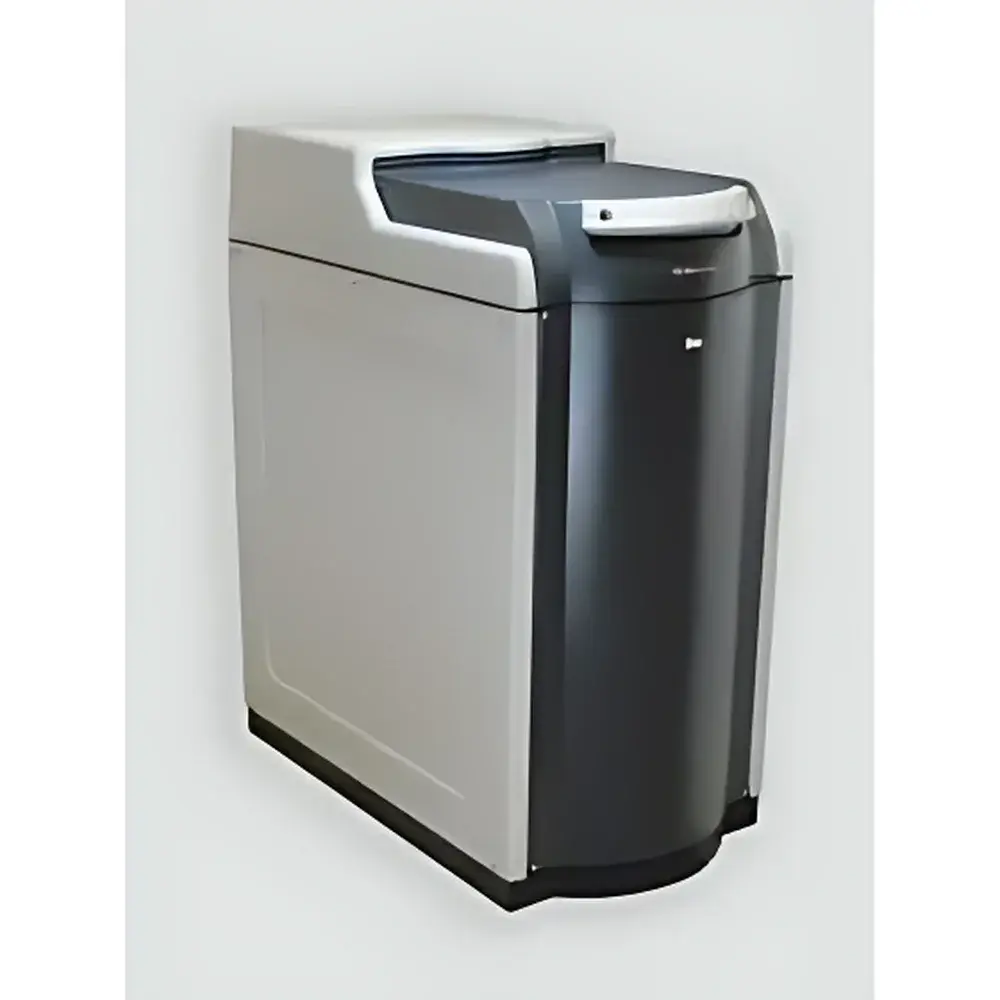
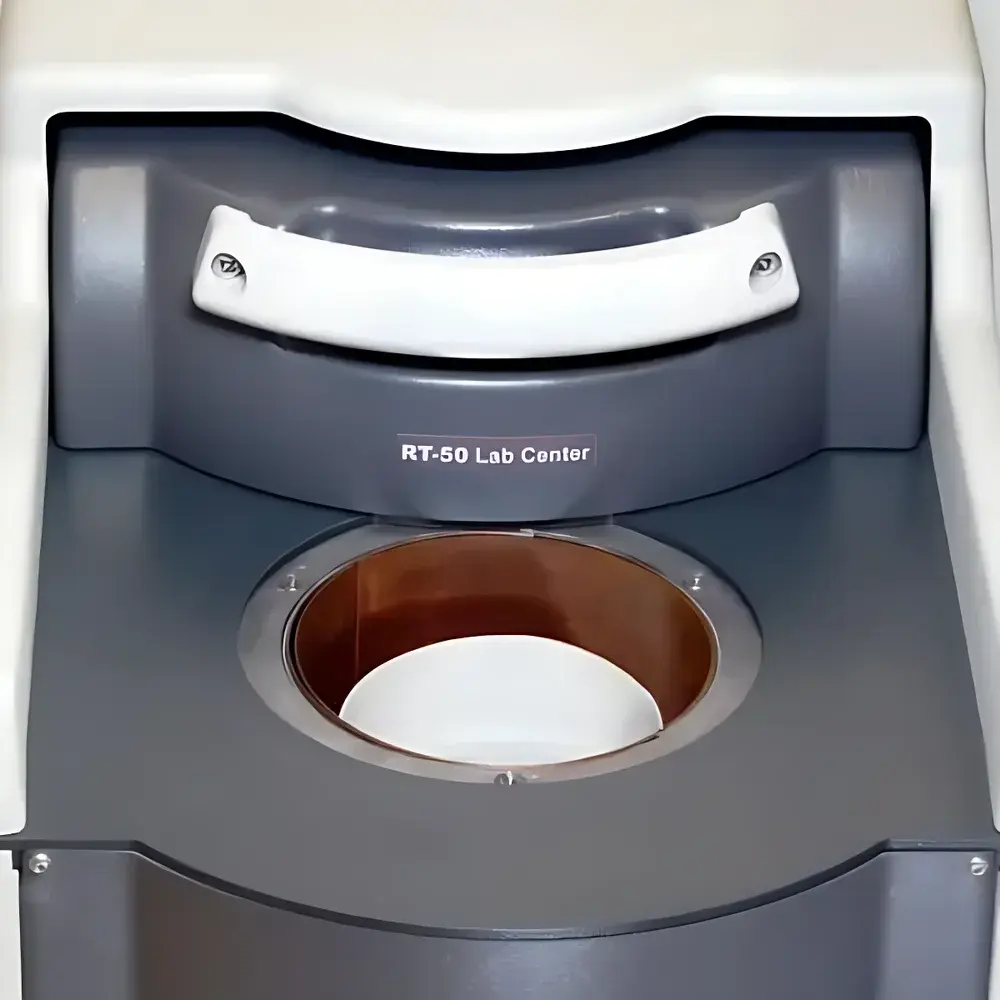
GEORADIS RT-50 A Fully Automated Low-Background Multichannel Gamma Spectrometer
| Brand | GEORADIS |
|---|---|
| Origin | Czech Republic |
| Model | RT-50 A |
| Instrument Type | Laboratory Gamma Spectrometer |
| Detector Type | NaI(Tl) Scintillation Crystal (76 mm × 76 mm, 0.35 L) |
| Measurement Range | 20 keV – 3.0 MeV |
| Energy Resolution | ≤7.5% FWHM at 662 keV (¹³⁷Cs) |
| Sensitivity | 0.02 Bq/g (for ⁶⁰Co) |
| Channel Count | 1024-channel MCA |
| Shielding | ≥9 cm lead equivalent (min. wall thickness 3.5 in), integrated sliding heavy-duty shielded lid |
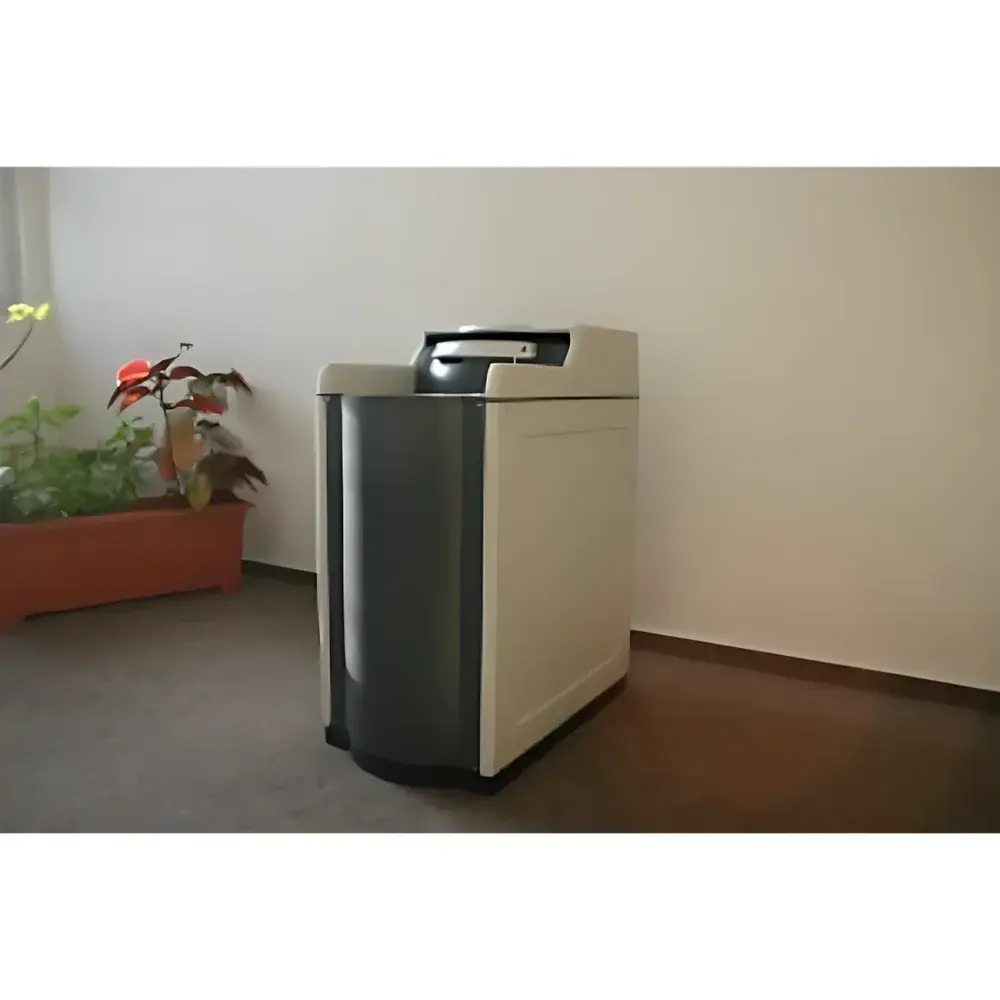
| Dimensions (H×W×D) | 770 × 360 × 620 mm |
| Weight | 410 kg (lead-shielded configuration: 580 kg) |
| Interface | USB 2.0 |
| Operating Temperature | 0–40 °C |
| Software Platform | LabCentre (Windows/Linux, FirebirdSQL 2.6+) |
Overview
The GEORADIS RT-50 A is a fully automated, low-background multichannel gamma spectrometer engineered for high-precision radionuclide quantification in solid environmental and industrial samples. It operates on the principle of scintillation spectroscopy: gamma photons interact with a thallium-doped sodium iodide [NaI(Tl)] crystal, generating light pulses proportional to incident photon energy; these are converted to electrical signals via a bialkali photomultiplier tube (PMT), digitized by a high-linearity 1024-channel analog-to-digital converter (ADC), and processed in real time for spectral deconvolution and activity calculation. The system integrates detector, high-voltage supply, pulse amplifier, and ADC into a single self-contained unit housed within a massive, lead-equivalent shielded cabinet (≥9 cm Pb). This architecture minimizes cosmic and terrestrial background interference—critical for achieving detection limits as low as 0.02 Bq/g for ⁶⁰Co in standardized geometries. Designed for routine laboratory deployment, the RT-50 A delivers complete gamma spectrum acquisition, energy calibration, peak identification, and quantitative isotopic analysis—including ⁴⁰K, ²³⁸U, ²³²Th, and anthropogenic nuclides—within ≤5 minutes per sample.
Key Features
- Integrated 76 mm × 76 mm NaI(Tl) scintillator (0.35 L volume) coupled to a fast-rise-time bialkali PMT (rise time < 0.5 µs), optimized for high count-rate stability and linearity.
- Self-contained 1024-channel multichannel analyzer (MCA) with on-board digital signal processing: real-time energy linearization, automatic dead-time correction (<0.25% error), and dual-buffered ADC (1.5 µs conversion time, 65535-bit internal resolution down-sampled).
- Robust mechanical shielding: floor-standing cabinet with ≥9 cm lead-equivalent walls and a motor-assisted sliding shielded lid—enabling rapid, reproducible sample loading without compromising background integrity.
- USB 2.0 interface for deterministic communication with host PC; no external power supplies or auxiliary modules required for core operation.
- Calibration traceability: factory-supplied ¹³⁷Cs reference source (9 kBq) enables two-point gain/offset stabilization; channel accuracy maintained within ±0.1 channel at 662 keV (typical peak position: channel 220).
- Thermal and electronic stability: active temperature compensation and programmable HV control ensure spectral fidelity across ambient operating range (0–40 °C).
Sample Compatibility & Compliance
The RT-50 A accepts solid samples in standardized geometries: cylindrical aluminum sample holders (150 mm diameter × 150 mm height, 1.5 mm wall thickness) or Marinelli beakers (up to 700 mL volume) for bulk environmental matrices. It complies with ISO 11929:2019 (evaluation of measurement uncertainty in ionizing radiation measurements) and supports method validation per ASTM D3648-22 (standard test methods for radioactivity in water) and IAEA Technical Reports Series No. 295 (gamma spectrometry for environmental monitoring). Its design facilitates GLP-compliant operation: full audit trail logging (sample ID, operator, timestamp, acquisition parameters, raw spectrum, processed results), electronic signature support, and secure data archiving aligned with FDA 21 CFR Part 11 requirements when deployed with validated LabCentre configurations.
Software & Data Management
LabCentre software—cross-platform (Windows 7–11, Linux kernel ≥2.6), built on FirebirdSQL 2.6+—provides full instrument control and quantitative analysis. It implements three operational modes: total-count screening, background-subtracted gross activity, and multi-nuclide least-squares fitting using user-defined or ISO-certified libraries (e.g., IAEA NuDat 3.0). All spectra and metadata are stored in an open, relational SQL database schema—enabling direct query integration with LIMS or enterprise analytics platforms. Calibration curves are generated from certified reference materials (CRM) with uncertainty propagation per GUM (JCGM 100:2018). Raw spectral files (.SPE) conform to the Canberra Interfile standard, ensuring interoperability with third-party tools (e.g., Genie 2000, GammaVision).
Applications
- Rapid radiological screening of scrap metal, slag, and dust in steel recycling and foundry operations—detecting orphan sources or NORM contamination prior to melting.
- Quantitative determination of natural radionuclides (⁴⁰K, ²²⁶Ra, ²³²Th) in building materials, geological cores, and soil samples per EU BSS Directive 2013/59/Euratom.
- Food and feed safety monitoring: verification of ¹³⁷Cs and ¹³⁴Cs activity post-nuclear incidents or near nuclear facilities, compliant with EC Regulation No. 733/2008.
- Environmental baseline studies: long-term tracking of airborne particulate deposition, sediment core profiling, and groundwater solid-phase extraction residues.
- Regulatory compliance testing for nuclear decommissioning projects—measuring residual surface contamination on concrete, steel, and insulation materials.
FAQ
What sample preparation is required for optimal performance?
Solid samples must be homogenized, dried to constant mass, and packed into standardized geometry containers (aluminum cylinder or Marinelli beaker) to ensure reproducible counting efficiency. No chemical digestion or encapsulation is needed.
Does the system support automated batch processing?
Yes—LabCentre allows queued acquisition of up to 99 samples with auto-start triggers, sequential logging, and configurable pass/fail thresholds based on user-defined activity limits.
How is energy calibration maintained over time?
The system performs automatic two-point stabilization using internal reference peaks (e.g., ⁶⁰Co at 1173/1332 keV or ¹³⁷Cs at 662 keV); drift correction is applied in real time during acquisition.
Can the RT-50 A be used for liquid samples?
Not directly—the instrument is configured exclusively for solid matrices. Liquid samples require evaporation to dry residue followed by packing into approved geometry holders.
Is remote monitoring or network integration supported?
LabCentre supports TCP/IP-based status polling and spectrum export via RESTful API endpoints; full remote desktop control requires local network authentication and firewall configuration.
Related Products







