
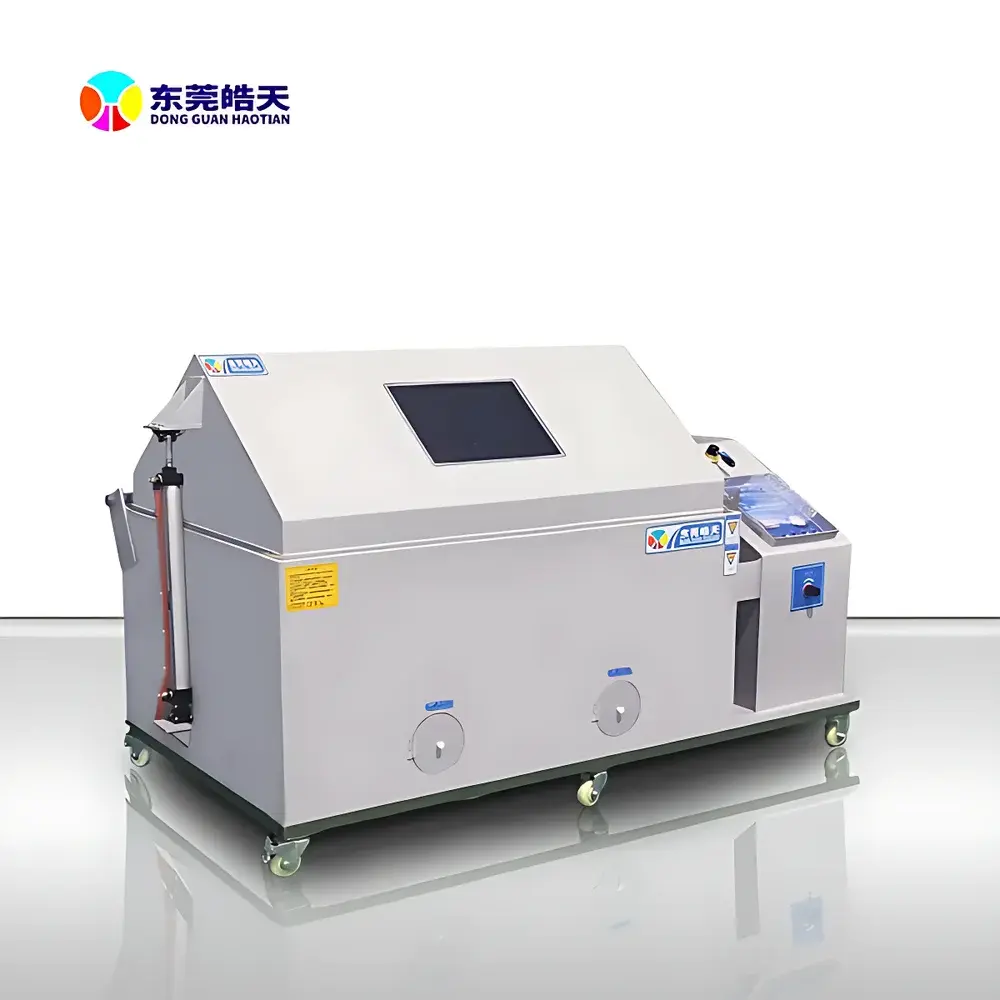
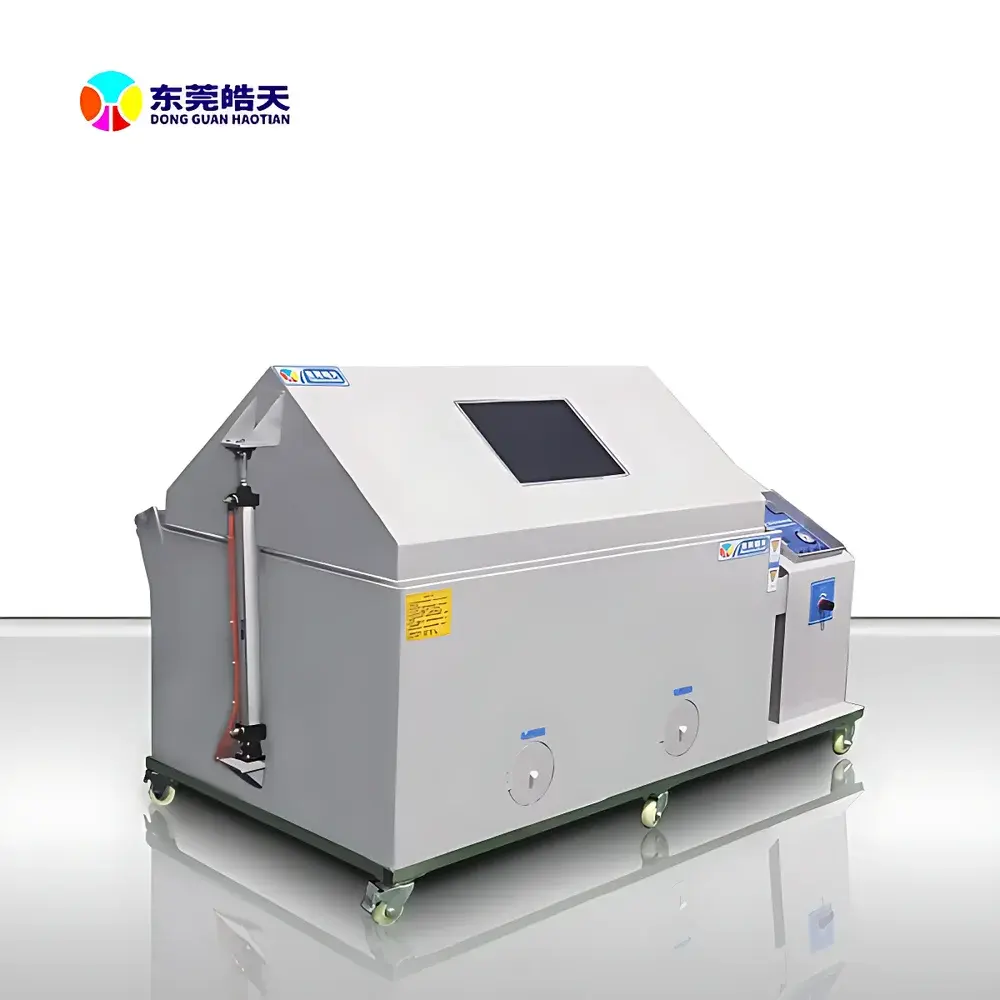
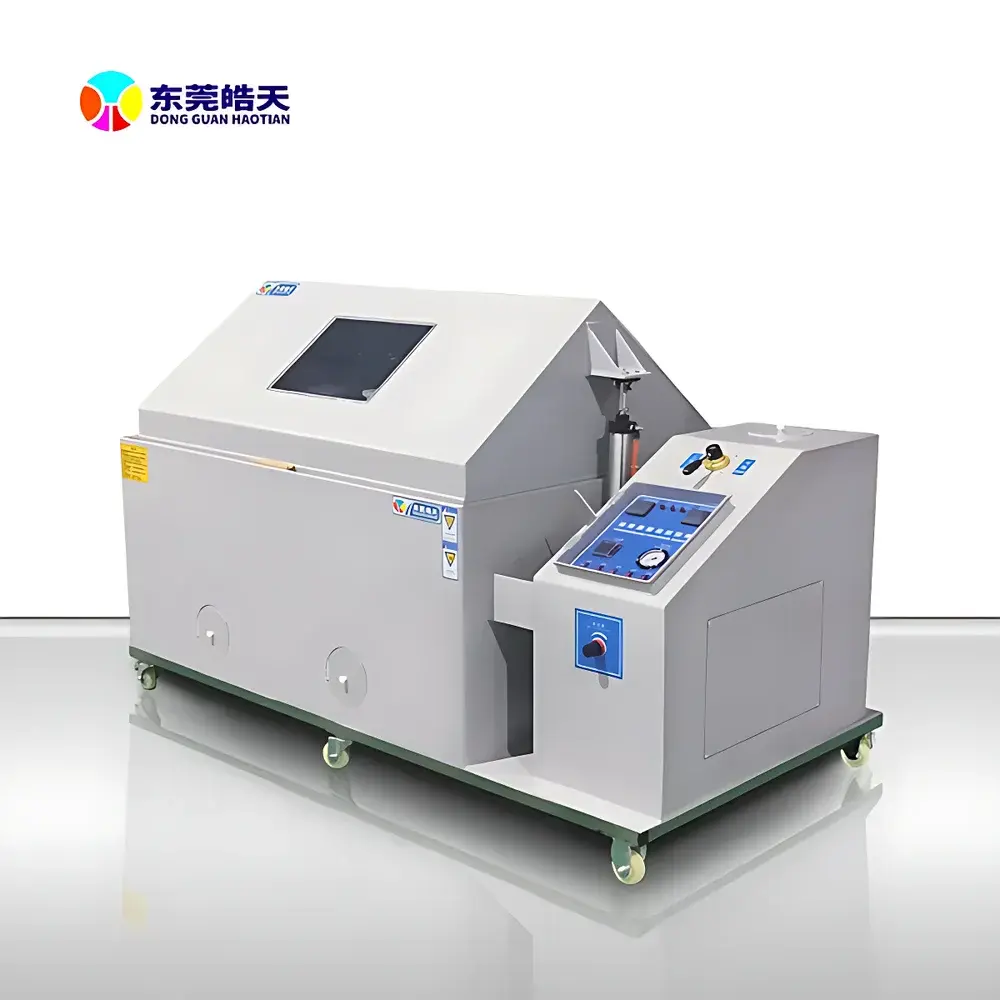
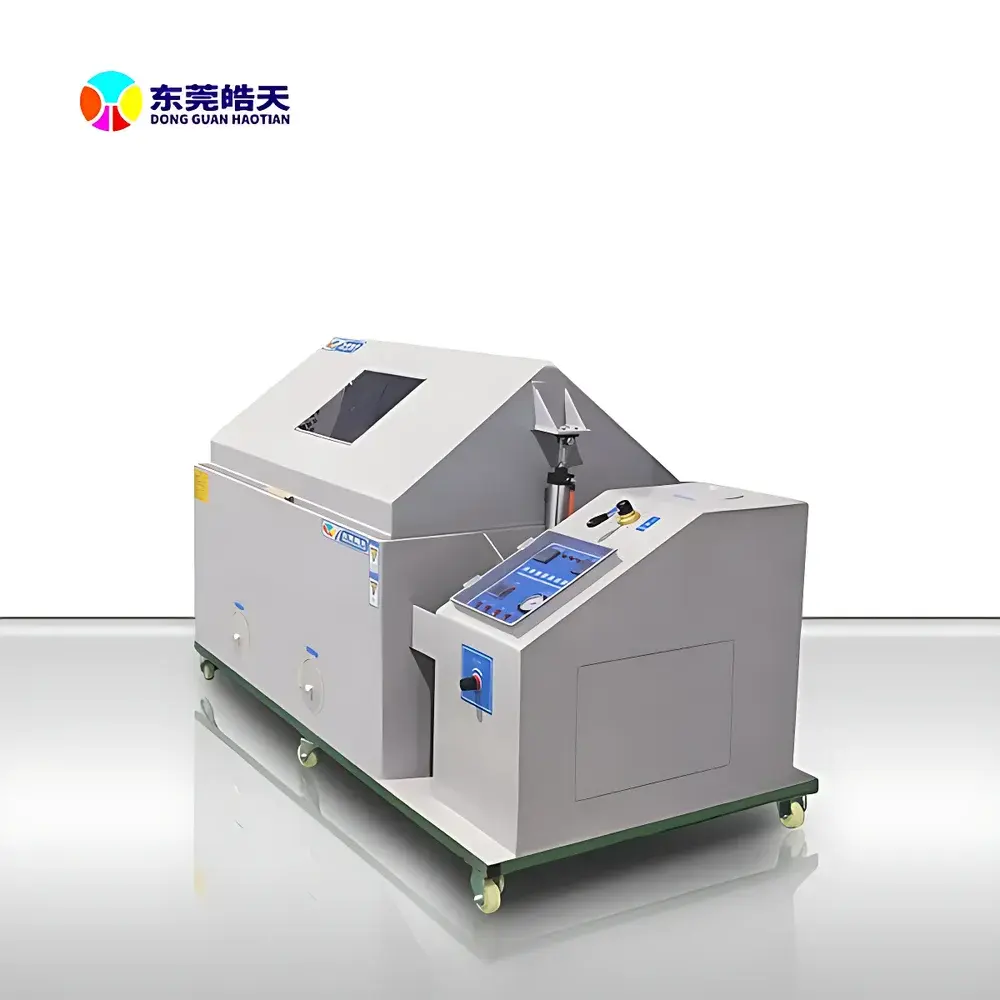
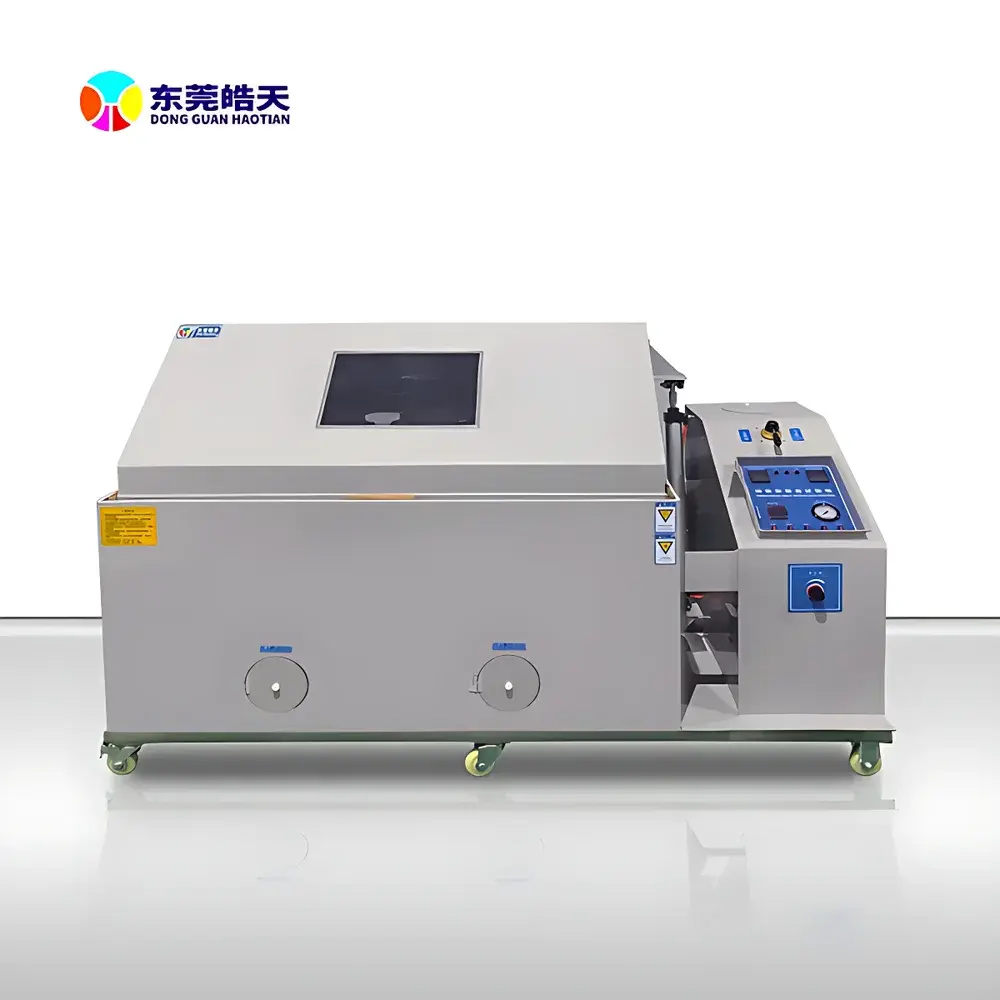
GHT HT-120A-PF Acetic Acid Salt Spray (ASS) Test Chamber
| Brand | GHT |
|---|---|
| Origin | Guangdong, China |
| Manufacturer Type | Direct Manufacturer |
| Model | HT-120A-PF |
| Spray Method | Continuous Air-Atomized Spray |
| Spray Rate | 1.0–2.0 mL / 80 cm² / hr |
| Nozzle Pressure | 0.7–1.0 kg/cm² |
| Fog Removal Method | Positive-Air-Pressure Exhaust |
| Salt Fog Deposition Rate | 1.0–2.0 mL / 80 cm² / hr |
| Temperature Range | Ambient to 63°C |
| Saturation Chamber Temperature (NSS/ACSS) | 47 ± 0.1°C |
| Saturation Chamber Temperature (CASS) | 63 ± 1°C |
| Test Chamber Temperature (NSS/ACSS) | 35 ± 0.1°C |
| Test Chamber Temperature (CASS) | 50 ± 1°C |
| pH of Salt Solution (NSS/ACSS) | 6.5–7.2 |
| pH of Salt Solution (CASS) | 3.0–3.2 |
| Dry Cycle Temperature | 60 ± 2°C, RH ≤ 30% |
| Soak Cycle Temperatures & Humidities | 23 ± 2°C / 50 ± 5% RH |
Overview
The GHT HT-120A-PF Acetic Acid Salt Spray (ASS) Test Chamber is an engineered environmental test system designed to evaluate the corrosion resistance of materials and surface coatings under accelerated, multi-phase corrosive conditions. It implements the standardized acetic acid salt spray (ASS) method—defined in ISO 9227, ASTM B117 (with ASS modification), and JIS Z2371—as a controlled variant of neutral salt spray (NSS) testing, where glacial acetic acid is added to adjust solution pH to 3.0–3.2. This low-pH environment intensifies electrochemical corrosion kinetics, particularly for copper-accelerated acetate (CASS) and ASS protocols, enabling rapid assessment of coating integrity, galvanic stability, and substrate passivation behavior. The chamber supports full-cycle composite testing sequences: salt fog exposure → hot-air drying → high-humidity soak—mimicking real-world cyclic degradation mechanisms encountered in marine, automotive, and industrial outdoor service environments.
Key Features
- Triple-zone thermal control architecture: independent regulation of test chamber (ambient–63°C), saturated air chamber (up to 63°C ±1°C), and compressed air pre-conditioning path.
- Air-atomized continuous spray system with precision-adjustable nozzle pressure (0.7–1.0 kg/cm²) and calibrated deposition rate (1.0–2.0 mL/80 cm²/hr), verified per ISO 9227 collection protocol over ≥16 hr.
- Integrated positive-pressure fog exhaust mechanism using filtered, temperature-matched chamber air—eliminating condensate re-deposition and ensuring uniform chamber ventilation without external ducting.
- Corrosion-resistant interior construction: PP (polypropylene) chamber body with PVC-coated insulation and titanium-reinforced heating elements to withstand prolonged acidic aerosol exposure.
- Dual-mode operation: programmable cycling between ASS, NSS, CASS, and SWAAT protocols via front-panel interface with real-time logging of chamber temperature, saturation temperature, and elapsed cycle time.
- Compliance-ready design: built-in calibration traceability support, temperature uniformity mapping capability (±1.0°C deviation across working volume), and stable pH-controlled solution delivery (pH 3.0–3.2 for ASS/CASS; 6.5–7.2 for NSS).
Sample Compatibility & Compliance
The HT-120A-PF accommodates flat, vertically oriented specimens up to 120 L internal volume, supporting standardized sample racks per ISO 9227 Annex A. It is validated for testing metallic substrates (carbon steel, stainless steels, aluminum alloys, copper, zinc-coated steels), organic coatings (epoxy, polyurethane, acrylic, electrodeposited primers), conversion coatings (chromate, phosphate), anodized aluminum, and non-metallic systems including ABS, PC, PVC, FRP, elastomers, and ceramic substrates. All operational parameters align with internationally recognized corrosion testing standards: ISO 9227 (ASS, NSS, CASS), ASTM B117 (modified for ASS), JIS Z2371, GB/T 10587, and DIN 50021. The system supports GLP-compliant validation documentation packages—including IQ/OQ protocols—and interfaces with external data loggers for FDA 21 CFR Part 11–aligned audit trails when integrated into regulated QC laboratories.
Software & Data Management
While the HT-120A-PF operates via intuitive push-button controller with digital LED display, it includes RS-485 serial output for integration with third-party SCADA or LIMS platforms. Temperature, cycle phase status, and runtime are logged at user-defined intervals (1–60 min). Optional PC-based software (sold separately) enables automated sequence programming, remote monitoring, PDF report generation (including deposition rate verification charts and temperature deviation histograms), and CSV export for statistical process control (SPC) analysis. All firmware adheres to IEC 61508 functional safety principles for embedded control logic, and calibration constants are password-protected to maintain measurement integrity during routine maintenance.
Applications
This chamber serves critical roles in quality assurance and R&D across multiple sectors: evaluating paint adhesion and blistering resistance on automotive body panels; validating corrosion protection of fasteners and chassis components per OEM specifications (e.g., Ford WSK-M2G215-A2, GMW14872); screening printed circuit board conformal coatings under IPC-TM-650 2.6.17; assessing marine-grade stainless steel passivation layers; qualifying aerospace sealants and composite matrix resins per MIL-STD-810H Method 509.11; and supporting academic research on electrochemical degradation mechanisms in chloride-acetate electrolytes. Its reproducible ASS protocol delivers statistically significant failure mode differentiation within 48–96 hr—significantly reducing time-to-failure vs. natural exposure studies.
FAQ
What standards does the HT-120A-PF comply with for ASS testing?
It meets ISO 9227:2022 Clause 6.2 (Acetic Acid Salt Spray), ASTM B117 Annex A1 (modified pH control), and JIS Z2371 Section 4.3.
Is external compressed air required?
Yes—a clean, oil-free, dry air supply at 2–6 bar is mandatory for both spray atomization and saturated air chamber pressurization.
Can the unit perform fully automated multi-cycle tests?
Yes; users can program up to 99 sequential phases (fog/dry/soak) with independent setpoints for temperature, duration, and relative humidity (where applicable).
How is salt fog deposition rate verified?
Via four standardized funnels placed per ISO 9227 Fig. 2 layout; collected solution volume is measured gravimetrically or volumetrically after ≥16 hr of continuous operation.
Does the system include pH monitoring hardware?
No—pH must be verified externally using calibrated benchtop meters before solution loading; the chamber maintains solution stability but does not auto-correct pH drift.



