
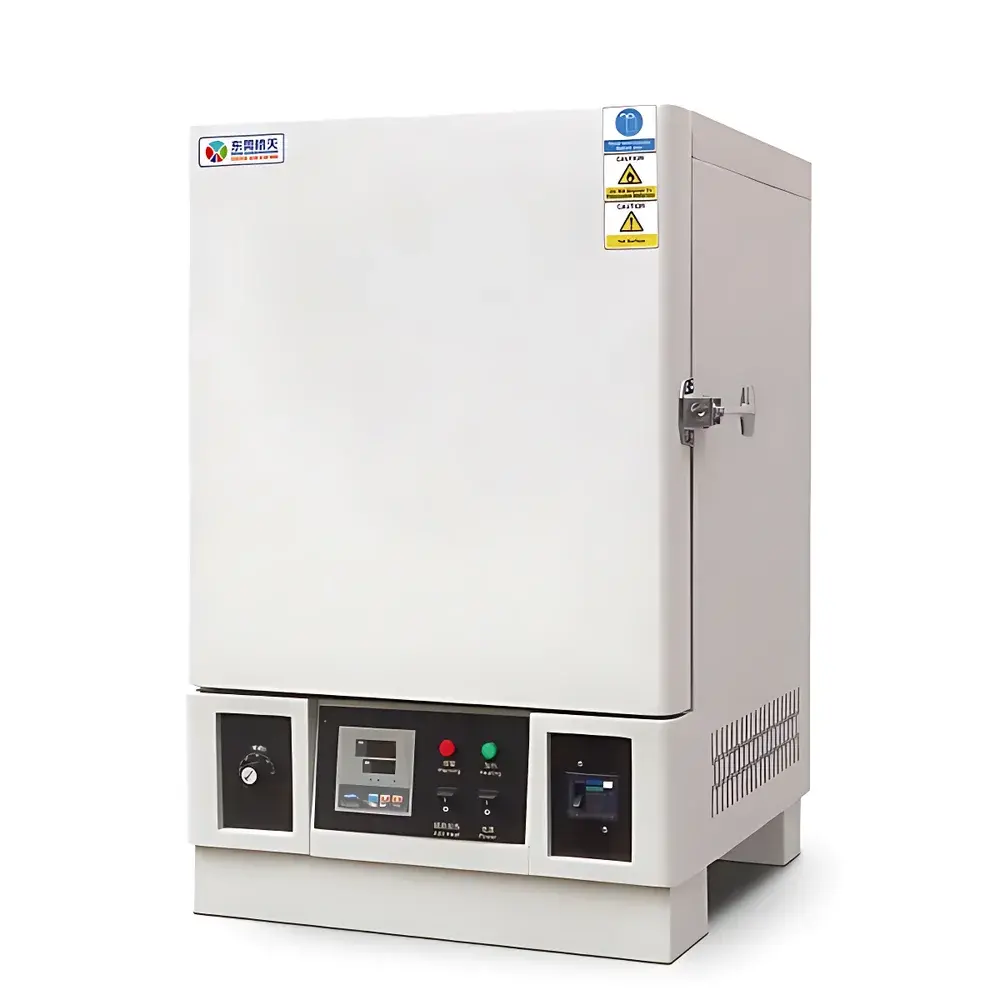
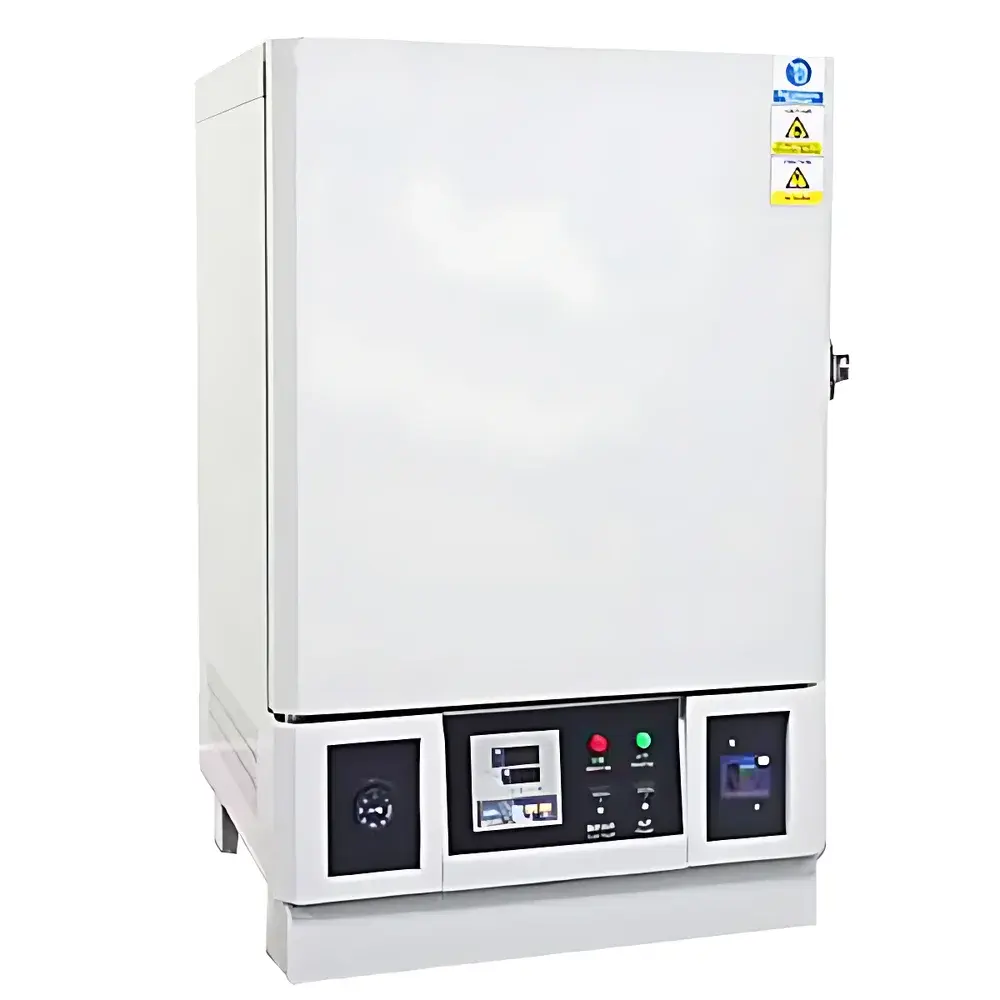
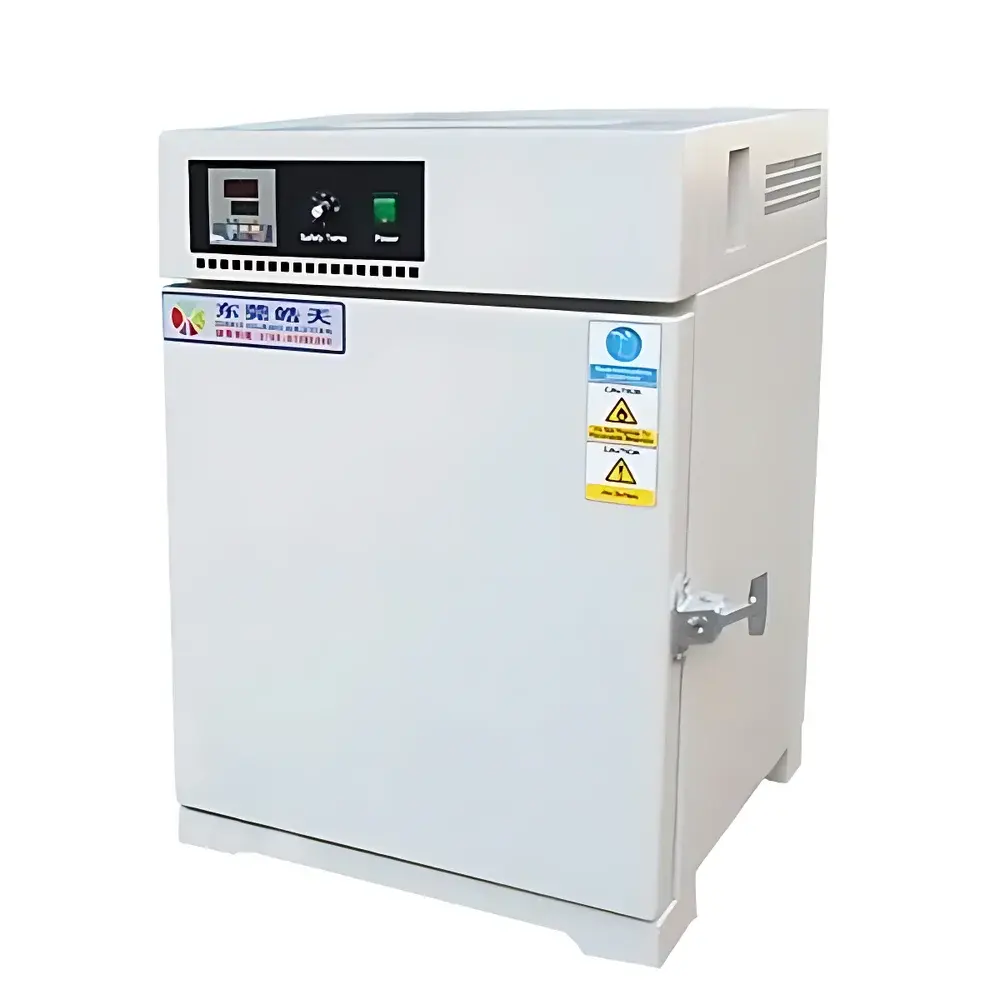
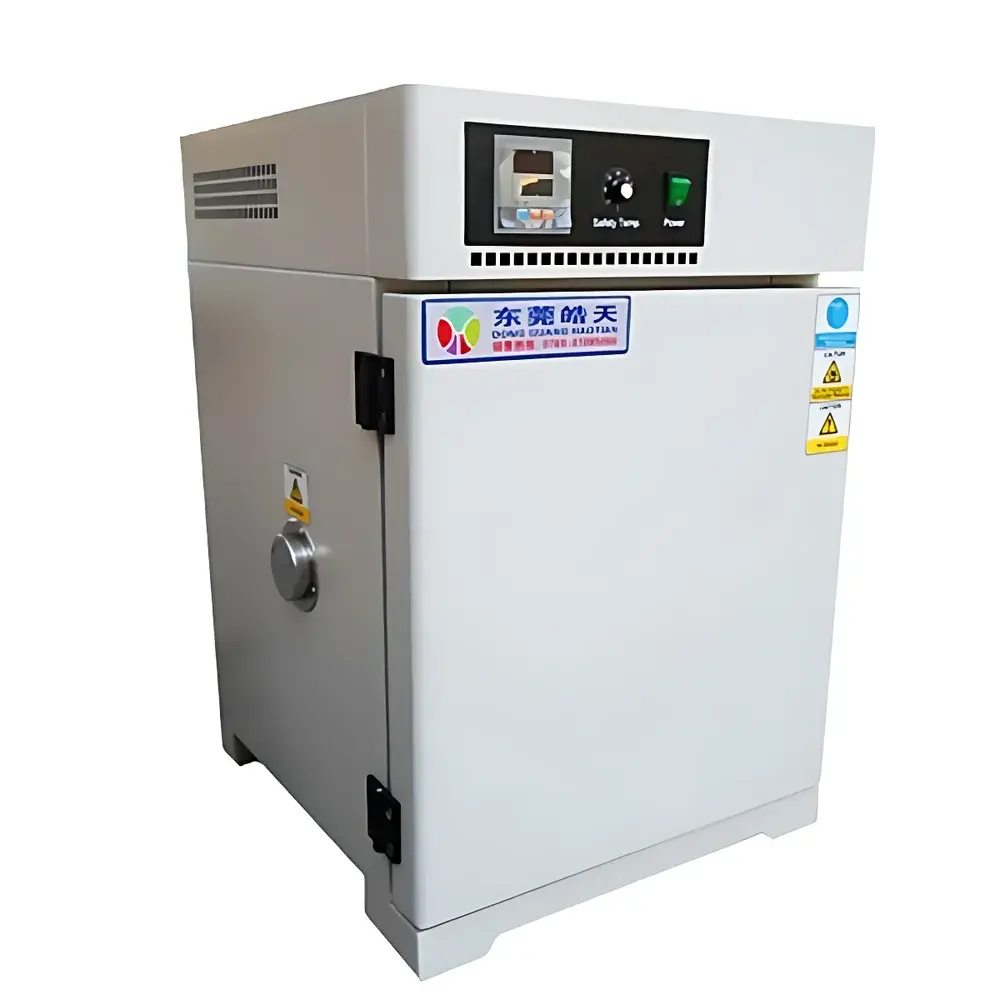
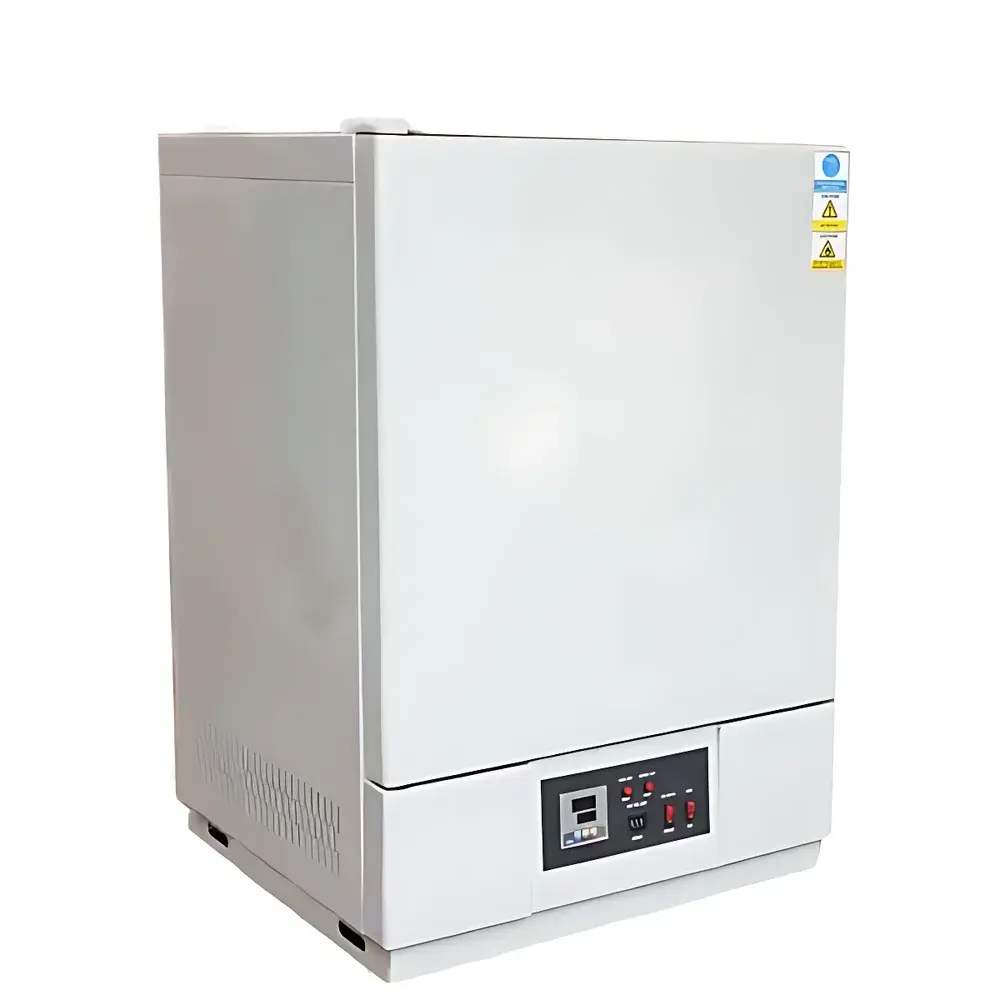
GHT ST-72S High-Temperature Aging Test Chamber
| Brand | GHT |
|---|---|
| Origin | Guangdong, China |
| Manufacturer Type | Direct Manufacturer |
| Country of Origin | China |
| Model | ST-72S |
| Max Operating Temperature | 400 °C |
| Temperature Range | RT + 10 °C to 400 °C |
| Temperature Uniformity | ±2 °C |
| Temperature Fluctuation | ±2 °C |
| Temperature Deviation | ±5 °C |
| Heating Rate | (Ambient + 20) °C → 200 °C in ≤40 min (standard configuration) |
| Cooling Rate | 0.7–1.0 °C/min |
| Internal Chamber Dimensions (W×H×D) | 650 × 600 × 600 mm |
| Power Supply | 220 V, 50 Hz |
| Rated Power | 1240 W |
| Standard Shelves | 2 adjustable stainless steel trays |
| Compliance | Designed per GB/T 2423.2 (IEC 60068-2-2) for high-temperature environmental testing |
Overview
The GHT ST-72S High-Temperature Aging Test Chamber is an engineered thermal stability platform designed for accelerated aging, thermal endurance evaluation, and long-term heat exposure testing of materials and components under controlled, steady-state elevated temperature conditions. It operates on the principle of forced-air convection heating, where high-efficiency nickel-chromium alloy heating elements generate uniform thermal energy, and a precisely balanced axial fan circulates heated air across the chamber volume. The chamber’s insulated double-wall construction—comprising high-density mineral fiber insulation and seamless stainless-steel inner lining—minimizes thermal loss and supports stable operation up to 400 °C. Unlike general-purpose drying ovens, the ST-72S is purpose-built for standardized aging protocols in quality assurance, R&D, and regulatory validation workflows, particularly where material degradation kinetics, oxidation resistance, polymer cross-linking behavior, or sealant performance under thermal stress must be quantified over time.
Key Features
- Stable high-temperature operation from ambient +10 °C to 400 °C with programmable ramp-hold profiles
- Temperature uniformity maintained within ±2 °C across the full working volume (650 × 600 × 600 mm), verified per IEC 60068-3-5 methodology
- Digital PID controller with real-time deviation compensation and auto-tuning capability for minimal overshoot and rapid stabilization
- Double-layer insulated chamber wall with 100 mm thick high-temp mineral wool and 304 stainless-steel interior for corrosion resistance and thermal integrity
- Two removable, height-adjustable 304 stainless-steel shelves rated for continuous 400 °C service; load capacity: 15 kg per shelf (evenly distributed)
- Over-temperature cut-off protection, door safety interlock, and grounded chassis meeting IEC 61000-6-2/6-4 EMC requirements
- Front-access observation window with dual-layer tempered glass and internal air purge to prevent condensation and maintain optical clarity at elevated temperatures
Sample Compatibility & Compliance
The ST-72S accommodates a broad range of non-volatile, non-explosive test specimens—including elastomers, thermoplastics, adhesives, printed circuit boards (PCBs), insulating materials, automotive gaskets, and pharmaceutical packaging films. It complies with key international standards for thermal aging assessment, including ASTM D573 (rubber), ASTM D3045 (plastics), ISO 188 (vulcanized rubber), and IEC 60068-2-2 (environmental testing—Part 2: Tests—Test B: Dry heat). Its design facilitates GLP-compliant documentation when paired with external data loggers (e.g., calibrated Class A Pt100 probes traceable to NIST), and its stable thermal profile supports validation per FDA 21 CFR Part 11 when integrated with compliant software systems.
Software & Data Management
While the ST-72S operates via an intuitive front-panel interface with digital setpoint display and status indicators, it supports optional RS485 Modbus RTU communication for integration into centralized lab monitoring networks. When connected to validated third-party SCADA or LIMS platforms, users can record timestamped temperature logs, generate calibration audit trails, and export CSV-formatted datasets for statistical process control (SPC) analysis. Optional Ethernet-enabled controllers provide remote access, alarm notifications via email/SMS, and electronic signature support aligned with 21 CFR Part 11 Annex 11 requirements for regulated environments.
Applications
- Accelerated life testing of polymer-based seals, cable jackets, and encapsulants in automotive and aerospace supply chains
- Oxidative aging studies of lubricants, greases, and transformer oils per ASTM D943 and IEC 60296
- Thermal stability screening of battery separator films and cathode active materials prior to cell assembly
- Pre-conditioning of electronic assemblies per JEDEC JESD22-A108 for reliability qualification
- Stability testing of medical device packaging per ISO 11607-1 to verify sterile barrier integrity after accelerated aging
- Material qualification for industrial furnace components, refractory coatings, and ceramic substrates
FAQ
What is the maximum allowable sample mass for continuous 400 °C operation?
The chamber supports up to 30 kg total static load (including shelves), provided samples are evenly distributed and do not obstruct airflow grilles.
Does the ST-72S meet UL or CE safety certification requirements?
The unit is constructed to IEC 61010-1 safety principles and carries CCC certification for the Chinese market; CE marking requires site-specific risk assessment and may be added upon request with EU Notified Body involvement.
Can humidity control be added as a retrofit option?
No—the ST-72S is a dry-heat-only system. For combined temperature/humidity profiling, consider the GHT TH-1000 series environmental chambers.
Is calibration documentation included with shipment?
A factory-assembled temperature verification report (at 100 °C, 200 °C, and 400 °C) is supplied; full ISO/IEC 17025 calibration with uncertainty budget is available as an add-on service.
What maintenance intervals are recommended for optimal thermal stability?
Fan motor lubrication and heating element resistance checks every 12 months; door gasket inspection and replacement every 24 months or after 500 thermal cycles above 300 °C.



