
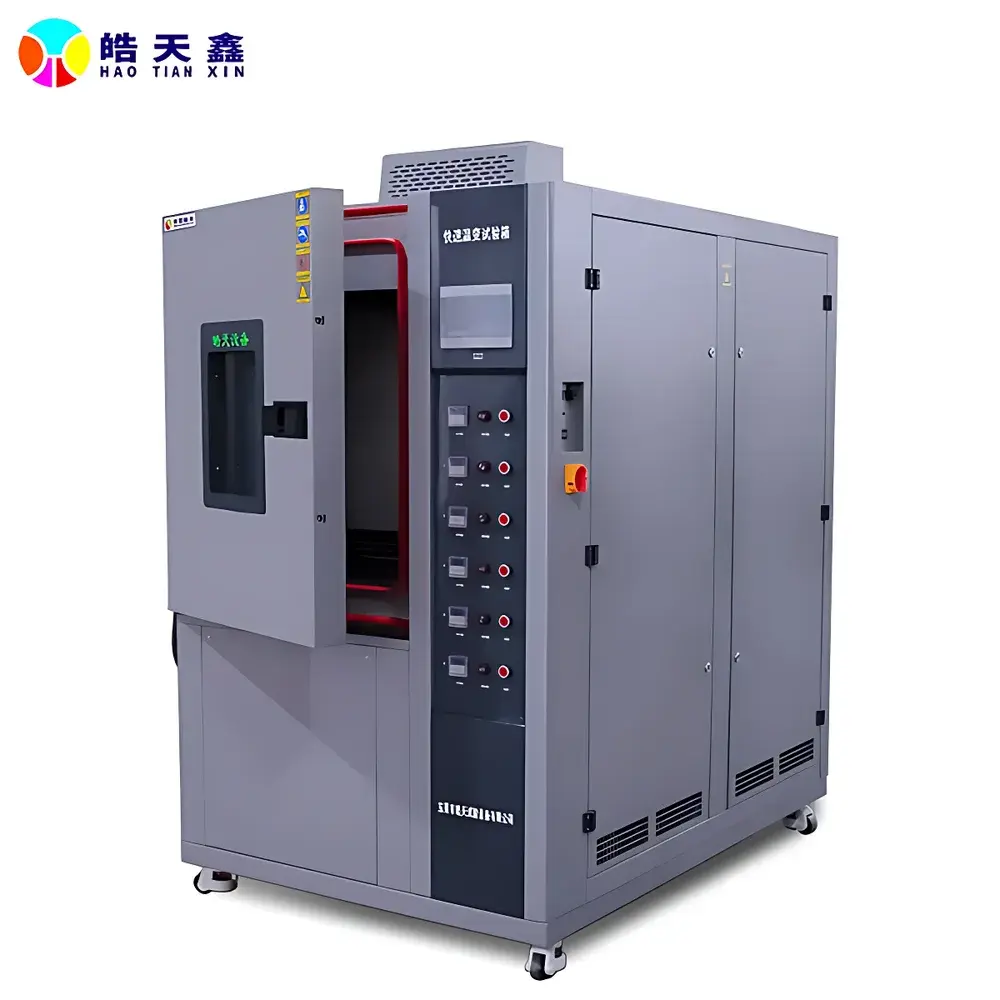
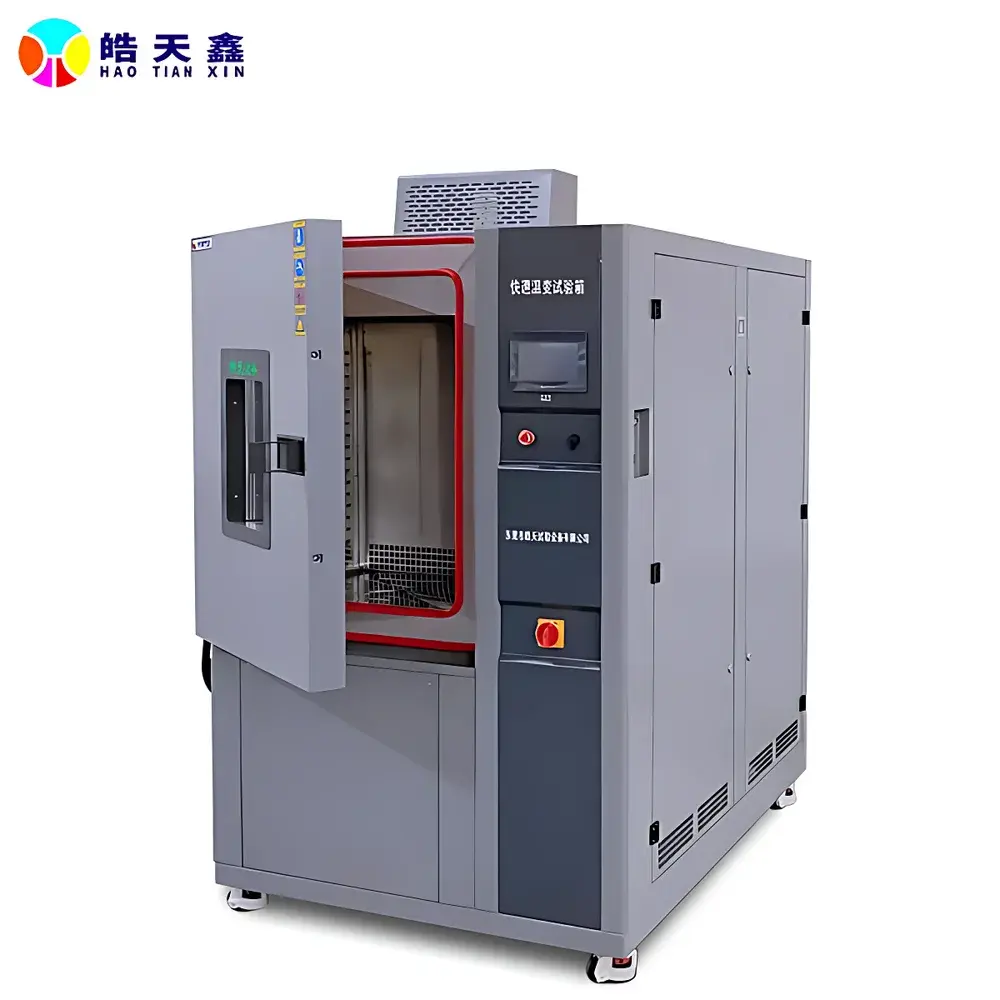
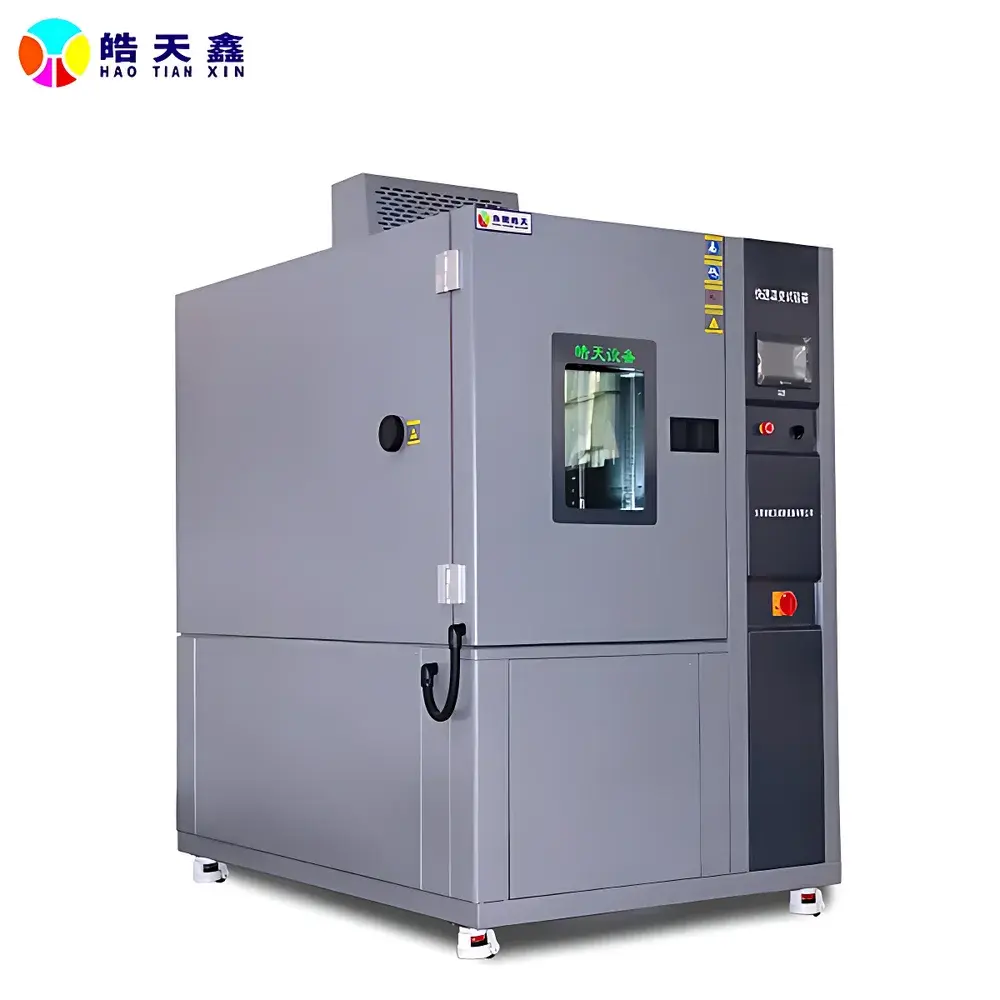
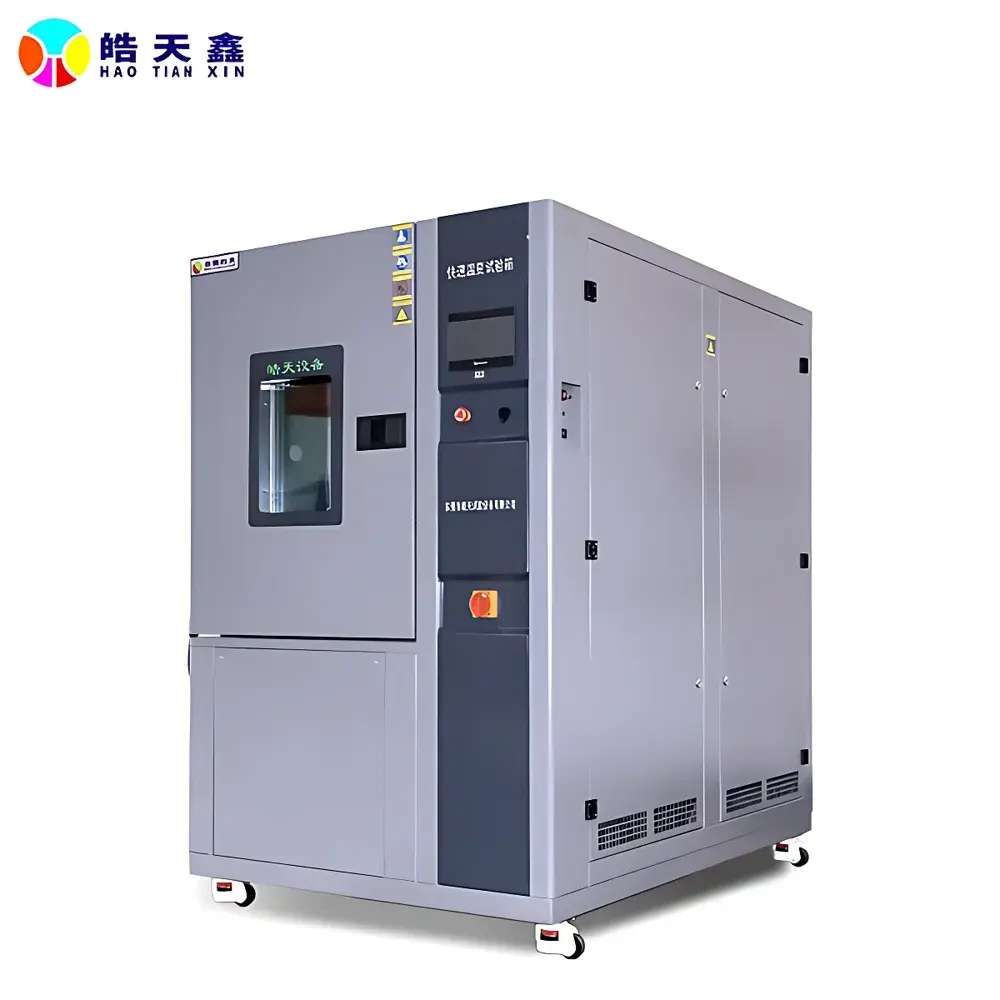
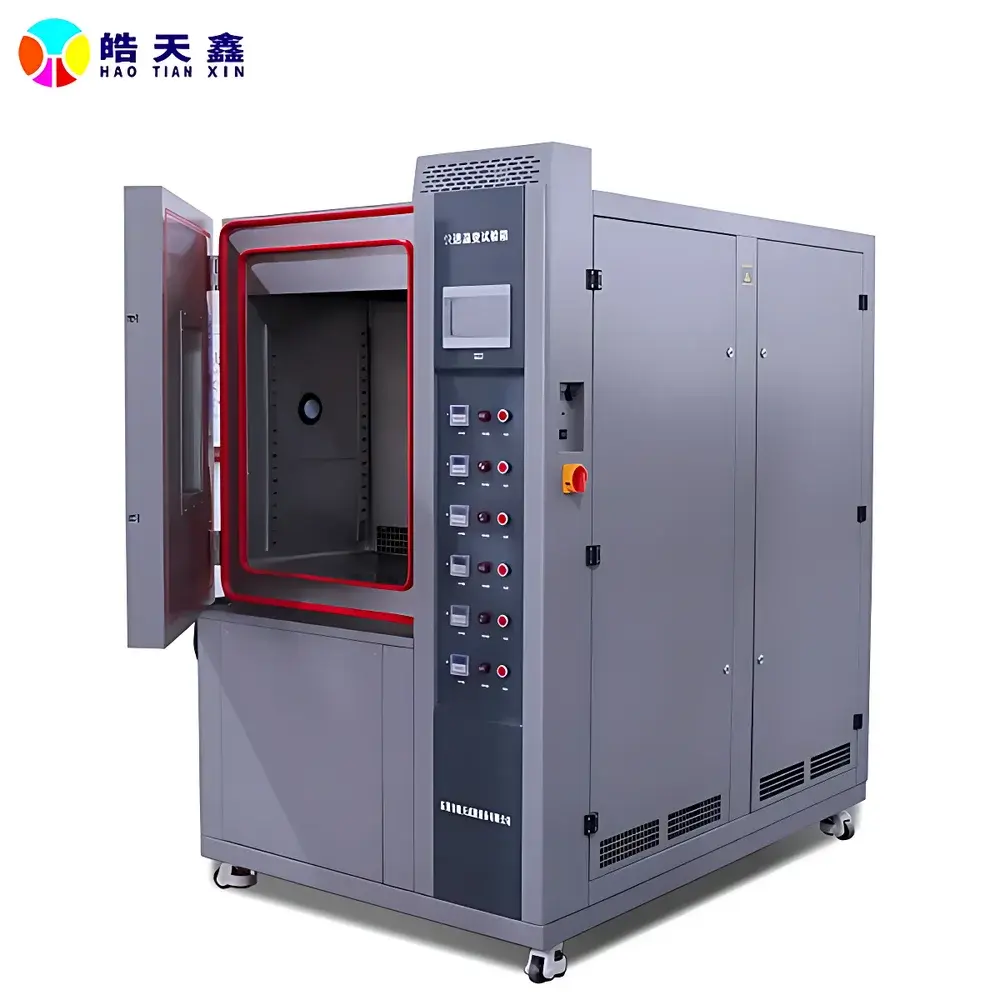
GHT TEE-408P Rapid Temperature Change Test Chamber
| Brand | GHT |
|---|---|
| Model | TEE-408P |
| Origin | Guangdong, China |
| Manufacturer Type | Direct Manufacturer |
| Temperature Range | −60 °C to +150 °C |
| Cooling Method | Compressor-based Refrigeration |
| Explosion-Proof | Standard (Non-Explosion-Proof) |
| Temperature Fluctuation | ±0.5 °C |
| Temperature Uniformity | ±2.0 °C |
| Temperature Deviation | ±2.0 °C |
| Heating Rate | ≤60 min (−60 °C → +150 °C) |
| Cooling Rate | ≤80 min (+150 °C → −60 °C) |
| Internal Chamber Dimensions | 500 mm (W) × 750 mm (H) × 600 mm (D) |
Overview
The GHT TEE-408P Rapid Temperature Change Test Chamber is an engineered environmental simulation system designed for accelerated thermal stress testing in accordance with international reliability standards including IEC 60068-2-14 (Change of Temperature), MIL-STD-810H Method 503.6, and JESD22-A104D. It operates on the principle of controlled, high-rate thermal cycling—inducing transient thermal gradients across test specimens to accelerate failure mechanisms associated with coefficient-of-thermal-expansion (CTE) mismatch, interfacial delamination, solder joint fatigue, and material embrittlement. Unlike conventional temperature chambers, the TEE-408P delivers reproducible ramp rates up to 10 °C/min (average) over its full operational range (−60 °C to +150 °C), enabling precise replication of real-world thermal shock profiles encountered during automotive powertrain operation, avionics deployment, or consumer electronics field use.
Key Features
- Robust dual-stage compressor refrigeration system using original Tecumseh (France) hermetic compressors, integrated with copper-aluminum finned condensers and high-efficiency expansion valves for stable low-temperature hold and rapid cooldown.
- High-precision UMC1200 programmable controller (imported from Japan) featuring 128×64 dot-matrix LCD interface, 100-segment programmable profile capability, real-time data logging, and Ethernet-enabled remote monitoring via Modbus TCP or optional OPC UA protocol.
- Electrical architecture compliant with IP54 ingress protection and reinforced galvanic isolation—fully implementing water-electricity separation design per IEC 61000-6-4 EMI requirements and UL 61010-1 safety standard.
- Chamber interior constructed from SUS304 stainless steel with seamless welding; floor equipped with integrated condensate drainage trough and sloped bottom to prevent vapor accumulation and specimen exposure to residual moisture.
- Optimized humidification subsystem: shallow-tank steam generation with drawer-type 12L external water reservoir, minimizing maintenance frequency and eliminating manual top-up during extended cycles.
- Enhanced visibility and operator safety: Philips LED lighting assembly with glare-free diffusion; conical-view observation window offering >220° horizontal field of view; dual-level leakage current protection (RCD + electronic ground-fault detection).
Sample Compatibility & Compliance
The TEE-408P accommodates a broad spectrum of physical specimens—including PCB assemblies, semiconductor packages (QFN, BGA, CSP), automotive ECUs, battery modules (up to 25 kg), and medical device enclosures—within its 225 L internal volume (500 × 750 × 600 mm). All thermal performance specifications—including temperature uniformity (±2.0 °C), stability (±0.5 °C), and deviation (±2.0 °C)—are validated per ISO 16750-4 Annex A and ASTM E145-22 Class II chamber classification requirements. The system supports full traceability through built-in audit trail functionality aligned with FDA 21 CFR Part 11 (electronic records/signatures) when configured with optional validation package and calibrated NIST-traceable sensors.
Software & Data Management
Control firmware supports automated cycle execution, event-triggered data capture (e.g., at dwell points, inflection thresholds), and CSV/Excel export of time-stamped temperature logs with millisecond resolution. Optional GHT-DataLink software enables multi-chamber fleet management, statistical process control (SPC) charting (X-bar/R), and compliance reporting for ISO/IEC 17025 accredited labs. All configuration changes, alarm events, and calibration interventions are timestamped and stored with user ID attribution—meeting GLP/GMP documentation integrity requirements.
Applications
- Qualification testing of electronic components under JEDEC J-STD-020D reflow sensitivity classifications.
- Thermal shock validation of aerospace connectors per RTCA/DO-160 Section 24.
- Reliability screening of lithium-ion battery cells during thermal abuse preconditioning (UN 38.3 T1–T5).
- Material compatibility assessment of adhesives, conformal coatings, and encapsulants subjected to cyclic thermal loading.
- Design verification of hermetic seals in MEMS sensors and optical modules.
- Process capability analysis of solder rework procedures in high-mix manufacturing environments.
FAQ
What is the maximum thermal ramp rate achievable with the TEE-408P?
The chamber achieves an average heating rate of ≤60 minutes (−60 °C to +150 °C) and cooling rate of ≤80 minutes (+150 °C to −60 °C) under no-load conditions. Actual ramp performance depends on specimen mass, thermal mass, and fixture configuration.
Does the system support automated thermal shock profiling per MIL-STD-810H Method 503.6?
Yes—the UMC1200 controller includes preloaded templates for standard shock profiles (e.g., two-zone, three-zone, dwell-based), with customizable dwell times, transition rates, and cycle counts.
Is third-party IQ/OQ/PQ validation support available?
GHT provides documented validation protocols, certified reference sensors, and on-site commissioning services compliant with ISO/IEC 17025 and GAMP5 guidelines.
Can the chamber be integrated into a centralized lab automation network?
Yes—via Ethernet port with Modbus TCP or optional OPC UA server license, enabling bidirectional communication with LIMS, MES, or SCADA platforms.
What maintenance intervals are recommended for the refrigeration system?
Compressor oil and filter dryer replacement every 24 months; annual calibration of PT100 sensors and verification of door seal integrity per ISO 16750-4 Clause 6.3.2.



