
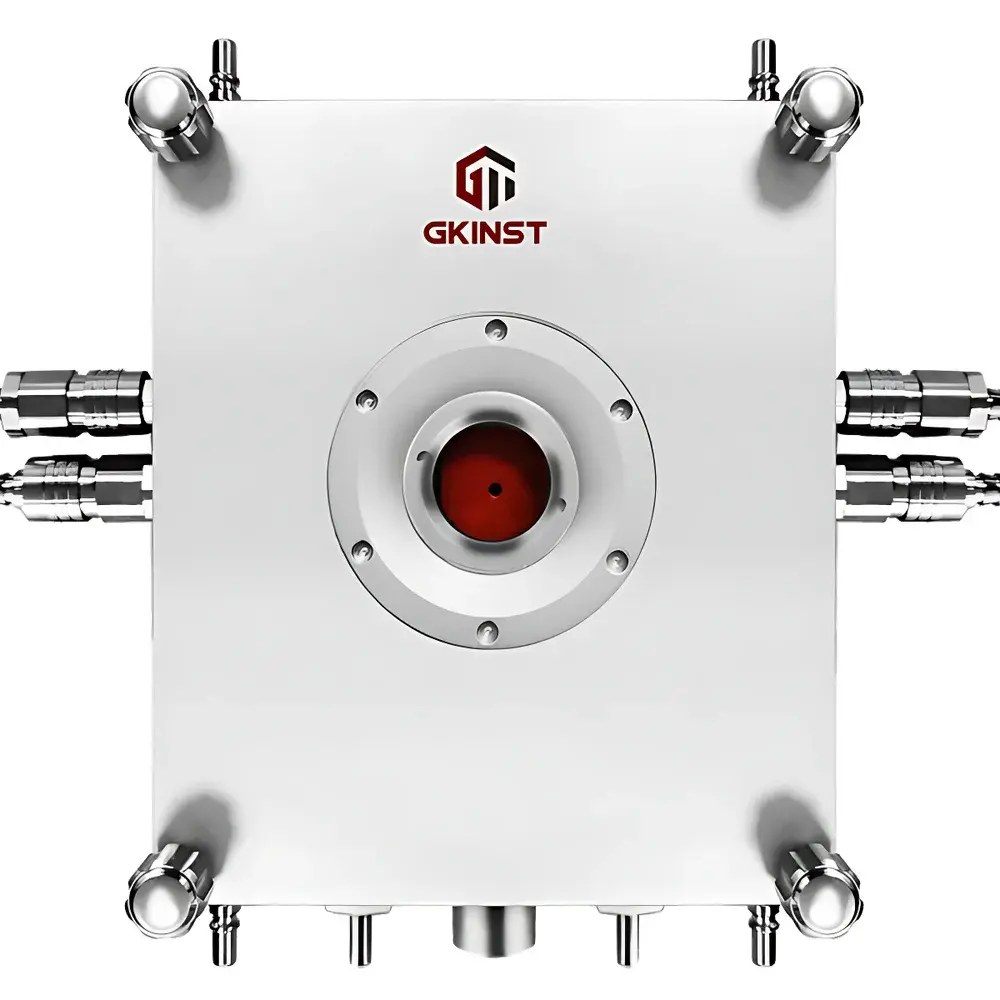
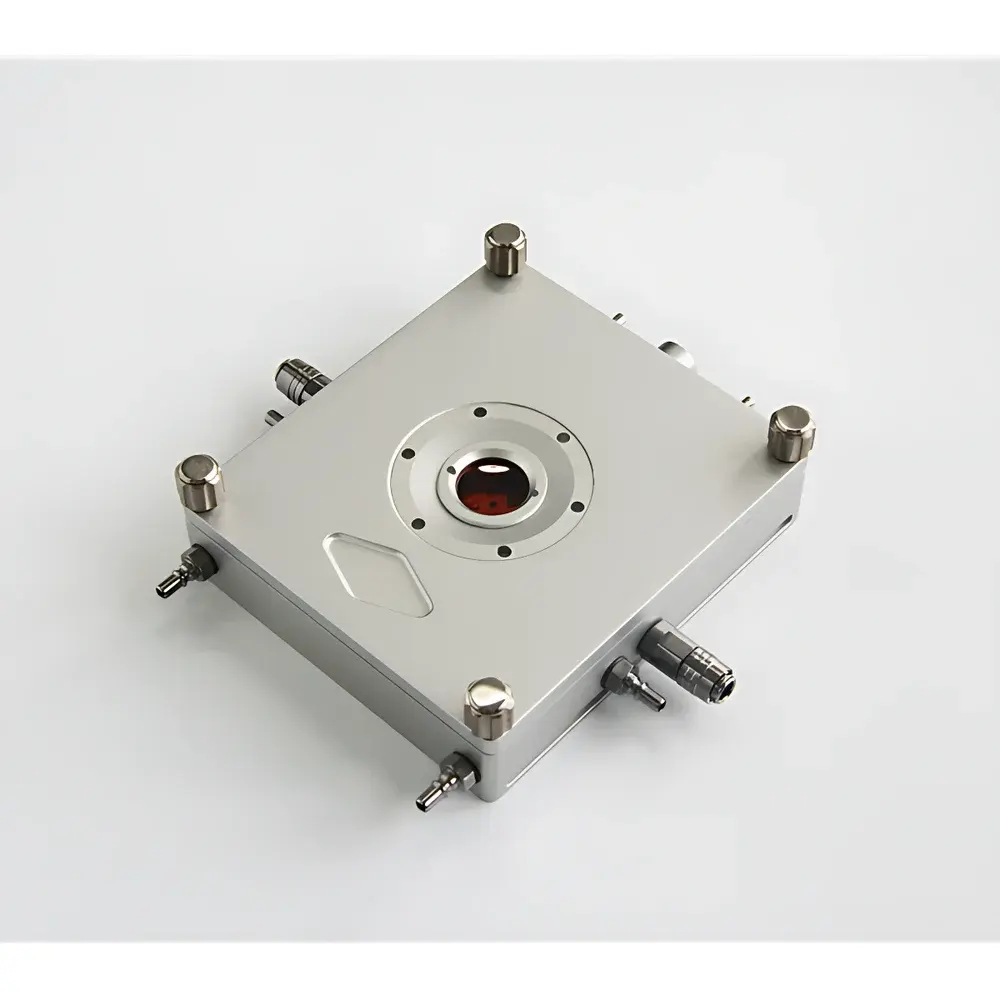
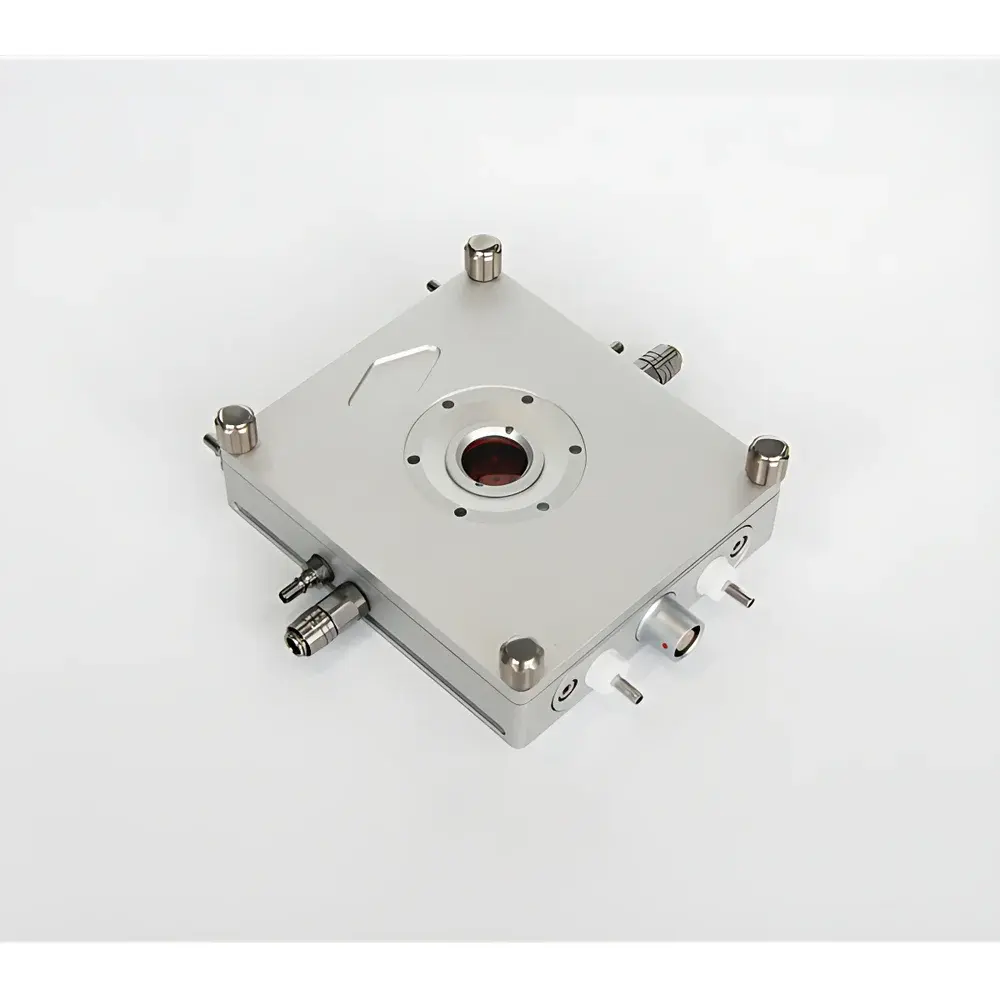
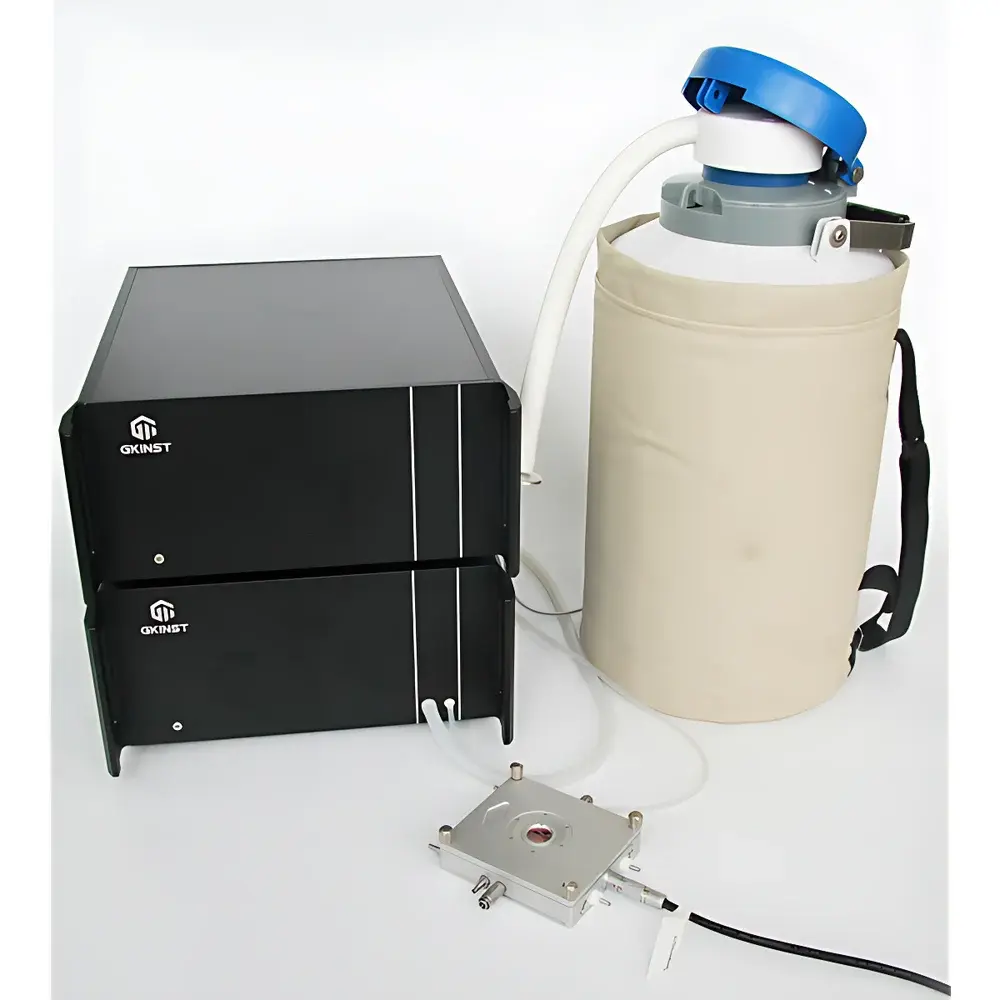
GKinst THMS600V Optical Heating and Cooling Stage
| Brand | GKinst |
|---|---|
| Model | GK-THMS600V |
| Temperature Range | −195 °C to +600 °C |
| Max. Heating Rate | 180 °C/min (customizable) |
| Temperature Resolution | 0.1 °C |
| Temperature Stability | <0.1 °C |
| Compatibility | Optical Microscopes, Raman Spectrometers, FTIR Microscopy Systems, UV-Vis Microspectrophotometers |
Overview
The GKinst THMS600V Optical Heating and Cooling Stage is a precision-engineered in-situ thermal stage designed for real-time structural and morphological characterization of materials under controlled temperature conditions. Based on Peltier-assisted cryogenic cooling and resistive high-temperature heating architecture, it enables synchronized observation of phase transitions, crystallization, decomposition, glass transitions, and thermal expansion behavior directly within optical microscopy or spectroscopic measurement environments. Unlike conventional hot stages limited to ambient-to-300 °C operation, the THMS600V extends functional capability across an ultra-broad thermal span—from liquid nitrogen temperatures (−195 °C) to high-temperature solid-state reaction regimes (600 °C)—while maintaining sub-0.1 °C thermal stability and 0.1 °C resolution. Its compact, low-vibration design integrates seamlessly beneath standard upright and inverted optical microscopes without obstructing optical paths or compromising numerical aperture, making it suitable for both transmission and reflection-mode modalities.
Key Features
- Ultra-wide operational temperature range: −195 °C to +600 °C, enabling studies from cryogenic vitrification to high-temperature sintering and oxidation
- Programmable multi-stage thermal profiles with ramp rates up to 180 °C/min (custom-configurable), supporting rapid thermal cycling experiments
- High-precision PID temperature control with real-time feedback via integrated Pt100 sensor and active thermal shielding
- Optically transparent ceramic heater platform with minimal infrared absorption and negligible autofluorescence—optimized for Raman, FTIR, and fluorescence microspectroscopy
- Low thermal mass construction ensures fast thermal equilibration and minimizes thermal lag during dynamic measurements
- Compact footprint (standard 25 mm mounting diameter) compatible with motorized XYZ microscope stages and automated focus systems
- Electromagnetic interference (EMI)-shielded electronics to preserve signal integrity in sensitive optical detection setups
Sample Compatibility & Compliance
The THMS600V accommodates standard sample formats including TEM/SEM-compatible grids, glass slides (up to 1 mm thickness), silicon wafers, metallurgical cross-sections, polymer films, and biological tissue sections. Sample holders are interchangeable and configurable for ambient gas, inert purge (N₂, Ar), or vacuum environments (optional vacuum-compatible version available). The stage meets CE marking requirements for electromagnetic compatibility (EN 61326-1) and low-voltage safety (EN 61010-1). For regulated laboratory environments, its temperature logging functionality supports audit-ready traceability when paired with compliant data acquisition software—fully compatible with GLP/GMP workflows requiring temperature calibration records per ISO/IEC 17025 and ASTM E220 standards.
Software & Data Management
Control is managed via GKinst’s StageControl Pro software (Windows-based), offering intuitive graphical programming of temperature ramps, dwell times, and trigger synchronization with external instruments (e.g., shutter control, spectrometer acquisition start/stop). All temperature data—including setpoint, actual reading, ramp rate, and timestamp—are logged at user-defined intervals (down to 10 ms) and exported in CSV or HDF5 format for post-acquisition correlation with imaging or spectral datasets. The software supports FDA 21 CFR Part 11-compliant user access levels, electronic signatures, and immutable audit trails when deployed on validated IT infrastructure. API integration (DLL and Python SDK) enables full automation within custom LabVIEW, MATLAB, or Python-based experimental frameworks.
Applications
- Real-time monitoring of polymer crystallization kinetics and melting hysteresis using polarized light microscopy
- In-situ observation of martensitic transformations and grain boundary mobility in metallic alloys during thermal cycling
- Thermal degradation analysis of pharmaceutical co-crystals and amorphous dispersions via hot-stage Raman mapping
- Phase behavior investigation of liquid crystals and block copolymer self-assembly under temperature gradients
- Dynamic assessment of nanoparticle agglomeration, sintering onset, and oxide layer growth in TEM-coupled optical correlative setups
- Biological specimen vitrification and devitrification studies in cryo-microscopy workflows
FAQ
Is the THMS600V compatible with confocal laser scanning microscopes (CLSM)?
Yes—the stage’s low-autofluorescence ceramic platform and optimized thermal shielding minimize background interference, enabling quantitative fluorescence intensity tracking across temperature gradients.
Can I perform simultaneous DSC-like thermal analysis while acquiring optical images?
While not a calorimeter, the THMS600V provides high-fidelity temperature metadata synchronized to image acquisition timestamps, allowing derivative-based inflection point detection (e.g., dT/dt peaks) correlated with morphological events.
What is the maximum recommended sample weight for stable thermal control?
For optimal response time and stability, samples should not exceed 500 mg; heavier loads require extended equilibration and may reduce achievable ramp rates.
Does the system include NIST-traceable calibration documentation?
Calibration certificates (including Pt100 sensor verification at −196 °C, 0 °C, 100 °C, and 600 °C) are provided with each unit and updated annually upon request.
Is vacuum operation supported out-of-the-box?
Standard units operate under ambient or purged gas conditions; vacuum-rated variants (≤10⁻³ mbar) are available as configured options with modified feedthroughs and sealing.




