
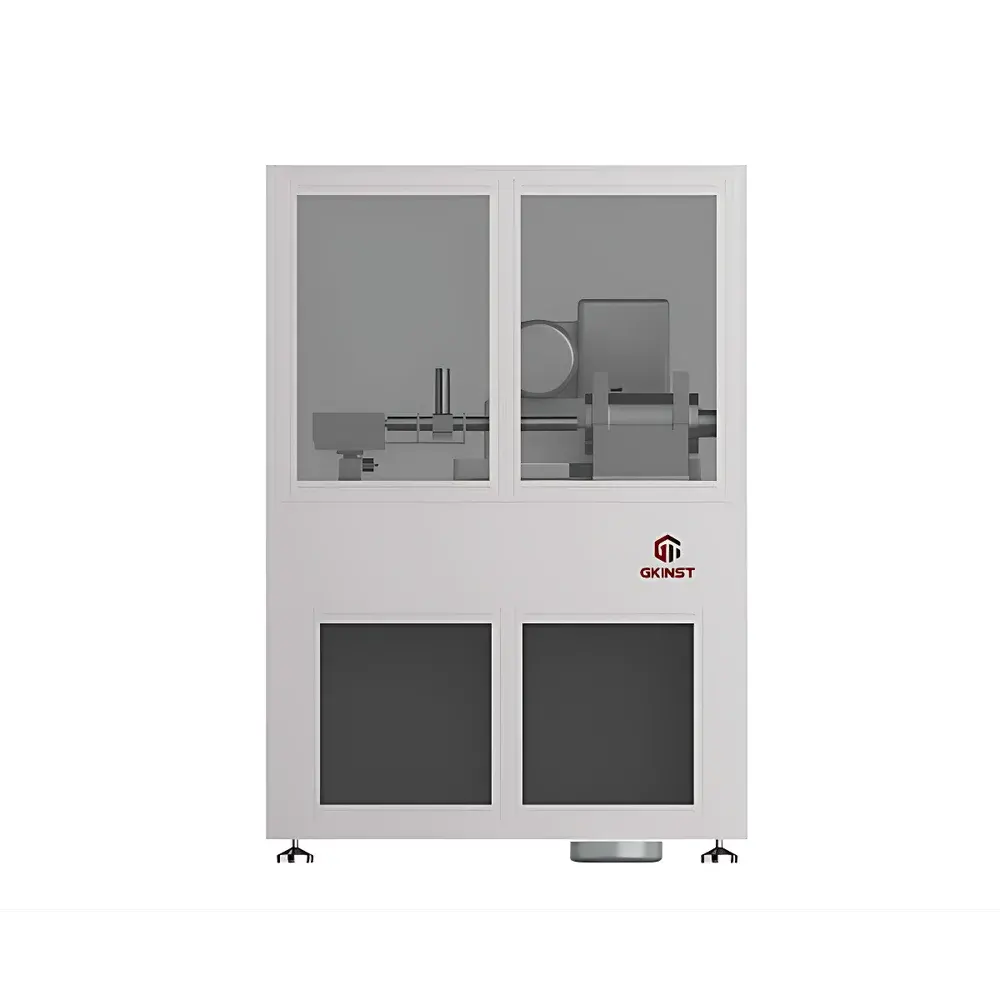
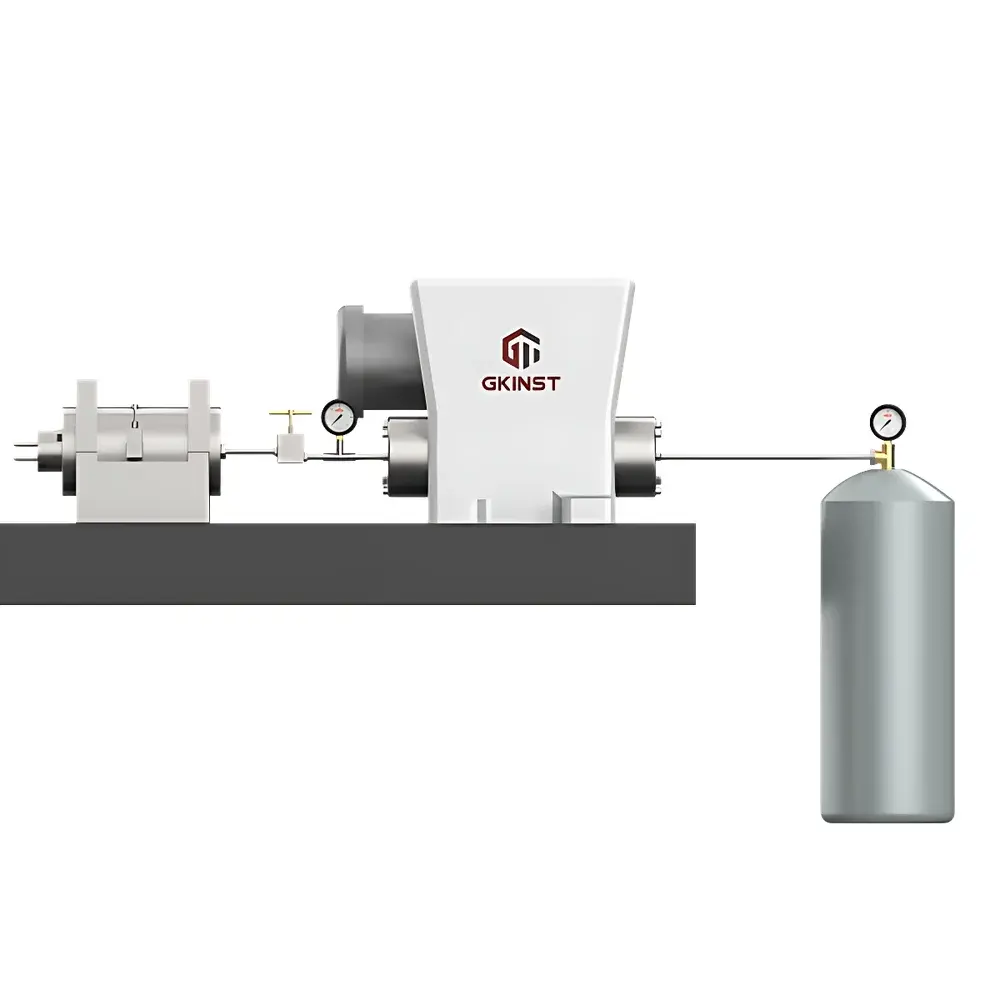
GKINST Visual High-Pressure Gas Loading System for Diamond Anvil Cells
| Brand | GKINST |
|---|---|
| Model | Customizable DAC Gas Loading System |
| Max Operating Pressure | 200 MPa |
| Compatible Gases | He, Ne, Ar, N₂, CH₄, H₂ (O₂ excluded) |
| DAC Compatibility | Modular Design for Standard & Custom DACs |
| Origin | Anhui, China |
| Supplier Type | Authorized Distributor |
Overview
The GKINST Visual High-Pressure Gas Loading System is an engineered solution for precise, real-time gas loading and pressure control in diamond anvil cell (DAC) experiments. Designed specifically for high-pressure physical chemistry and condensed matter research, this system operates on the principle of controlled isostatic gas compression to establish quasi-hydrostatic or hydrostatic stress states within the sample chamber. Unlike mechanical or solid-medium compression methods, gas-based pressurization leverages the uniform compressibility and low shear resistance of inert gases—enabling reproducible pressure transmission with minimal deviatoric stress. The integrated ruby fluorescence pressure calibration subsystem allows in situ, non-invasive pressure measurement during gas loading, eliminating reliance on post-experiment pressure estimation or external manometric references. This capability is critical for experiments requiring precise pressure targeting—especially during laser-heated DAC studies where thermal gradients and pressure drift must be continuously monitored and compensated.
Key Features
- Real-time ruby fluorescence-based pressure monitoring synchronized with gas injection, enabling closed-loop pressure control during DAC sealing
- Modular DAC interface design accommodating standard 1st–4th generation symmetric and asymmetric DACs (e.g., Mao-Bell, radial geometry, toroidal), with customizable flange adapters and O-ring sealing configurations
- Gas-handling manifold rated to 200 MPa (29,000 psi), constructed from cold-worked stainless steel (ASTM A269 TP316L) with helium-leak-tested welds and metal-sealed VCR fittings
- Dual-stage pressure regulation: coarse pre-regulation (0–50 MPa) followed by fine piezoelectric-controlled metering (±0.1 MPa resolution) for sub-MPa pressure increments
- Optically transparent viewport (fused silica, AR-coated, 10 mm clear aperture) aligned coaxially with the DAC sample chamber for simultaneous optical diagnostics (Raman, absorption, fluorescence) during pressurization
- O₂-exclusion architecture: all wetted components passivated per ASTM A967 and certified for use with reducing and inert gases only; oxygen service prohibited per ASME B31.3 process safety guidelines
Sample Compatibility & Compliance
The system supports a defined set of high-purity inert and non-reactive gases—including helium (He), neon (Ne), argon (Ar), nitrogen (N₂), methane (CH₄), and hydrogen (H₂)—all supplied at ≥99.999% purity and trace-moisture-controlled (<0.1 ppm H₂O). Gas compatibility has been validated against ISO 8573-1 Class 1 particulate/moisture/oil specifications. For laser-heating applications, neon’s low thermal conductivity and wide optical transparency window (200–2500 nm) make it ideal as both pressure-transmitting medium and thermal insulator. Helium remains the benchmark for quasi-hydrostatic conditions up to 60 GPa at room temperature, as confirmed by X-ray diffraction-based equation-of-state validation per ISO/IEC 17025-accredited reference laboratories. All pressure transducers are NIST-traceable and calibrated annually in accordance with ISO/IEC 17025 requirements. The system conforms to GLP-compliant documentation standards for pressure history logging and audit trail retention.
Software & Data Management
Control and data acquisition are managed via GKINST DAC-Load Control Suite v3.2—a Windows-based application compliant with FDA 21 CFR Part 11 for electronic records and signatures. The software provides time-stamped pressure vs. time profiles, ruby R₁/R₂ peak tracking with automatic baseline correction, and synchronized trigger outputs for external instrumentation (e.g., synchrotron beamline shutters, laser pulse generators). All raw spectra and pressure logs are stored in HDF5 format with embedded metadata (DAC ID, gas type, operator, timestamp, calibration file hash). Audit trails record user logins, parameter changes, and emergency stop events with immutable timestamps. Export options include CSV, MATLAB .mat, and NeXus-compatible formats for integration into institutional data management systems (e.g., ICAT, DataVerse).
Applications
- In situ pressure calibration of ruby fluorescence standards under variable gas media and thermal conditions
- Hydrostaticity assessment via XRD peak broadening analysis across He, Ne, and Ar pressure media up to 100 GPa
- Gas-phase reaction kinetics in confined geometries (e.g., H₂ + N₂ → NH₃ catalysis under high-P/T)
- Thermodynamic phase mapping of volatile-bearing minerals (e.g., CO₂-H₂O fluid inclusions, silicate melt volatiles)
- Laser-heated DAC experiments requiring dynamic pressure compensation during thermal cycling
- Development and validation of new pressure scales (e.g., Pt, Si, Au) using gas-loaded reference standards
FAQ
Can this system be used with oxygen or reactive gases?
No. Oxygen and other oxidizing or pyrophoric gases (e.g., Cl₂, F₂, NO₂) are strictly prohibited due to material compatibility and explosion hazard risks. Only inert and reducing gases listed in the specifications are supported.
Is ruby fluorescence calibration performed automatically during operation?
Yes—the system integrates a 532 nm excitation laser and spectrometer module that acquires ruby R₁/R₂ peaks at user-defined intervals (1–60 s), applying real-time temperature-corrected calibration per the Mao et al. (1986) and Dorogokupets & Oganov (2007) equations.
Does the system support remote operation and integration with synchrotron beamlines?
Yes—it features Ethernet (TCP/IP) and RS-485 interfaces, with API documentation (Python/C++ SDK) provided for integration with EPICS, TANGO, or custom beamline control frameworks.
What DAC models are natively supported without modification?
Standard symmetric DACs with 1/4″-28 UNF top screws and 1.5 mm culet anvils (e.g., DAC-100 series, UHV-DAC-300) are supported out-of-the-box; custom adapters are available for radial, toroidal, and membrane-driven DACs.
How is pressure stability maintained during long-duration experiments (>24 h)?
The system employs active pressure hold mode with periodic micro-adjustments (≤0.05 MPa deviation over 48 h), verified via continuous ruby monitoring and logged in compliance with ISO 5725-2 precision repeatability standards.
Related Products




