
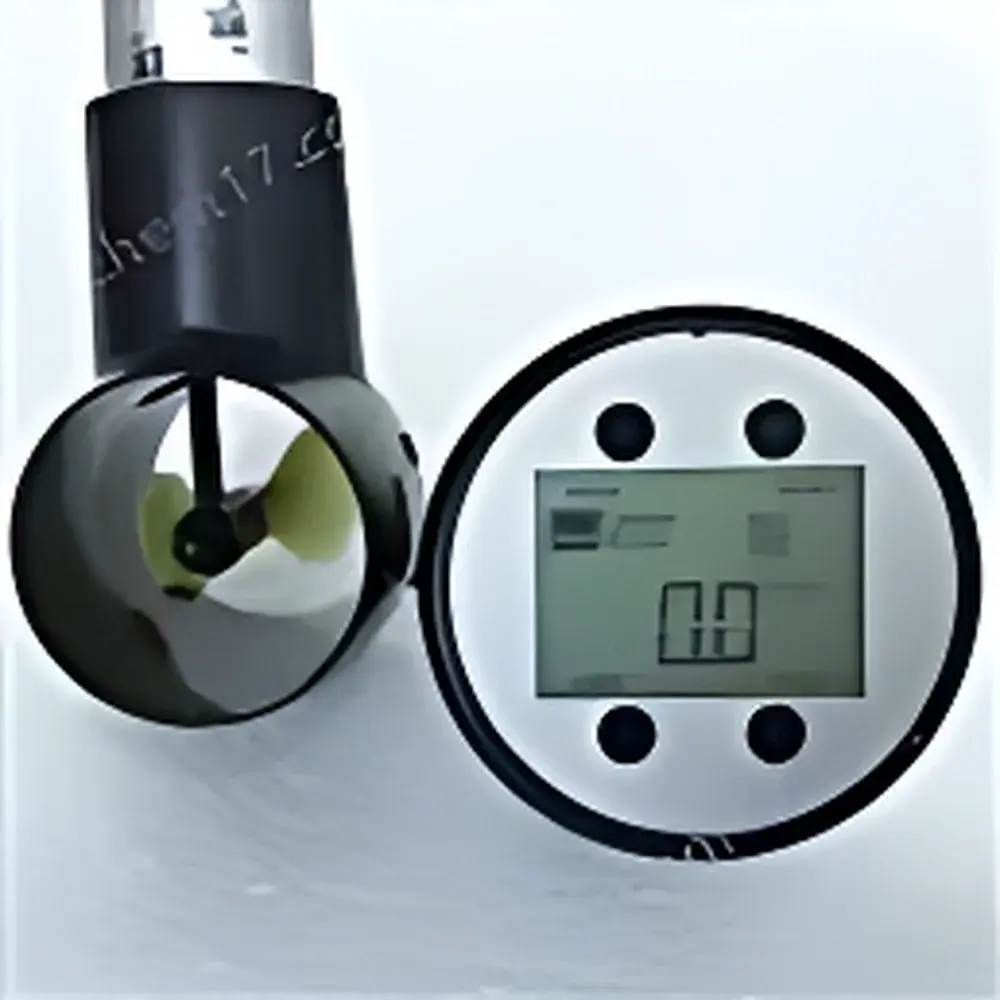
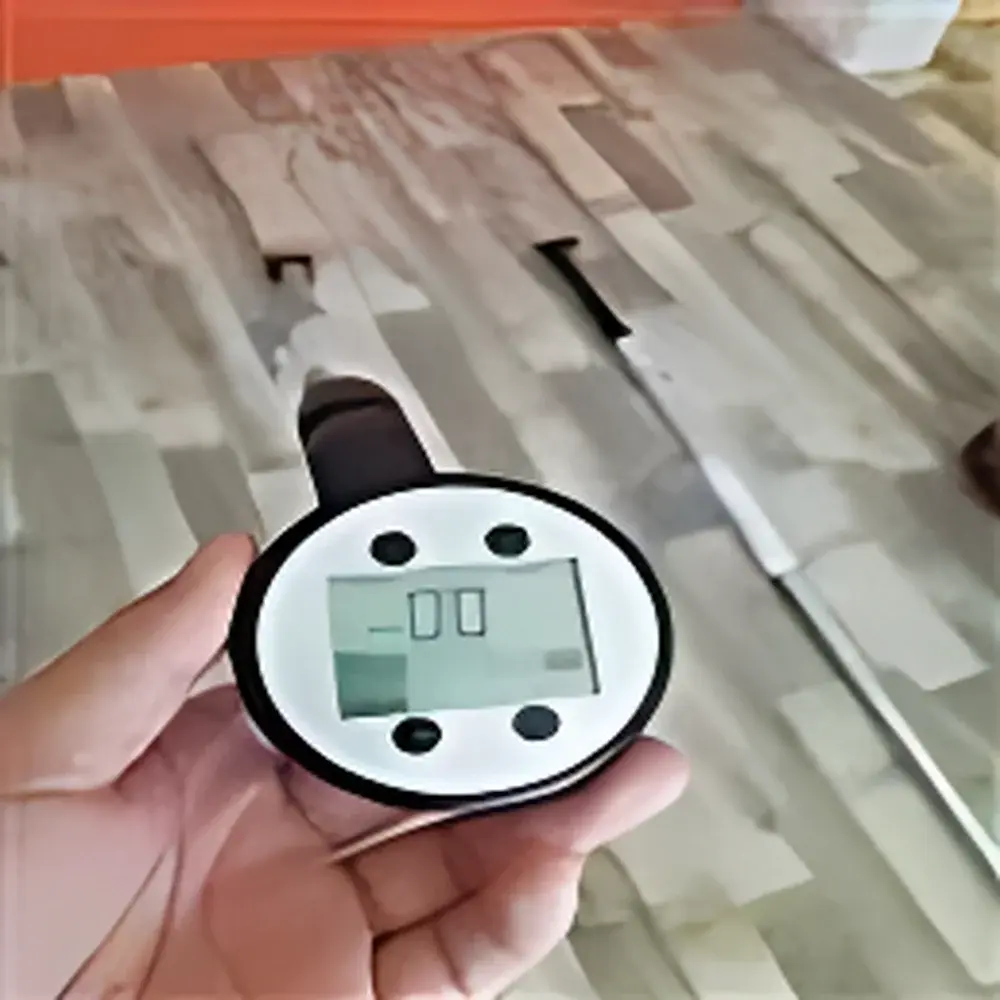
Global Water FP111 / FP211 / FP311 Portable Turbine Flow Velocity Meter
| Brand | Global Water |
|---|---|
| Origin | Germany (Manufactured under Global Water USA specification) |
| Model | FP111, FP211, FP311 |
| Measurement Principle | Electromagnetic pulse generation via turbine–propeller sensor with positive displacement hydrodynamic sampling |
| Velocity Range | 0.1–6.1 m/s |
| Accuracy | ±0.03 m/s |
| Display | Backlit LCD with anti-glare & UV-stabilized coating |
| Data Storage | 30 sets of min/max/average values |
| Operating Temperature | –20 °C to +70 °C |
| Storage Temperature | –30 °C to +80 °C |
| Probe Material | PVC housing, anodized aluminum shaft, stainless steel water bearings |
| Handle Length (extendable) | FP111: 1.1–1.8 m |
| FP211 | 1.7–4.6 m |
| FP311 | 0.76–1.7 m |
| Weight | FP111: 0.9 kg |
| FP211 | 1.4 kg |
| FP311 | 1.3 kg |
| Power | Sealed lithium battery, ~5-year typical service life, non-replaceable |
| Certifications | CE compliant |
| Optional Accessories | Rotatable probe head (±90°), alignment vanes for directional correction |
Overview
The Global Water FP111, FP211, and FP311 are handheld, field-deployable turbine-based flow velocity meters engineered for precise, real-time measurement of open-channel and partially filled pipe flow velocities. These instruments operate on the principle of electromagnetic pulse generation: rotation of a protected turbine–propeller sensor—mounted within a 2-inch-diameter PVC and anodized aluminum housing—induces magnetic flux changes detected by a Hall-effect pickup in the handle. Each revolution produces a proportional electrical signal, digitized and processed to compute instantaneous and time-averaged velocity values in meters per second (m/s) or feet per second (ft/s), selectable via firmware configuration. Unlike Doppler or acoustic Doppler velocimetry (ADV) systems, this positive displacement method delivers high reproducibility in low-turbidity, debris-prone environments—including stormwater runoff, wastewater channels, irrigation ditches, and natural streams—without requiring calibration against reference flows or external power sources. The instruments are designed for direct-contact deployment, with minimum immersion depth of just 5 cm (2 inches), enabling reliable operation in shallow or constrained hydraulic sections.
Key Features
- True time-averaged velocity calculation: continuous sampling at 1 Hz with dynamic averaging across cross-sectional traverses, supporting accurate discharge estimation per ISO 748 and ASTM D5490 protocols.
- Debris-resistant turbine design: self-cleaning spiral geometry and shielded bearing assembly minimize clogging in suspended-solids-laden flows typical of combined sewer overflows (CSOs) and agricultural drainage.
- Three ergonomic telescoping handle variants: FP111 (1.1–1.8 m), FP211 (1.7–4.6 m), and FP311 (0.76–1.7 m), each featuring integrated metric/imperial depth scale (0.01 ft / 1 mm resolution) bonded to the lower shaft for simultaneous depth and velocity profiling.
- Robust environmental sealing: IP67-rated electronics enclosure with UV-stabilized ABS/polycarbonate housing and anti-glare LCD—operable from –20 °C to +70 °C ambient, validated per IEC 60529.
- Onboard data logging: stores up to 30 independent measurement sessions, each containing timestamped min, max, and mean velocity values; no external software required for field review.
- Low-power architecture: sealed lithium cell provides ≥5 years of field use (typical); low-battery indicator alerts prior to functional degradation.
Sample Compatibility & Compliance
The FP series is optimized for aqueous media with suspended solids ≤10 mm particle size and viscosity 3% TS), aerated flows, or applications requiring sub-0.1 m/s resolution. All models comply with CE marking requirements under the EU Electromagnetic Compatibility Directive 2014/30/EU and Low Voltage Directive 2014/35/EU. While not certified to GLP or FDA 21 CFR Part 11, the devices support audit-ready field documentation when used in conjunction with standardized SOPs for open-channel flow monitoring (e.g., USGS Techniques and Methods Book 3, Chapter A22). Calibration traceability is maintained through factory verification against NIST-traceable flow benches; field recalibration is not required under normal operating conditions but recommended annually or after mechanical impact.
Software & Data Management
These meters operate as standalone instruments with no proprietary software dependency. All data are viewable directly on the LCD display using four tactile membrane buttons for mode selection, unit switching, data recall, and reset functions. No Bluetooth, USB, or wireless connectivity is included—eliminating cybersecurity exposure and ensuring operational continuity in remote or RF-restricted zones. For integration into larger environmental monitoring networks, users may manually transcribe logged values into LIMS or GIS platforms. Optional accessories—including rotatable probe heads (±90° articulation) and alignment vanes—enhance usability in confined infrastructure (e.g., vertical risers, sump outlets) where visual orientation is obstructed, thereby reducing angular error per ISO 10721 guidance on velocity vector alignment.
Applications
- Stormwater and combined sewer overflow (CSO) characterization per EPA NPDES permit requirements.
- Wastewater collection system hydraulic assessment, including inflow/infiltration (I/I) studies.
- Stream gauging and low-flow monitoring in ecological baseflow investigations.
- Industrial process water flow verification in cooling circuits, effluent lines, and pretreatment channels.
- Educational hydrology fieldwork and undergraduate fluid mechanics laboratories.
- Post-construction stormwater management plan (SWMP) compliance verification.
FAQ
What is the minimum water depth required for accurate measurement?
A minimum immersion depth of 5 cm (2 inches) is required to fully submerge the turbine and ensure laminar engagement with the flow profile.
Can the FP series measure reverse or bidirectional flow?
No—the turbine–propeller design is unidirectional; it measures magnitude only and does not distinguish flow direction.
Is the battery replaceable in the field?
No—the lithium cell is hermetically sealed and not user-serviceable; replacement requires return to an authorized Global Water service center.
How is accuracy maintained over time without field calibration?
The turbine’s geometric consistency and electromagnetic sensing architecture provide long-term stability; annual verification against a known flow standard is recommended for regulatory reporting contexts.
Are the FP models suitable for saltwater applications?
Yes—PVC and anodized aluminum components resist chloride-induced corrosion; however, prolonged exposure to seawater requires post-use freshwater rinse to prevent electrolytic residue buildup.







