
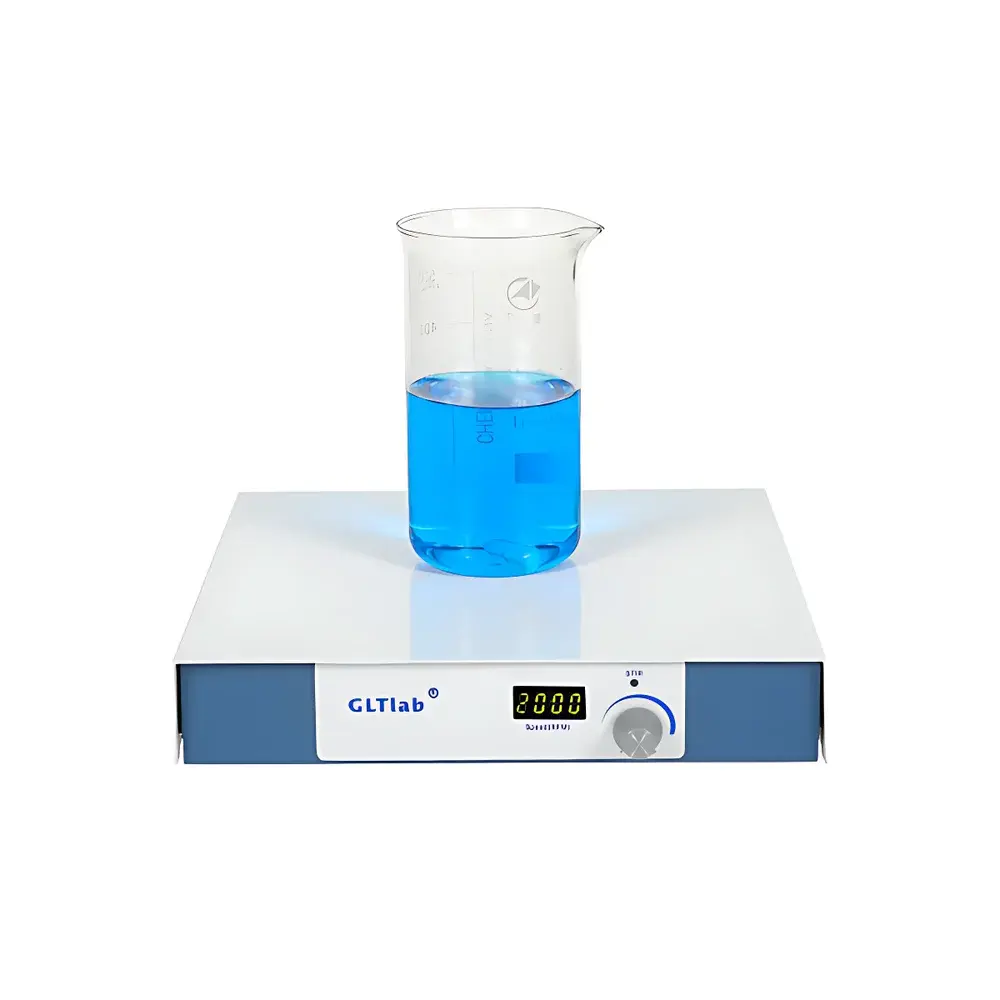
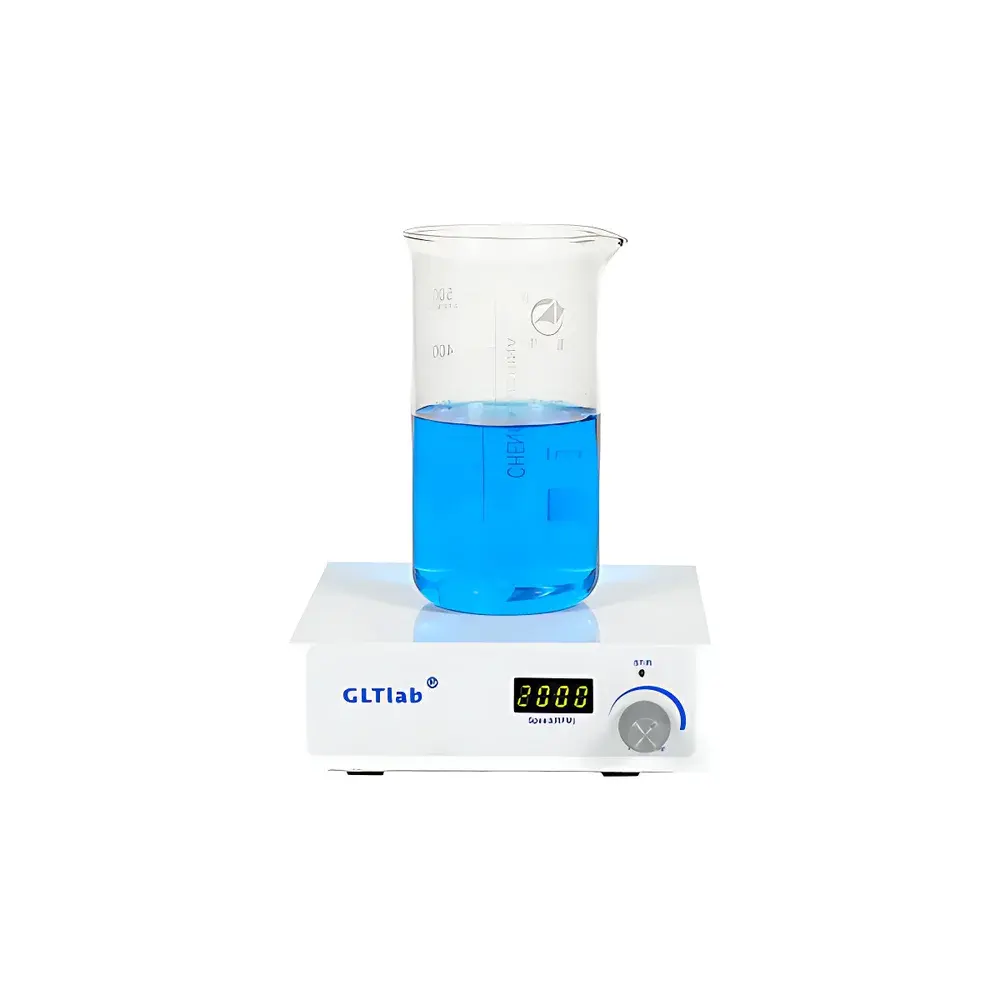
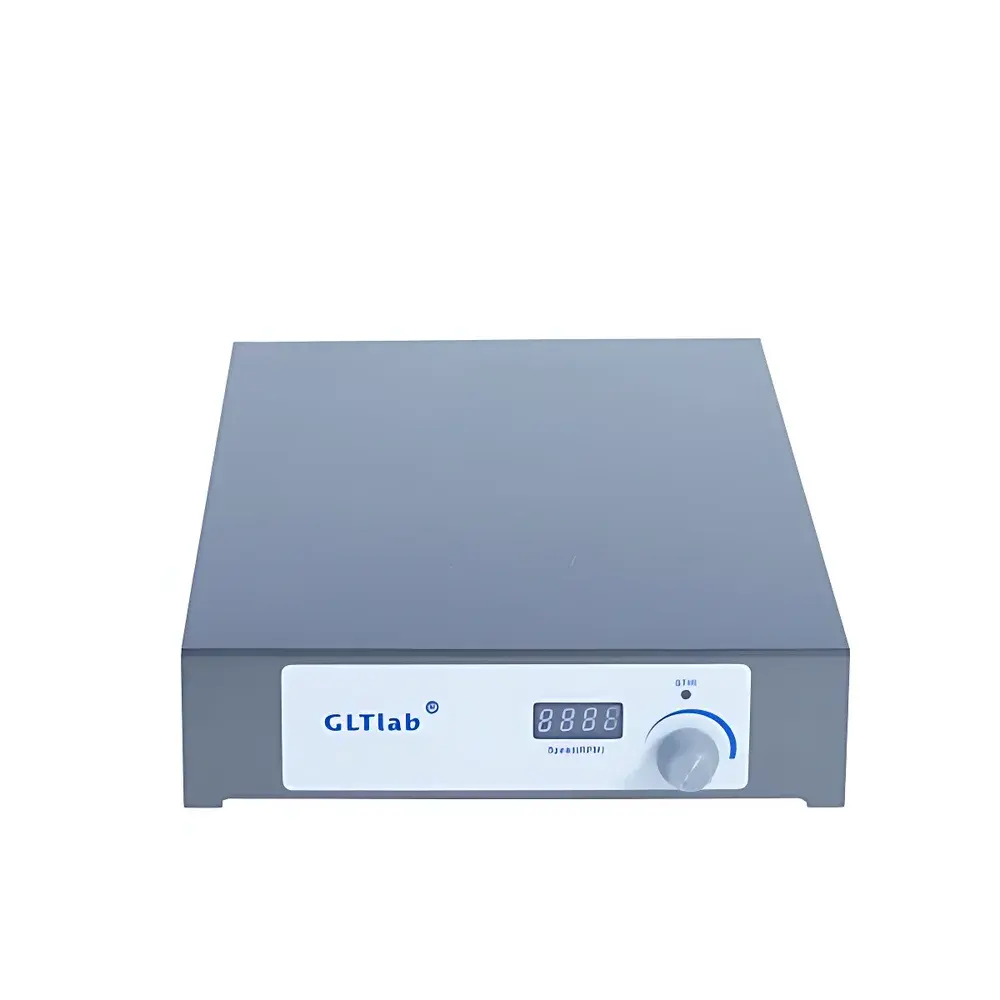
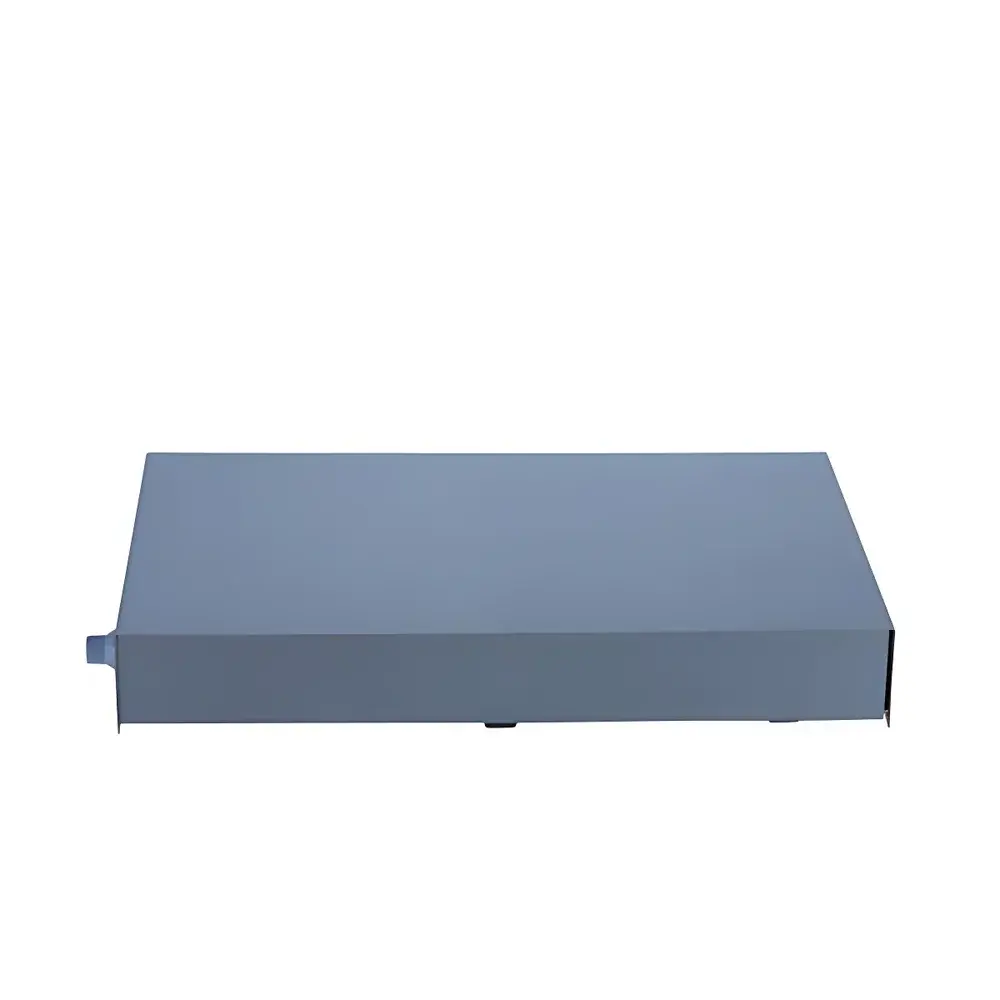
GLTLab S-2C Digital-Controlled Single Magnetic Stirrer
| Brand | GLTLab |
|---|---|
| Origin | Guangdong, China |
| Manufacturer Type | Direct Manufacturer |
| Product Category | Domestic |
| Model | S-2C |
| Instrument Type | Magnetic Stirrer |
| Maximum Stirring Volume | 20 L |
| Speed Range | 100–2000 rpm |
| Temperature Control | Ambient Only |
| Plate Dimensions | 200 × 200 mm |
| Body Material | Stainless Steel (SUS304) Baseplate & Housing |
| Motor Type | Brushless DC Motor |
| Power Supply | 12 V DC Adapter |
| Power Consumption | ~4 W |
| Weight | ~1.5 kg |
| Cable Length | ~1.5 m |
| Display | Digital RPM Readout |
| Speed Setting Method | Rotary Encoder (Not Potentiometer) |
| Input Channels | 1 (Stirring Only) |
| Compliance Note | Not Designed for Concurrent Heating Applications |
Overview
The GLTLab S-2C is a compact, digitally controlled single-position magnetic stirrer engineered for precision and reliability in routine laboratory mixing tasks. It operates on the principle of rotating magnetic field coupling—where a microcontroller-driven brushless DC motor beneath a non-magnetic stainless steel (SUS304) plate generates a time-varying magnetic field that induces rotational motion in a magnetic stir bar immersed in the sample vessel. Unlike hotplate stirrers, the S-2C is strictly a stirring-only device with no integrated heating element; it is explicitly designed for ambient-temperature applications where thermal stability or exclusion of conductive heating is required. Its fixed 200 × 200 mm ceramic-coated SUS304 top plate provides uniform field distribution across standard round-bottom flasks, beakers, and graduated cylinders (50 mL to 20 L capacity), ensuring consistent torque delivery without magnetic saturation at high speeds.
Key Features
- Digital speed control via rotary encoder interface—enabling repeatable, stepless adjustment from 100 to 2000 rpm with ±10 rpm typical repeatability under load.
- High-efficiency brushless DC motor delivering low-noise operation (<45 dB(A)), extended service life (>10,000 h MTBF), and minimal heat generation—critical for long-duration unattended protocols.
- SUS304 stainless steel housing and plate surface resist corrosion, chemical splashes, and mechanical abrasion—suitable for use in analytical, pharmaceutical QC, and academic teaching labs handling aqueous, organic, or mildly acidic/basic solutions.
- Integrated digital LED display shows real-time rotational speed—eliminating parallax error associated with analog dials and supporting documentation traceability during SOP execution.
- Low-power architecture (nominal 4 W draw) enables deployment in environments with limited electrical infrastructure—including laminar flow hoods, gloveboxes, or mobile lab carts powered by DC sources.
- Compact footprint (200 × 200 × 60 mm) and lightweight design (~1.5 kg) facilitate benchtop reconfiguration and integration into modular workstations without compromising structural rigidity.
Sample Compatibility & Compliance
The S-2C accommodates vessels up to 20 L volume when paired with appropriately sized PTFE- or glass-coated stir bars (sold separately). It supports standard borosilicate glassware (e.g., DIN 12779 beakers, ISO 4788 cylinders) and polypropylene containers compatible with magnetic coupling. The device complies with IEC 61010-1:2010 for electrical safety in laboratory equipment and meets RoHS Directive 2011/65/EU for hazardous substance restriction. While not certified to UL or CSA standards, its isolated 12 V DC power architecture inherently limits touch-current risk per IEC 60950-1 Annex A. Note: Per manufacturer specification, concurrent use with external heating sources (e.g., water baths, hot plates) is not validated and may compromise magnetic coupling efficiency or thermal management—users must implement independent temperature monitoring if ambient drift is process-critical.
Software & Data Management
The S-2C operates as a standalone instrument with no embedded firmware connectivity (no USB, Bluetooth, or Ethernet interfaces). All operational parameters are set and monitored locally via the front-panel rotary encoder and LED display. This architecture ensures deterministic response time (<100 ms speed stabilization), immunity to network latency or driver conflicts, and full compatibility with air-gapped or GxP-regulated environments where electronic data capture is restricted. For laboratories requiring audit trails, manual recording of speed settings against batch records or logbooks satisfies basic GLP documentation requirements. No software installation, license management, or cybersecurity patching is necessary—reducing total cost of ownership and validation burden.
Applications
- Homogenization of buffer solutions, cell culture media, and reagent dilutions prior to filtration or dispensing.
- Controlled dissolution testing of solid dosage forms in pharmacopeial methods (e.g., USP <711> apparatus 2 alternatives).
- Preparation of calibration standards for spectrophotometry, titration, or ICP-MS analysis where particulate suspension uniformity impacts accuracy.
- Facilitation of enzymatic reactions, ligand-binding assays, and immunoassay incubations requiring gentle, continuous agitation at constant ambient conditions.
- Undergraduate and graduate teaching labs—demonstrating fluid dynamics principles, viscosity estimation via drag correlation, or magnetic field interaction phenomena.
FAQ
Does the S-2C include a stir bar?
No. Magnetic stir bars are sold separately and must be selected based on vessel geometry, liquid viscosity, and required torque.
Can the S-2C be used with corrosive solvents such as concentrated HCl or NaOH?
Yes—the SUS304 plate and housing provide resistance to short-term exposure; however, prolonged contact with halide-rich or strong oxidizing media requires post-use cleaning and visual inspection for pitting.
Is speed calibration traceable to national standards?
The unit does not include factory calibration documentation; users may verify performance using an external tachometer compliant with ISO 5348:2019.
What is the maximum viscosity this stirrer can handle effectively?
At 2000 rpm, it reliably agitates aqueous solutions up to ~500 mPa·s (e.g., 2% CMC solution); higher viscosities require lower speeds or alternative agitation methods.
Can multiple S-2C units be synchronized?
No—each operates independently with no master-slave or parallel control capability.
Related Products



