
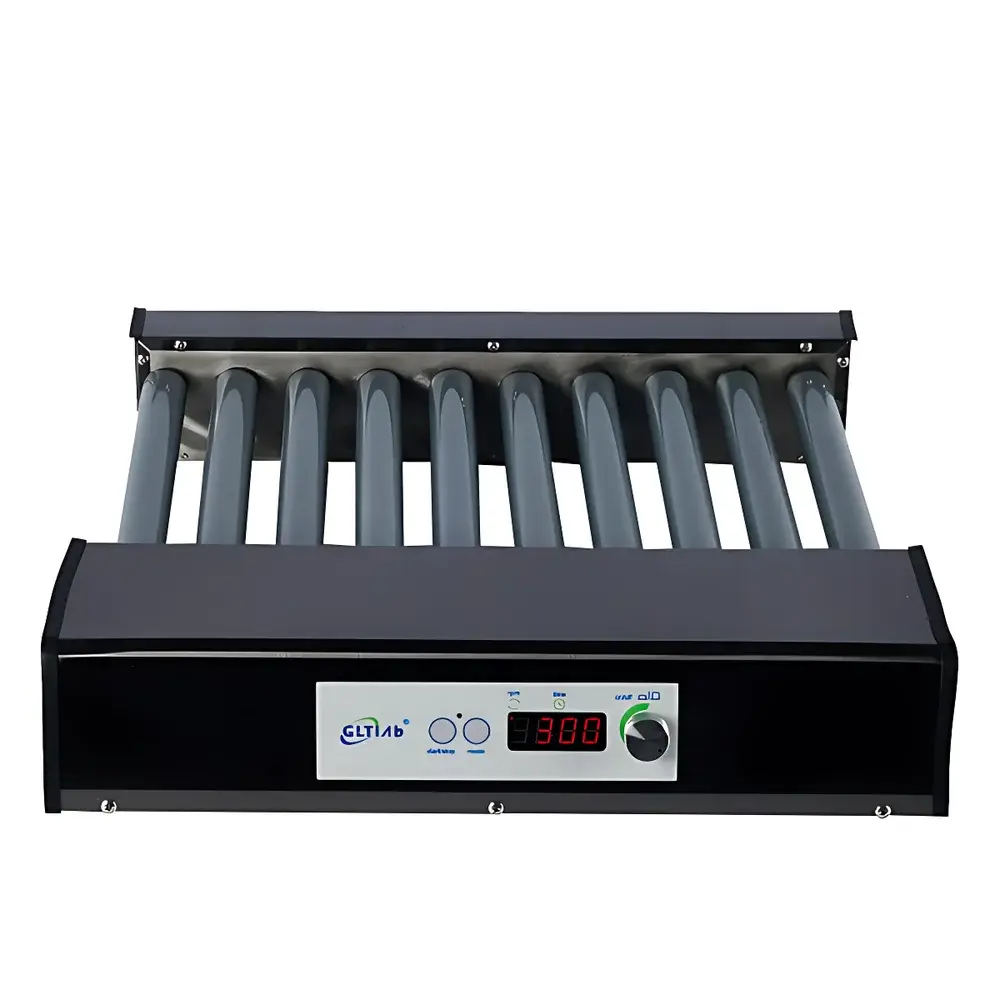
GLTlab TR-10B 10-Axis CNC Rotary Mixer & Homogenizer
| Brand | GLTlab |
|---|---|
| Origin | Guangdong, China |
| Manufacturer Type | Direct Manufacturer |
| Country of Origin | China |
| Model | TR-10B |
| Dimensions (W×D×H) | 556 × 543 × 98 mm |
| Maximum Load Capacity | 10 kg |
| Speed Range | 5–300 rpm |
| Timing Range | 1 s – 200 h |
| Roller Dimensions | 340 × 30 mm |
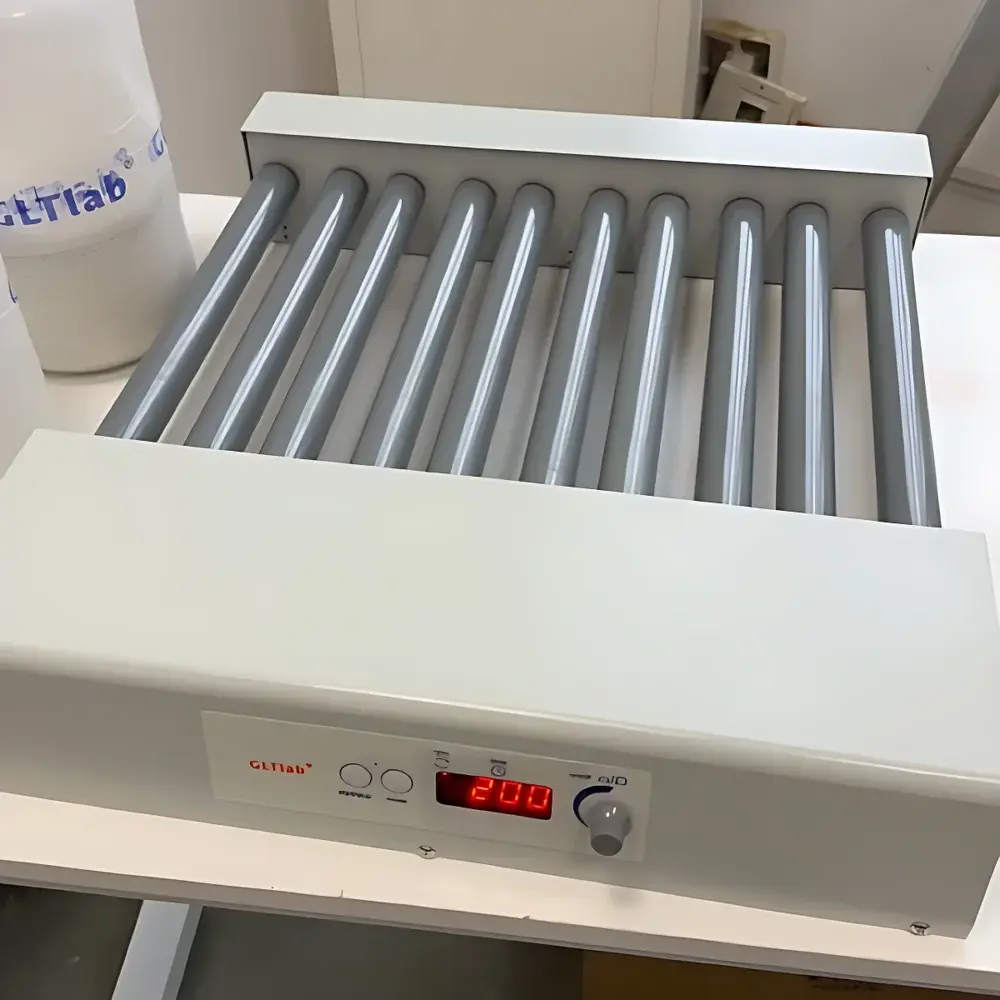
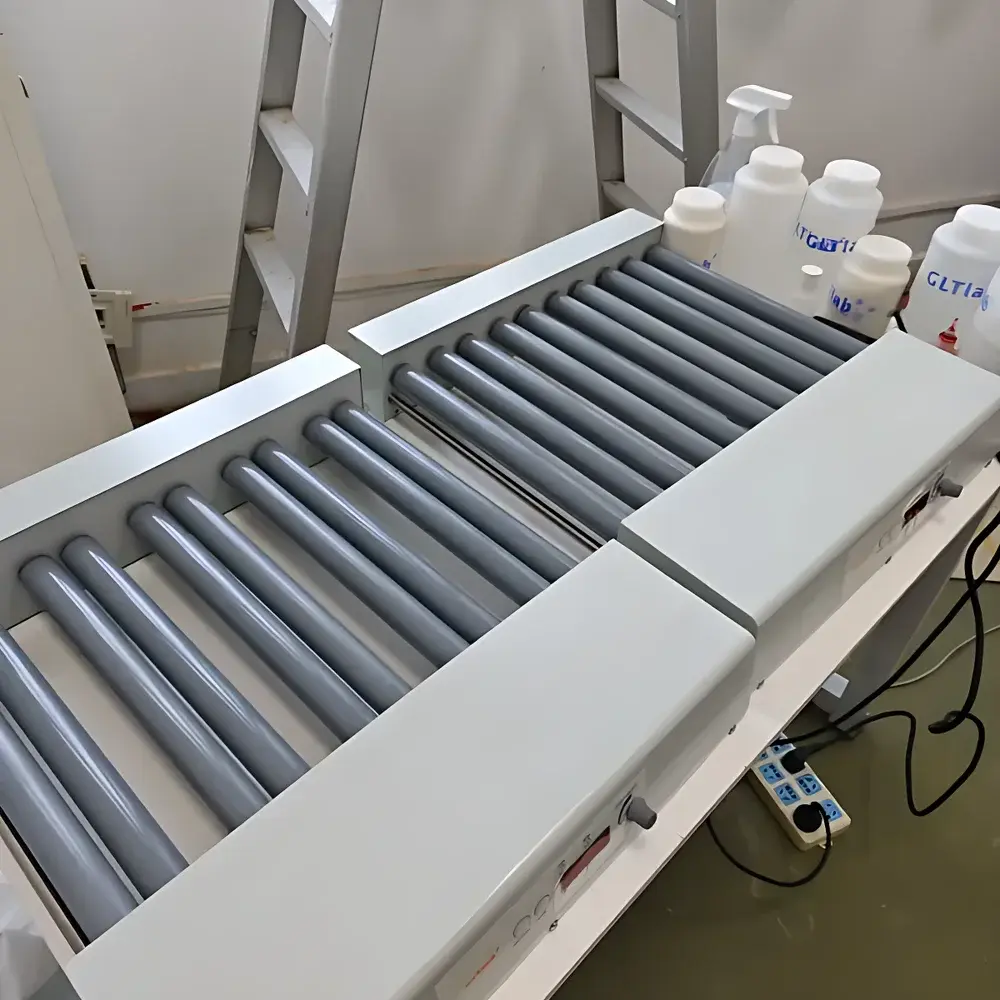
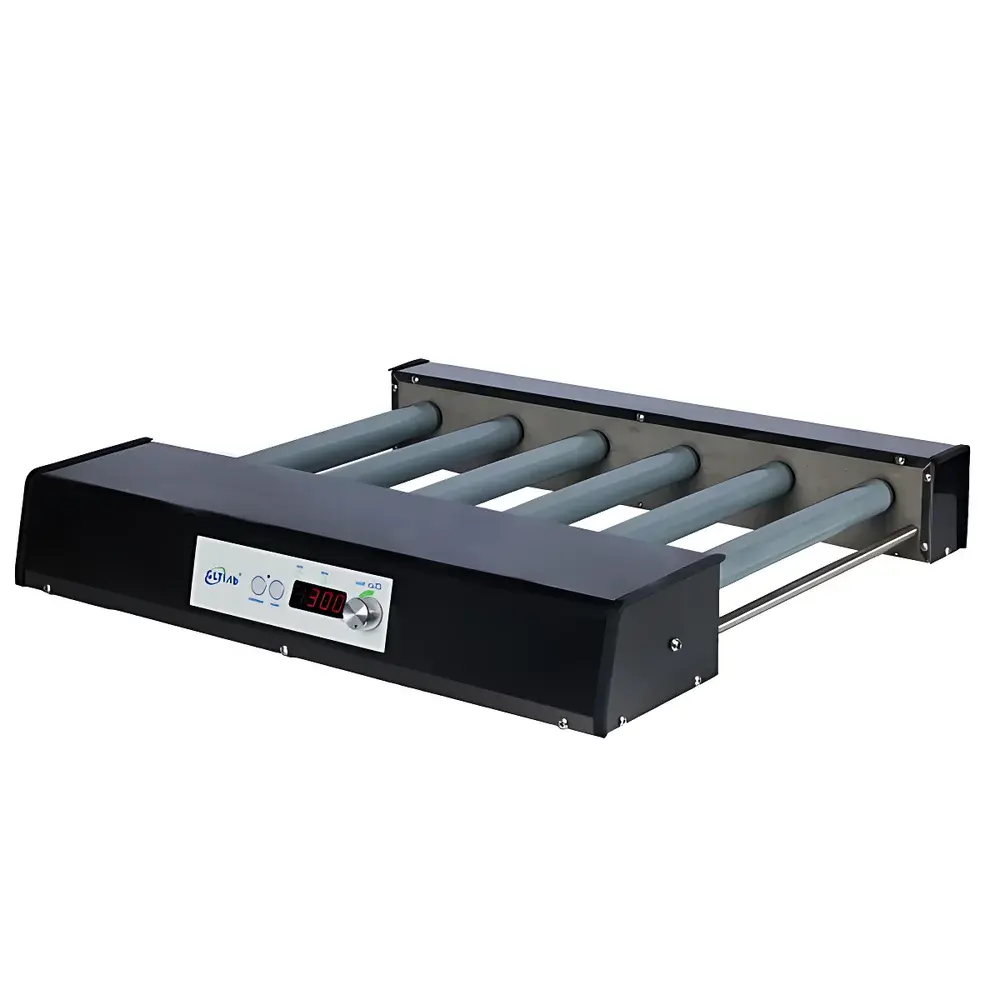
| Roller Count | 10 |
| Control System | CNC Digital Interface |
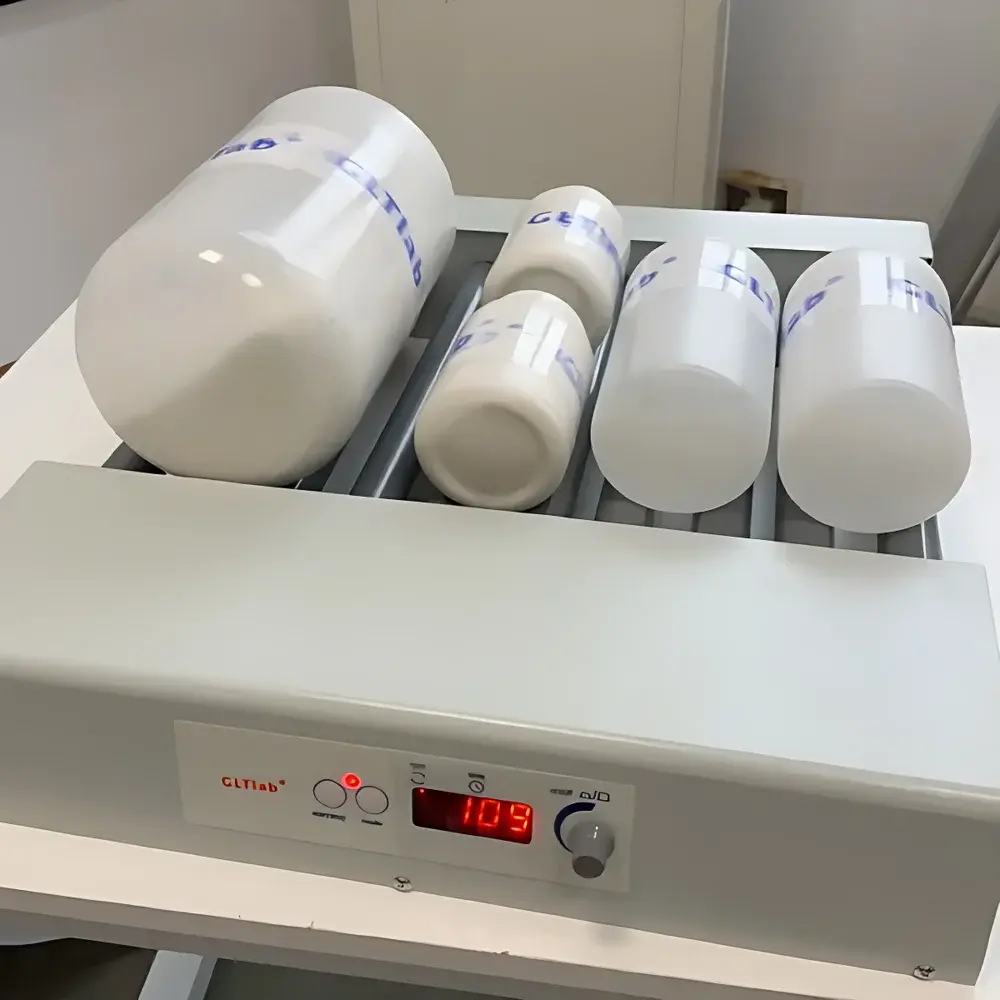
| Sample Vessel Compatibility | Up to five 1 L bottles + five 500 mL bottles, or three 5 L bottles |
| Net Weight | 10 kg |
| Application Scope | Solid–solid, solid–liquid, and high-viscosity liquid homogenization |
Overview
The GLTlab TR-10B is a precision-engineered 10-axis CNC-controlled rotary mixer and homogenizer designed for reproducible, scalable blending of heterogeneous materials under controlled rotational dynamics. Unlike orbital shakers or vortex mixers, the TR-10B employs coaxial, independently driven rollers operating in synchronized bidirectional rotation—enabling true tumbling motion that ensures uniform shear distribution and minimal sedimentation during extended mixing cycles. Its mechanical architecture follows Couette-type flow principles, where material movement is governed by surface velocity gradients between rotating cylindrical surfaces and contained vessels. This design is particularly effective for high-viscosity slurries (e.g., battery electrode pastes with >50 Pa·s apparent viscosity), cohesive powders, and immiscible phase systems where conventional agitation fails to achieve homogeneity without particle attrition or air entrapment.
Key Features
- 10 independently aligned, CNC-synchronized rollers with precision-machined 340 × 30 mm stainless-steel shafts—optimized for torque transmission and thermal stability across extended duty cycles.
- Digital speed control from 5 to 300 rpm with ±1 rpm repeatability; programmable bidirectional reversal at user-defined intervals to prevent stratification and promote axial dispersion.
- Extended timing range (1 second to 200 hours) supports both rapid process development and long-duration aging studies—critical for cathode slurry maturation in Li-ion battery R&D.
- Modular load platform accommodates diverse vessel configurations: up to five 1 L glass or HDPE bottles plus five 500 mL roller bottles simultaneously—or alternatively, three 5 L industrial-grade containers—without mechanical recalibration.
- Brushless DC motor coupled with low-backlash planetary gear reduction delivers consistent torque output up to 10 kg total payload, minimizing vibration and acoustic emission (<52 dB(A) at 1 m).
- IP20-rated enclosure with reinforced aluminum alloy chassis and anti-slip rubber feet ensures structural integrity on laboratory benches and pilot-scale production floors.
Sample Compatibility & Compliance
The TR-10B is validated for use with standard laboratory and industrial containers—including borosilicate glass jars, polypropylene roller bottles, and stainless-steel mixing cans—compatible with solvents (NMP, DMF, water-based electrolytes), conductive carbon dispersions, ceramic suspensions, and polymer binders. It meets mechanical safety requirements per IEC 61000-6-2 (immunity) and IEC 61000-6-4 (emissions), and its operational parameters align with ASTM D5265 (Standard Practice for Mixing High-Viscosity Materials) and ISO 8502-9 (surface preparation testing protocols requiring homogeneous particulate distribution). While not certified for GMP environments out-of-the-box, its deterministic timing, non-volatile parameter storage, and absence of firmware-upgradable logic render it suitable for GLP-compliant workflows when paired with documented SOPs and manual audit logs.
Software & Data Management
The TR-10B operates via an embedded 32-bit ARM Cortex-M4 microcontroller with real-time clock (RTC) and non-volatile memory for storing up to 99 user-defined protocols—including speed profiles, direction reversal sequences, and dwell times. No proprietary software or USB connectivity is required; all settings are configured via tactile membrane keypad with LED feedback. Parameter changes are logged locally with timestamp and operator ID field (manually entered), satisfying basic traceability needs for internal quality records. For integration into automated lab networks, optional RS-485 Modbus RTU interface enables remote monitoring and synchronization with LIMS or MES platforms—supporting audit trails compliant with FDA 21 CFR Part 11 when deployed with validated third-party middleware.
Applications
- Battery Material Processing: Homogenization of NMC/LFP cathode slurries, silicon-carbon anode composites, and solid-state electrolyte suspensions—ensuring uniform conductive network formation prior to coating.
- Pharmaceutical Formulation: Blending of high-potency API powders with excipients, wet granulation pre-mixing, and suspension stabilization for oral dispersible tablets.
- Advanced Ceramics & Composites: Dispersion of nano-sized fillers (e.g., SiC, Al₂O₃) in polymer matrices or aqueous colloids without agglomeration.
- Chemical Synthesis Support: Pre-reaction mixing of viscous monomer blends, catalyst slurries, and crosslinker solutions where thermal sensitivity prohibits high-shear methods.
- Environmental & Geochemical Testing: Reproducible preparation of soil–water extract slurries for leaching assays per EPA Method 1311 and TCLP protocols.
FAQ
What vessel sizes and types are supported on the TR-10B?
The unit accommodates standard roller bottles (500 mL and 1 L), wide-mouth glass jars (up to 1 L), and custom 5 L stainless-steel canisters—provided external diameters fall within 60–120 mm and height does not exceed 300 mm.
Is the TR-10B suitable for explosive or flammable solvent mixtures?
No. The TR-10B lacks ATEX or IECEx certification and is not rated for Class I Division 1 hazardous locations. Use only in well-ventilated fume hoods when handling volatile organics.
Can mixing parameters be exported for regulatory documentation?
Yes—protocol IDs, start/stop timestamps, and final speed/direction states are retained in non-volatile memory and can be manually transcribed into batch records; optional RS-485 output enables automated logging with compatible SCADA systems.
Does the TR-10B require routine calibration?
Speed accuracy is factory-verified against NIST-traceable tachometry and remains stable over 5,000 operating hours; no user calibration is specified. Annual verification using an optical tachometer is recommended for GLP environments.
What maintenance is required for long-term reliability?
Biannual inspection of roller shaft alignment, lubrication of gear housing (with ISO VG 68 synthetic oil), and cleaning of dust filters—detailed in the included Maintenance Logbook (EN/ES/CN editions).



