
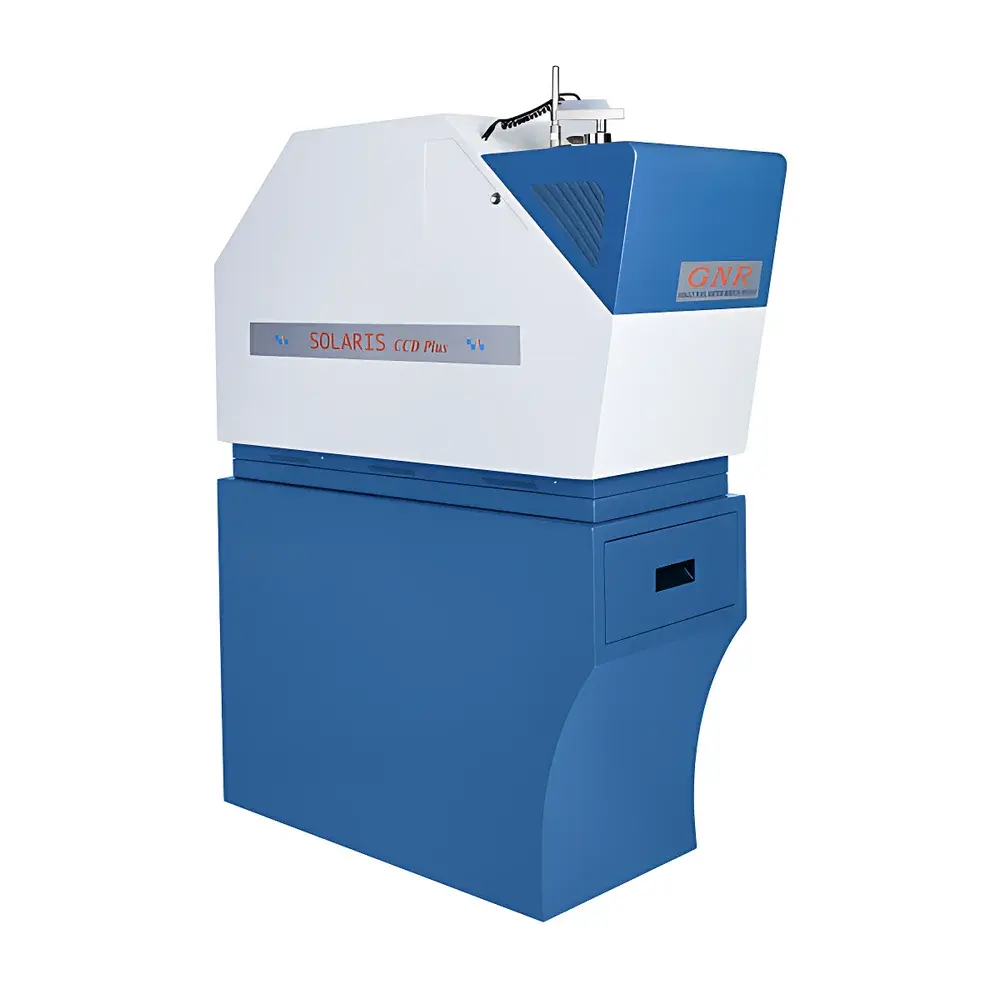
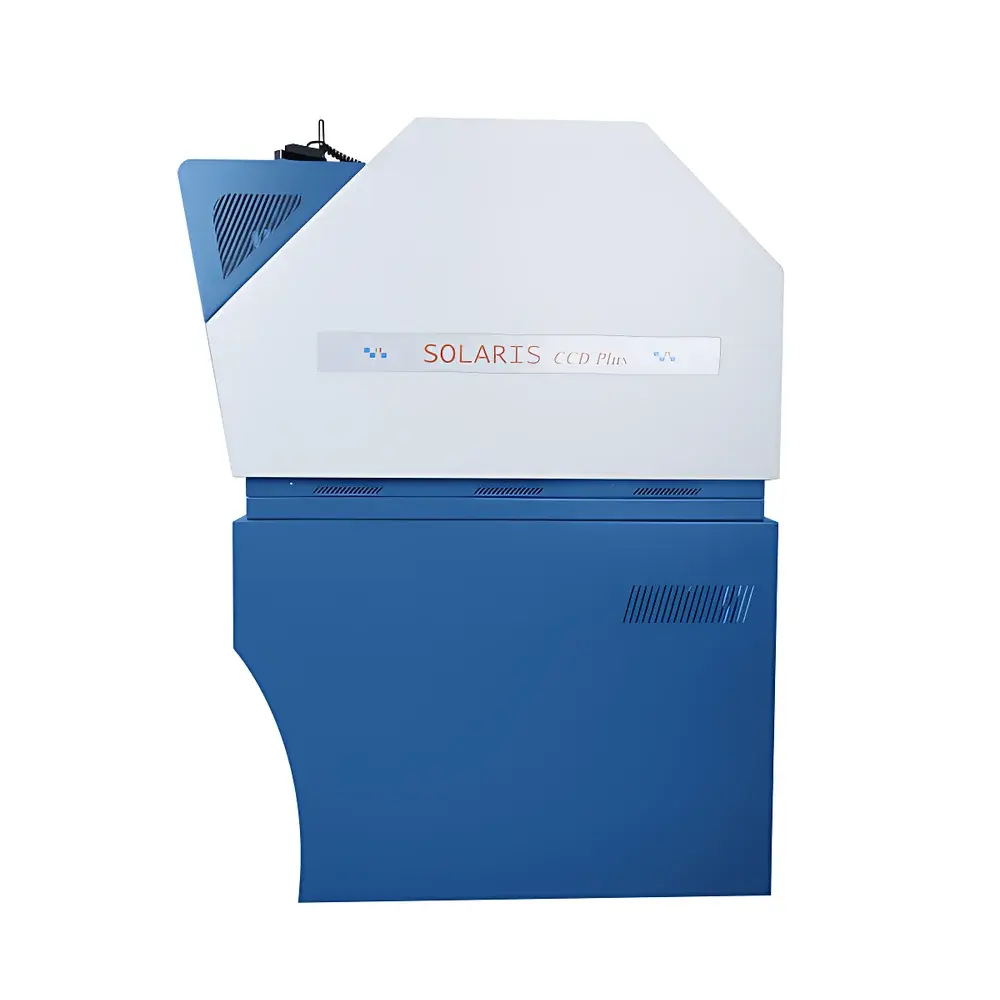
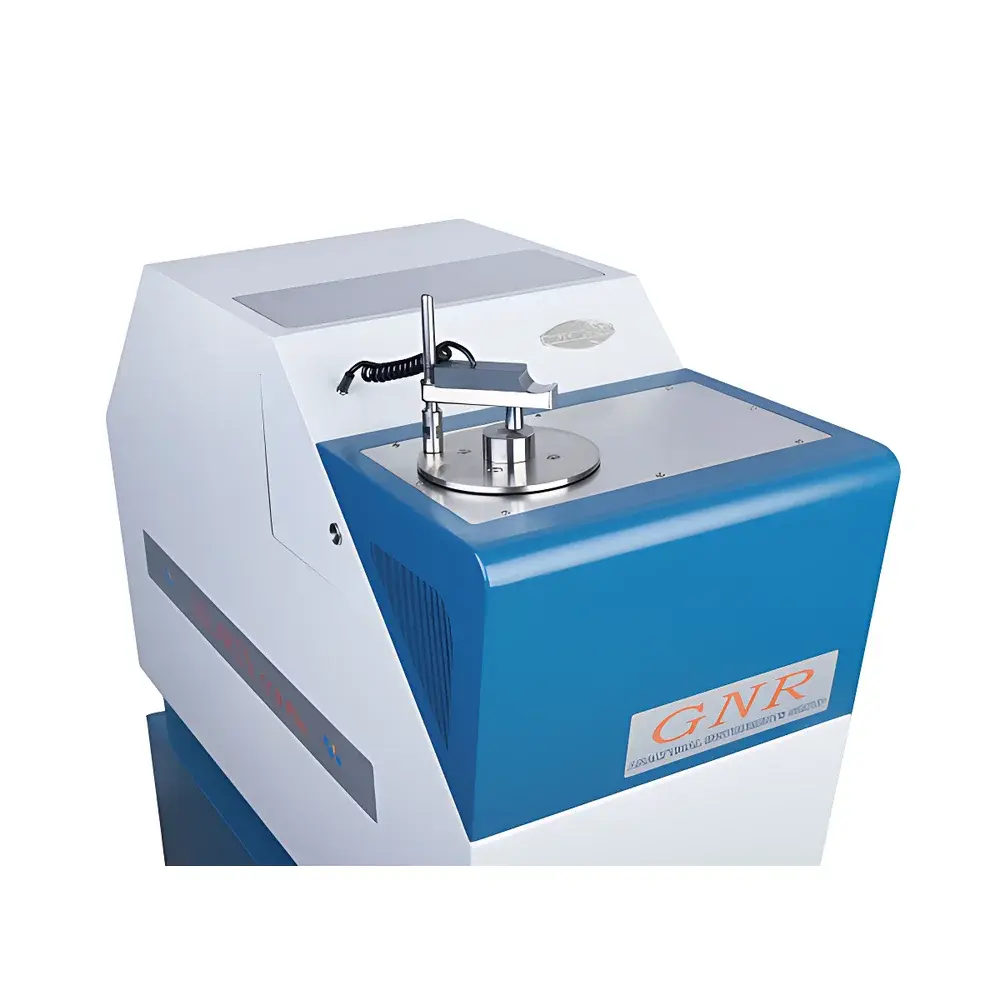
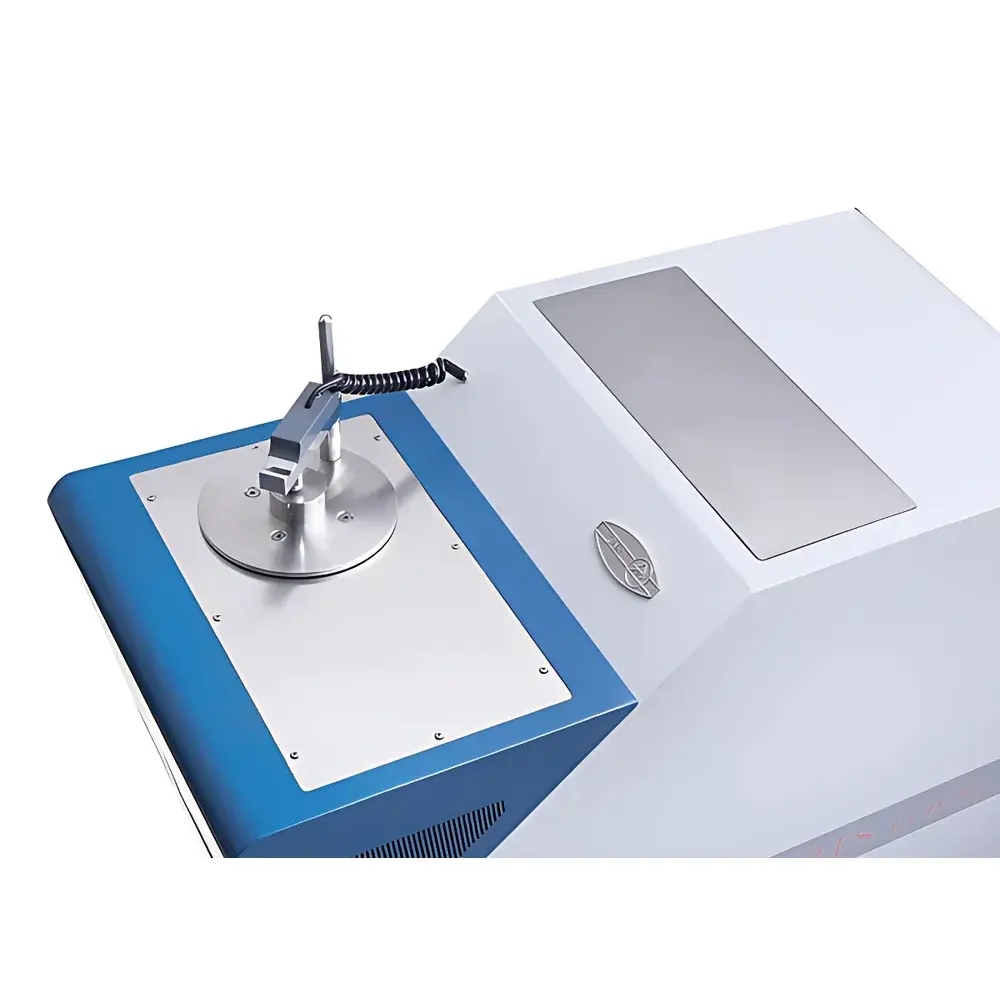
GNR S5 Full-Spectrum Direct-Reading Optical Emission Spectrometer
| Brand | GNR |
|---|---|
| Origin | Italy |
| Model | S5 |
| Instrument Type | Floor-Standing |
| Excitation Method | Spark |
| Focal Length | 500 mm |
| Groove Density | 3600 lines/mm |
| Wavelength Range | 130–900 nm |
| Detection Mode | Full-Spectrum CCD |
| Vacuum Optical Chamber | Integrated, Sealed |
| Elemental Coverage | C, P, S, N, Al, Ni, Cr, Mn, Cu, Mo, V, Ti, Co, Nb, W, Sn, Pb, Zn, Mg, Ca, Si, Fe, As, Bi, Sb, etc. |
Overview
The GNR S5 Full-Spectrum Direct-Reading Optical Emission Spectrometer is a floor-standing spark emission spectrometer engineered for high-precision elemental analysis of metallic alloys in industrial QC/QA, foundry, and metallurgical R&D laboratories. Based on the principle of spark-induced optical emission spectroscopy (OES), the S5 utilizes controlled argon-atmosphere spark excitation to atomize and excite sample surfaces, generating element-specific atomic emission lines across the ultraviolet-to-near-infrared spectrum (130–900 nm). Its 500 mm focal length Paschen-Runge optical bench—among the longest in commercial full-spectrum OES systems—enables superior spectral resolution and dispersion, critical for resolving overlapping lines of challenging elements such as arsenic (As), antimony (Sb), bismuth (Bi), and nickel (Ni). The integrated vacuum optical chamber eliminates air absorption below 190 nm, ensuring accurate quantification of carbon (C), phosphorus (P), sulfur (S), and nitrogen (N) with detection limits down to 10 ppm for carbon in steel matrices. This architecture supports long-term signal stability and minimizes recalibration frequency under variable ambient conditions.
Key Features
- 500 mm focal length Paschen-Runge spectrometer with 3600 lines/mm concave holographic grating, delivering high linear dispersion and resolving power for complex alloy matrices.
- Full-spectrum CCD detection system covering 130–900 nm continuously—no mechanical scanning or PMT channel switching required—enabling simultaneous multi-element acquisition and post-acquisition spectral reprocessing.
- Integrated vacuum-sealed optical chamber with direct light-path design: UV-transparent fused silica window and lens-based coupling minimize optical losses and maintain signal integrity over time.
- Real-time wavelength calibration: At every spark event, the system performs automatic pixel-level spectral reference mapping using internal calibration lines, compensating for thermal drift without requiring temperature stabilization or extended warm-up periods.
- Optimized argon-flushed spark stand with laminar gas flow dynamics—engineered to fully encapsulate the excitation zone and suppress oxide formation, ensuring reproducible ablation and stable plasma conditions across diverse sample geometries and surface finishes.
- Maintenance-optimized optical path: Front-access lens cleaning and modular vacuum chamber design reduce downtime; no optical realignment is needed after routine maintenance.
Sample Compatibility & Compliance
The S5 is validated for solid conductive metallic samples—including ferrous (steels, cast irons), non-ferrous (Al, Cu, Mg, Zn, Ti, Ni-base superalloys), and specialty alloys (stainless steels, tool steels, high-temperature alloys). Sample preparation follows ISO 11577:2020 (metallic materials — spark optical emission spectrometry — general requirements) and ASTM E415-22 (standard test method for analysis of carbon and low-alloy steel by spark OES). The instrument complies with IEC 61000-6-3 (EMC emissions) and IEC 61000-6-2 (immunity), and its software architecture supports audit-trail functionality aligned with GLP and GMP documentation requirements per FDA 21 CFR Part 11 when configured with optional electronic signature modules.
Software & Data Management
Controlled via GNR’s proprietary SpectraSuite™ software, the S5 provides intuitive method development, calibration management, and statistical process control (SPC) tools. All raw spectral data—including full 2D CCD frames—are stored in vendor-neutral HDF5 format, enabling third-party spectral processing, chemometric modeling (e.g., PLS regression), and traceable data re-evaluation. Calibration models support multi-matrix standardization (steel, aluminum, copper), drift correction via internal reference lines, and automated outlier detection based on intensity variance thresholds. Data export adheres to ASTM E1382-21 (standard guide for digital data exchange in analytical chemistry), supporting CSV, XML, and LIMS-integrated protocols via OPC UA or ODBC interfaces.
Applications
- High-accuracy certification of carbon content in low-carbon steels and ultra-low-carbon stainless grades (e.g., AISI 304L, 316L).
- Trace analysis of residual elements (As, Sn, Sb, Bi) in automotive and aerospace aluminum alloys per AMS 2772 and EN 573-3.
- Routine monitoring of P and S segregation in continuous-cast billets and hot-rolled coil samples.
- Multi-element verification of master alloys and scrap sorting in recycling facilities (e.g., Cu–Ni–Co ternary blends).
- Research-grade spectral line profiling for plasma diagnostics and matrix-effect studies in laser-assisted or hybrid spark-laser excitation development.
FAQ
Does the S5 require external cooling water or compressed air?
No—the S5 operates with air-cooled electronics and sealed argon recirculation; only bottled argon (99.996% purity) is required for excitation.
Can the S5 analyze non-conductive samples such as ceramics or coated metals?
Not directly; it is designed exclusively for electrically conductive solid metals. Non-conductors require alternative techniques (e.g., LA-ICP-MS or XRF).
How frequently must the vacuum pump be serviced?
The oil-free scroll pump requires inspection every 12 months and filter replacement every 24 months under typical 8-hr/day operation.
Is method transfer possible between different GNR instruments?
Yes—calibration models and spectral libraries are portable across the GNR S series (S3, S5, S7) when using identical grating and detector configurations.
What safety certifications does the S5 hold?
It carries CE marking per EU Machinery Directive 2006/42/EC and RoHS 2011/65/EU compliance; laser-classified components (if equipped with optional alignment aids) meet IEC 60825-1:2014 Class 1 requirements.





