
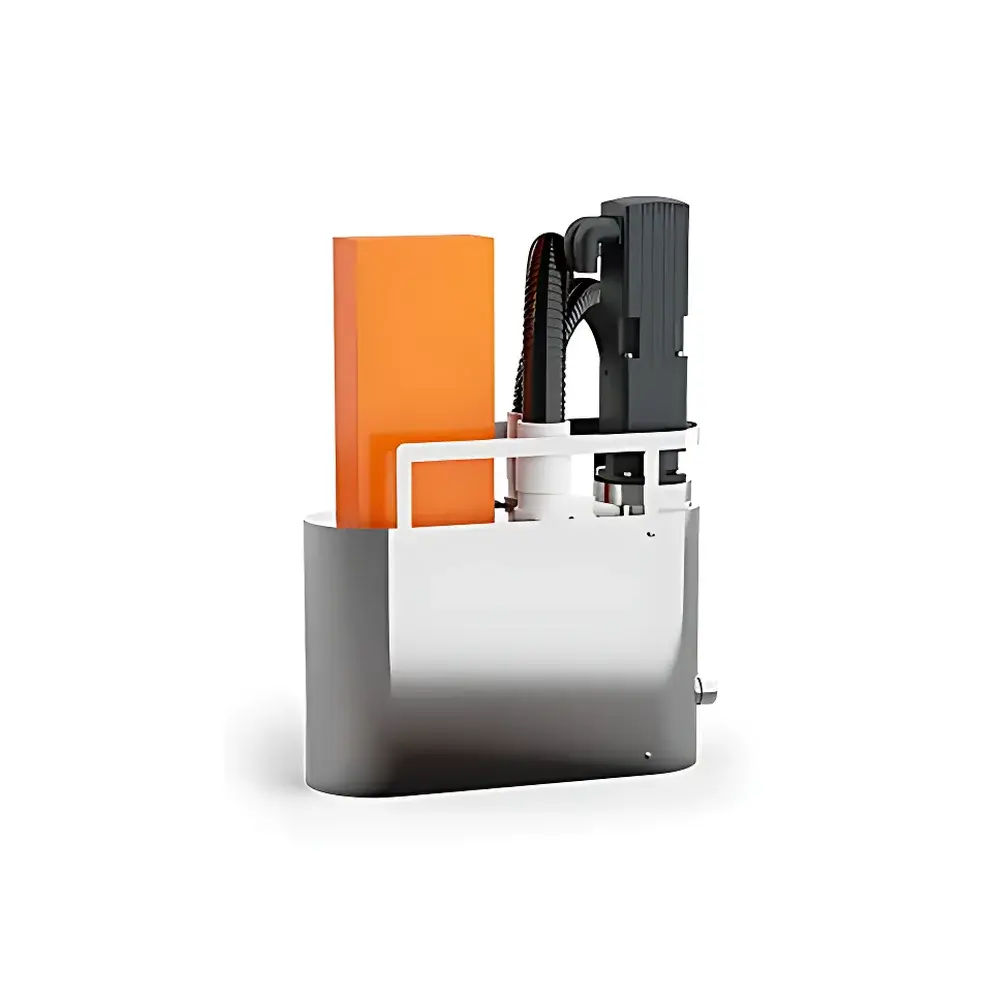
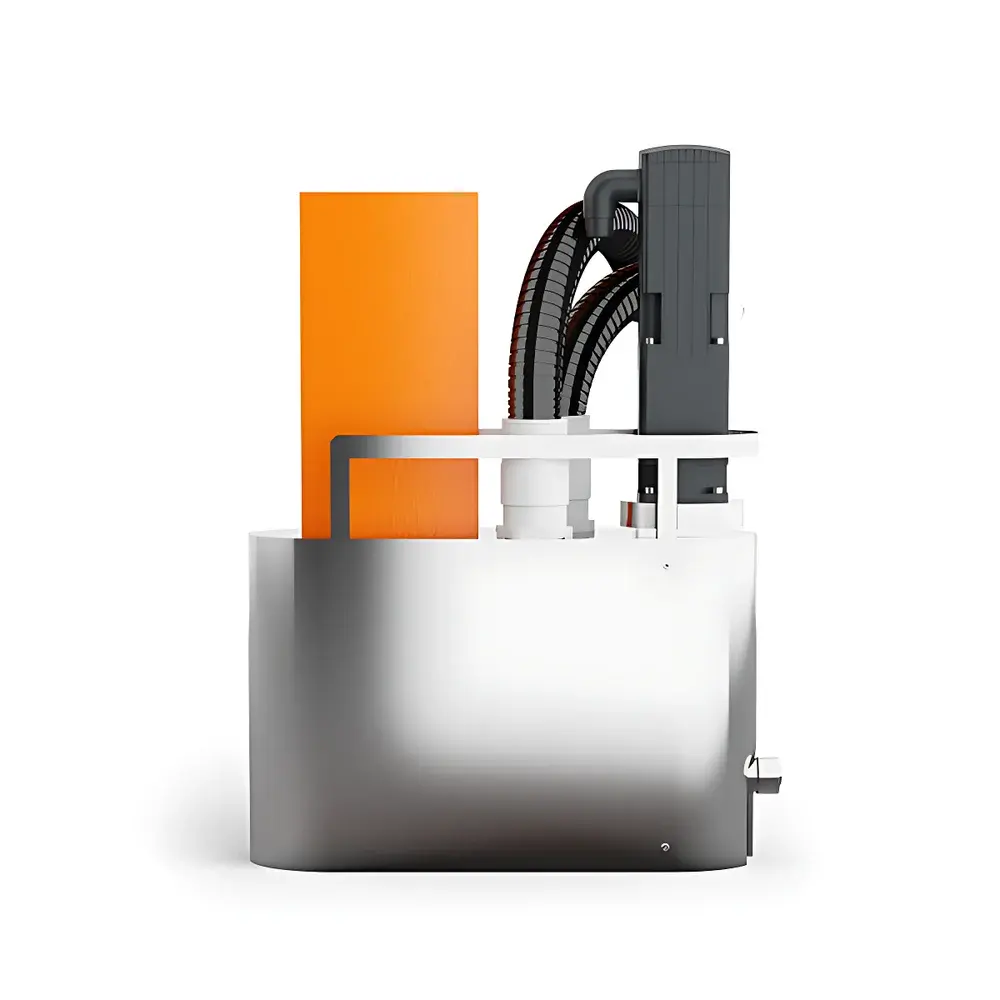
Goettfert MBR/MBR-TD Online Capillary Rheometer
| Brand | Goettfert |
|---|---|
| Origin | Germany |
| Model | MBR / MBR-TD |
| Die Diameter | 0.5–10 mm |
| Die Length | 40 mm |
| Temperature Range | 40–350 °C |
| Pressure Range | 1–350 bar |
| Melt Pump Displacement | 0.4 cm³/rpm |
| Pump Speed | 0.1–100 rpm |
| Dynamic MVR Range | 1:1000 |
| Dimensions (L×W×H) | 550 × 175 × 335 mm |
| Weight | ~20 kg |
Overview
The Goettfert MBR and MBR-TD are compact, inline capillary rheometers engineered for real-time monitoring of polymer melt rheology directly within extrusion or compounding lines. Based on the fundamental principles of capillary rheometry—governed by the Hagen–Poiseuille equation—the instruments measure shear viscosity, melt flow rate (MFR), melt volume rate (MVR), flow rate ratio (FRR), and power-law index n, which correlates with molecular weight distribution (Mw/Mn). Unlike offline laboratory rheometers, the MBR series features a short-flow, non-recirculating melt path with a precision-machined cylindrical die geometry, ensuring high data fidelity and direct comparability with ASTM D3835 and ISO 11443 test results. Its design eliminates melt residence time artifacts, making it especially suitable for dynamic process environments where formulation changes occur frequently—such as in masterbatch production, specialty compound blending, or R&D pilot lines.
Key Features
- Compact footprint (width only 150 mm for MBR; 175 mm for MBR-TD), enabling installation in space-constrained industrial settings
- Non-return melt path architecture: processed material flows unidirectionally through the die and exits the system—no recirculation to the main extruder
- Integrated clean-out valve for rapid, residue-free material changeovers between batches or formulations
- Modular extension capability: optional Rheotens unit mounts directly at the die exit for simultaneous extensional rheology characterization
- MBR-TD variant supports triple-die configuration—enabling concurrent measurement across three distinct capillary geometries for enhanced shear-rate coverage and cross-validation
- High-precision melt pump (0.4 cm³/rpm displacement) with digitally controlled speed range (0.1–100 rpm) ensures stable, reproducible pressure generation
Sample Compatibility & Compliance
The MBR/MBR-TD accommodates thermoplastic polymers—including polyolefins, engineering plastics (e.g., PA, PC, PBT), elastomers, and filled compounds—with melt temperatures spanning 40–350 °C and pressures up to 350 bar. Its cylindrical die geometry (diameter 0.5–10 mm, length 40 mm) conforms to standardized capillary rheometry practice per ISO 11443 Annex A and ASTM D3835 Section 7. All temperature control zones employ Pt100 sensors and PID-regulated heating, traceable to national metrological standards. The system supports GLP-compliant operation when integrated with validated data acquisition software and audit-trail-enabled controllers—fully compatible with FDA 21 CFR Part 11 requirements for electronic records and signatures in regulated manufacturing environments.
Software & Data Management
Goettfert’s proprietary WinRHEO software provides real-time visualization of viscosity curves, pressure transients, MVR trends, and FRR evolution over time. Data export is supported in CSV, XML, and HDF5 formats for integration into MES or LIMS platforms. The software logs full instrument metadata—including calibration history, sensor diagnostics, and user access timestamps—to satisfy GMP documentation requirements. Optional OPC UA server module enables seamless connectivity with Siemens PCS7, Rockwell FactoryTalk, or Schneider EcoStruxure systems for closed-loop process feedback applications.
Applications
- Continuous quality verification during high-value compound production (e.g., conductive, flame-retardant, or medical-grade grades)
- Real-time detection of batch-to-batch molecular degradation or contamination events via deviation in power-law index n
- Process optimization of twin-screw extrusion parameters using live shear viscosity feedback
- Validation of new resin lots against reference rheological profiles prior to full-scale production release
- Supporting ICH Q5E comparability studies for polymer-based drug delivery systems under regulatory review
FAQ
Can the MBR be installed on existing extrusion lines without major retrofitting?
Yes—the unit mounts directly via standard DIN/ISO flange interfaces (typically DN25–DN50) and requires only electrical supply, compressed air for valve actuation, and coolant connections.
Is calibration traceable to national standards?
All pressure transducers and temperature sensors are supplied with factory calibration certificates traceable to PTB (Physikalisch-Technische Bundesanstalt) or equivalent NMIs.
Does the MBR-TD require additional hardware to run triple-die tests?
Yes—the MBR-TD includes three independent die holders, three dedicated pressure transducers, and an expanded controller module preconfigured for synchronized multi-channel acquisition.
How is melt residence time minimized in the MBR design?
The total melt path from inlet to die exit is less than 60 mm, with no dead volumes or internal recirculation zones—typical residence time is under 2 seconds at 50 rpm pump speed.
Can raw rheological data be exported for third-party analysis?
Yes—WinRHEO exports fully timestamped, unit-annotated datasets including shear stress, shear rate, apparent viscosity, and derived indices (FRR, n, activation energy) in open-format files compliant with ASTM E2915 and ISO/IEC 17025 reporting guidelines.



