
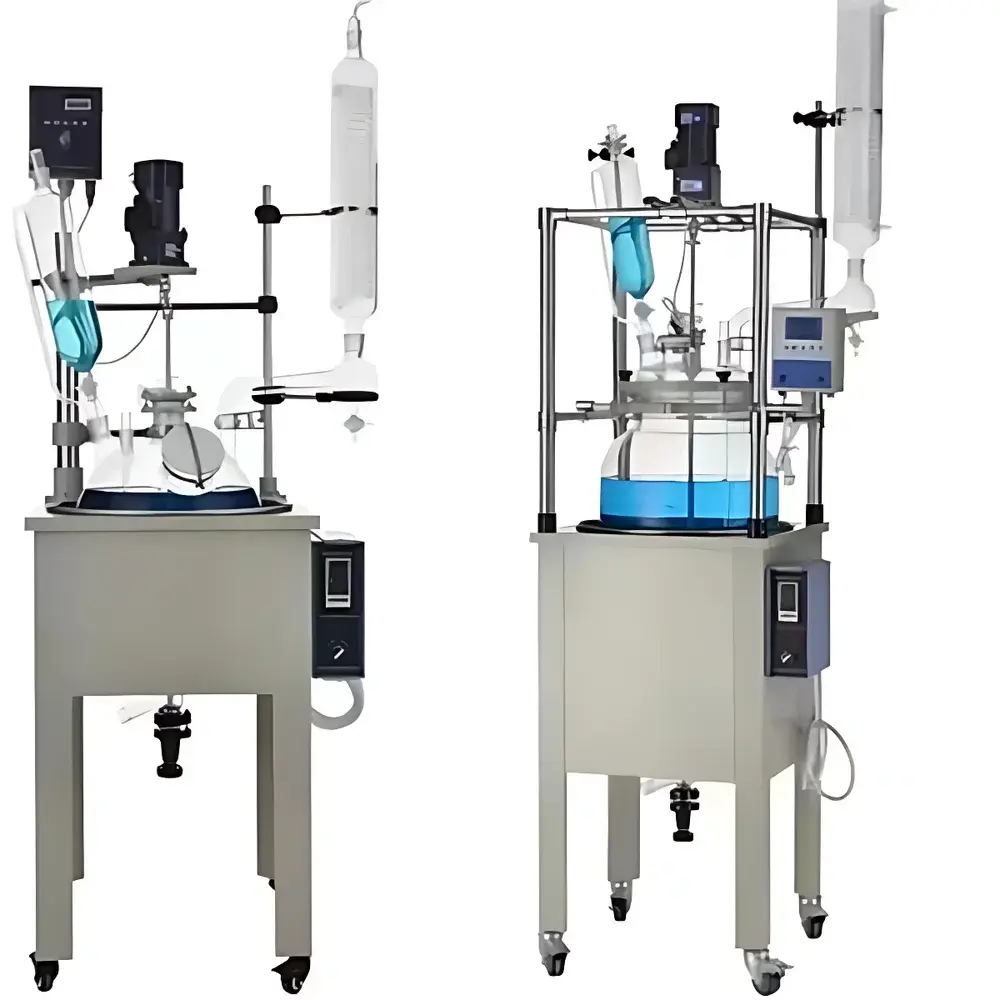
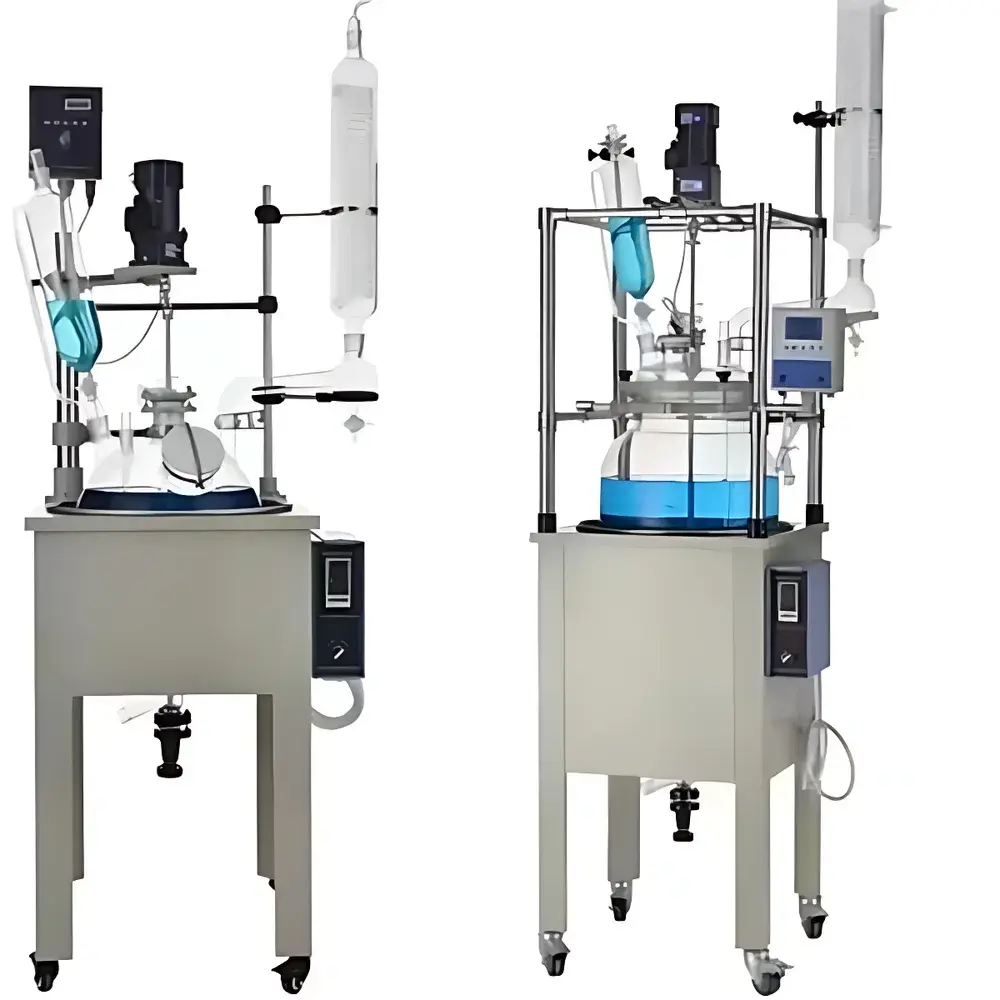
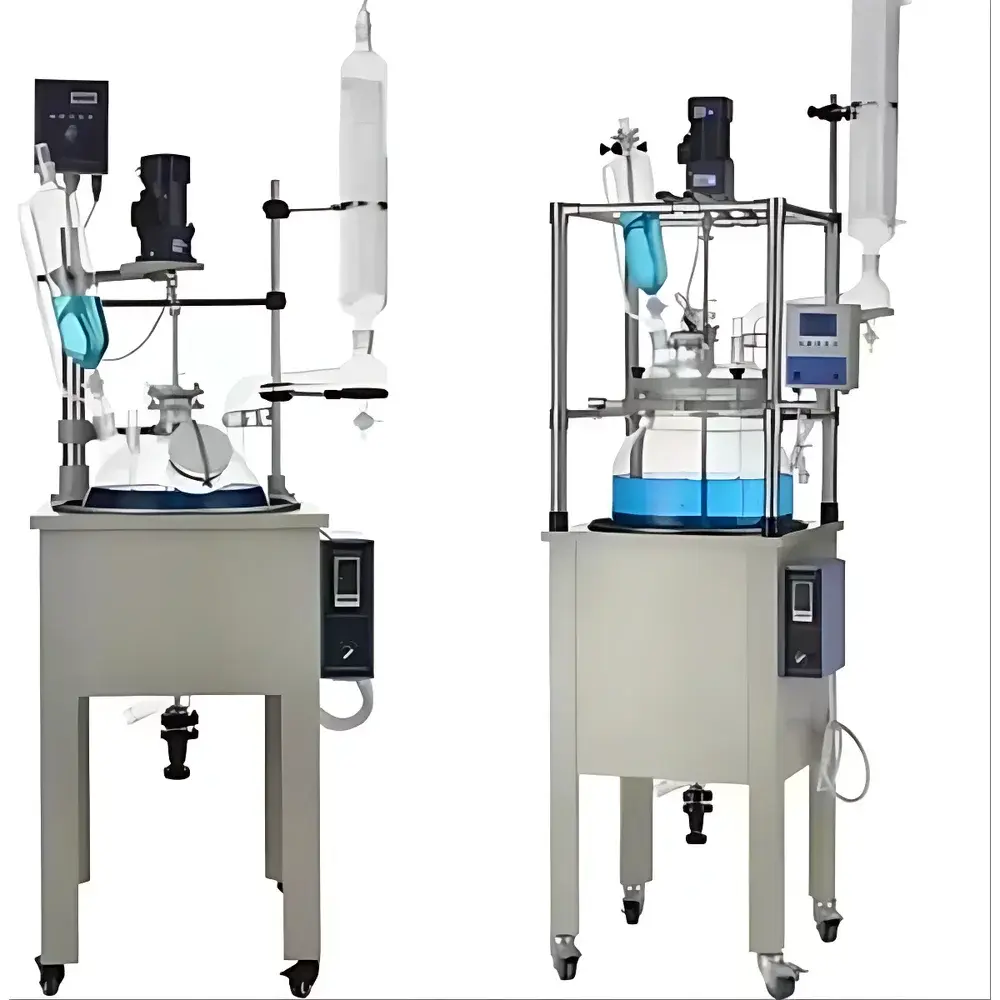
Gongyi Yuhua YDF Series Single-Layer Glass Reactor (1 L to 100 L Capacity)
| Brand | Gongyi Yuhua Instrument |
|---|---|
| Origin | Henan, China |
| Model | YDF-1L, YDF-2L, YDF-3L, YDF-5L, YDF-10L–YDF-100L |
| Vessel Material | GG-17 Borosilicate Glass (3.3) |
| Max Vacuum | −0.098 MPa (−98 kPa) |
| Stirring Speed Range | 0–800 rpm (digital display) |
| Motor Power | 40 W |
| Operating Voltage | 220 V AC |
| Sealing | PTFE Components |
| Temperature Control | Compatible with External Oil/Water Bath Circulators or Chilled Circulation Units |
| Discharge | Bottom-mounted Full-Seal Drain Valve (for ≥10 L models) |
| Compliance | Designed for Lab-Scale Synthesis, Extraction, and Distillation under Ambient and Reduced Pressure |
Overview
The Gongyi Yuhua YDF Series Single-Layer Glass Reactor is an engineered laboratory system designed for controlled chemical synthesis, solvent reflux, concentration, distillation, and extraction under ambient, heated, or reduced-pressure conditions. Unlike jacketed reactors, the YDF series relies on external thermal management—typically via a compatible thermostatic oil/water bath circulator or a chilled circulation unit—to maintain precise temperature profiles across the reaction volume. The reactor vessel is fabricated from GG-17 (DIN ISO 3585) borosilicate glass 3.3, offering high thermal shock resistance (ΔT ≈ 150 °C), low coefficient of thermal expansion (3.3 × 10⁻⁶ K⁻¹), and exceptional chemical inertness toward acids, alkalis, and organic solvents. Its single-layer construction enables full visual monitoring of reaction progress, phase separation, crystallization, and foam formation—critical for process development in fine chemistry, pharmaceutical intermediate synthesis, and natural product isolation.
Key Features
- GG-17 borosilicate glass vessel with calibrated volume markings and standardized ISO 22241/ISO 1127 ground-glass joints (e.g., 24/29, 29/32, 34/45) for modular integration with condensers, dropping funnels, thermometers, and vacuum adapters.
- PTFE-sealed mechanical stirring assembly featuring corrosion-resistant PTFE-coated impeller and shaft; optimized for laminar-to-turbulent mixing across viscosity ranges up to ~500 mPa·s at 800 rpm.
- Digital speed controller with soft-start function and real-time rpm readout (0–800 rpm), minimizing mechanical stress during startup and enabling reproducible shear history in kinetic studies.
- Integrated bottom discharge valve with full PTFE sealing and leak-tight shut-off—standard on all YDF-10L and larger configurations—enabling safe, residue-free transfer of reaction mixtures without disassembly.
- Modular thermal interface: compatible with external circulation baths operating from −20 °C to +200 °C (dependent on bath fluid); optional cold-finger or coil-type condenser attachments support efficient vapor condensation and reflux control.
- Compact, space-efficient frame design with adjustable height clamping and load-balanced support structure—certified for static loads up to 1.5× rated vessel mass (e.g., 150 kg for YDF-100L).
Sample Compatibility & Compliance
The YDF reactor supports heterogeneous and homogeneous reactions involving aqueous, alcoholic, chlorinated, and ether-based media. Its all-glass/PTFE wetted path eliminates metal ion leaching, making it suitable for catalyst-sensitive transformations and USP –compliant material compatibility screening. While not certified to ASME BPVC Section VIII or PED 2014/68/EU, the system complies with general laboratory safety standards (EN 61010-1, IEC 61000-6-3) when operated within specified vacuum (≤ −0.098 MPa) and temperature limits. For GLP-regulated environments, users must validate bath temperature uniformity (±0.5 °C), stirrer torque consistency, and vacuum decay rate (<0.5 kPa/min at −95 kPa) per internal SOPs aligned with ISO/IEC 17025 calibration requirements.
Software & Data Management
The YDF reactor operates as a standalone analog-digital hybrid instrument: motor speed and bath temperature are managed externally via independent controllers. No embedded firmware or proprietary software is included. However, the system is fully compatible with third-party data acquisition platforms (e.g., LabVIEW, Delta Tau PMAC, or Eurotherm 3500 series) when connected via 0–10 V analog inputs or Modbus RTU (with optional interface module). All critical operational parameters—including bath setpoint, actual temperature, stir speed, and vacuum level (when paired with a digital vacuum gauge)—can be logged synchronously for audit trails required under FDA 21 CFR Part 11 (when implemented with electronic signature and access controls).
Applications
- Batch synthesis of APIs and intermediates under nitrogen or argon blanket, including Grignard, lithiation, and hydrogenation precursors.
- Solvent recovery and concentration of heat-labile botanical extracts using gentle rotary evaporation–style reflux at sub-boiling temperatures.
- Acid-catalyzed esterification and transesterification with real-time visual monitoring of phase inversion and water separation.
- Polymerization initiation studies where monomer conversion is tracked via refractive index or in-line FTIR coupling through side-arm ports.
- Crystallization screening under controlled cooling ramps (0.1–2 °C/min) enabled by programmable circulators.
- Extraction of volatile oils from plant matrices using steam distillation or solvent-assisted hydrodistillation.
FAQ
What temperature range can the YDF reactor safely operate within?
The GG-17 glass vessel is rated for continuous use between −20 °C and +150 °C. Short-term excursions to +200 °C are permissible with appropriate thermal ramping and bath fluid selection (e.g., silicone oil).
Is the system suitable for corrosive halogenated solvents such as chloroform or carbon tetrachloride?
Yes—GG-17 glass and PTFE components exhibit excellent resistance to halogenated organics; however, prolonged exposure to hot, concentrated hydrohalic acids (e.g., HBr, HI) is not recommended.
Can the YDF-10L and larger models be mounted on a reactor lift or automated platform?
Yes—each model features standardized M12 threaded mounting points on the base frame, compatible with common lab reactor lifts and robotic handling interfaces.
Does the system include vacuum pump or chiller integration capability?
No—vacuum pumps and chillers are external accessories; the YDF provides standard NW16/KF16 vacuum port and 1/2″ BSP inlet/outlet for coolant lines.
How is calibration traceability maintained for temperature and pressure measurements?
Users must employ NIST-traceable reference sensors (e.g., PT100 Class A or digital capacitance manometer) during IQ/OQ validation; Gongyi Yuhua provides dimensional drawings and material certificates upon request.



