
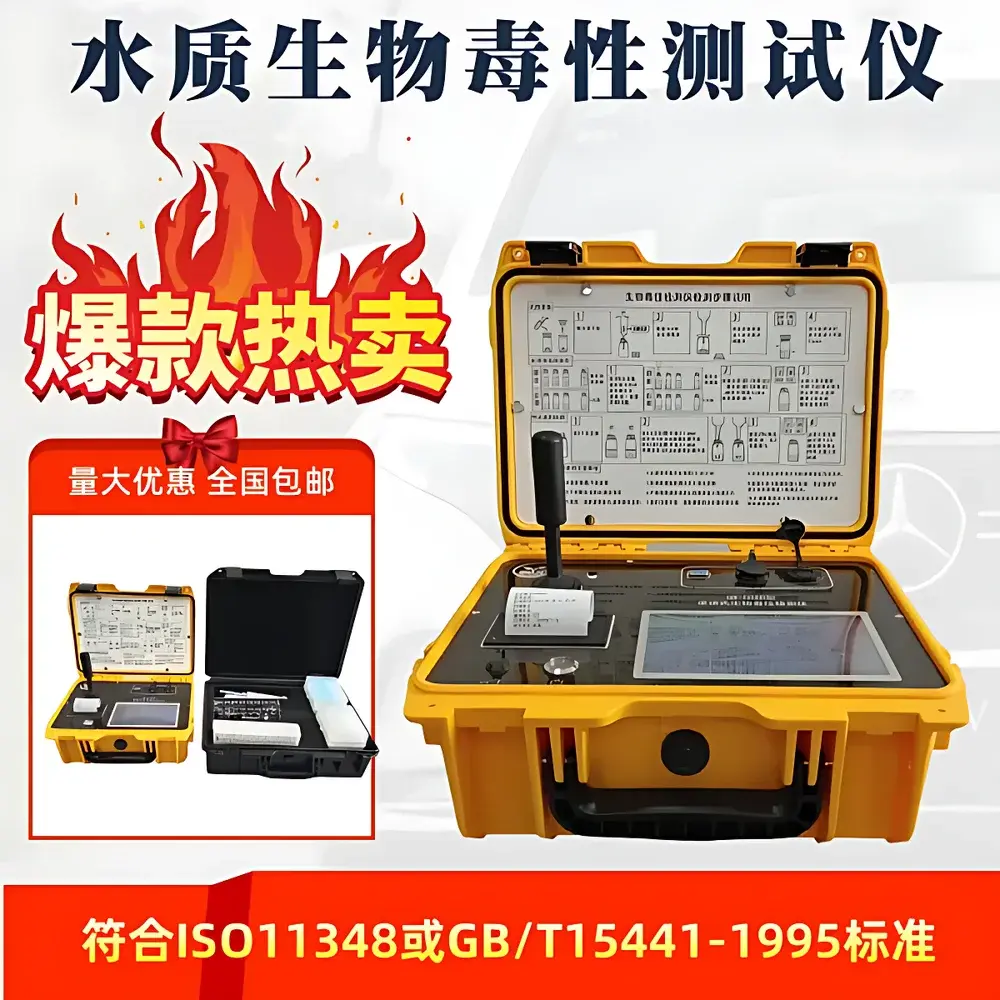
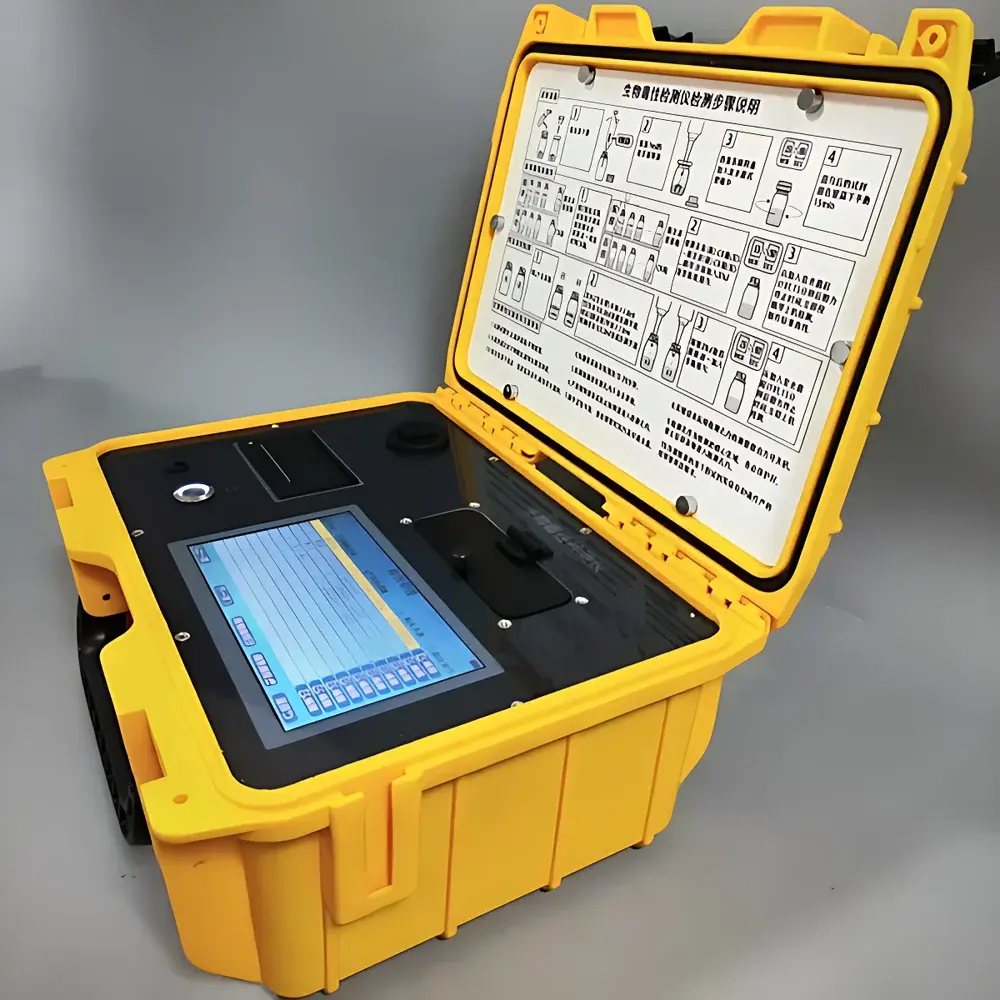
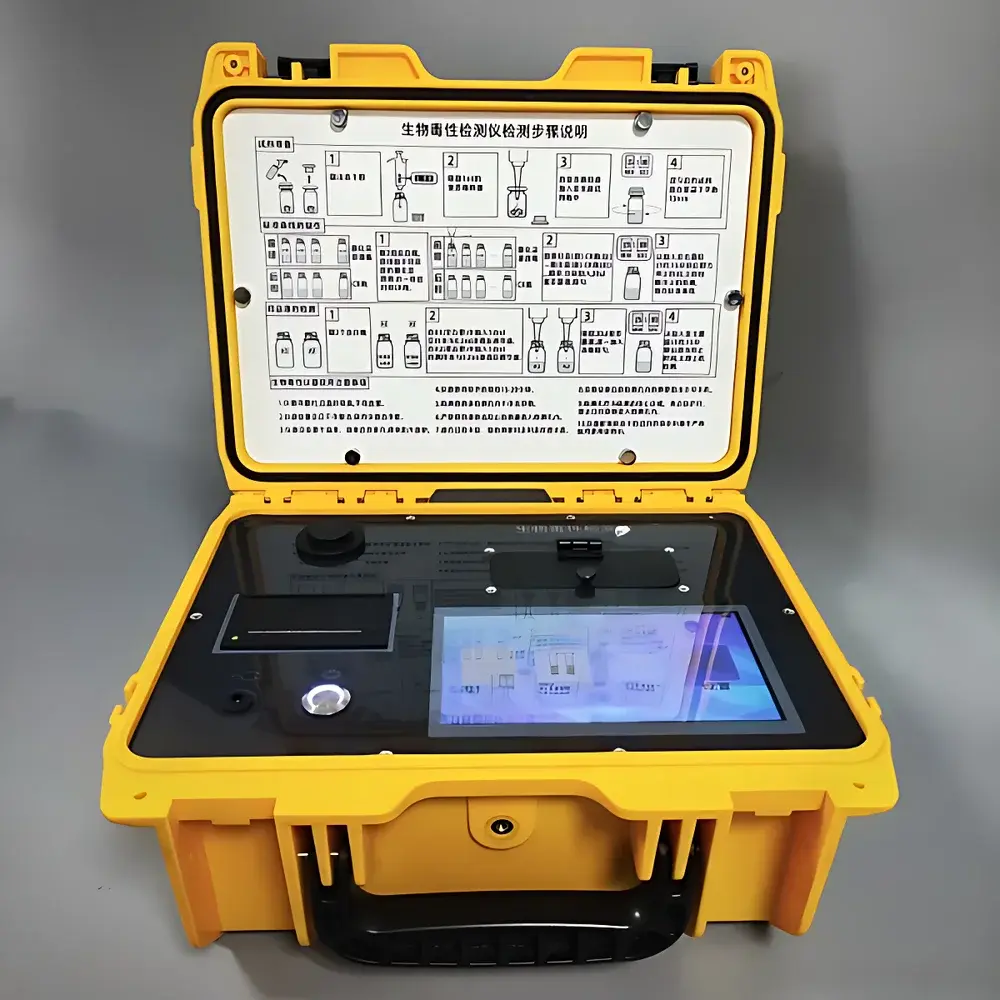
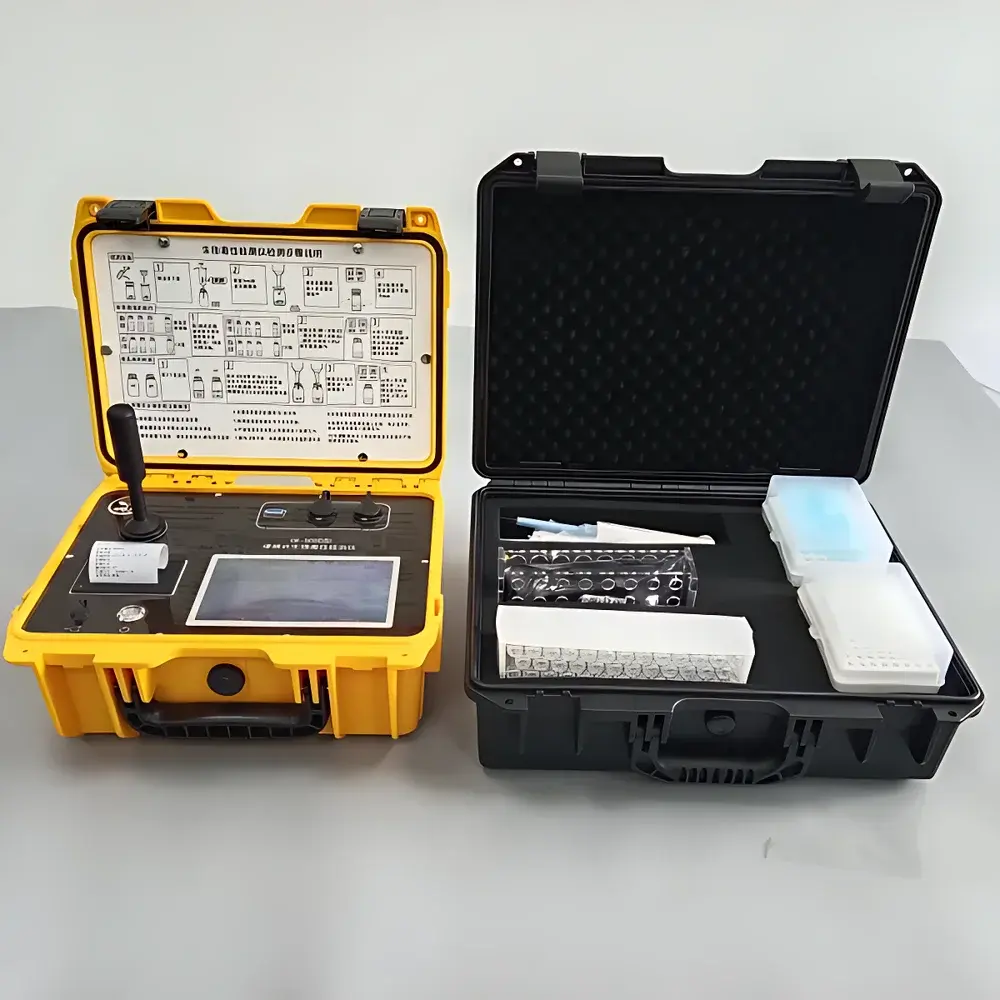
GR5050 Portable Water Toxicity Analyzer by Guo Ruili Heng
| Brand | Guo Ruili Heng |
|---|---|
| Origin | Shandong, China |
| Manufacturer Type | Direct Manufacturer |
| Country of Origin | China |
| Model | GR5050 |
| Instrument Type | Portable |
| Biological Indicator | Bioluminescent Bacteria (Aliivibrio fischeri) |
| Storage Temperature Range | −10 °C to 50 °C |
| Operational Reagent Temperature Range | 5 °C to 45 °C |
| Time-to-Result | ≤15 minutes post sample preparation |
Overview
The GR5050 Portable Water Toxicity Analyzer is an engineered solution for rapid, on-site assessment of acute aquatic toxicity in environmental water samples. It operates on the principle of bioluminescence inhibition assay using freeze-dried or lyophilized Aliivibrio fischeri (formerly Vibrio fischeri) — a marine luminous bacterium whose metabolic activity correlates directly with light emission intensity. When exposed to toxicants, cellular respiration and ATP-dependent luciferase activity decline, resulting in measurable reduction of bioluminescence. The GR5050 quantifies this inhibition (%) relative to a non-toxic control, enabling classification of sample toxicity according to standardized thresholds (e.g., EC50 estimation via dose–response curve fitting). Designed for field deployment and routine laboratory screening, the instrument delivers reproducible results without requiring cell culture infrastructure or specialized microbiological training.
Key Features
- True portable architecture: Integrated optical detection module, temperature-controlled reaction chamber, and rechargeable lithium-ion power supply enable operation in remote locations, mobile labs, or emergency response vehicles.
- Automated luminescence measurement: Dual-channel photomultiplier tube (PMT) sensor with auto-zero calibration ensures high signal-to-noise ratio and minimizes operator-induced variability.
- Pre-validated reagent kits: Lyophilized A. fischeri test strains supplied in sealed vials with defined shelf life (≥12 months at 2–8 °C); reconstitution requires only sterile saline buffer.
- Onboard data processing: Embedded microcontroller performs real-time inhibition calculation, EC50 interpolation (if multi-concentration mode selected), and statistical validation per ISO 11348-3 and DIN 38412-L34 guidelines.
- Ruggedized housing: IP65-rated enclosure with shock-absorbing silicone gasketing withstands vibration, dust ingress, and transient moisture exposure typical of wastewater treatment plants or riverbank sampling sites.
Sample Compatibility & Compliance
The GR5050 accepts raw or filtered aqueous matrices including surface water, groundwater, treated effluent, stormwater runoff, and industrial process water. Samples with turbidity >100 NTU or residual chlorine >0.1 mg/L require pre-treatment (e.g., filtration through 0.45 µm membrane or sodium thiosulfate dechlorination) prior to analysis. The system complies with internationally recognized protocols for microbial toxicity testing: ISO 11348-3 (Water quality — Determination of the inhibitory effect of water samples on the light emission of Vibrio fischeri — Part 3: Method using freeze-dried bacteria), EPA Method 100.2 (for wastewater), and Chinese standard HJ 1182–2021 (Determination of acute toxicity in water using bioluminescent bacteria). All measurement logs retain timestamp, operator ID, sample ID, and environmental parameters (temperature, humidity) to support GLP-compliant documentation.
Software & Data Management
The GR5050 communicates via USB-C or Bluetooth 5.0 to the companion desktop application “ToxView Pro”, compatible with Windows 10/11 and macOS 12+. Software functions include method configuration (single-point, multi-dose, or kinetic mode), automatic calibration curve generation, batch report export (PDF/CSV/XLSX), and audit trail logging compliant with FDA 21 CFR Part 11 requirements (user authentication, electronic signatures, immutable record retention). Raw luminescence decay curves and inhibition histograms are stored with embedded metadata for traceability during regulatory review or inter-laboratory comparison studies.
Applications
- Real-time monitoring of wastewater treatment plant influent/effluent for early warning of toxic shock loads.
- Compliance verification against discharge permits referencing whole-effluent toxicity (WET) criteria.
- Emergency response assessment following chemical spills or illicit discharges into receiving waters.
- Ecotoxicological screening of leachates from landfills, construction sites, or mining operations.
- Educational use in university environmental science laboratories for hands-on demonstration of bioassay principles and dose–response modeling.
FAQ
What bacterial strain is used in the GR5050 assay?
The instrument utilizes lyophilized Aliivibrio fischeri NRRL B-11177 (ATCC 7744), certified for consistent bioluminescent output and sensitivity across production lots.
Can the GR5050 quantify specific contaminants like heavy metals or pesticides?
No — it measures total acute toxicity as an integrative biological endpoint; identification and quantification of individual toxicants require complementary analytical methods such as ICP-MS or GC-MS.
Is method validation required before regulatory submission of results?
Yes — users must perform initial performance qualification (PQ) including precision (RSD ≤15% across triplicate controls), limit of detection (LOD ≈ 1% inhibition), and matrix spike recovery (80–120%) per local regulatory guidance prior to routine use.
How often must the optical sensor be calibrated?
Factory calibration is valid for 12 months; field verification using NIST-traceable neutral density filters is recommended before each daily use session.
Does the system support unattended operation?
No — the GR5050 requires manual sample loading and reagent addition; however, its 15-minute turnaround enables high-throughput sequential analysis when operated by trained personnel.







