
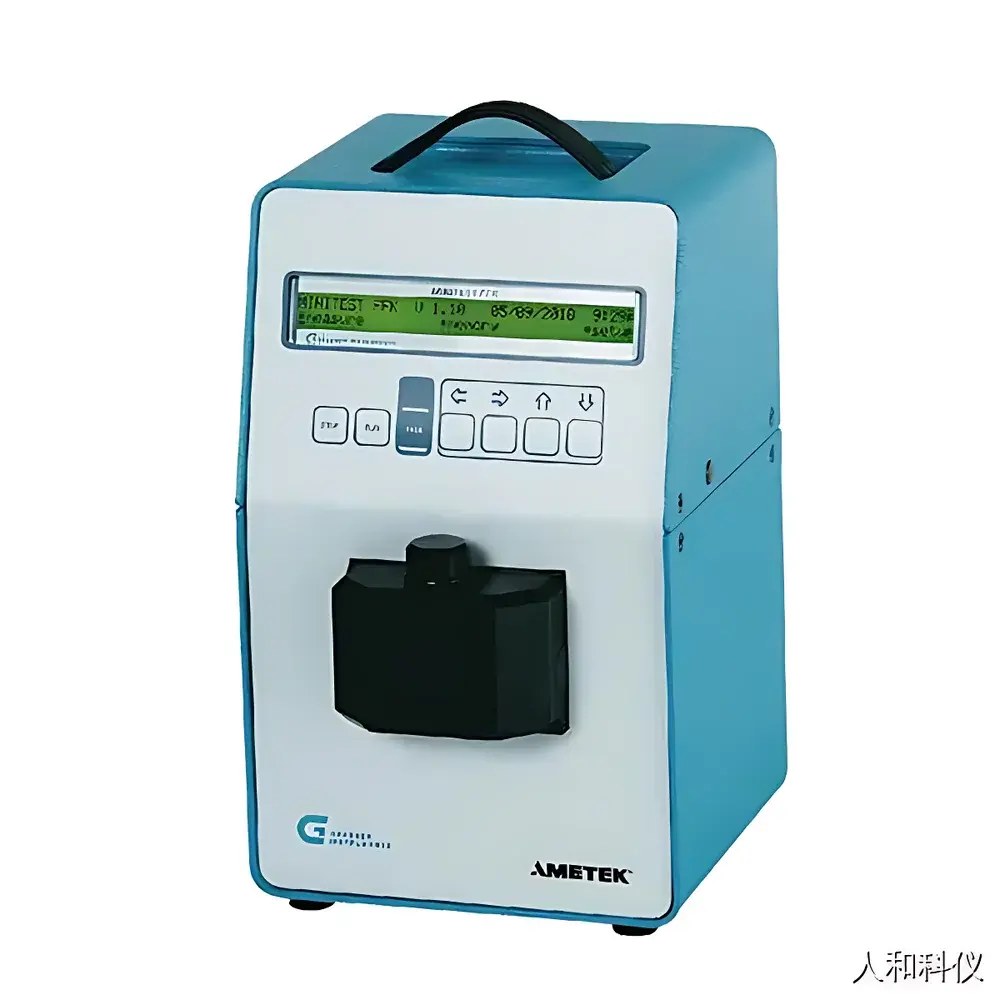
Grabner MINITEST FFK Low-Temperature Grease Flow Tester
| Brand | Grabner |
|---|---|
| Origin | Austria |
| Model | MINITEST FFK |
| Test Principle | Corrosion-Resistant Capillary Extrusion (DIN 51805) |
| Temperature Range | −50 °C to +30 °C |
| Temp. Accuracy | ±0.1 °C |
| Pressure Range | 0–300 kPa |
| Pressure Accuracy | ±0.1 kPa |
| Dimensions | 196 × 315 × 175 mm |
| Weight | 10 kg |
| Power Supply | 100–240 V AC, 50/60 Hz, 200 W or 12 V DC (optional) |
Overview
The Grabner MINITEST FFK is a fully automated, benchtop low-temperature grease flow tester engineered for precise determination of the minimum extrusion pressure required to force lubricating grease through a standardized capillary nozzle under controlled thermal conditions. It implements the corrosion-resistant capillary extrusion method specified in DIN 51805 — a widely accepted standard for assessing the low-temperature pumpability and flow initiation behavior of greases used in centralized lubrication systems, automotive chassis applications, and industrial machinery operating in sub-zero environments. Unlike manual or semi-automated alternatives, the MINITEST FFK eliminates operator-dependent variables by integrating closed-loop Peltier temperature control, high-resolution pressure transduction, and programmable stepwise pressure ramping. Its design enables reproducible measurement of grease yield stress analogs at temperatures as low as −50 °C, directly supporting compliance with OEM specifications, ISO 6743-9 (lubricant classification), and ASTM D1092 (standard test method for apparent viscosity of grease). The instrument’s thermally stable metal block, hermetic sealing architecture, and integrated condensate management system ensure long-term metrological integrity across repeated thermal cycles.
Key Features
- Fully automated operation with pre-programmable test sequences: user-defined target temperature, equilibration time, initial pressure offset, pressure increment step size, and maximum pressure limit
- Peltier-based cascade cooling module enabling stable, vibration-free temperature control from −50 °C to +30 °C with ±0.1 °C accuracy and minimal energy consumption—no liquid nitrogen or external chillers required
- High-precision digital pressure sensor (0–300 kPa range, ±0.1 kPa resolution) coupled with motor-driven piston actuation for consistent, repeatable force application
- Hermetically sealed test chamber featuring a stainless-steel thermal block, precision-machined standard nozzle (DIN 51805 compliant), and EPDM-sealed insertion port to prevent moisture ingress and thermal leakage
- Integrated condensate collection via Eppendorf-style receiver vial, eliminating internal frost accumulation and ensuring unambiguous endpoint detection
- Compact footprint (196 × 315 × 175 mm) and lightweight construction (10 kg) suitable for laboratory, QC lab, or field-deployable use; dual power options (AC mains or 12 V DC)
Sample Compatibility & Compliance
The MINITEST FFK accommodates standard NLGI consistency classes (000 to 6) and is validated for lithium-, calcium-, polyurea-, and complex-soap-based greases, including those containing thickeners with high base oil volatility or synthetic ester carriers. Sample preparation follows strict DIN 51805 protocol: degassed grease layer applied uniformly on optical-grade glass, followed by controlled nozzle priming to eliminate air entrapment. The instrument meets essential requirements for GLP-compliant testing environments, including traceable calibration paths for both temperature and pressure subsystems. While not intrinsically certified for hazardous locations, its electrical architecture complies with IEC 61010-1 for laboratory equipment safety. Data outputs are compatible with 21 CFR Part 11–ready LIMS integration when paired with Grabner’s optional PC software suite, supporting audit trails, electronic signatures, and version-controlled method storage.
Software & Data Management
The MINITEST FFK operates via an embedded touchscreen interface with bilingual (English/German) menu navigation and real-time graphical display of pressure vs. time curves during equilibration and extrusion phases. All raw data—including temperature drift logs, pressure ramp profiles, equilibrium duration, and final extrusion pressure—are stored internally with timestamping and sample ID tagging. Optional USB export enables CSV-formatted datasets for post-processing in Excel, MATLAB, or statistical analysis platforms. When connected to Grabner’s proprietary LabLink software (Windows-based), users gain access to automated report generation (PDF/HTML), comparative batch trending, pass/fail threshold enforcement per ASTM D1092 Annex A, and configurable export to networked file servers or cloud repositories. Audit trail functionality records all parameter changes, user logins, and calibration events in accordance with ISO/IEC 17025 documentation requirements.
Applications
- Validation of cold-start performance of chassis greases in automotive OEM qualification protocols
- QC release testing of NLGI #2 and #3 greases for wind turbine pitch bearing applications requiring −40 °C operability
- R&D evaluation of thickener–base oil interactions under thermal stress, particularly for biodegradable or low-toxicity formulations
- Root-cause analysis of grease pumpability failure in centralized lubrication systems deployed in arctic mining or offshore platforms
- Supporting ASTM D1092 correlation studies and interlaboratory round-robin trials for method harmonization
- Monitoring aging effects on low-temperature rheology following ASTM D6184 (grease stability testing)
FAQ
What standard does the MINITEST FFK implement?
It strictly follows DIN 51805 for corrosion-resistant capillary extrusion, which is technically aligned with the principles of ASTM D1092 and ISO 2137 (penetration), though it measures extrusion pressure rather than cone penetration.
Is calibration traceable to national standards?
Yes—temperature sensors are calibrated against PT100 reference probes traceable to PTB (Physikalisch-Technische Bundesanstalt); pressure transducers are calibrated using dead-weight testers certified to ISO/IEC 17025.
Can the instrument be used for non-grease samples such as pastes or gels?
No—the MINITEST FFK is specifically designed and validated for lubricating greases conforming to DIN 51805 geometry and rheological assumptions; deviation from specified nozzle dimensions or sample preparation compromises result validity.
How long does a full test cycle take at −40 °C?
Typical total duration ranges from 120 to 180 minutes, including 60–120 min thermal equilibration followed by 5–30 min pressure ramping, depending on grease consistency and selected step size.
Does the system require routine maintenance beyond nozzle cleaning?
Yes—recommended quarterly verification of Peltier module thermal efficiency, annual recalibration of pressure sensor and temperature block, and periodic inspection of O-ring integrity in the sealing assembly.
Related Products





