
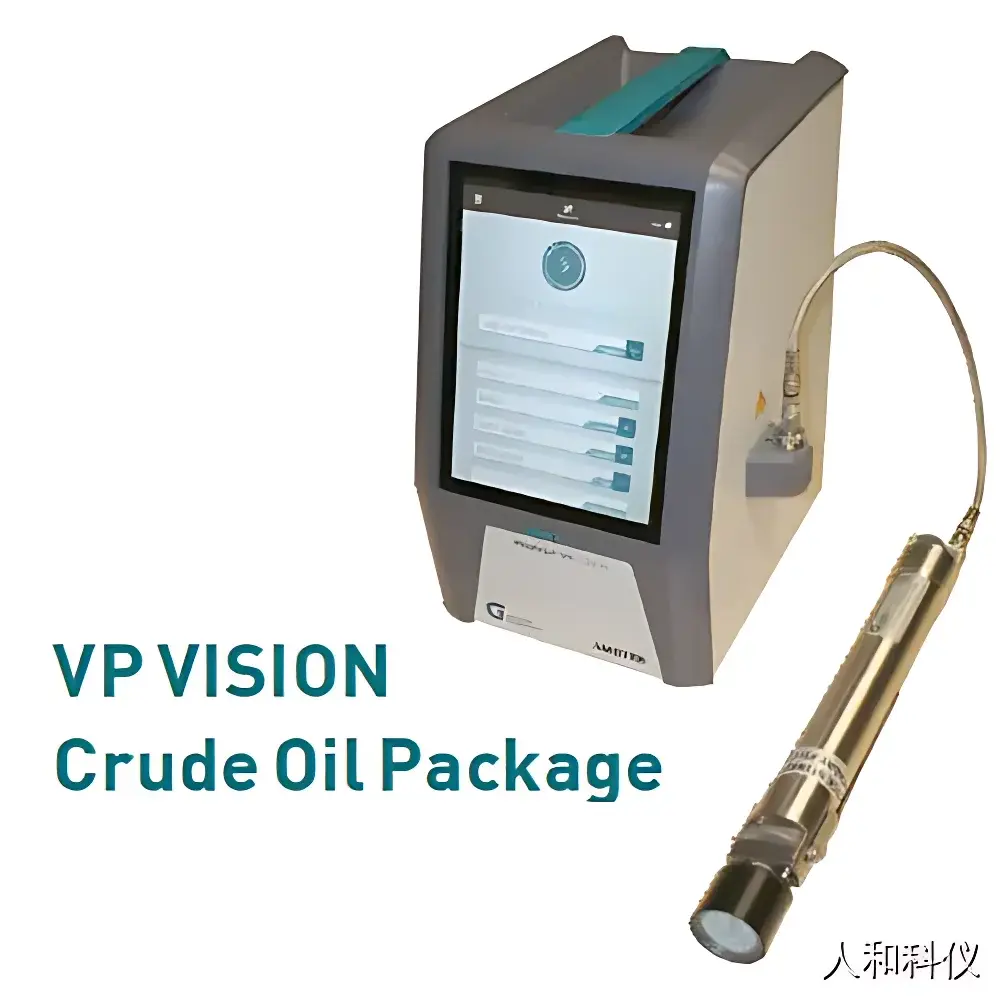
Grabner MINIVAP VP VISION+ Crude Oil Vapor Pressure Analyzer
| Brand | Grabner |
|---|---|
| Origin | Austria |
| Model | MINIVAP VP VISION+ Crude Oil Package |
| Analysis Method | Three-stage Expansion Method |
| Compliance | ASTM D6377, ASTM D3700, GOST R 52340, EPA Method for TVP |
| Sample Volume | 250 mL (10 mL per test) |
| Maximum Operating Pressure | 7000 kPa |
| Material | High-grade stainless steel |
| Integrated Components | Pressure sensor, rupture disc, manual agitation plate, dedicated crude oil inlet interface |
| Filling Options | Manual or pressurized |
| Agitation | Built-in manual agitation plate with pressure monitoring |
Overview
The Grabner MINIVAP VP VISION+ Crude Oil Vapor Pressure Analyzer is an automated, laboratory-grade instrument engineered for precise and repeatable determination of true vapor pressure (TVP) of crude oil and other volatile petroleum liquids. It operates on the principle of three-stage expansion—a thermodynamically rigorous method defined in ASTM D6377—where a representative sample is expanded stepwise under controlled temperature and pressure conditions to quantify equilibrium vapor pressure without phase segregation or compositional bias. Unlike traditional Reid Vapor Pressure (RVP) methods (e.g., ASTM D323, IP 409, JIS K2258-1), which measure vapor pressure at 37.8 °C using a fixed air-to-liquid ratio and are unsuitable for unstable, dissolved-gas-rich crudes, the MINIVAP VP VISION+ Crude Oil Package delivers TVP data that reflect actual field and transport conditions. Its design directly addresses the analytical challenges posed by live crude oils containing dissolved light hydrocarbons (C1–C4), ensuring compositional integrity from sampling through analysis.
Key Features
- Automated three-stage expansion sequence compliant with ASTM D6377 and EPA regulatory requirements for TVP reporting.
- Integrated FPC 250 Floating Piston Cylinder (FPC): A 250 mL high-pressure stainless-steel sampling vessel engineered to ISO/ASTM-compliant geometry, enabling safe, isobaric collection and transport of live crude oil samples without flash loss or light-end fractionation.
- In-situ pressure monitoring: Embedded pressure transducer within the FPC inlet manifold continuously records internal pressure during filling, agitation, and thermal equilibration—critical for detecting gas breakout or sampling anomalies.
- Manual agitation plate with dual functionality: Provides mechanical homogenization of heterogeneous crude samples while serving as a calibrated backpressure source during field deployment (optional use per ASTM D3700).
- Robust pressure containment architecture: Rated to 7000 kPa (1015 psi) maximum working pressure; includes certified rupture disc and hardened stainless-steel valve train compatible with H₂S and sour service environments.
- Dedicated crude oil interface: Custom-designed inlet tubing and sealing geometry minimize dead volume and prevent cross-contamination between samples.
Sample Compatibility & Compliance
The system is validated for use with undiluted, unfiltered crude oils—including paraffinic, naphthenic, and heavy blends—as well as condensates and stabilized lease crude. It supports full compliance with ASTM D6377 (standard test method for determining vapor pressure of crude oil using a three-stage expansion technique), ASTM D3700 (standard practice for sampling and handling crude oil for analysis), and GOST R 52340 (Russian Federation standard for crude oil vapor pressure). The FPC 250 cylinder meets dimensional and material specifications outlined in all three standards, ensuring traceable equivalence across international laboratories. Optional audit-ready configurations support GLP and GMP environments, including electronic signature capability and 21 CFR Part 11–compliant data logging when paired with Grabner’s VP Vision software.
Software & Data Management
VP Vision software provides intuitive instrument control, real-time pressure/temperature profiling, and automated calculation of TVP according to ASTM D6377 Annex A1 algorithms. All raw sensor data—including expansion stage timing, intermediate pressures, and thermal drift correction factors—are timestamped, encrypted, and stored in a relational database with immutable audit trails. Export formats include CSV, PDF analytical reports (with digital signatures), and XML for LIMS integration. Software validation documentation (IQ/OQ/PQ protocols) and electronic record retention policies align with FDA, ISO/IEC 17025, and API RP 45 standards for petroleum testing laboratories.
Applications
- Crude oil custody transfer and pipeline specification verification (e.g., API MPMS Chapter 19.4)
- Refinery feedstock characterization and distillation modeling input
- Regulatory reporting for EPA Tier II, SPCC, and state-level vapor emission inventories
- Field laboratory deployment for upstream production monitoring (offshore platforms, FPSOs, remote well sites)
- Research into vapor–liquid equilibrium (VLE) behavior of unconventional crudes and bitumen diluents
- Method validation and interlaboratory comparison studies under ASTM D6299 precision guidelines
FAQ
What distinguishes TVP measured by ASTM D6377 from RVP measured by ASTM D323?
TVP reflects the actual equilibrium vapor pressure of crude oil at reservoir or storage temperature, accounting for dissolved gases and non-ideal phase behavior. RVP is a standardized but empirically derived value at 37.8 °C with fixed air saturation, making it inappropriate for live crude and prone to significant underestimation.
Can the FPC 250 be used for samples other than crude oil?
Yes—the cylinder is compatible with liquefied petroleum gas (LPG), natural gasoline, and stabilized condensates, provided operating pressure and temperature limits are observed and applicable standards (e.g., ASTM D6897 for LPG) are followed.
Is calibration traceable to NIST or equivalent national metrology institutes?
All pressure transducers are factory-calibrated against NIST-traceable deadweight testers; annual recalibration services include full uncertainty budget documentation per ISO/IEC 17025.
How does the system handle high-H₂S or corrosive crude streams?
The FPC 250 uses ASTM A276 Type 316 stainless steel throughout; optional Hastelloy C-276 wetted parts and sulfur-resistant seals are available upon request.
Does the analyzer require external cooling or heating baths?
No—the integrated Peltier-controlled thermal chamber maintains sample temperature within ±0.1 °C across the operational range of 0 °C to 70 °C, eliminating dependency on external utilities.
Related Products







