
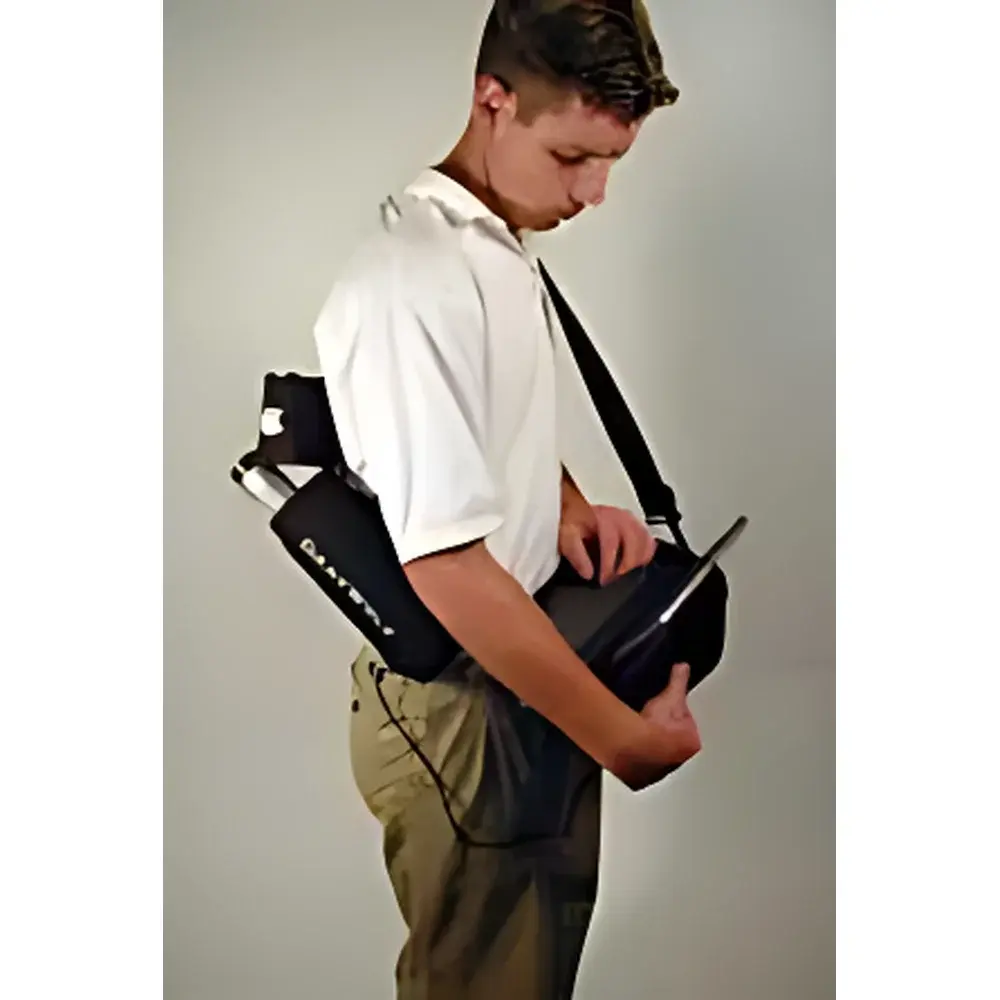
Graywolf Emergency Monitoring System
| Brand | Graywolf |
|---|---|
| Origin | USA |
| Manufacturer Status | Authorized Distributor |
| Product Origin | Imported |
| Model | Graywolf |
| Pricing | Upon Request |
Overview
The Graywolf Emergency Monitoring System is a modular, handheld field-deployable platform engineered for real-time, multi-parameter environmental assessment in dynamic and time-critical scenarios. Built upon a robust embedded computing architecture with integrated touchscreen interface, the system operates on a probe-based modular principle—where a single掌上电脑 (PDA-style controller unit) interfaces seamlessly with interchangeable sensor modules to deliver simultaneous, synchronized measurements across gaseous, particulate, thermal, hygric, acoustic, and pressure domains. Its core measurement methodologies include electrochemical (EC), non-dispersive infrared (NDIR), photoionization detection (PID), laser scattering (for PM), and capacitive humidity sensing—all calibrated traceably to NIST-traceable standards. Designed explicitly for first-response teams, industrial hygienists, HVAC commissioning engineers, and cleanroom QA/QC personnel, the system supports rapid situational awareness during chemical spills, confined space entry, post-remediation verification, indoor air quality (IAQ) audits, and regulatory compliance inspections.
Key Features
- Modular sensor architecture enabling concurrent detection of up to six gases—including SO₂, NO₂, CO, NO, NH₃, O₃, H₂S, HCN, EtO, Cl₂, HCl, F₂, HF, PH₃, H₂, O₂, ClO₂, SiH₄, THT, phosgene, arsine, and hydrazine—using application-specific electrochemical or PID cells.
- Ultra-sensitive TVOC quantification across 1 ppb–10,000 ppm range, with PID lamp energy selectable (10.0 eV or 10.6 eV) to optimize selectivity for aromatic, aliphatic, or chlorinated compounds.
- Integrated IAQ probe delivering simultaneous CO₂ (NDIR, 0–5000 ppm), CO (EC, 0–1000 ppm), relative humidity (±1.5% RH), temperature (±0.3°C), dew point, absolute humidity, specific humidity, and mixing ratio—with calculated outdoor air ventilation rate via tracer gas dilution methodology.
- Multi-domain environmental sensing: PM₁₀ mass concentration (optical scattering, 0–1000 µg/m³), particle counting (0.3–10 µm channels), differential pressure (±500 Pa), sound pressure level (30–130 dB(A)), and surface moisture content (capacitance-based, 0–100% RH equivalent).
- Field annotation suite supporting geotagged text notes, voice memos (WAV), JPEG image capture, and hand-drawn sketches—all automatically embedded into measurement records with timestamp, GPS coordinates (optional), and sensor metadata.
- On-device calibration management: full access to sensor zero/span history, user-initiated bump tests, editable calibration intervals, and configurable alarm thresholds aligned with OSHA PELs, ACGIH TLVs®, and ISO 16814 indoor air guidelines.
Sample Compatibility & Compliance
The system is validated for use in ambient air, workplace atmospheres, HVAC ductwork, cleanroom ISO Class 5–8 environments, and emergency response zones per EPA Method TO-15 (VOCs), NIOSH 6004/6011 (gases), and ASTM D6245 (IAQ). All sensor modules comply with IEC 61000-4 electromagnetic immunity standards and carry CE marking under Directive 2014/30/EU (EMC) and 2014/35/EU (LVD). Data integrity conforms to FDA 21 CFR Part 11 requirements when paired with optional audit trail-enabled firmware; electronic records are exportable in CSV, PDF, and XML formats compliant with ISO/IEC 17025 reporting structures.
Software & Data Management
The onboard operating system supports intuitive touch navigation and features over 30 preloaded report templates—including ASHRAE 62.1 ventilation verification, LEED IEQ credit documentation, OSHA 1910.120 incident logs, and ISO 14644-1 cleanroom classification summaries. Users may import custom Word/PDF templates or embed proprietary QA checklists. Data synchronization occurs via USB-C or Wi-Fi to Graywolf Cloud Analytics—a secure, GDPR-compliant portal offering role-based access control, automated trend analysis, deviation alerts, and GLP/GMP-aligned electronic signatures. All raw sensor outputs retain native resolution and metadata (e.g., temperature compensation coefficients, filter status, signal-to-noise ratios) for retrospective validation.
Applications
- Emergency response: real-time plume mapping during chemical release incidents, hazmat team deployment support, and post-incident exposure reconstruction.
- Indoor environmental quality (IEQ) auditing: comprehensive IAQ assessments per ANSI/ASHRAE Standard 62.1, ISO 16814, and EN 13779—covering ventilation efficacy, contaminant source identification, and occupant comfort indices.
- HVAC commissioning and diagnostics: airflow balancing, duct leakage verification, coil performance evaluation, and economizer control validation using integrated differential pressure and tracer gas modes.
- Cleanroom monitoring: continuous or spot-check validation of airborne particulate counts, differential pressure gradients, and volatile organic background levels in pharmaceutical, semiconductor, and biotech facilities.
- Industrial hygiene surveys: personal and area sampling for occupational exposure limit (OEL) compliance, including short-term exposure limit (STEL) and time-weighted average (TWA) calculations with automatic logging.
FAQ
Does the system support NIST-traceable calibration certificates?
Yes—each sensor module ships with a factory calibration certificate referencing NIST SRM 1662 (SO₂), SRM 1661 (CO), and SRM 2691 (O₃); field recalibration maintains traceability through documented procedures.
Can data be exported in formats compatible with LIMS or enterprise EHS platforms?
Yes—CSV exports include full metadata headers; XML schema follows ASTM E2082-22 for interoperability with major LIMS and EHS software suites.
Is the device intrinsically safe for use in classified hazardous locations?
No—standard configurations are rated for general-purpose use only (Class I, Division 2 not certified); explosion-proof enclosures are available as OEM-configured variants upon request.
What is the battery life under continuous multi-sensor operation?
Up to 8 hours with all active sensors engaged; hot-swappable Li-ion packs enable uninterrupted field operation with auxiliary charging via vehicle DC or solar-compatible power banks.
How frequently does firmware receive security and functional updates?
Quarterly feature releases and critical security patches are distributed via Graywolf’s secure OTA channel, with version history and change logs published in the customer portal.
Related Products







