
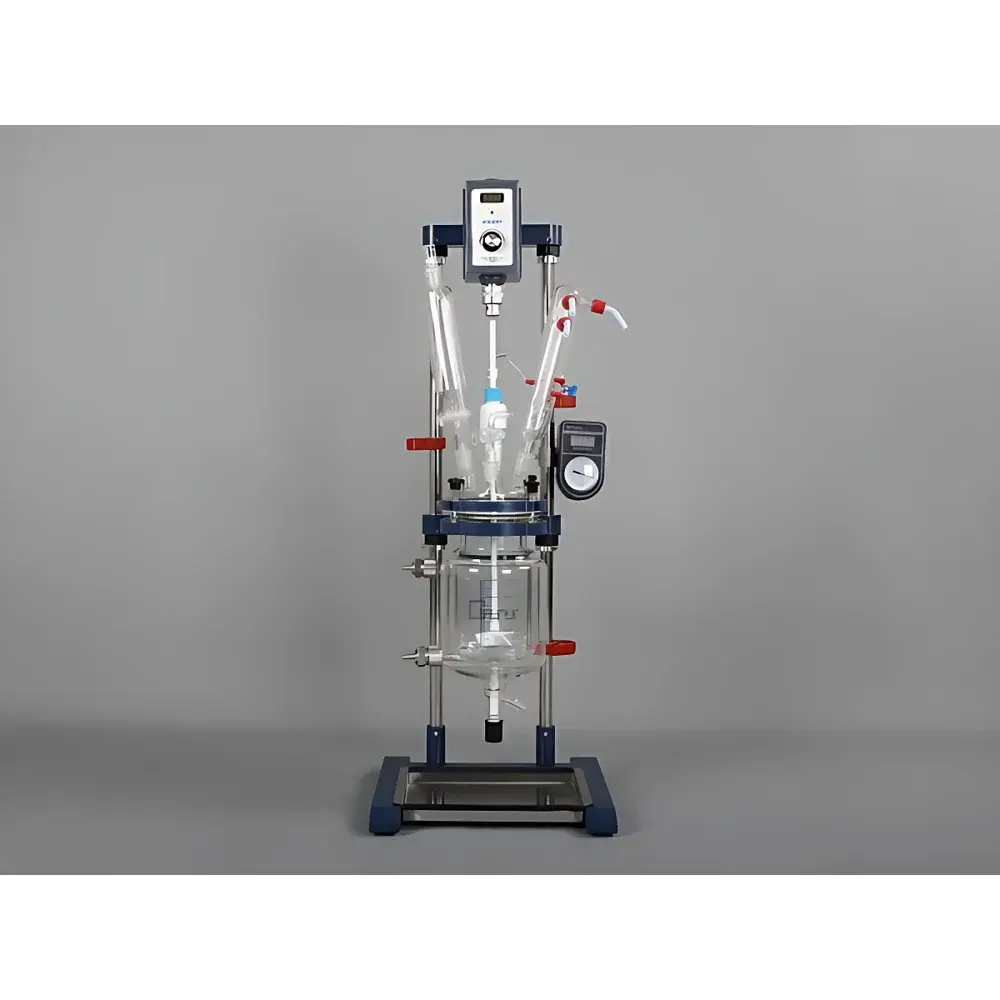
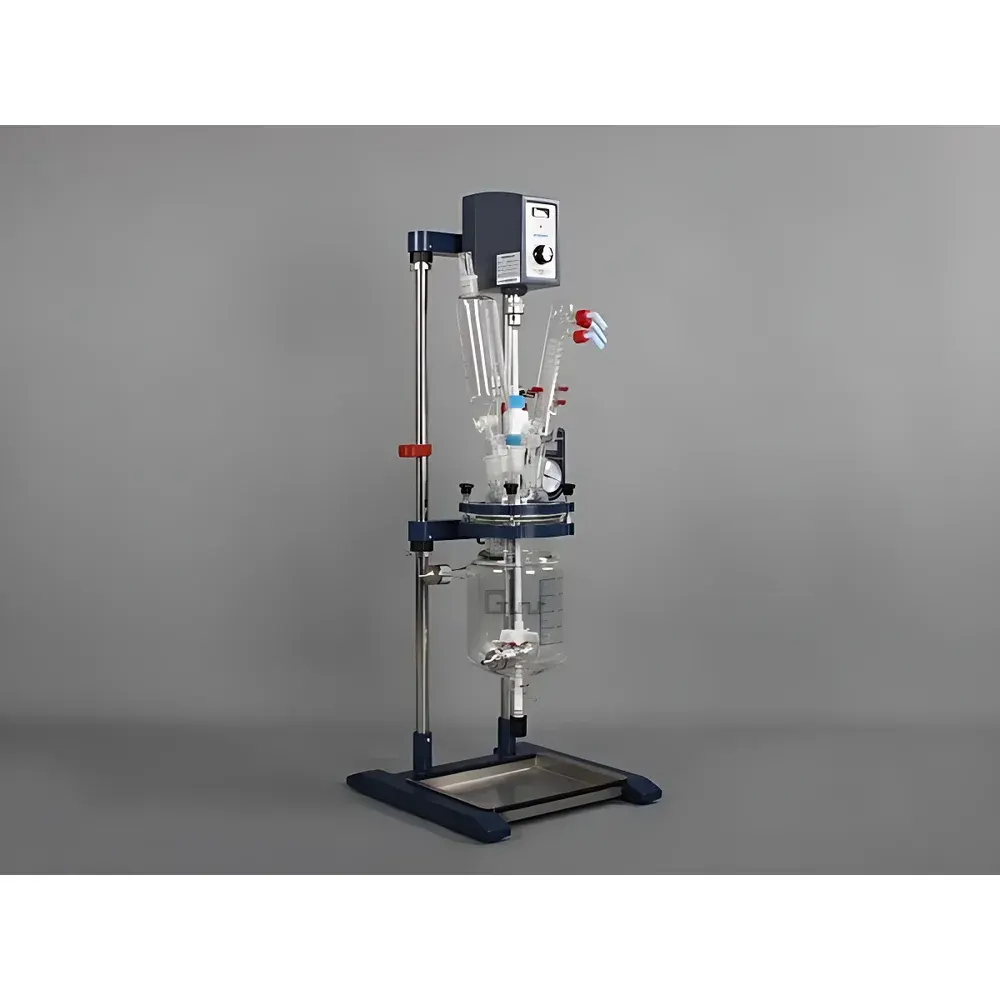
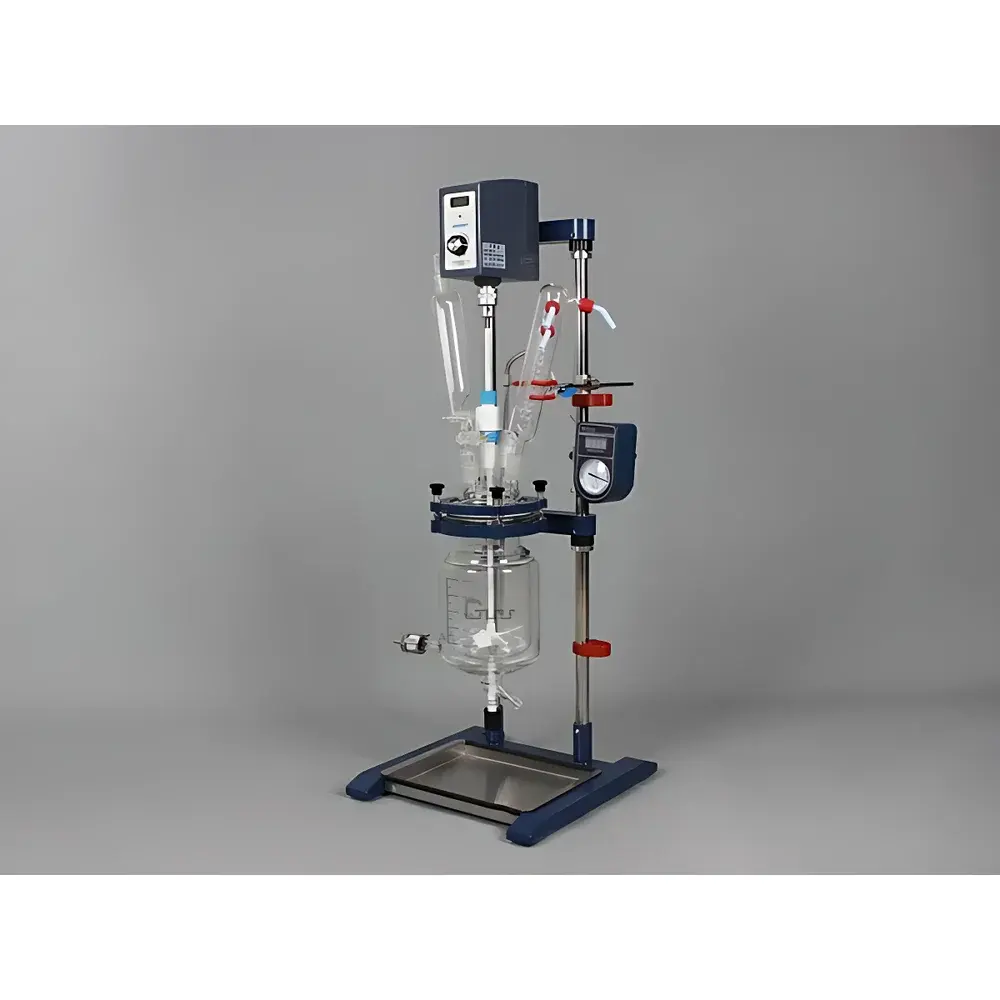
The Great Wall GR-1-3 Variable-Speed Glass Reactor
| Brand | The Great Wall |
|---|---|
| Origin | Henan, China |
| Manufacturer Type | Direct Manufacturer |
| Country of Origin | China |
| Model | GR-1-3 |
| Price Range | USD 2,800 – 7,200 (FOB) |
| Usable Volume | 1.0 L (Micro-to-Small Scale) |
| Construction Material | Borosilicate Glass 3.3 |
| Operating Pressure Range | −0.1 to 0.0 MPa (Vacuum to Atmospheric) |
| Jacket Capacity | ~0.3 L |
| Condenser Heat Transfer Area | ~0.025 m² |
| Constant-Pressure Funnel Capacity | 200 mL |
| Vacuum Level | ≤ −0.098 MPa (≤ 2 kPa absolute) |
| Temperature Range | −80 °C to +200 °C |
| Stirring Speed | 50–500 rpm (Infinitely Variable) |
| Stirring Torque | 70 N·cm |
| Stirring Power | 70 W |
| Temperature Sensor | Pt100 (±0.1 °C accuracy) |
| Sealing Material | PTFE |
| Frame Material | SUS304 Stainless Steel |
| Stirrer Shaft & Blades | SUS304 with PTFE coating |
| Stirrer Type | Anchor/Paddle-type with PTFE blades |
| Electrical Supply | 110 V / 60 Hz or 220–240 V / 50–60 Hz |
| Ambient Operating Conditions | 5–35 °C, ≤70% RH |
| Overall Dimensions (W×D×H) | ~480 × 420 × 1100 mm |
Overview
The Great Wall GR-1-3 Variable-Speed Glass Reactor is an integrated, jacketed laboratory-scale reaction system engineered for precise temperature control, vacuum-compatible synthesis, and reproducible mechanical agitation under chemically aggressive conditions. Designed around the ISO-standardized borosilicate glass 3.3 (DIN ISO 3585), the reactor core—including vessel, condenser, reflux adapter, and constant-pressure addition funnel—exhibits exceptional thermal shock resistance (ΔT ≤ 80 °C), hydrolytic stability (Class 1 per DIN ISO 719), and chemical inertness toward organic solvents, strong acids, and alkalis. Its operational envelope spans −80 °C (with cryogenic coolant circulation) to +200 °C (via oil or steam jacket heating), while maintaining safe vacuum integrity down to ≤2 kPa absolute (−0.098 MPa gauge). The system operates exclusively under sub-atmospheric pressure (−0.1 to 0.0 MPa), eliminating risks associated with pressurized exothermic reactions—making it especially suitable for distillation, hydrogenation, Grignard formation, low-temperature lithiation, and moisture-sensitive organometallic chemistry.
Key Features
- Monolithic borosilicate glass 3.3 construction compliant with ASTM E438 Type I, Class A specifications for laboratory glassware.
- SUS304 stainless steel support frame with electropolished finish and PTFE-coated load-bearing contact surfaces for corrosion resistance and cleanability.
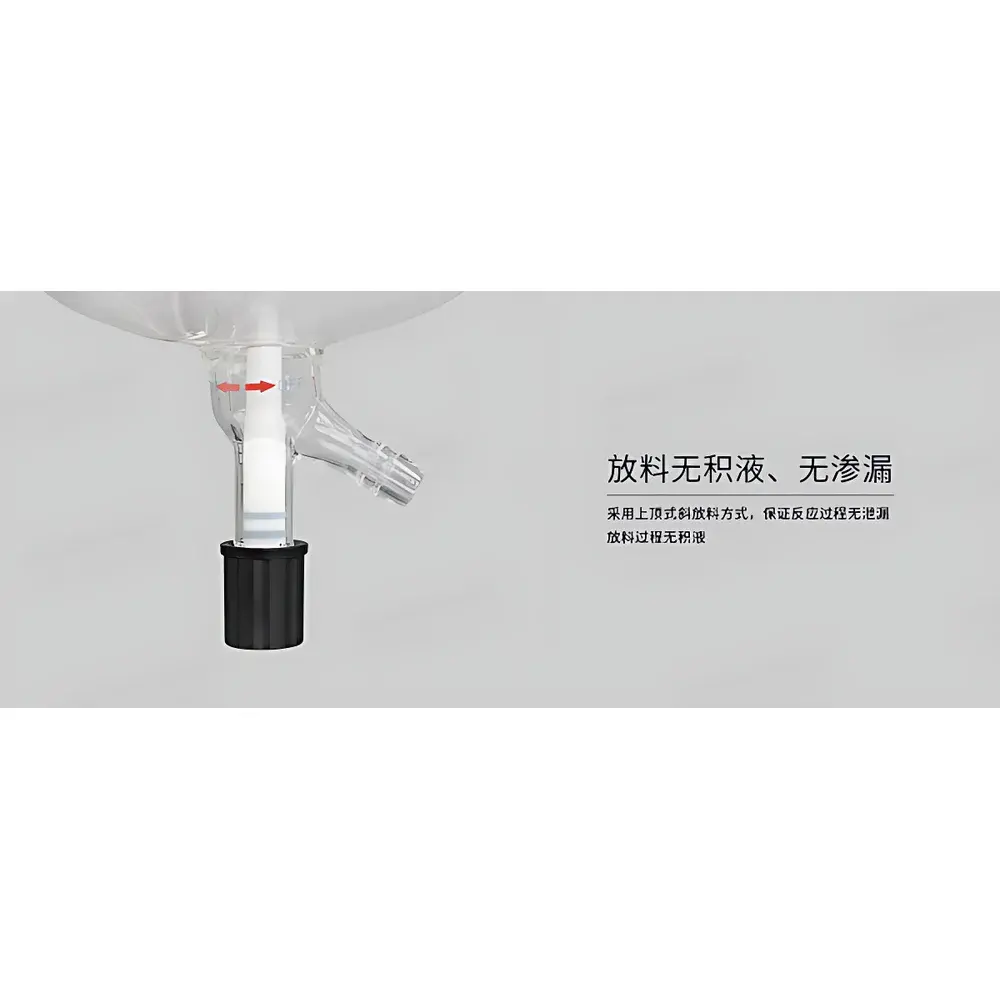
- PTFE-sealed, side-discharge valve with zero dead-volume geometry and adjustable mounting height (100–210 mm) to prevent cross-contamination during batch transfer.
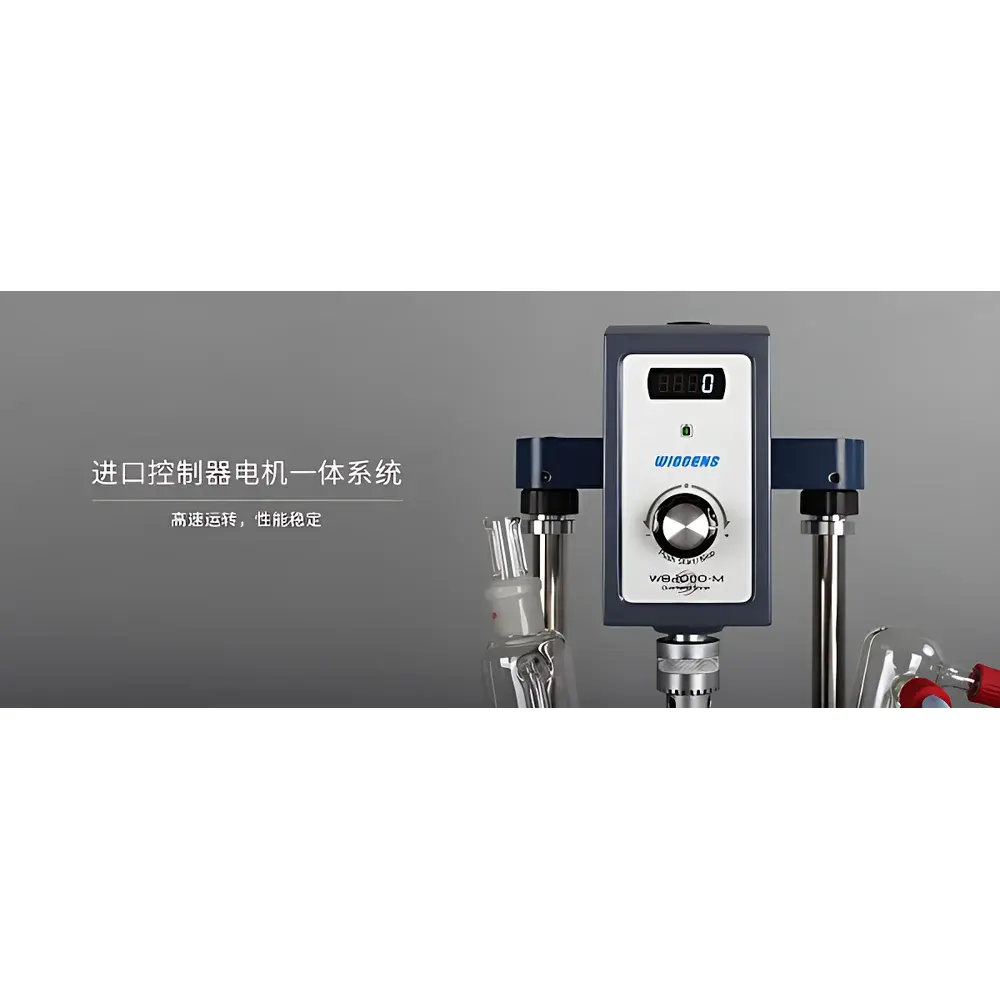
- Imported high-torque DC motor drive (70 W, 50–500 rpm, infinitely variable speed control) with LED digital display and ±1 rpm repeatability.
- Pt100 temperature sensor (IEC 60751 Class B) housed in dual-layer protection: 304 SS sheath + outer PTFE insulation, enabling ±0.1 °C measurement accuracy within the full operating range.
- Standardized 24/40 and 19/22 ground-glass joints per ISO 8573-1, ensuring interchangeability with common condensers, thermometers, dropping funnels, and inert gas inlets.
- Jacketed design supports external heat transfer media (e.g., silicone oil, ethylene glycol/water, dry ice/acetone slurry) via Rc 1/2″ or Rc 3/4″ NPT inlet/outlet ports.
- Integrated SUS304 material catch tray beneath the reactor base, sized to contain full vessel discharge without spillage—supporting GLP-compliant lab hygiene protocols.
Sample Compatibility & Compliance
The GR-1-3 accommodates homogeneous and heterogeneous reaction mixtures up to 1.0 L working volume, including suspensions, slurries, viscous polymerizations, and gas-liquid catalytic systems. Its all-glass fluid path eliminates metal ion leaching, ensuring compatibility with trace-metal-sensitive syntheses (e.g., pharmaceutical intermediates, OLED precursors). All wetted seals conform to USP and biological reactivity standards. The reactor meets CE machinery directive 2006/42/EC requirements when operated within specified thermal, vacuum, and electrical parameters. While not intrinsically rated for explosion-proof environments, optional nitrogen purging through dedicated 24/40 ports enables operation under inert atmosphere per OSHA 1910.119 process safety management guidelines.
Software & Data Management
The GR-1-3 operates as a standalone analog-controlled instrument; no embedded firmware or proprietary software is included. However, its analog outputs—0–10 VDC for stirrer speed and 4–20 mA for Pt100 signal—are compatible with third-party data acquisition systems (e.g., LabVIEW, Delta Tau PMAC, or Siemens SIMATIC S7 PLCs) for time-stamped logging, alarm triggering, and audit-trail generation. When integrated into validated workflows, the system supports 21 CFR Part 11-compliant electronic records when paired with qualified software platforms featuring user access controls, electronic signatures, and immutable audit logs. Temperature and agitation setpoints are manually recorded per GLP Annex 13 documentation practices.
Applications
- Batch-wise solvent-free or low-solvent condensation polymerizations (e.g., polyesters, polyamides).
- Catalytic hydrogenation under controlled H₂ flow and vacuum degassing.
- Low-temperature enolate generation and alkylation (−78 °C using dry ice/acetone).
- Reflux-coupled esterifications and transesterifications with continuous water removal.
- Photochemical reactions using UV-transparent glass components and external lamp coupling.
- Extraction and concentration of thermolabile natural products under reduced pressure.
- Teaching laboratories: Demonstrating Arrhenius kinetics, equilibrium shifts under vacuum, and multi-phase mass transfer phenomena.
FAQ
What is the maximum allowable temperature differential between jacket and reactor contents?
The design limit is ΔT ≤ 80 °C to prevent thermal stress fracture of borosilicate glass 3.3. For example, if internal reaction temperature is 180 °C, jacket temperature must not exceed 100 °C.
Can the GR-1-3 be used for pressurized reactions?
No. It is rated exclusively for vacuum-to-atmospheric operation (−0.1 to 0.0 MPa). Pressurized applications require alternative reactor systems certified to ASME BPVC Section VIII.
Is the stirring system compatible with highly viscous media?
Yes—the 70 N·cm torque rating supports viscosities up to ~50,000 mPa·s at reduced speeds (e.g., 80–120 rpm), provided paddle geometry is optimized for shear-thinning behavior.
How is vacuum integrity verified during qualification?
Per ISO 2859-1 sampling plans, vacuum hold tests are conducted at ≤2 kPa for ≥30 minutes; allowable pressure rise is ≤2 kPa/h, measured with calibrated capacitance manometer.
Are replacement glass components available as spare parts?
Yes. All major glass assemblies—including reactor body, condenser, reflux head, and funnel—are stocked as individual SKUs with serialized traceability and CoA documentation.



