
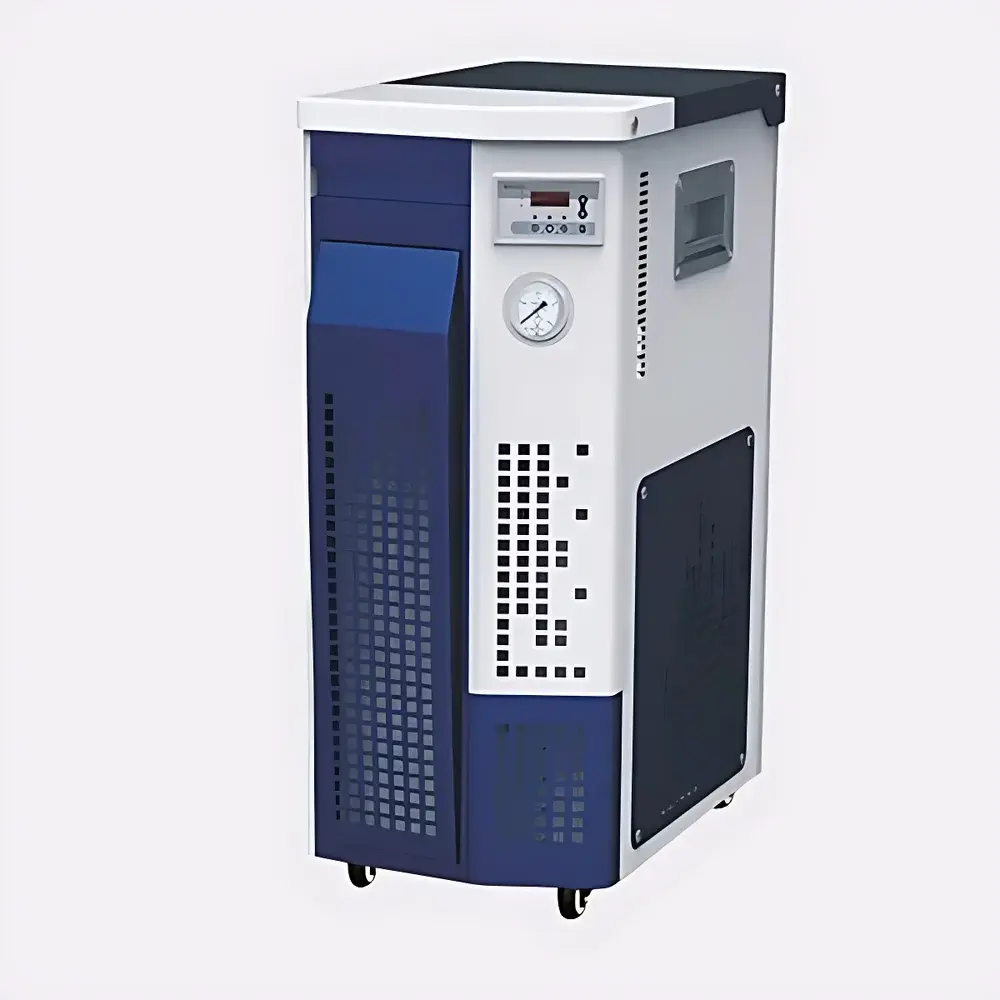
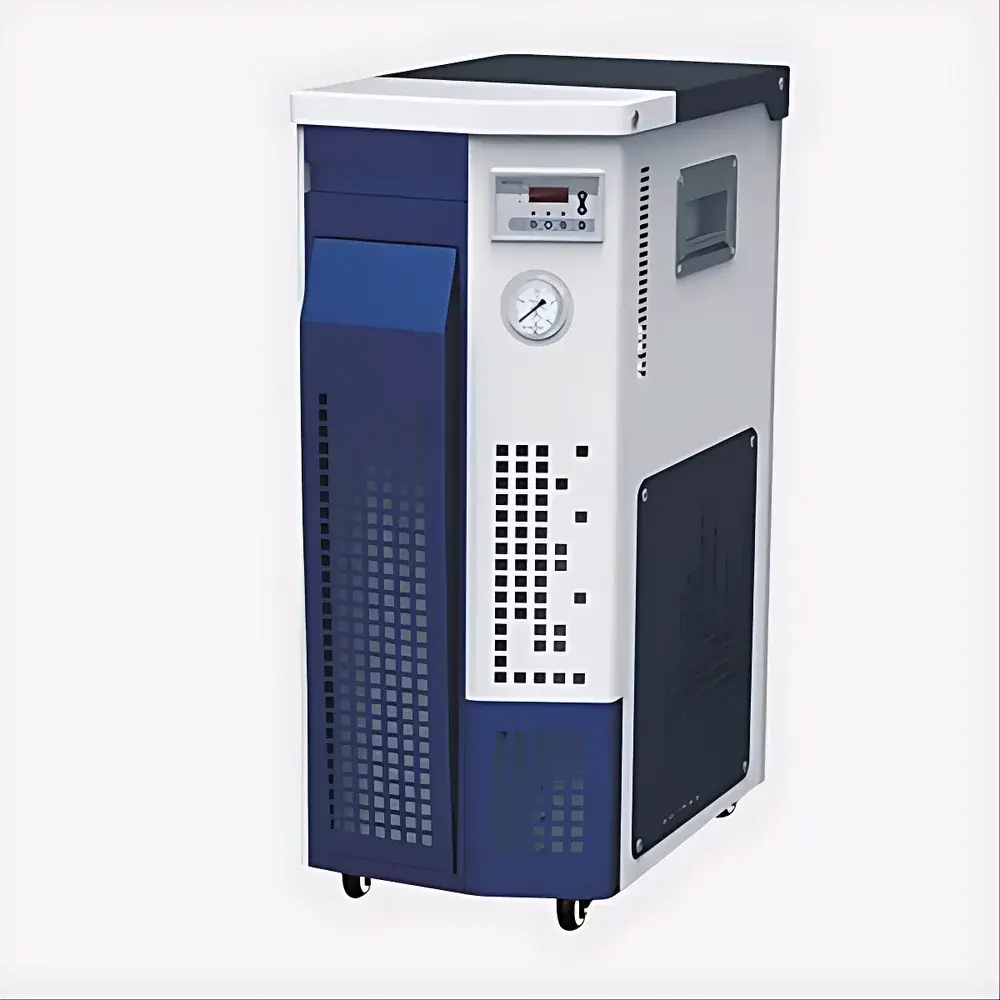
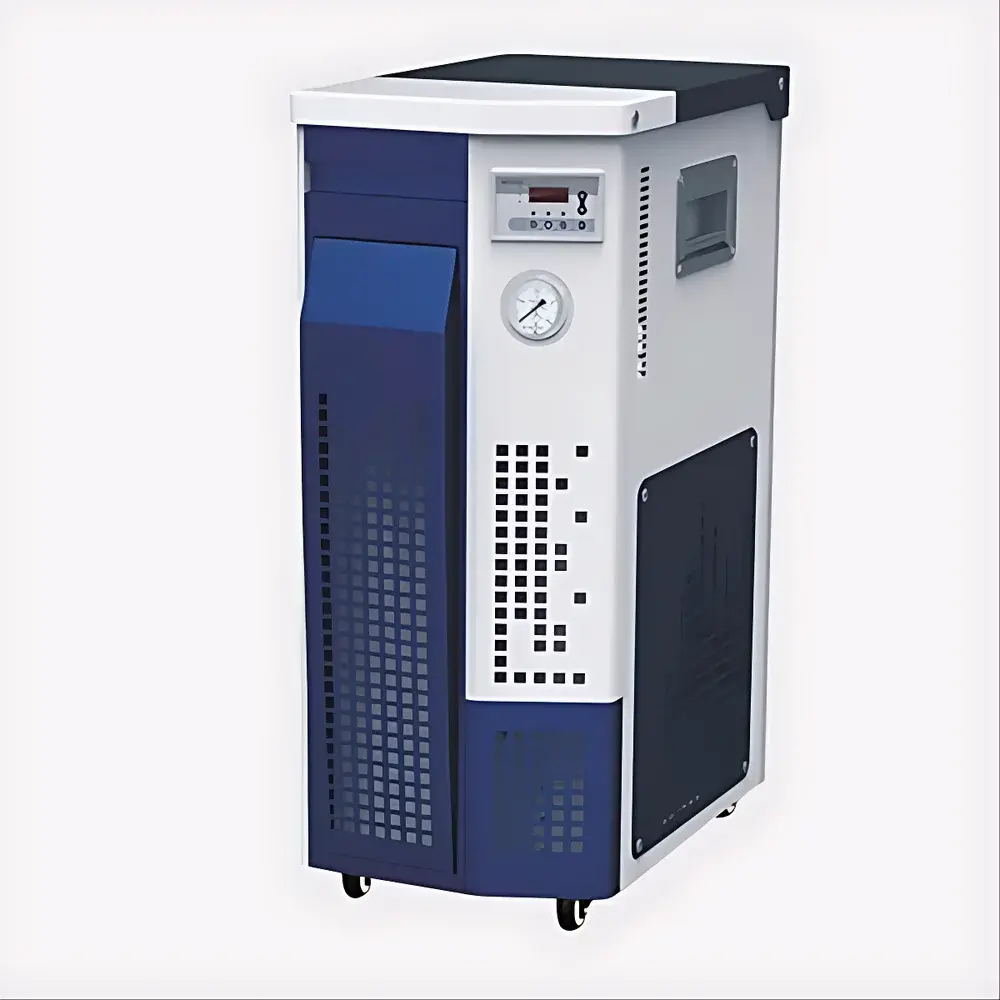
The Great Wall RJHS-2020 Low-Temperature Solvent Recovery System
| Brand | The Great Wall |
|---|---|
| Origin | Henan, China |
| Manufacturer Type | Authorized Distributor |
| Country of Origin | China |
| Model | RJHS-2020 |
| Quotation | Available Upon Request |
| Empty Chamber Temperature | −10 °C |
| Operating Temperature Range | −10 °C to 20 °C |
| Ultimate Vacuum Pressure | 50 mbar |
| Ambient Temperature Limit | ≤25 °C |
| Ambient Relative Humidity Limit | ≤60% RH |
| Power Supply | 220–240 V~, 50 Hz |
| Temperature Display | Digital |
| Pumping Speed | 25 L/min |
| Total Power Consumption | 545 W |
| Rated Current | 2.5 A |
| Dimensions (W×D×H) | 320 mm × 450 mm × 570 mm |
| Net Weight | 61 kg |
Overview
The Great Wall RJHS-2020 Low-Temperature Solvent Recovery System is a compact, benchtop-scale vacuum distillation unit engineered for the safe, energy-efficient reclamation of used organic solvents in laboratory and pilot-scale industrial settings. It operates on the principle of low-temperature vacuum evaporation—reducing the boiling point of volatile solvents under controlled sub-atmospheric pressure—thereby enabling recovery at temperatures significantly below their ambient-pressure boiling points. This minimizes thermal degradation of heat-sensitive compounds and reduces energy input compared to conventional atmospheric distillation. Designed for continuous operation in regulated environments, the RJHS-2020 supports closed-loop solvent reuse across R&D labs, QC/QA departments, and small-batch manufacturing units where solvent consumption, cost control, and VOC emissions compliance are critical operational priorities.
Key Features
- Integrated refrigerated condensation system with stable −10 °C cold trap performance, ensuring high-efficiency vapor capture and minimal solvent loss during recovery cycles.
- Robust stainless-steel main chamber and condenser housing, corrosion-resistant to common organic solvents including aliphatic hydrocarbons, aromatics, ketones, ethers, alcohols, nitrogen- and sulfur-containing compounds.
- Digital temperature controller with real-time display and ±0.5 °C accuracy over the −10 °C to 20 °C operating range, facilitating precise process repeatability.
- High-flow vacuum pump assembly delivering 25 L/min pumping speed and capable of achieving 50 mbar ultimate vacuum—sufficient for efficient removal of low-boiling solvents such as acetone, ethanol, ethyl acetate, and hexane.
- Compact footprint (320 mm × 450 mm × 570 mm) and 61 kg net weight enable flexible placement in fume hoods or dedicated recovery workstations without structural reinforcement.
- Compliance-ready electrical architecture: 220–240 V~, 50 Hz input with built-in thermal overload protection and grounded chassis design meeting IEC 61010-1 safety requirements for laboratory equipment.
Sample Compatibility & Compliance
The RJHS-2020 is validated for recovery of solvents commonly employed across pharmaceutical synthesis, polymer processing, coating formulation, and electronics cleaning applications. Compatible feed streams include spent wash solutions, reaction quench mixtures, extraction residues, and rinse solvents containing single-component or multi-component blends (e.g., toluene/ethanol, THF/water, MEK/methanol). While not certified to ISO 9001 or FDA 21 CFR Part 11 out-of-the-box, its operational parameters—including traceable temperature logging (via optional external data logger), closed-system design, and absence of moving parts in contact with recovered distillate—support alignment with GLP and GMP documentation practices. Users are advised to perform in-house validation per ASTM D86 or ISO 3405 when establishing solvent purity specifications for reuse.
Software & Data Management
The RJHS-2020 operates via standalone hardware controls with no embedded microprocessor or network interface. Temperature setpoint and real-time chamber reading are displayed on an integrated digital LED panel. For audit-trail generation and long-term process monitoring, integration with third-party data acquisition systems (e.g., LabVIEW, WinCC, or Modbus-compatible PLCs) is supported via analog 0–10 V output (optional accessory). All operational parameters—including runtime, batch count, and ambient condition logs—must be manually recorded in accordance with internal SOPs. The system’s mechanical simplicity ensures high mean time between failures (MTBF) and eliminates firmware update dependencies.
Applications
- Pharmaceutical laboratories recovering HPLC-grade acetonitrile or methanol from analytical waste streams.
- Coating and ink manufacturers reclaiming xylene, butyl acetate, or glycol ether solvents from spray booth filters and cleaning tanks.
- Electronics fabrication facilities reprocessing isopropyl alcohol (IPA) and acetone used in wafer rinsing and photomask cleaning.
- Academic research groups minimizing hazardous waste disposal volumes while maintaining solvent purity for reproducible reaction outcomes.
- Small-scale adhesive and resin producers reducing raw material procurement frequency through on-site cyclohexanone or methyl ethyl ketone (MEK) regeneration.
FAQ
What types of solvents can be processed in the RJHS-2020?
The system is optimized for volatile organic solvents with boiling points below 150 °C at atmospheric pressure, including but not limited to alkanes, aromatics, ketones, esters, ethers, and primary/secondary alcohols. Halogenated solvents (e.g., chloroform, DCM) require additional corrosion assessment prior to use.
Is the recovered solvent suitable for reuse in synthesis or analysis?
Recovery purity depends on feed composition, distillation rate, and cold trap efficiency. For critical applications, users must verify recovered solvent quality via GC, Karl Fischer titration, or UV-Vis spectroscopy against relevant pharmacopoeial or industrial standards.
Does the RJHS-2020 meet explosion-proof requirements for Class I, Division 1 environments?
No—the unit is rated for general laboratory use only and lacks intrinsic safety certification. Installation in classified hazardous locations requires external explosion-proof enclosures and site-specific ATEX/IECEx review.
Can the system handle aqueous solvent mixtures?
Yes, provided water content remains below 10 wt% and azeotrope formation does not impede phase separation. For high-water feeds, pre-decantation or desiccant pretreatment is recommended.
What maintenance intervals are recommended for sustained performance?
Vacuum pump oil should be changed every 200 operating hours; cold trap surfaces require periodic cleaning with lint-free wipes and isopropanol; O-rings should be inspected quarterly and replaced if cracking or compression set is observed.



