
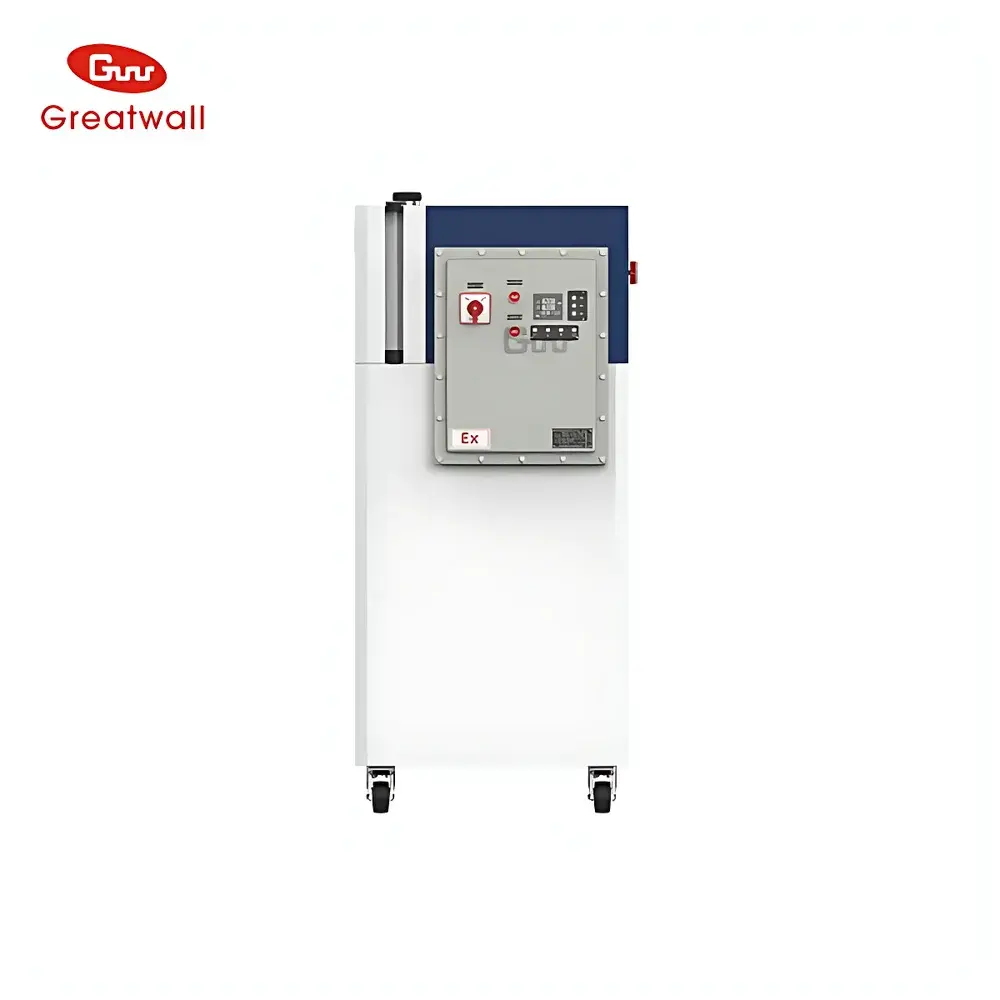
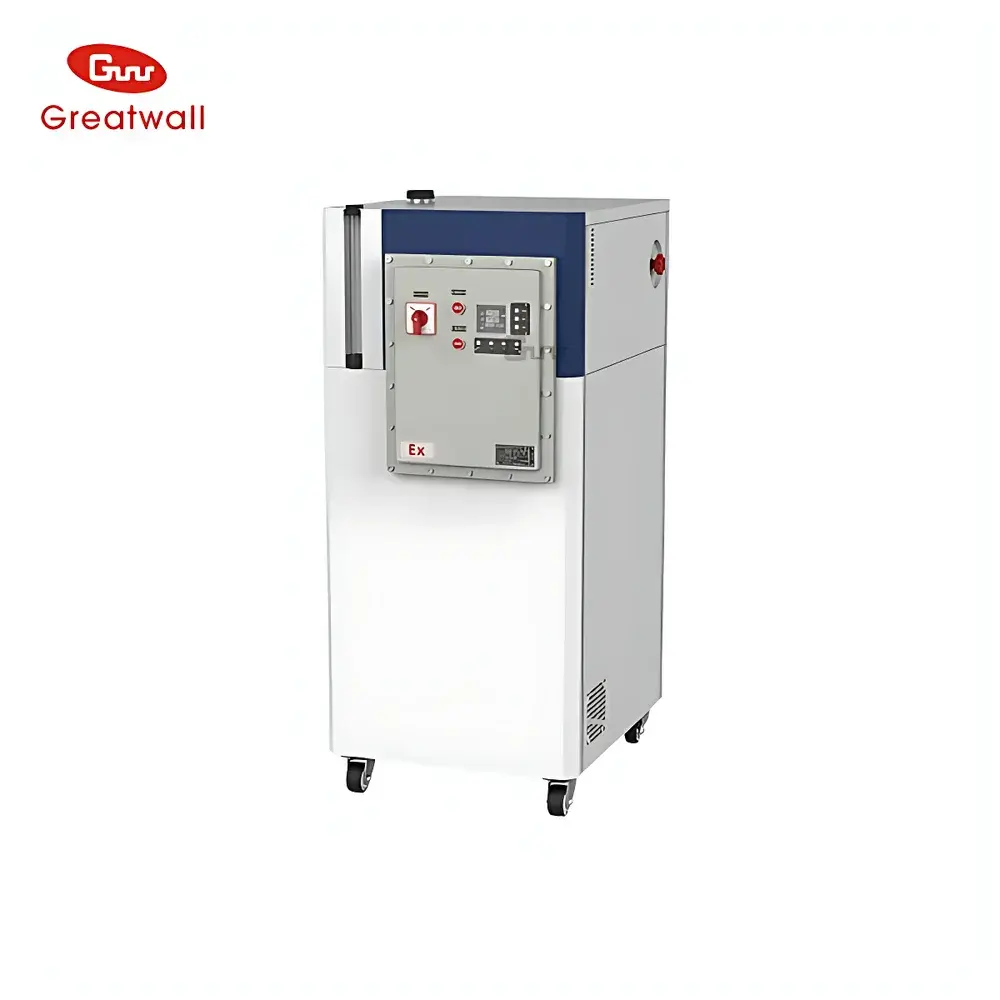
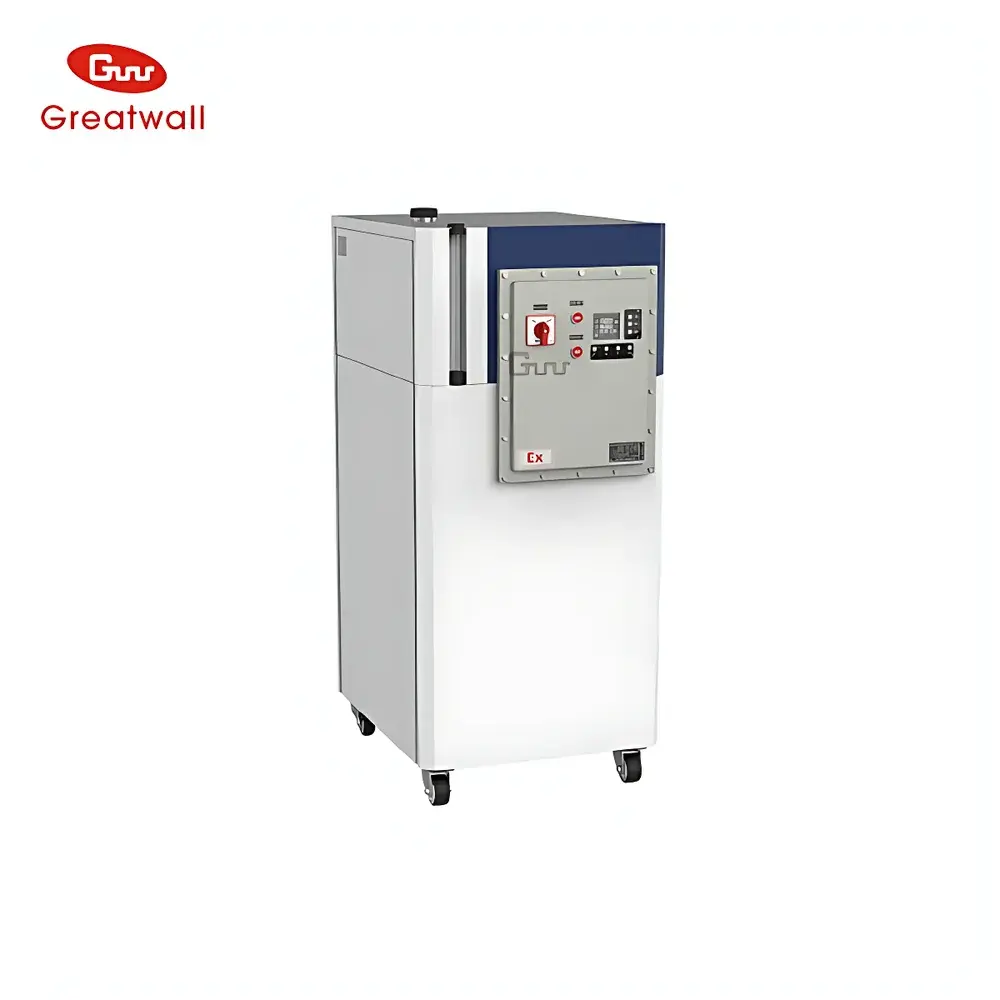
Great Wall SY-20-250Ex Explosion-Proof High-Temperature Circulating Bath
| Brand | Great Wall |
|---|---|
| Model | SY-20-250Ex |
| Origin | Henan, China |
| Manufacturer Type | Direct Manufacturer |
| Instrument Type | Constant-Temperature Circulating Bath |
| Circulation Mode | External Circulation |
| Temperature Control | Heating-Only |
| Temperature Range | Ambient +5°C to 250°C |
| Temperature Stability | ±0.5°C |
| Total Power Input | 3250 W |
| Supply Voltage | 3-phase, 380 V, 50 Hz |
| Heat Transfer Fluid | Thermal Oil |
| Safety Certification | ATEX/IECEx-compliant components (explosion-proof heater, circulation pump, and control cabinet) |
Overview
The Great Wall SY-20-250Ex Explosion-Proof High-Temperature Circulating Bath is an engineered thermal management system designed for safe, precise, and stable temperature control in hazardous environments where flammable vapors, combustible dusts, or explosive atmospheres may be present. It operates on the principle of forced convection using thermally stable synthetic or mineral-based heat transfer oils, circulated via an intrinsically safe external loop to maintain uniform thermal energy delivery to jacketed reactors, distillation columns, or other process vessels. Unlike standard heating baths, the SY-20-250Ex integrates certified explosion-proof components—including Class II, Division 1 (or Zone 1) rated electric heaters, centrifugal circulation pumps, and fully enclosed control cabinets—ensuring compliance with international hazardous area classification standards including IEC 60079-0, IEC 60079-1, and IEC 60079-7. Its architecture supports continuous operation at elevated temperatures up to 250°C while maintaining thermal stability within ±0.5°C under dynamic load conditions typical of pilot-scale pharmaceutical synthesis or fine chemical processing.
Key Features
- Explosion-proof certified components: Heater assembly, circulation pump, and control cabinet meet IECEx and ATEX directives for use in Zone 1 / Class I, Division 1 environments.
- Sealed closed-loop circulation system minimizes thermal fluid oxidation, evaporation, and moisture absorption—extending service life of synthetic or mineral thermal oils by up to 40% compared to open-bath alternatives.
- Real-time liquid level monitoring via calibrated sight glass and integrated float-level sensor with visual and audible low-level alarm output.
- Multi-layer safety protection: Independent overtemperature cutoff (mechanical and electronic), earth leakage detection, thermal overload relay, overcurrent tripping, and phase-sequence monitoring for three-phase supply integrity.
- Integrated cooling coil enables auxiliary temperature modulation via externally supplied chilled water (e.g., from a chiller or municipal supply), supporting ramp-and-soak protocols requiring both heating and active cooling phases.
- Rugged stainless-steel reservoir and insulated housing reduce ambient heat loss and improve energy efficiency during prolonged high-temperature operation.
Sample Compatibility & Compliance
The SY-20-250Ex is compatible with a broad range of heat transfer fluids meeting ASTM D6722 or DIN 51522 specifications—including polyalphaolefin (PAO), silicone oil, and high-stability mineral oils—with flash points exceeding 250°C. It interfaces seamlessly with glass-lined, stainless-steel, or Hastelloy-jacketed reactors used in API manufacturing, polymerization, hydrogenation, and esterification processes. The unit complies with CE marking requirements (2014/34/EU ATEX Directive), GB 3836.1–2021 (China’s explosion-proof standard), and supports integration into facilities operating under cGMP, ISO 9001, and ISO 14001 quality and environmental management systems. Documentation includes Factory Acceptance Test (FAT) reports, component certification dossiers, and electrical schematics traceable to IEC 61000-6-2/6-4 EMC standards.
Software & Data Management
While the SY-20-250Ex features a dedicated analog/digital hybrid controller with PID tuning capability and local setpoint adjustment, it also provides optional 4–20 mA analog output and Modbus RTU (RS-485) interface for integration into distributed control systems (DCS) or SCADA platforms. All critical operational parameters—including bath temperature, outlet fluid temperature, circulation pressure, and fault status—are logged with timestamping. When connected to a validated data acquisition system compliant with FDA 21 CFR Part 11, audit trails, electronic signatures, and user-access controls can be implemented to satisfy GLP and GMP regulatory expectations for temperature-critical process validation.
Applications
This circulating bath serves as a core thermal utility in regulated industrial laboratories and pilot plants. Primary applications include: controlled-temperature catalytic reactions in hydrogenation units; thermal profiling during crystallization of active pharmaceutical ingredients (APIs); temperature ramping in continuous flow chemistry reactors; and thermal conditioning of analytical sample introduction systems in GC and HPLC instrumentation requiring stable pre-heating. Its explosion-proof rating makes it suitable for solvent-intensive operations involving toluene, THF, ethyl acetate, or isopropanol—common in coating formulation, agrochemical synthesis, and battery electrolyte development.
FAQ
What explosion-proof certifications does the SY-20-250Ex hold?
The unit incorporates components certified to IECEx Ex d IIB T4 Gb and ATEX II 2G Ex d IIB T4 Gb standards, suitable for Group IIB gas environments with maximum surface temperature class T4 (≤135°C). Full system certification documentation is provided upon request.
Can the unit operate continuously at 250°C?
Yes—designed for sustained operation at its maximum rated temperature, provided thermal fluid selection meets viscosity and thermal degradation thresholds per OEM recommendations and routine maintenance intervals are observed.
Is remote monitoring supported?
Standard configuration includes analog output and Modbus RTU; optional Ethernet/IP or Profibus-DP modules are available for direct PLC or MES integration.
What maintenance is required for long-term reliability?
Quarterly inspection of fluid level, heater insulation resistance, pump seal integrity, and calibration verification of temperature sensors is recommended. Annual full-system thermographic and electrical safety testing is advised for GMP-regulated environments.



