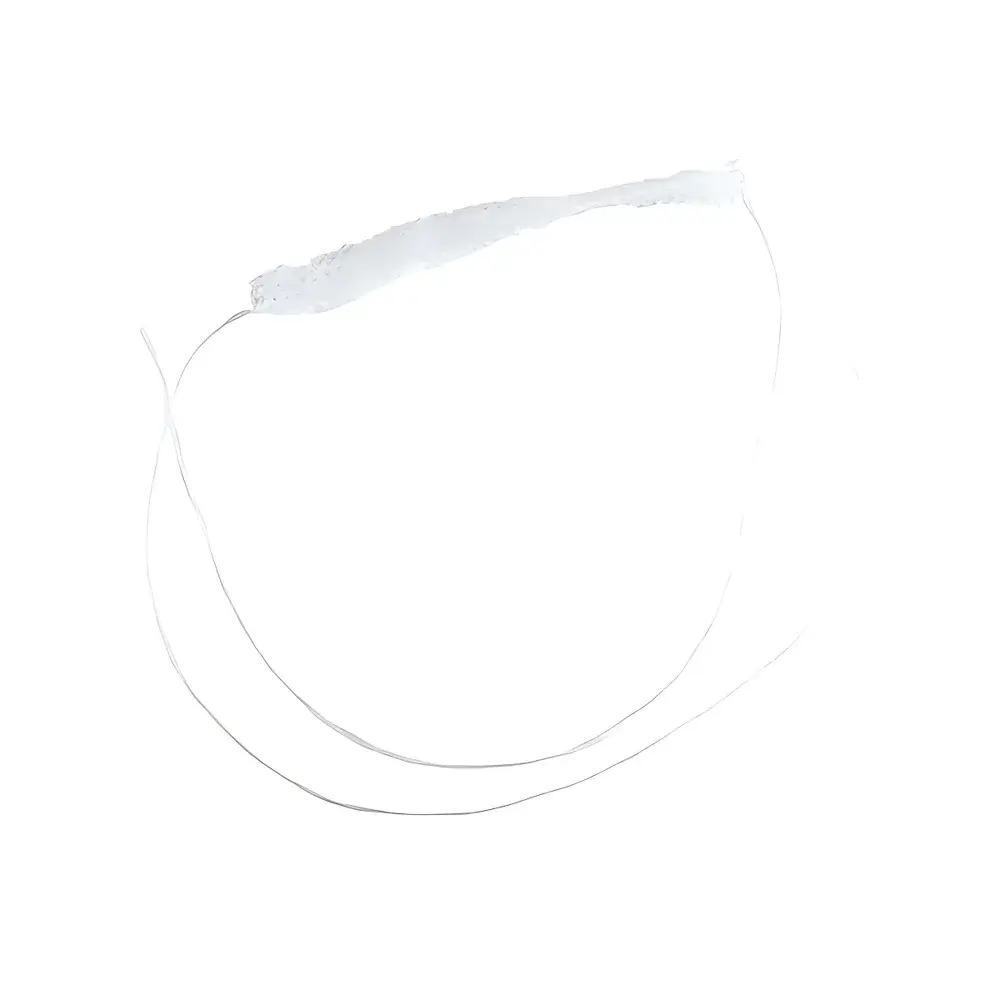
GS10 Derivatization Coil
| Brand | Huapai Keyi |
|---|---|
| Origin | Shandong, China |
| Manufacturer Type | Direct Manufacturer |
| Country of Origin | China |
| Model | GS10 Derivatization Coil |
| Service Quotation Range | USD 0–150 (excl. shipping & customs) |
| Field Experience | 3 years |
Overview
The GS10 Derivatization Coil is a precision-engineered passive electromagnetic component designed for integration into analytical instrumentation workflows—particularly in gas-phase derivatization systems, thermal desorption units, and controlled-reaction interface modules used in chromatographic and spectroscopic analysis. Unlike active sensors or transducers, the GS10 functions as a thermally stable, low-inductance coil assembly optimized to facilitate rapid, uniform heat transfer during on-line chemical derivatization reactions (e.g., silylation, acylation, or methylation of trace analytes prior to GC or GC-MS detection). Its geometry and winding configuration are calibrated to ensure minimal magnetic field interference while maintaining consistent thermal mass distribution across operating temperatures from ambient to 350 °C. The coil does not generate signals autonomously; rather, it serves as a controlled resistive heating element when integrated with external power regulation circuits compliant with IEC 61000-4-3 (EMC immunity) and UL 61010-1 (electrical safety for lab equipment).
Key Features
- High-purity nickel-chromium (NiCr) alloy winding with ceramic fiber insulation, rated for continuous operation up to 350 °C
- Precision-wound helical geometry ensuring uniform thermal gradient distribution and minimized hot-spot formation
- Low parasitic inductance (< 2.5 µH at 1 kHz), engineered to reduce electromagnetic coupling with adjacent signal-carrying lines in multi-channel analytical interfaces
- Compact cylindrical form factor (OD: 8.5 mm, L: 42 mm) compatible with standard 1/4″ Swagelok® or VCR® compression fittings for inline installation
- RoHS-compliant construction with no lead, cadmium, or halogenated flame retardants—certified per EN 50581:2012
- Traceable manufacturing documentation including lot-specific resistance calibration data (25 °C nominal resistance: 28.7 Ω ± 0.5 Ω)
Sample Compatibility & Compliance
The GS10 Derivatization Coil is intended for use with volatile and semi-volatile organic compounds (VOCs/SVOCs), including phenols, fatty acids, sterols, and amino acid derivatives. It is validated for compatibility with common derivatizing reagents such as N-methyl-N-(trimethylsilyl)trifluoroacetamide (MSTFA), dimethylformamide dimethylacetal (DMF-DMA), and diazomethane precursors under inert carrier gas environments (He, N₂, H₂). Device integration requires adherence to ISO/IEC 17025:2017 clause 5.5.2 (equipment suitability verification) and ASTM D7359–22 (standard practice for derivatization in elemental analysis). No direct contact with liquid-phase samples is permitted; all applications must conform to vapor-phase reaction protocols only.
Software & Data Management
As a hardware-only passive component, the GS10 Derivatization Coil does not incorporate embedded firmware, microcontrollers, or digital communication interfaces. Its operational parameters (e.g., applied voltage, current draw, surface temperature) are monitored externally via compatible laboratory control systems—such as Agilent MassHunter, Thermo Fisher Chromeleon, or custom LabVIEW-based DAQ platforms—using standard 4–20 mA analog feedback loops or PT100 RTD inputs. All calibration records, installation logs, and maintenance history must be retained per GLP requirements (21 CFR Part 58) and may be linked to instrument asset management databases using unique serial identifiers engraved on the coil housing.
Applications
- On-line silylation of hydroxyl- and carboxyl-containing metabolites in breath or headspace analysis
- Thermal-assisted derivatization of chlorinated pesticides prior to GC-ECD detection
- Interface module in thermal desorption–gas chromatography–mass spectrometry (TD-GC-MS) systems for enhanced sensitivity of polar environmental contaminants
- Reaction zone component in portable field-deployable GC systems requiring low-power, high-stability heating elements
- Custom OEM integration into ISO/IEC 17025-accredited reference material production lines for certified derivative standards
FAQ
Is the GS10 Derivatization Coil suitable for liquid-phase derivatization?
No. It is strictly intended for vapor-phase or thermally induced gas-phase reactions. Immersion in solvents or direct contact with liquids will compromise insulation integrity and void warranty.
Does the coil include temperature sensing capability?
No. Integrated temperature measurement requires external PT100, K-type thermocouple, or infrared pyrometer integration per system design specifications.
What electrical safety certifications does the GS10 hold?
It complies with structural requirements of UL 61010-1 Ed.3 and IEC 61010-1:2010 for laboratory electrical equipment. Full certification documentation is available upon request for qualified purchasers.
Can the GS10 be recalibrated after extended thermal cycling?
Resistance drift is characterized during qualification testing; routine recalibration is not required. However, users must verify cold-resistance baseline annually per ISO/IEC 17025 clause 6.4.10.
Is OEM branding or custom winding specification available?
Yes—Huapai Keyi offers private-label engraving and geometry modifications (e.g., adjusted length, wire gauge, or termination style) under NDA for volume orders ≥50 units.
Related Products