
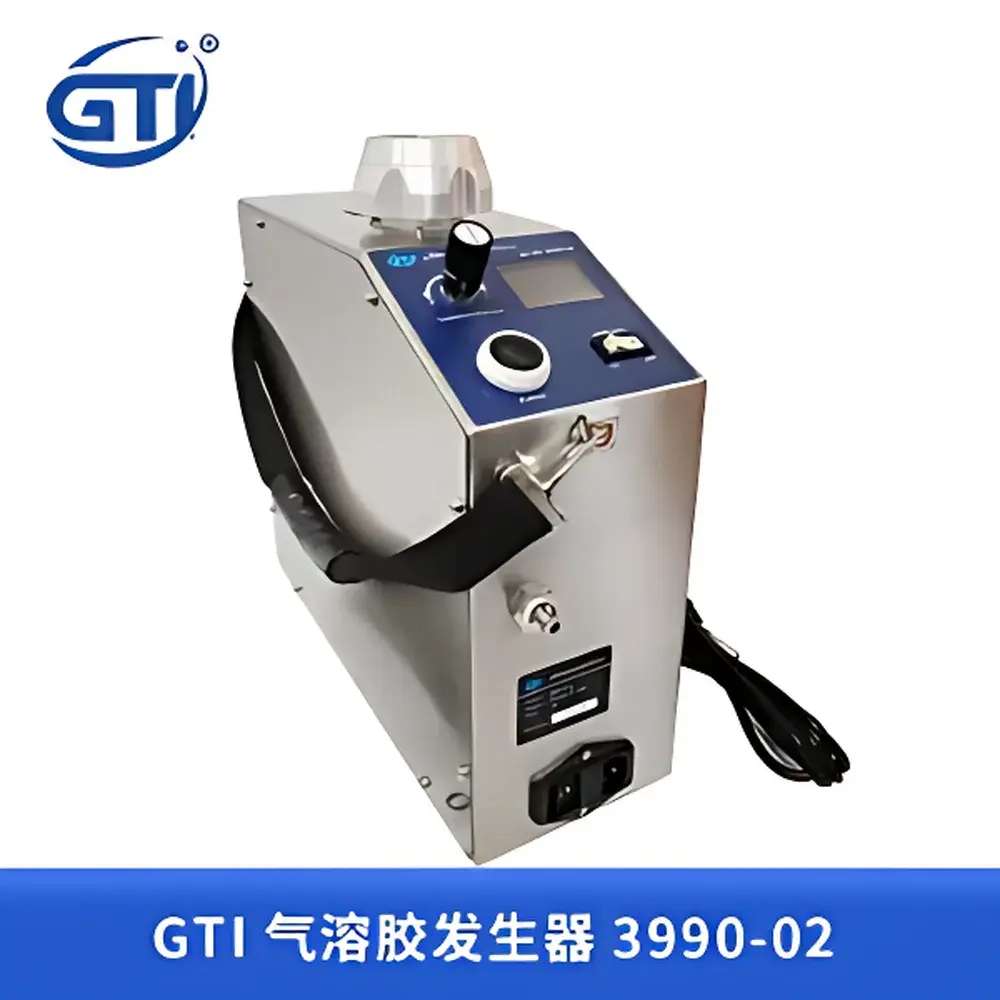
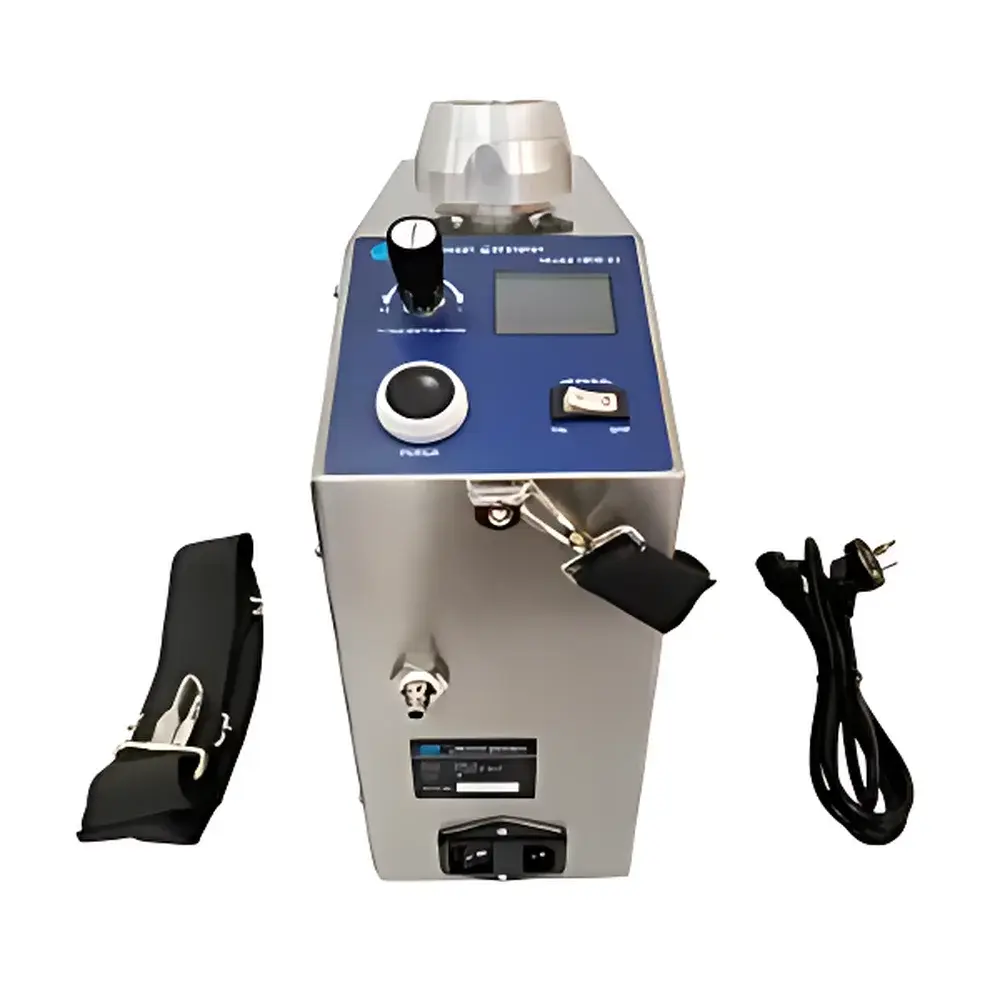
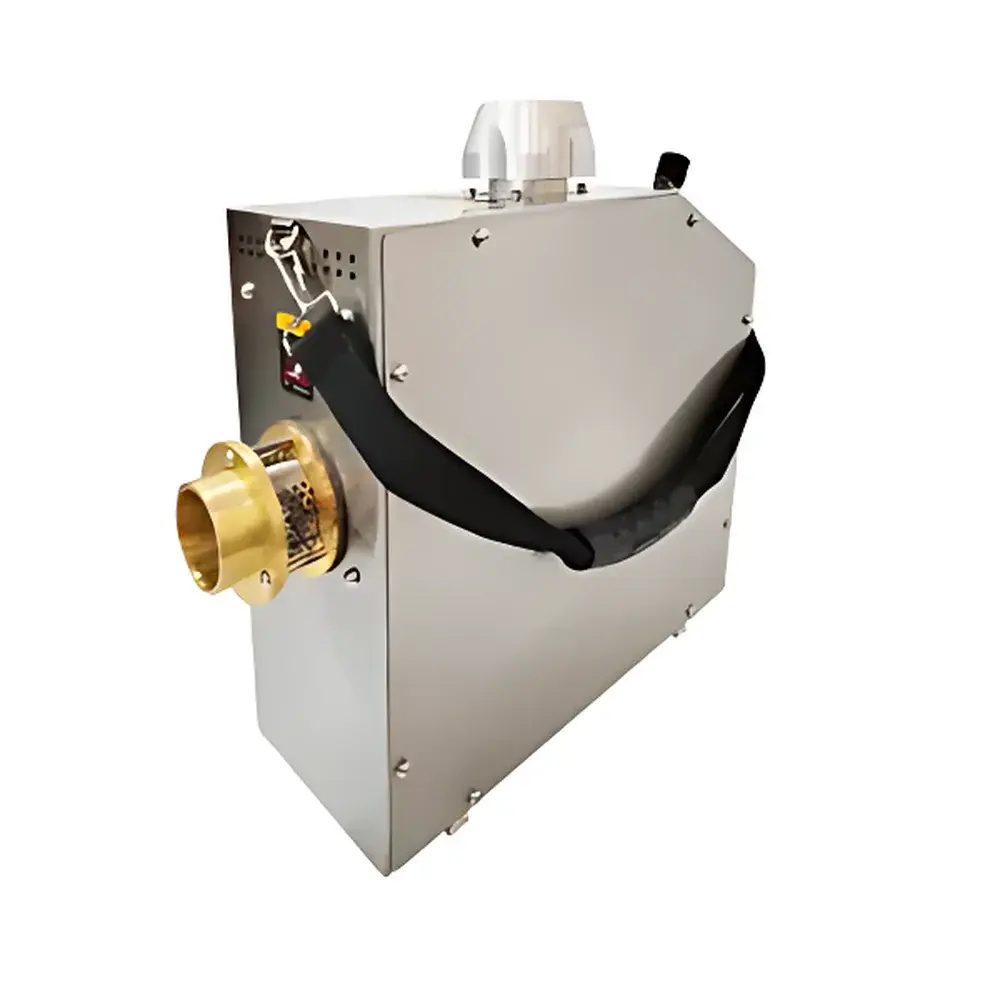
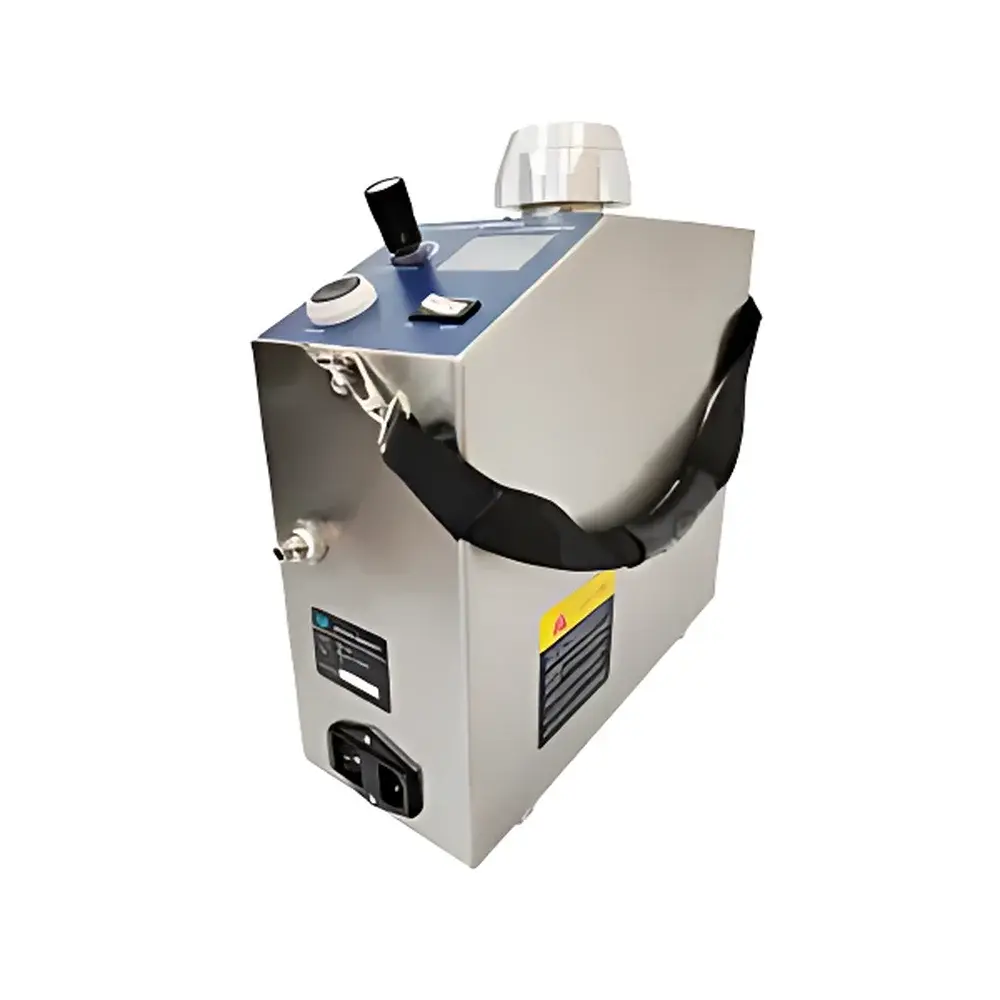
GTI 3990-02 Thermal Aerosol Generator for HEPA/ULPA Filter Leak Testing
| Brand | GTI |
|---|---|
| Origin | Liaoning, China |
| Manufacturer Type | Manufacturer |
| Product Category | Domestic |
| Model | 3990-02 |
| Output Flow Range | 500–70,000 cfm (833–119,000 m³/h) |
| Aerosol Concentration | 10–100 mg/m³ (10–100 µg/L) |
| Heating Time | < 2 min |
| Aerosol Types | PAO-4, DOS/DESH, Ondina EL, DOP/DEHP, Mineral Oil |
| Reservoir Capacity | 1.8 L |
| Power Supply | 220 VAC, 50 Hz, 8 A |
| Input Pressure | 345 kPa (50 psi) |
| Dimensions | 430 × 140 × 360 mm |
| Weight | 11 kg |
| Display | 2.4″ TFT Color Screen |
| Compliance | ANSI/ASME N509-2019 & N510-2019 |
Overview
The GTI 3990-02 Thermal Aerosol Generator is an engineered solution for quantitative leak testing of high-efficiency particulate air (HEPA) and ultra-low penetration air (ULPA) filters in controlled environments. It operates on the principle of thermal phase transition: liquid aerosol test agent—such as PAO-4, DOS, or mineral oil—is heated to vaporization by a precision-controlled resistive heating element, then rapidly quenched by a regulated inert carrier gas stream (e.g., nitrogen or CO₂), resulting in a stable, polydisperse aerosol cloud with a particle size distribution compliant with ANSI/ASME N509-2019 and N510-2019 standards. This thermally generated aerosol provides consistent mass concentration and reproducible particle morphology—critical for upstream challenge testing in cleanroom qualification, pharmaceutical facility validation, and nuclear containment integrity verification. Unlike pressure-driven Laskin nozzle generators, the 3990-02 delivers scalable output across a wide volumetric flow range (500–70,000 cfm), enabling uniform challenge conditions for both localized equipment (e.g., biosafety cabinets, FFUs) and full-scale HVAC systems.
Key Features
- Thermal generation architecture ensuring stable, repeatable aerosol output without mechanical nozzles or compressed-air dependency
- Ultra-fast thermal ramp-up: full operational temperature achieved in under 2 minutes, minimizing test setup time
- Large 1.8 L reservoir capacity—60% greater than comparable thermal generators—supporting extended-duration tests without refilling
- Integrated 2.4″ full-color TFT display showing real-time internal gas pressure, heater zone temperature, and operational status
- Stainless steel chassis with reinforced pressure-rated housing (rated to 345 kPa / 50 psi), resistant to thermal stress and compatible with ISO Class 5–8 cleanroom cleaning protocols
- Multi-agent compatibility: validated for PAO-4, DOS/DESH, Ondina EL, DOP/DEHP, and pharmaceutical-grade mineral oils per USP <797> and EU GMP Annex 1 requirements
- Modular outlet interface supporting optional extension ducts and sealed quick-connect couplings for remote delivery to hard-to-access upstream ductwork
Sample Compatibility & Compliance
The GTI 3990-02 is designed for use with standard photometric and condensation particle counter (CPC)-based aerosol photometers—including GTI’s own 3990-series light-scattering photometers—for downstream scanning per ISO 14644-3, IEST-RP-CC006.2, and FDA Guidance for Industry: Sterile Drug Products Produced by Aseptic Processing. Its aerosol output meets the geometric mean diameter (GMD) and standard deviation (σg) specifications defined in ANSI/ASME N509/N510 for nuclear and HVAC applications. The generator supports GLP- and GMP-aligned workflows: all operational parameters (temperature setpoint, pressure, run duration) are logged internally and exportable via USB; firmware supports audit-trail-enabling configurations compatible with 21 CFR Part 11-compliant data management systems when integrated with validated software platforms.
Software & Data Management
While the 3990-02 operates as a standalone hardware unit, its embedded microcontroller records timestamped event logs—including heater activation time, peak temperature, pressure stability window, and total runtime—accessible via USB mass storage mode. These logs serve as objective evidence for IQ/OQ/PQ documentation during cleanroom commissioning. When paired with GTI’s 3990 Photometer and optional PC-based analysis suite (v3.2+), users can synchronize upstream challenge concentration data with downstream scan results to generate automated pass/fail reports aligned with ISO 14644-3 leakage thresholds (e.g., ≤0.01% for Class A/B zones). Firmware updates are distributed through GTI’s secure customer portal, with version history and change logs provided for regulatory traceability.
Applications
- HEPA/ULPA filter integrity testing in pharmaceutical aseptic processing suites (ISO 5–8 environments)
- Leak detection in nuclear fuel handling facilities and radiological containment enclosures
- Validation of laminar airflow workstations, biological safety cabinets (BSCs), and isolators
- Commissioning and periodic requalification of hospital operating rooms and compounding pharmacies
- Testing of HVAC ductwork, terminal filters, and fan-filter units (FFUs) in semiconductor fabrication cleanrooms
- Research-grade aerosol challenge studies requiring repeatable polydisperse distributions in inhalation toxicology labs
FAQ
What aerosol agents are certified for use with the 3990-02?
PAO-4 (polyalphaolefin), DOS (di-octyl sebacate), DESH (di-ethylhexyl sebacate), Ondina EL, DOP/DEHP, and USP-grade mineral oil—all tested and documented for thermal stability and aerosol fidelity at operating temperatures up to 400°C.
Does the 3990-02 require compressed air or nitrogen supply?
Yes—it requires a regulated inert carrier gas source (N₂ or CO₂) at 345 kPa (50 psi) to transport and quench the vaporized agent; compressed air is not recommended due to moisture and oil contamination risks.
Can the 3990-02 be used for FDA 21 CFR Part 11-compliant validation?
The device itself is not Part 11–certified, but its data logging capability—when integrated with validated third-party electronic lab notebooks (ELNs) or LIMS platforms—supports ALCOA+ data integrity principles required for regulated submissions.
How does the 3990-02 differ from Laskin nozzle-type generators like the 3990-01?
The 3990-02 uses thermal vaporization for higher concentration output and broader flow scalability, while Laskin-nozzle models (e.g., 3990-01/03) offer finer control at low-flow, localized applications where precise directional delivery is prioritized over volumetric output.
Is routine calibration required, and what does GTI recommend for maintenance?
Annual verification of heater temperature accuracy and pressure transducer linearity is recommended using NIST-traceable references; GTI-certified service partners perform on-site calibration, firmware updates, and preventive maintenance per ISO/IEC 17025-aligned procedures.







