
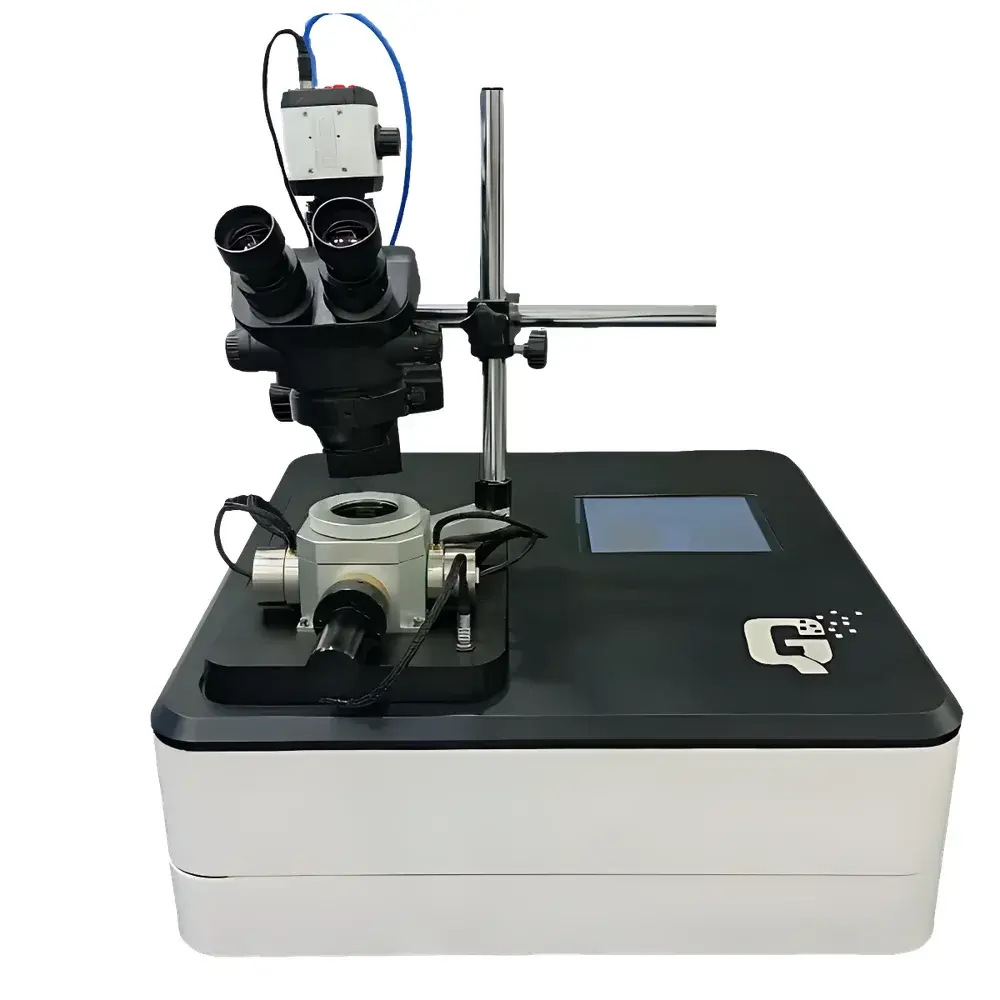
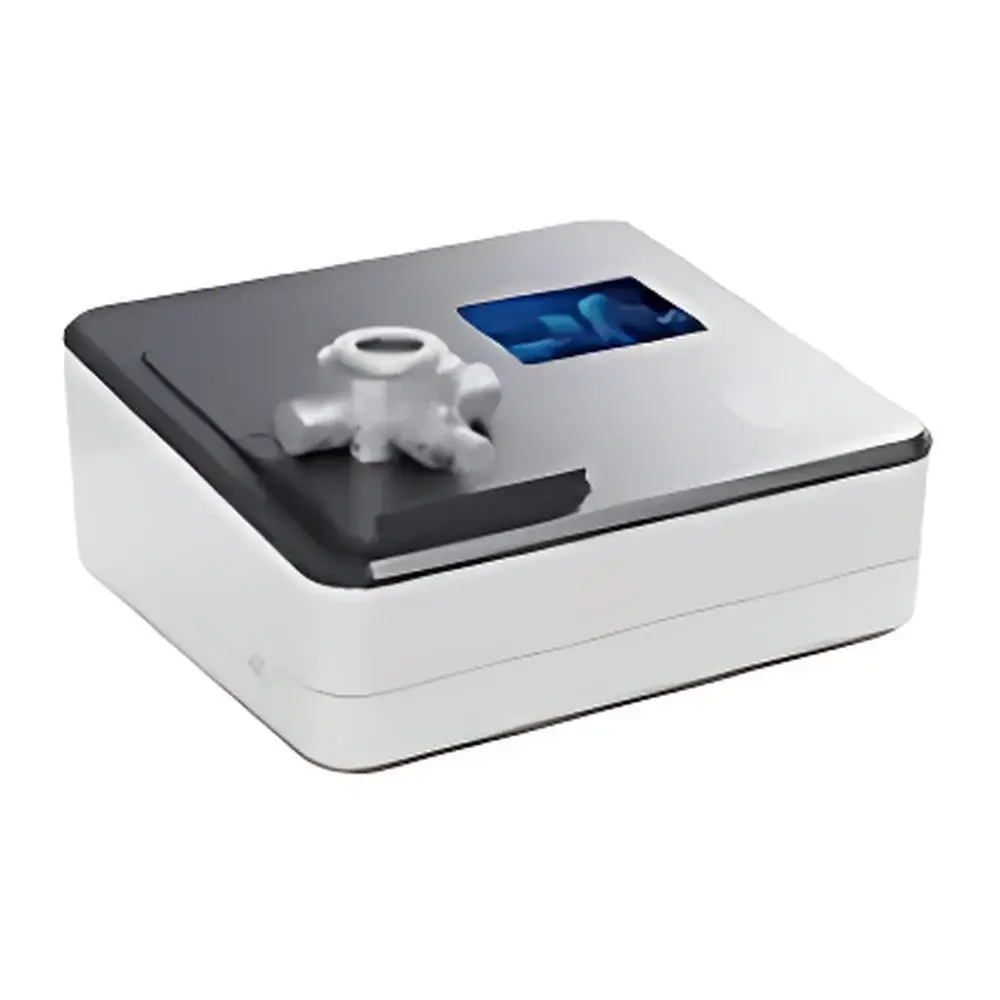
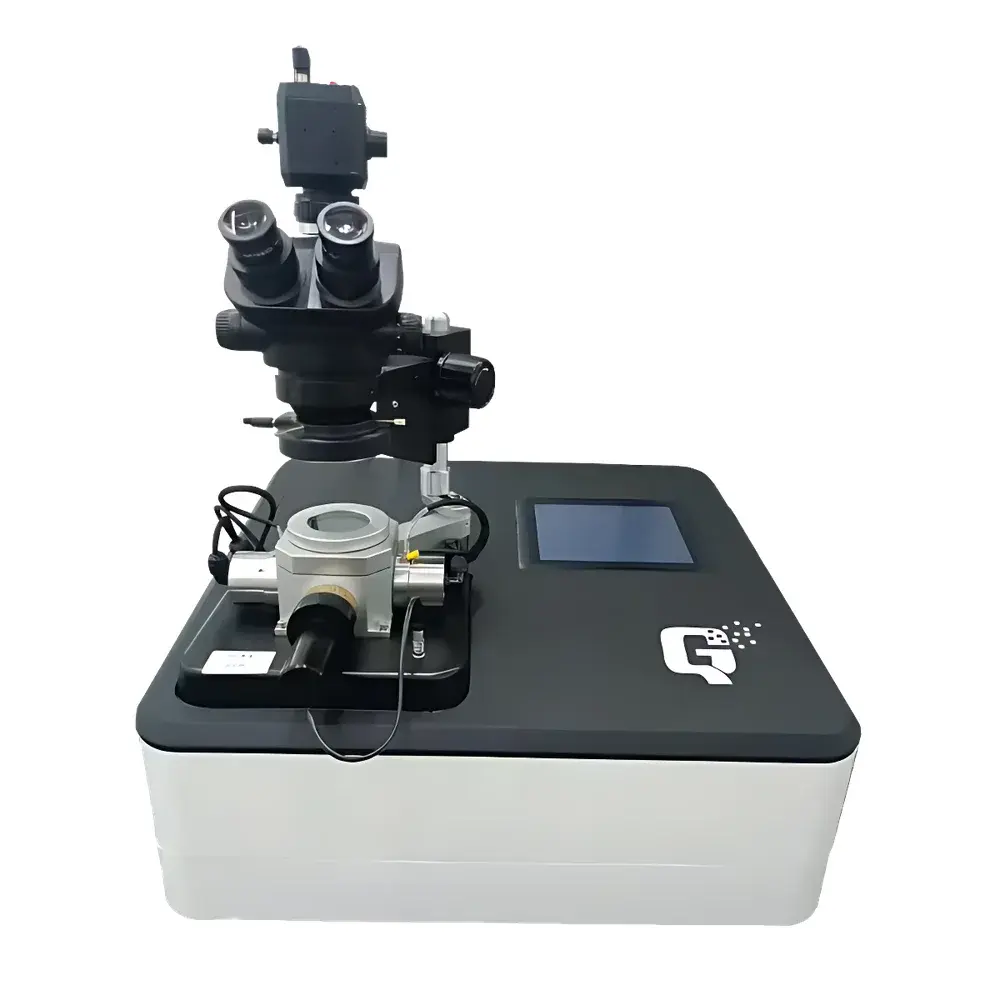
GU-AI9000 Ion Beam Milling System by DingHong
| Brand | DingHong |
|---|---|
| Origin | Jiangsu, China |
| Model | GU-AI9000 |
| Ion Beam Energy | 0–10 keV |
| Tilting Range | 0–360° (continuous rotation) |
| Maximum Sample Dimensions | <25 × 25 × 20 mm |
| Beam Spot Size | ≥Φ500 nm (nominal thin area diameter) |
| Vacuum System | Integrated diaphragm pump + turbo-molecular pump |
| Cooling Options | Peltier-cooled stage (–30 °C) or optional liquid nitrogen cryo-stage |
Overview
The GU-AI9000 Ion Beam Milling System is a high-precision, dual-ion-source instrument engineered for cross-sectional sample preparation in transmission electron microscopy (TEM), scanning electron microscopy (SEM), and focused ion beam (FIB)-complementary workflows. It operates on the principle of physical sputtering—where inert gas ions (typically Ar⁺) are accelerated toward a solid sample under high vacuum, removing surface material atom-by-atom through momentum transfer. Unlike reactive plasma etching or mechanical polishing, ion beam milling delivers damage-free, amorphous-layer-minimized surfaces with exceptional uniformity and crystallographic fidelity—critical for atomic-resolution structural analysis and defect characterization. Designed for laboratories requiring reproducible thinning of brittle, multi-phase, or beam-sensitive materials—including ceramics, intermetallics, battery cathodes, geological thin sections, and polymer composites—the GU-AI9000 supports both rapid pre-thinning and ultra-low-energy final polishing to achieve electron-transparent regions exceeding 500 nm in lateral extent.
Key Features
- Dual independent ion guns with non-magnetic, non-focusing ion optics—eliminating magnetic particle accumulation on source components and enabling large-diameter beam profiles (≥Φ500 nm) for broad-area thinning.
- Adjustable ion acceleration voltage from 0.1 to 10 keV, allowing sequential high-energy (5–10 keV) removal for rapid material ablation followed by low-energy (0.1–2 keV) fine finishing to minimize ion-induced damage and curtailing preferential sputtering.
- Full 360° continuous sample rotation combined with precise tilt control (±10° incremental adjustment), ensuring isotropic milling and eliminating shadowing artifacts during edge-thinning or plan-view preparation.
- Integrated vacuum architecture comprising a dry diaphragm backing pump and a 300 L/s turbo-molecular pump, achieving base pressures <5×10⁻⁶ mbar within 15 minutes—compatible with glovebox integration via standard KF40 flanges.
- Modular cooling system offering two operational modes: thermoelectric (Peltier) stage cooling to –30 °C without consumables, or optional LN₂-based cryo-stage for sub-100 K operation—essential for preserving volatile phases, preventing beam-induced recrystallization, or stabilizing radiation-sensitive organics.
Sample Compatibility & Compliance
The GU-AI9000 accommodates specimens up to 25 × 25 × 20 mm in volume, including TEM half-grid stubs, bulk metal coupons, fractured fracture surfaces, and encapsulated devices. Its non-contact, non-chemical milling mechanism ensures compatibility with insulating, conductive, and semi-conductive materials without charging mitigation requirements. The system adheres to ISO 14644-1 Class 5 cleanroom-compatible vacuum practices and incorporates pressure interlocks, over-temperature cutoffs, and emergency venting per IEC 61000-6-2 EMC standards. While not certified to FDA 21 CFR Part 11, its software architecture supports audit-trail-enabled operation when deployed in GLP/GMP-regulated environments (e.g., pharmaceutical solid-state characterization or medical device metallurgy labs), provided local validation protocols are applied.
Software & Data Management
Operation is managed via a dedicated Windows-based GUI supporting real-time monitoring of beam current, chamber pressure, stage temperature, and tilt/rotation angles. All parameters—including voltage ramp profiles, dwell time per angle, and cooling setpoints—are programmable and stored with timestamped metadata. Export formats include CSV for post-processing in MATLAB or Python, and PNG/JPEG snapshots of live beam diagnostics. No cloud connectivity or remote access functionality is embedded; data residency remains fully local to ensure compliance with institutional IT security policies and export-controlled research frameworks.
Applications
- Preparation of electron-transparent lamellae from sintered oxides, Ni-based superalloys, and SiC-reinforced composites for high-angle annular dark-field (HAADF) STEM analysis.
- Site-specific thinning of battery electrode cross-sections (e.g., NMC cathodes, graphite anodes) while preserving interfacial SEI layers at cryogenic temperatures.
- Artifact-free polishing of geological thin sections containing clay minerals or hydrous phases prone to dehydration under thermal stress.
- Final-stage cleaning of FIB-milled TEM samples to remove Ga⁺ implantation damage and amorphous surface layers.
- Routine maintenance of SEM EBSD samples where crystallographic orientation contrast requires near-perfect surface flatness and minimal topography.
FAQ
What ion species are supported, and how is gas delivery managed?
Argon is the standard sputtering gas; the system uses a precision mass flow controller (MFC) with stainless-steel gas line and leak-tight Swagelok fittings. Optional gas inlets support O₂ or N₂ for reactive ion milling, though not factory-configured.
Is the GU-AI9000 compatible with automated scripting or third-party control interfaces?
No native API or LabVIEW driver is supplied; all operation is GUI-mediated. Custom serial-command emulation may be implemented via RS-232 port (TTL-level), subject to user-developed protocol validation.
How often does the ion source require cleaning or replacement?
Under typical usage (2–3 samples/week), the non-magnetic ion gun assembly requires inspection every 6 months and cleaning only if carbon buildup is observed via endoscope—average service interval exceeds 18 months.
Can the system be upgraded to include plasma cleaning or low-energy electron flood gun?
No. The GU-AI9000 is purpose-built as a dedicated ion milling platform; auxiliary modules are not mechanically or electrically integrated into its chassis design.
Related Products



