
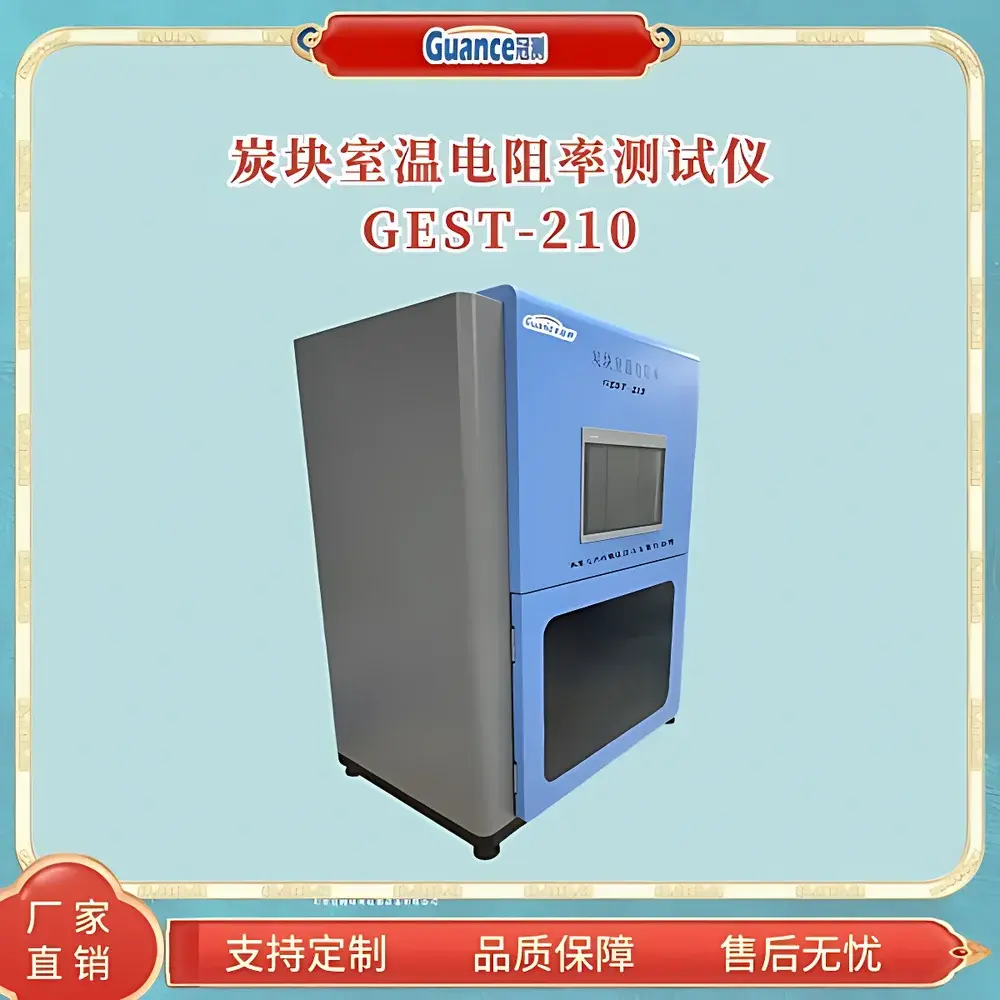
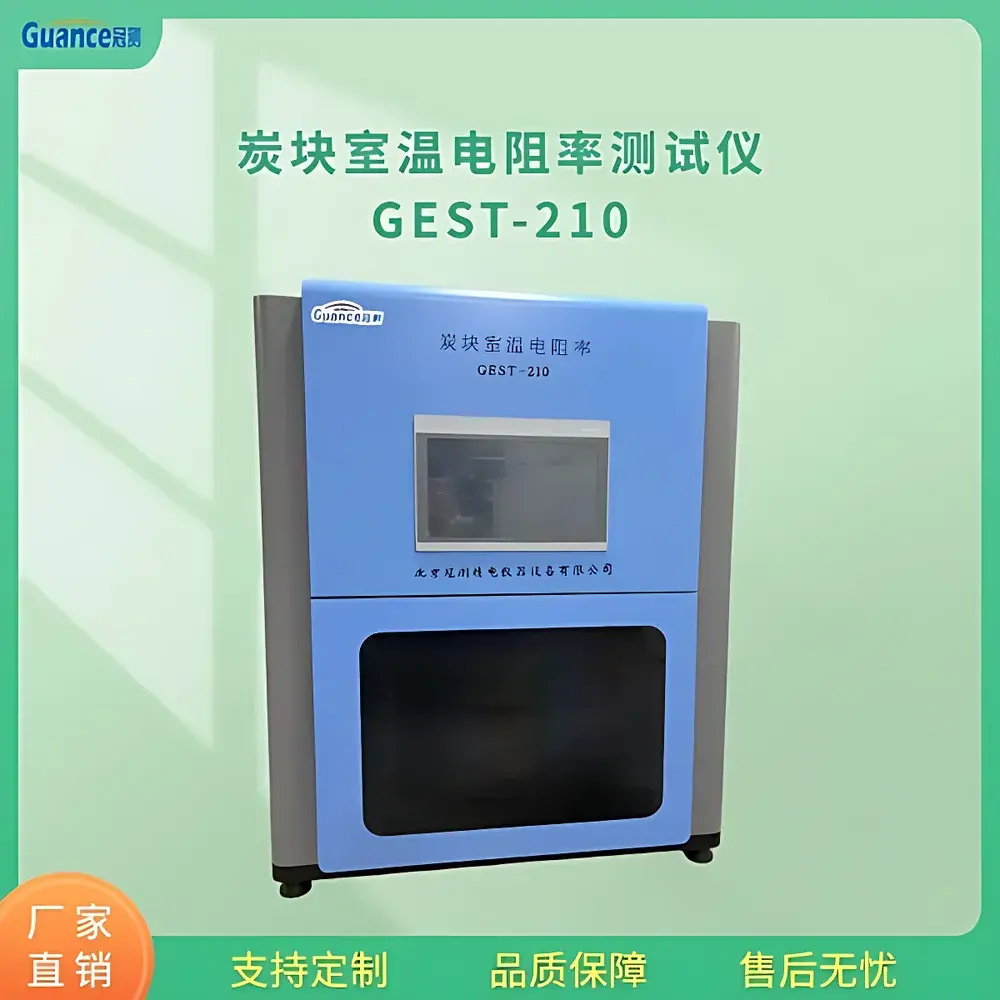
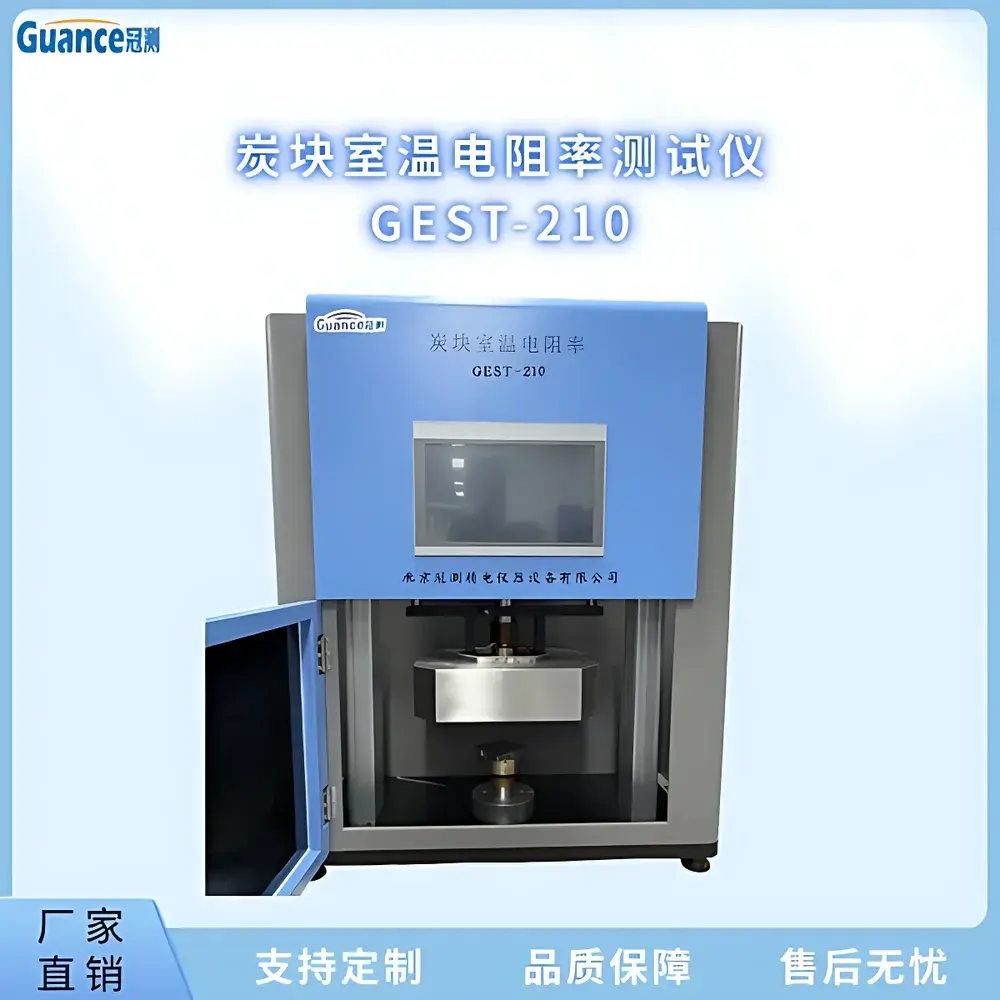
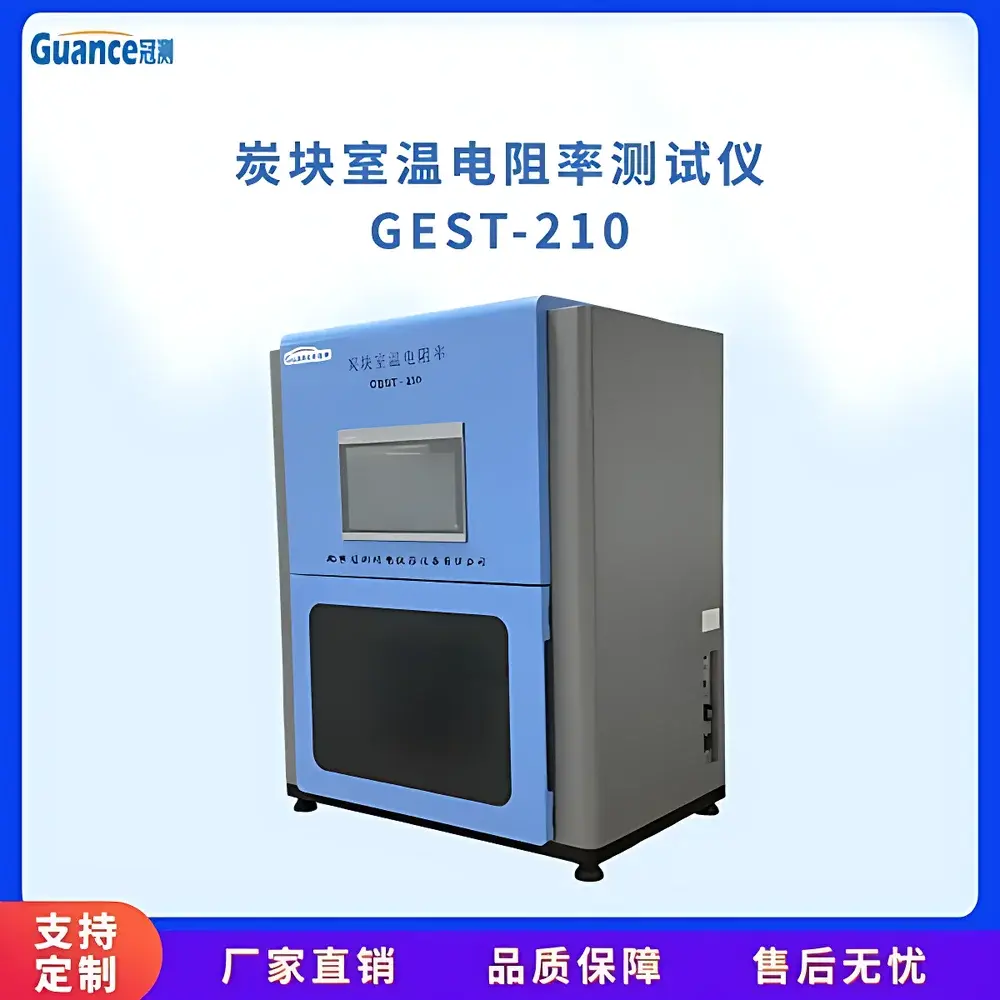
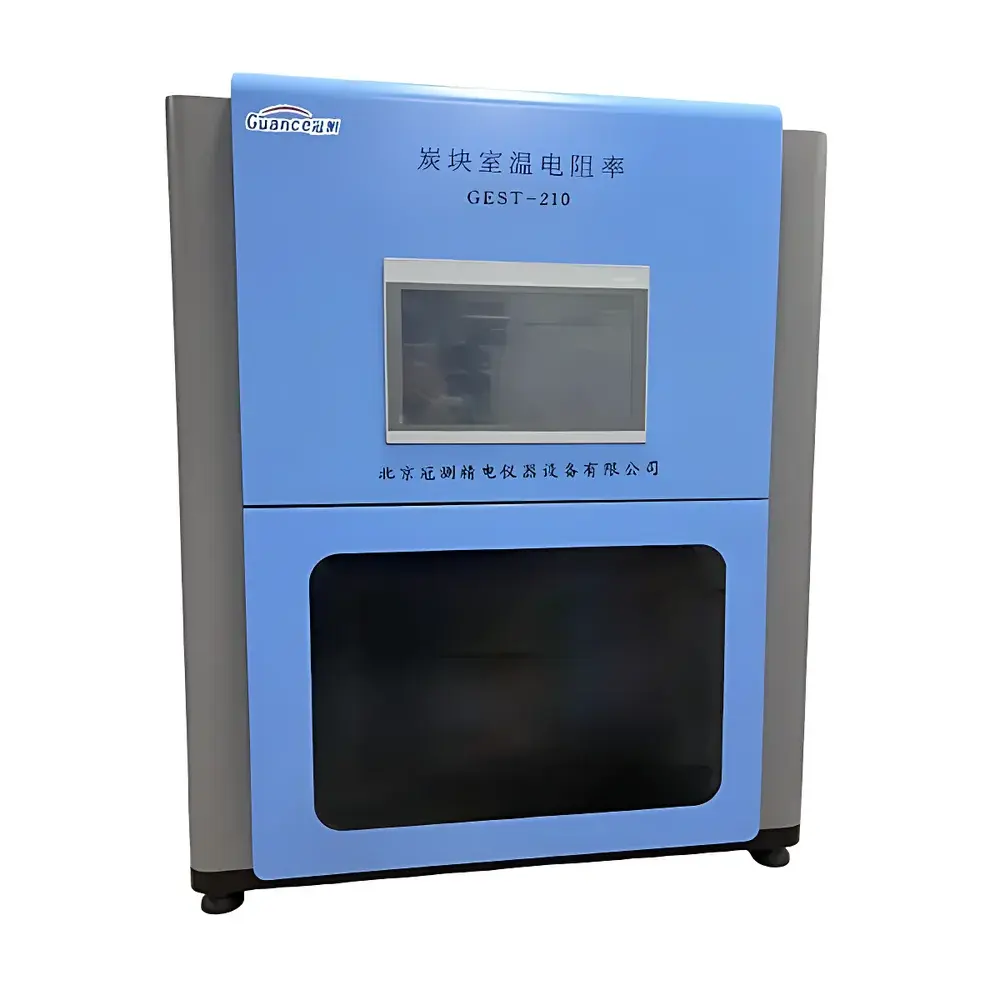
GuanCe GEST-210E Automated Resistivity Tester for Carbon Blocks
| Brand | GuanCe Instruments |
|---|---|
| Origin | Beijing, China |
| Manufacturer Type | Authorized Distributor |
| Country of Origin | China |
| Model | GEST-210E |
| Price | USD 1,750 (FOB Beijing) |
Overview
The GuanCe GEST-210E Automated Resistivity Tester for Carbon Blocks is a precision instrument engineered for the standardized measurement of electrical resistivity in carbonaceous materials—including anode and cathode carbon blocks, graphite electrodes, calcined coke, and raw carbon feedstocks—at ambient temperature. It operates primarily on the four-point probe (4PP) principle, a contact-based DC method compliant with ASTM D3917 (Standard Test Method for Electrical Resistivity of Graphite), ISO 11713:2015 (Carbonaceous materials—Determination of electrical resistivity), and Chinese national standards GB/T 24525–2009, GB/T 24521–2018, and YS/T 63.2–2006. In this configuration, two outer probes inject a known constant current (typically 1 mA to 100 mA), while two inner probes measure the resulting voltage drop across a defined inter-probe spacing. Resistivity (ρ) is calculated using the geometric correction factor k and the formula ρ = k × V/I, eliminating errors from contact resistance and electrode polarization. The system supports optional two-probe and eddy-current modes for comparative or non-destructive screening applications where surface integrity or geometry precludes direct probing.
Key Features
- Automated sample handling with motorized stage, pneumatic clamping, and real-time contact verification to ensure consistent electrode pressure (adjustable 0.5–5.0 MPa) and repeatable probe-sample interface.
- Integrated four-point probe head with tungsten-carbide tips, calibrated spacing (1.0 mm ± 0.01 mm), and auto-reversing current polarity to suppress thermoelectric offset and improve measurement stability.
- High-resolution digital multimeter core: 6½-digit resolution, 0.01 µΩ·m minimum display resolution, and full-scale range from 1 µΩ·m to 100 mΩ·m—covering low-resistivity graphite (50 mΩ·m).
- Onboard Pt100 temperature sensor (±0.1 °C accuracy) with real-time resistivity compensation based on material-specific temperature coefficients (α) stored per material class in firmware.
- Self-diagnostic subsystem monitoring open/short circuits, probe wear, thermal drift, and clamp actuation failure—with audible alert and on-screen fault code (e.g., “ERR-203: Probe Contact Resistance > 50 Ω”).
Sample Compatibility & Compliance
The GEST-210E accommodates rectangular carbon block specimens up to 200 mm × 200 mm × 300 mm (L × W × H) and cylindrical samples (Ø ≤ 150 mm). Standard test configurations follow GB/T 24525–2009 requirements for anode blocks: measurements performed at three orthogonal faces with ≥3 readings per face, averaged and reported with standard deviation. All firmware logic, data logging timestamps, user access controls, and audit trail generation comply with GLP (Good Laboratory Practice) documentation requirements. Raw measurement data—including timestamp, probe current/voltage, temperature, pressure, and operator ID—is immutably stored in internal flash memory with SHA-256 hashing for traceability. Optional USB export enables CSV/Excel-compatible output for integration into LIMS or QA/QC databases.
Software & Data Management
The embedded GUI (Linux-based, 7-inch capacitive touchscreen) provides intuitive workflow navigation: sample registration → parameter selection (standard mode / custom k-factor) → automated test sequence → real-time curve plot (V vs. t, ρ vs. T). The companion PC software (Windows 10/11, x64) enables advanced post-processing: statistical process control (SPC) charts, batch trend analysis, comparative histograms across furnace lots, and automated report generation per ISO/IEC 17025 Annex A. Audit logs record every user action—including calibration adjustments, parameter overrides, and data deletions—with operator authentication (PIN + optional RFID badge). Data export supports PDF (with digital signature), XLSX (with metadata headers), and XML formats compatible with FDA 21 CFR Part 11–compliant environments when deployed with networked authentication servers.
Applications
- Quality assurance of prebaked and graphitized anodes in aluminum smelting plants, ensuring compliance with IAI (International Aluminium Institute) specifications for resistivity-driven energy efficiency.
- R&D characterization of novel carbon composites (e.g., SiC-doped anodes, nanostructured graphite) where microstructural homogeneity directly correlates with bulk resistivity distribution.
- In-process verification during carbon block machining—detecting localized porosity, binder migration, or oxidation-induced surface degradation before final installation.
- Third-party certification testing per EN 12930:2019 (Carbon materials for the production of aluminium—Anodes) and JIS R 2201:2020 (Graphite electrodes).
- Academic research on charge transport mechanisms in disordered carbon networks, supporting modeling of electron hopping versus band conduction regimes.
FAQ
Does the GEST-210E require external calibration standards?
Yes—annual calibration against NIST-traceable carbon reference materials (e.g., NIST SRM 2135a) is recommended; the instrument includes built-in zero-offset and gain verification routines using internal shunt resistors.
Can it measure irregularly shaped or porous carbon samples?
It supports planar surfaces only; highly porous or friable samples must be impregnated with conductive epoxy prior to testing to ensure stable probe contact and avoid local current constriction artifacts.
Is the temperature compensation algorithm configurable per material type?
Yes—users may define up to 12 material profiles, each with unique α (1/°C), reference temperature (Tref), and geometric correction factor k, stored in non-volatile memory.
What safety certifications does the unit hold?
CE-marked per EN 61010-1:2010 (Safety requirements for electrical equipment for measurement, control, and laboratory use); RoHS 2011/65/EU compliant.
How is firmware updated?
Via encrypted USB stick with signed .bin files; updates preserve all user-configured parameters and historical data.



