
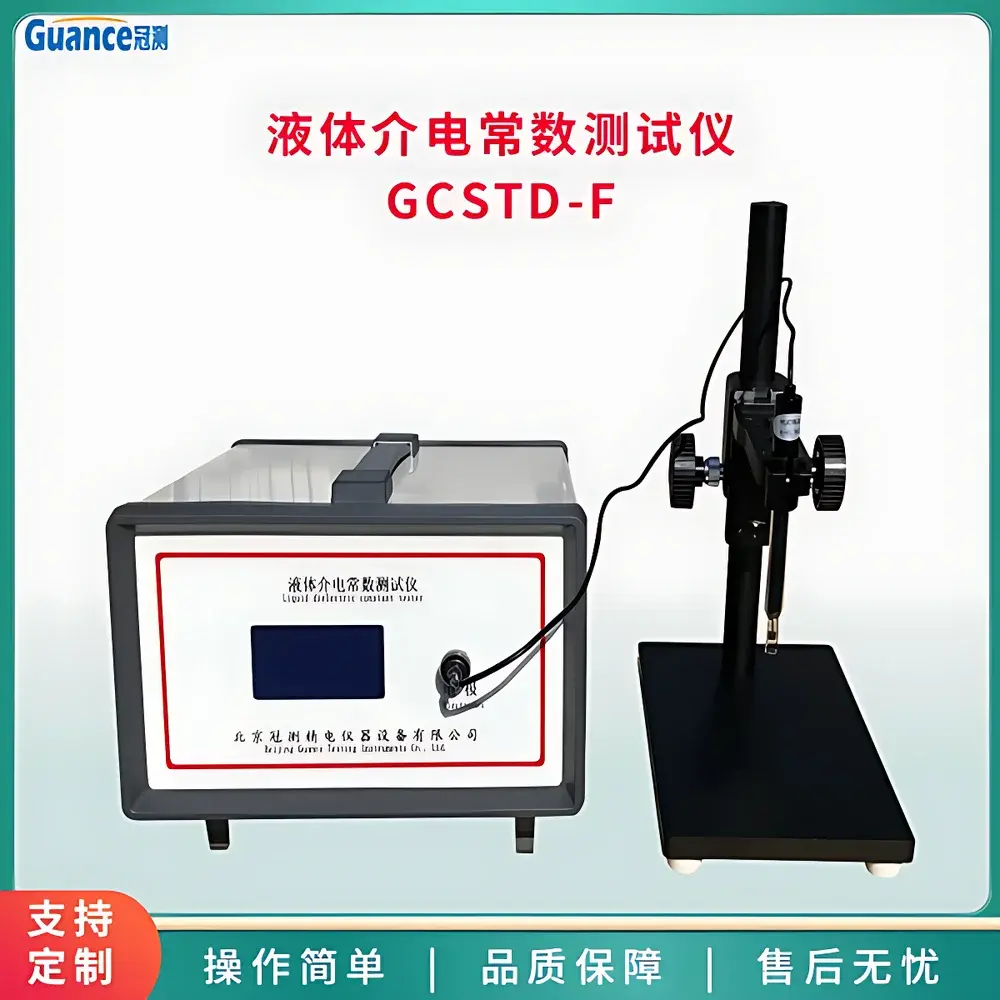
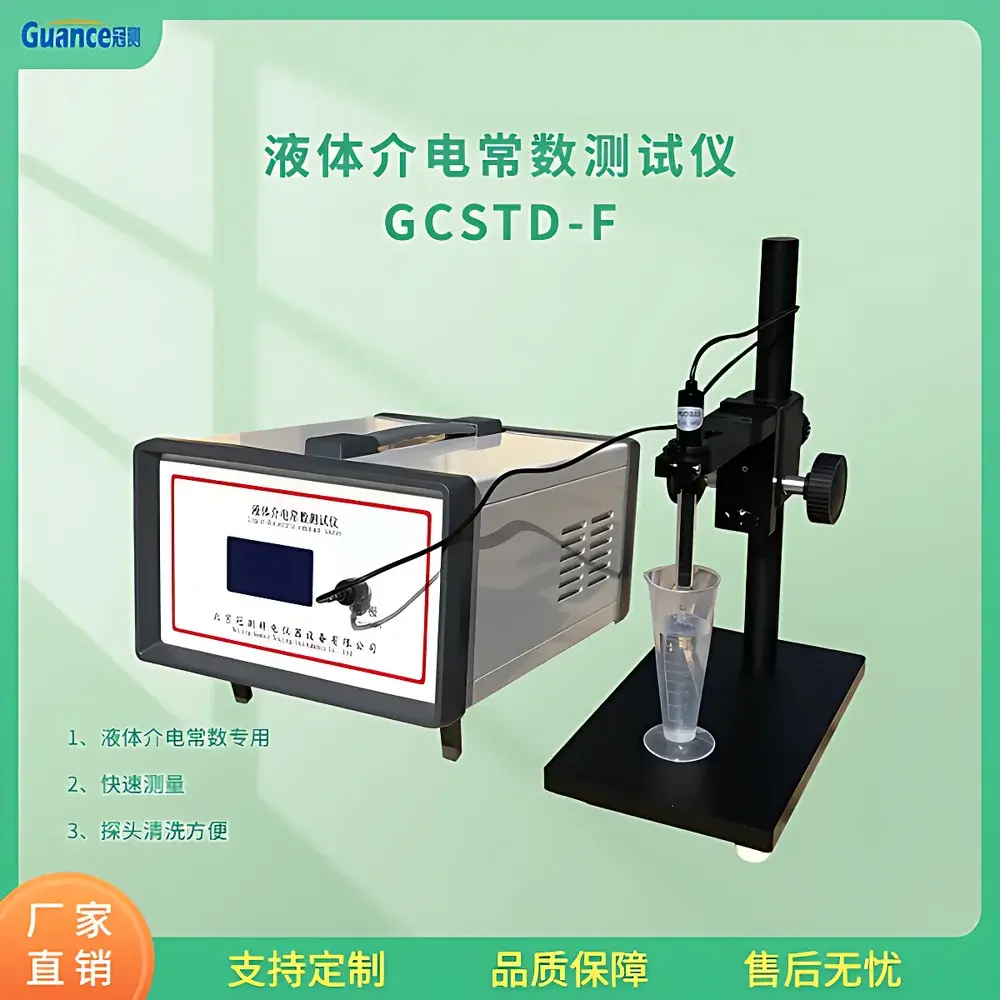
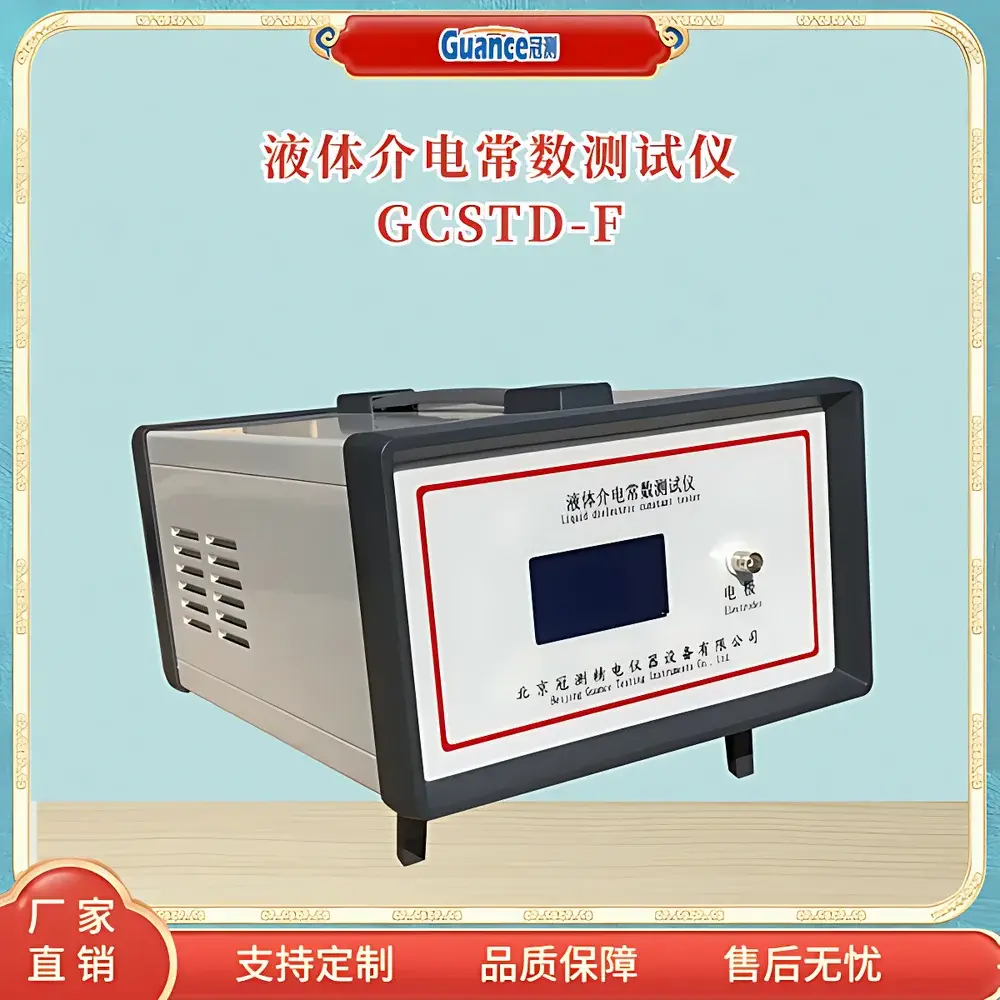
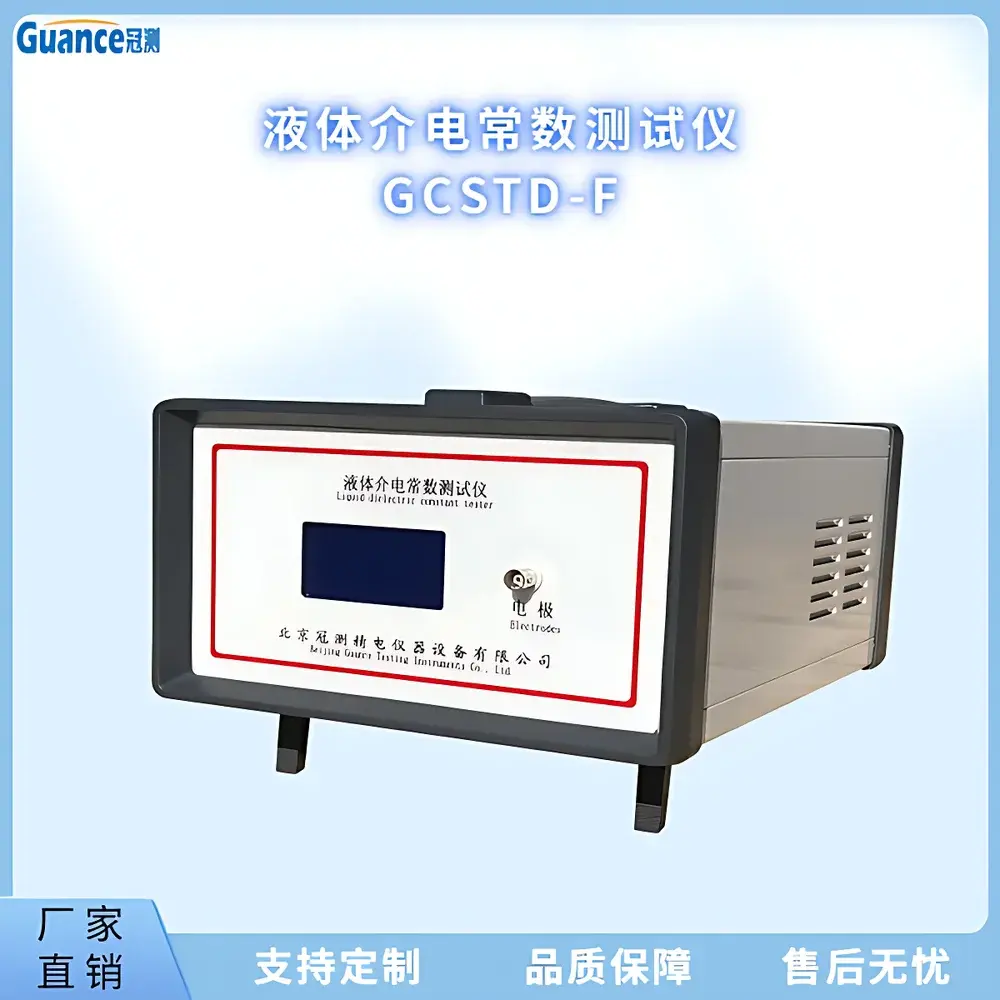
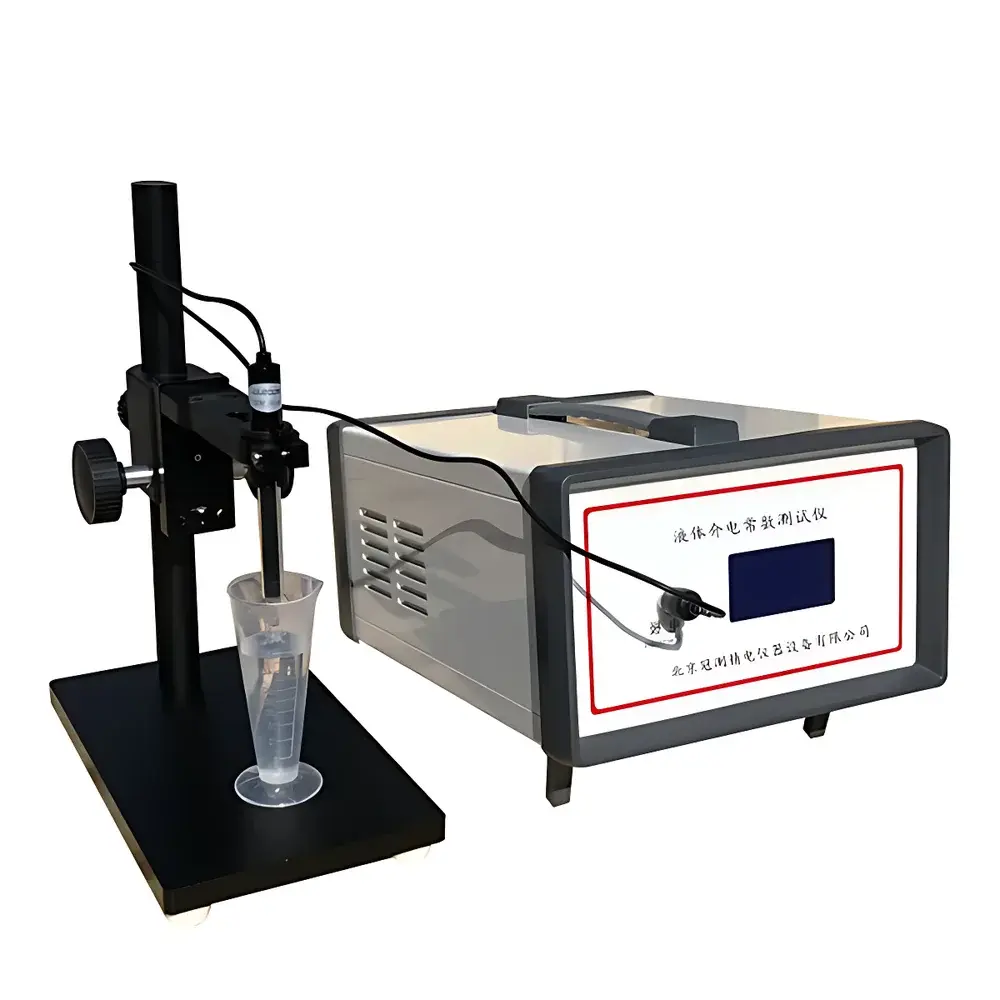
GuanCe Instruments GCSTD-F3 Liquid Power-Frequency Dielectric Constant Analyzer
| Brand | GuanCe Instruments |
|---|---|
| Origin | Beijing, China |
| Manufacturer Type | Authorized Distributor |
| Regional Classification | Domestic (China) |
| Model | GCSTD-F3 |
| Price | USD 1,550 (approx.) |
Overview
The GuanCe Instruments GCSTD-F3 Liquid Power-Frequency Dielectric Constant Analyzer is a precision benchtop instrument engineered for the accurate determination of relative permittivity (dielectric constant, εr) and dissipation factor (tan δ) of liquid dielectrics at industrial power frequency (50 Hz or 60 Hz). It operates on the principle of parallel-plate (cylindrical coaxial) capacitance measurement under a stable, low-distortion sinusoidal AC voltage. The analyzer applies a calibrated test signal across a defined electrode geometry immersed in the sample, measures the resulting complex impedance, and computes εr using the fundamental relationship: C = ε0εrA/d (for parallel-plate approximation) or its cylindrical equivalent. This method conforms to the foundational electrostatic theory described in IEC 60247 and ASTM D924—standards governing dielectric fluid testing for insulating oils, coolants, and process liquids. Designed for laboratory and quality control environments, the GCSTD-F3 supports routine evaluation of polarity, molecular dipole moment, ionic impurity content, and aging-related degradation in hydrocarbon-based and polar solvent systems.
Key Features
- Coaxial cylindrical electrode assembly fabricated from high-purity 316 stainless steel—ensuring corrosion resistance, dimensional stability, and long-term repeatability.
- Fixed inter-electrode spacing maintained by six non-magnetic nylon alignment screws—eliminating mechanical drift and preserving geometric calibration integrity.
- Open-structure electrode design enabling rapid, residue-free cleaning between samples without disassembly—critical for cross-contamination prevention in multi-sample workflows.
- Integrated temperature stabilization interface (optional external bath coupling) to support controlled measurements per ISO 6296 requirements for thermal dependency studies.
- Low-noise analog front-end with digital signal processing (DSP) to minimize phase error and enhance tan δ resolution at power frequency.
- Compliance-ready architecture: supports manual logging traceability; firmware design accommodates future integration with LIMS via RS-232/USB virtual COM port.
Sample Compatibility & Compliance
The GCSTD-F3 is validated for use with non-aqueous, non-conductive, and low-conductivity liquids—including mineral insulating oils, silicone fluids, transformer esters, hydrocarbon solvents (e.g., n-hexane, toluene), and polar organic media (e.g., ethanol, acetone, ethylene glycol). It is not suitable for aqueous solutions, conductive electrolytes, or suspensions with particulate loading >10 ppm. Electrode compatibility extends to aggressive solvents (e.g., chlorinated hydrocarbons, ethers) due to inert construction materials: 316 SS, PTFE-insulated terminals, and nylon spacers. Cleaning protocols align with ASTM D877 and IEC 60429 guidelines—requiring ultrasonic immersion in analyte-matched solvents followed by nitrogen purge drying. Disassembly is strictly prohibited, as it invalidates the certified electrode geometry and voids calibration traceability per ISO/IEC 17025 metrological practice.
Software & Data Management
The GCSTD-F3 operates in standalone mode with an embedded LCD interface for real-time display of εr, tan δ, capacitance (Cx), and test frequency. Measurement data are stored locally (up to 200 records) with timestamp, operator ID field, and manual annotation capability. Export is supported via USB flash drive in CSV format—structured for direct import into Excel, MATLAB, or statistical process control (SPC) platforms. While no proprietary PC software is bundled, the device adheres to standard SCPI command syntax over serial communication, enabling custom scripting for automated batch testing, GLP-compliant audit trails, and integration into FDA 21 CFR Part 11–enabled QA systems when paired with validated third-party acquisition software.
Applications
- Quality assurance of transformer and switchgear insulating oils per IEEE C57.106 and IEC 60429 specifications.
- R&D screening of bio-based dielectric coolants for electric vehicle traction inverters and battery thermal management systems.
- Monitoring oxidative degradation in turbine oils through progressive εr increase and tan δ rise.
- Characterization of solvent purity in pharmaceutical excipient manufacturing (e.g., USP-grade isopropanol verification).
- Educational laboratories for teaching electromagnetic material properties, Debye relaxation theory, and dielectric spectroscopy fundamentals.
FAQ
Can the GCSTD-F3 measure aqueous solutions?
No. High ionic conductivity causes significant conduction current that overwhelms displacement current, leading to non-physical εr values and unstable tan δ readings.
Is calibration certificate included with shipment?
A factory calibration report (traceable to NIM, China) is provided. For ISO/IEC 17025 accreditation, third-party calibration with uncertainty budget is recommended annually.
What is the minimum sample volume required?
25 mL is sufficient to fully immerse the cylindrical electrode assembly while maintaining meniscus clearance above the active sensing zone.
Does the instrument support variable frequency testing?
No. The GCSTD-F3 is optimized exclusively for fixed-frequency (50/60 Hz) power-system-relevant dielectric assessment. For broadband spectroscopy, refer to impedance analyzers with 1 Hz–10 MHz range.
How often must the electrodes be cleaned?
After every sample change—especially when switching between polar and nonpolar liquids—to prevent dielectric memory effects and surface adsorption artifacts.



