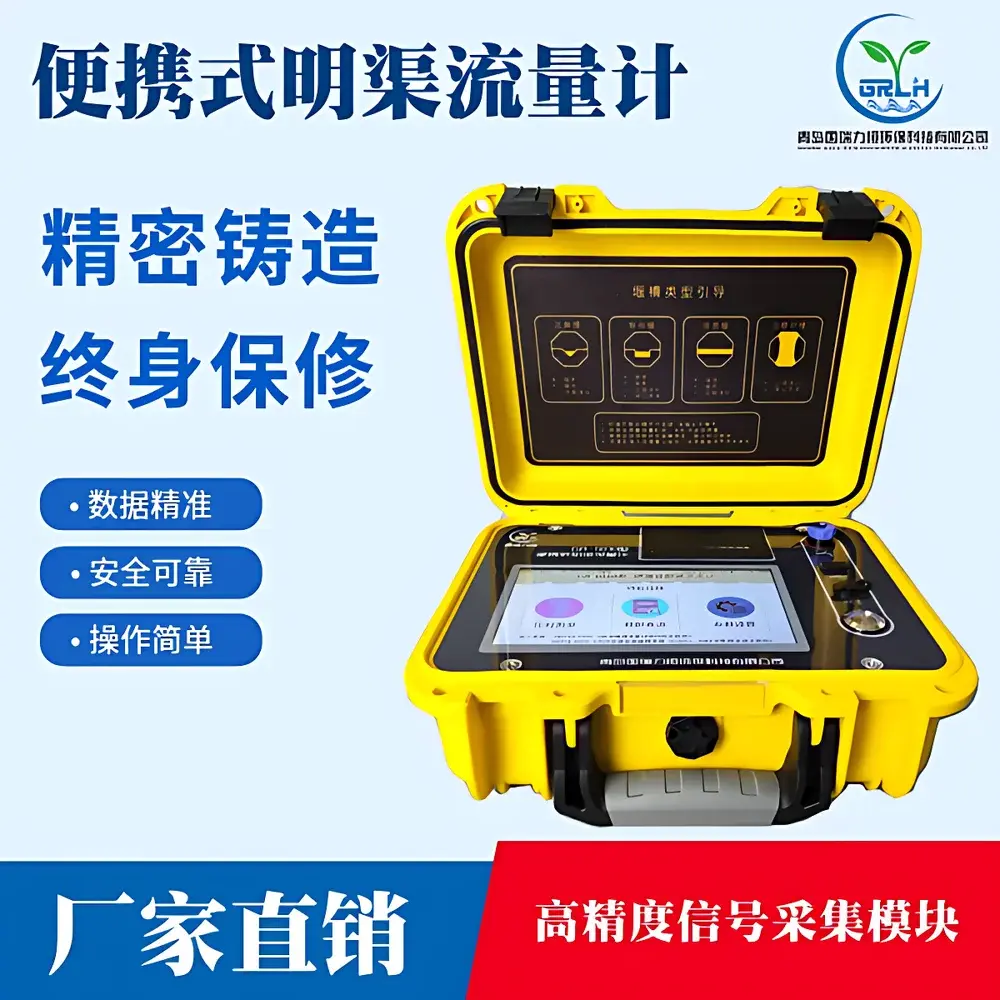
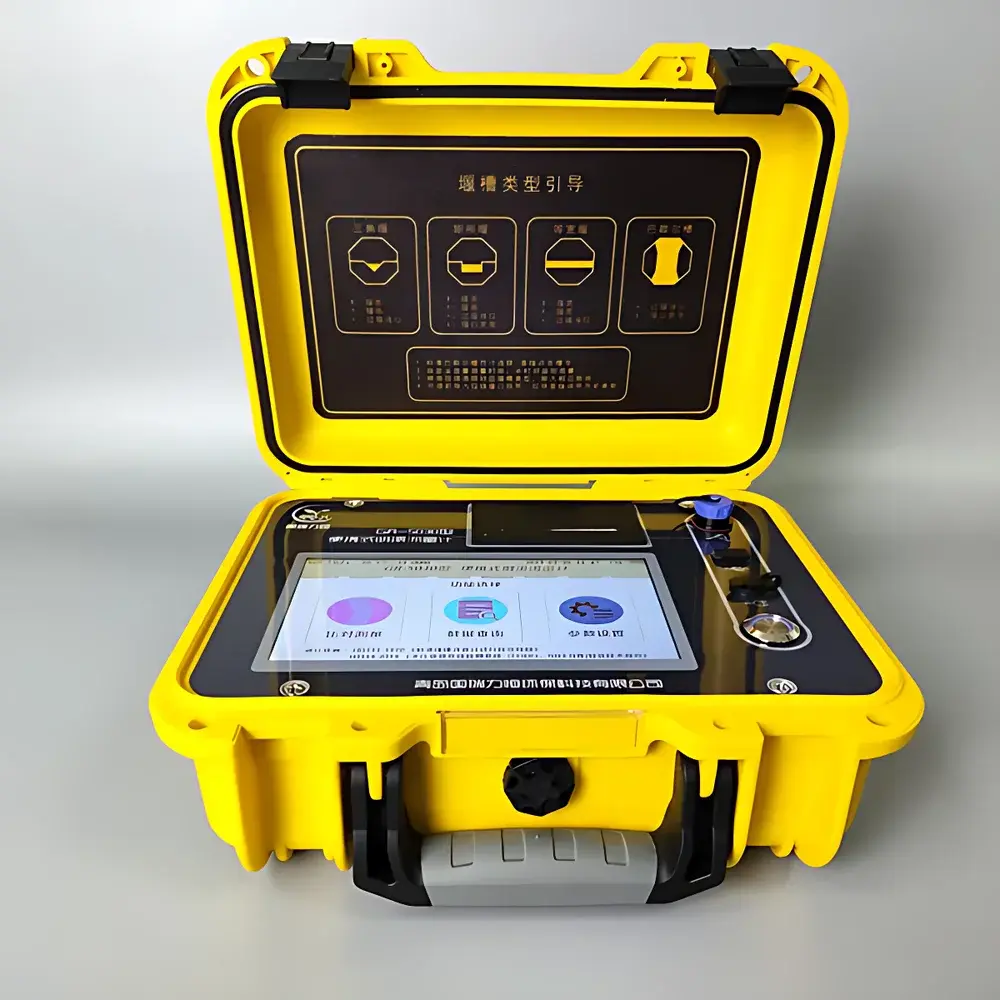
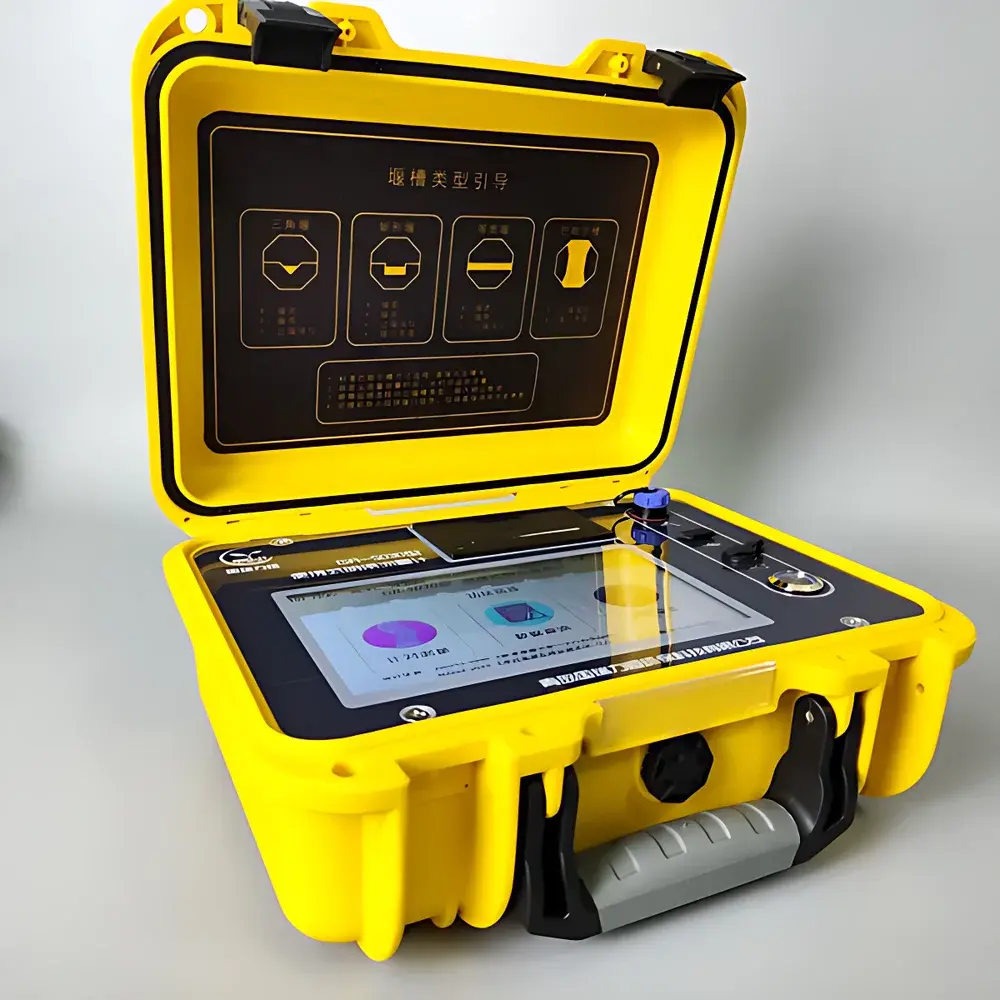
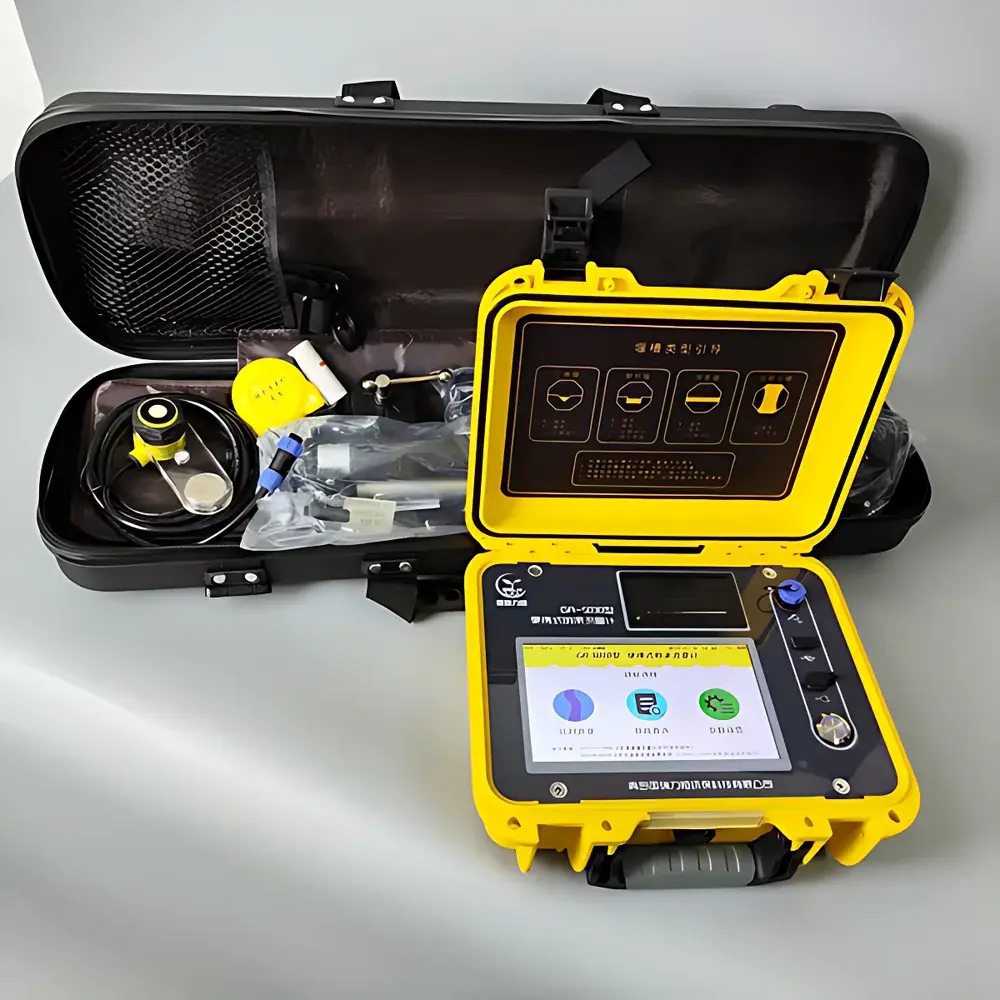
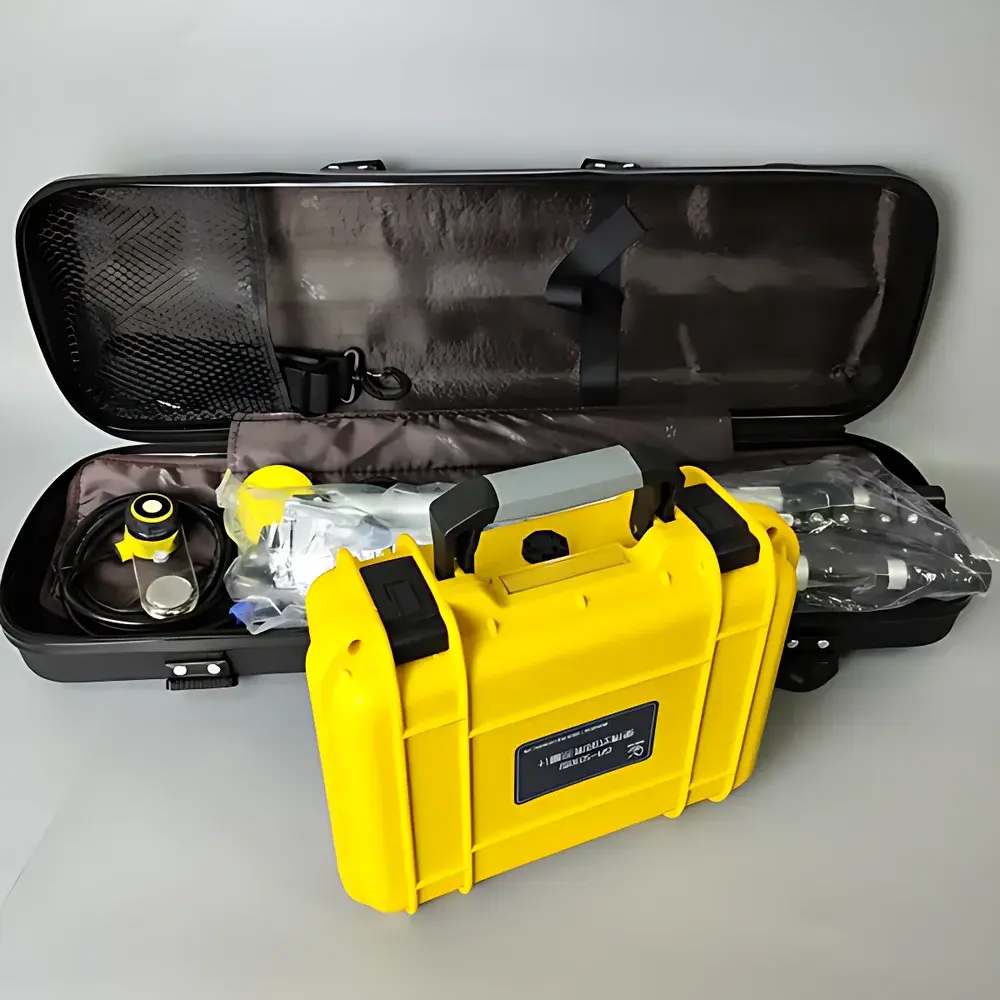
Guo Ruili Heng GR-5030 Portable Open-Channel Flow Meter
| Brand | Guo Ruili Heng |
|---|---|
| Origin | Shandong, China |
| Manufacturer Type | Manufacturer |
| Country of Origin | China |
| Model | GR-5030 |
| Liquid Level Measurement Accuracy | ≤0.5 mm |
| Flow Measurement Accuracy | ≤±1% |
| Flow Measurement Range | 0–40 m³/s |
| Sampling Frequency | 3 Hz |
| Data Storage Capacity | 50,000 records |
| Battery Life | >72 h (internal Li-ion) |
| Operating Temperature | −20 °C to +50 °C |
| Operating Humidity | ≤85% RH |
| Dimensions | 270 × 215 × 105 mm |
| Weight | 2.4 kg |
| Display | Color TFT touchscreen with Chinese UI |
| Output Interface | USB |
| Compliant Standards | JJG 711–1990, HJ 15–2019, HJ 353–2019, HJ 354–2019, HJ 355–2019 |
Overview
The Guo Ruili Heng GR-5030 Portable Open-Channel Flow Meter is a field-deployable, high-integrity verification instrument engineered for regulatory compliance and technical validation of continuous emission monitoring systems (CEMS) and wastewater discharge flow instrumentation. It operates on the principle of ultrasonic time-of-flight measurement coupled with standardized hydraulic algorithms defined in JJG 711–1990 and HJ 15–2019 for open-channel flow quantification via weirs and flumes. Unlike fixed-installation flow sensors, the GR-5030 is designed for periodic performance verification—enabling auditable, traceable comparison between online flow transmitters and reference-grade measurements under real-world hydraulic conditions. Its architecture supports dual-mode validation: synchronized liquid level error assessment (at 2-minute intervals over six consecutive readings) and integrated volumetric flow reconciliation over 10-minute windows—both aligned with HJ 354–2019 acceptance criteria for water pollution source monitoring systems.
Key Features
- Comprehensive hydraulic structure compatibility: validated for ten standard weir and flume geometries—including V-notch, rectangular, broad-crested, Palmer-Bowlus, Parshall, Palmer-Bowlus, trapezoidal thin-plate, and flat-V weirs—ensuring universal applicability across municipal and industrial effluent channels.
- 24-bit high-resolution analog-to-digital conversion for ultrasonic level sensing, delivering stable signal integrity and minimizing quantization noise in low-flow or turbulent conditions.
- 7-inch color TFT resistive touchscreen with full Chinese-language interface and context-sensitive touch guidance—eliminating reliance on external PCs during field deployment.
- Onboard thermal printer enabling immediate hard-copy generation of calibration logs, comparison reports, and timestamped measurement summaries per HJ 355–2019 operational recordkeeping requirements.
- Integrated intelligent power management system that dynamically regulates battery discharge profiles, extending service life and supporting uninterrupted operation for >72 hours on a single charge.
- Robust mechanical design: hand-carried ruggedized enclosure (2.4 kg total mass), IP65-rated front panel, and shock-absorbing molded case—optimized for repeated transport across remote sampling sites and plant perimeters.
Sample Compatibility & Compliance
The GR-5030 is expressly intended for use in gravity-fed, non-pressurized open-channel flows carrying municipal wastewater, industrial process effluents, and stormwater runoff. It does not support closed-pipe or pressurized conduit applications. All hydraulic computations adhere strictly to ISO 4359:2016 (open-channel flow measurement using weirs and flumes) and national technical specifications referenced in HJ 15–2019. The device satisfies functional requirements outlined in HJ 353–2019 (installation), HJ 354–2019 (acceptance testing), and HJ 355–2019 (ongoing operational quality assurance). Its data acquisition and reporting workflows are structured to support GLP-aligned documentation practices and facilitate audit readiness for environmental regulatory inspections conducted under China’s Ministry of Ecology and Environment (MEE) framework.
Software & Data Management
Data collection, storage, and export are managed through embedded firmware—not external PC software. All measurements—including timestamps, sensor IDs, hydraulic geometry parameters, raw ultrasonic transit times, calculated level values, and derived flow rates—are stored locally in non-volatile memory (50,000-record capacity). Export occurs exclusively via USB mass-storage mode, producing CSV-formatted files compatible with Excel, MATLAB, or LIMS platforms. No cloud connectivity, remote telemetry, or proprietary drivers are implemented—ensuring data sovereignty and eliminating cybersecurity exposure vectors. Audit trails include operator login credentials (password-protected access), session start/stop times, and automatic report generation flags—supporting traceability per ISO/IEC 17025:2017 clause 7.5.2 on record control.
Applications
- Periodic verification of online ultrasonic or magnetic flowmeters installed at wastewater treatment plant outfalls per HJ 354–2019 Section 6.2.3.
- Commissioning and post-installation acceptance testing of new flow monitoring stations in compliance with HJ 353–2019 Annex B.
- Root-cause analysis of flow data discrepancies during MEE routine inspections or third-party environmental audits.
- Field validation of hydraulic modeling assumptions—particularly where channel geometry deviates from idealized weir/flume configurations.
- Training and competency assessment for plant operators responsible for flow instrumentation maintenance and QA/QC protocols.
FAQ
What standards does the GR-5030 comply with for regulatory verification?
It conforms to JJG 711–1990, HJ 15–2019, HJ 353–2019, HJ 354–2019, and HJ 355–2019—covering metrological verification, technical specifications, installation, acceptance, and operational maintenance of open-channel flow monitoring systems.
Can the GR-5030 replace a permanently installed flowmeter?
No. It is a portable verification tool—not a permanent monitoring device—and lacks continuous real-time transmission capability or 24/7 environmental hardening.
Is the internal battery replaceable by the user?
The lithium-ion battery pack is field-serviceable but requires authorized technician intervention to maintain calibration integrity and enclosure IP rating.
Does the device support English-language firmware?
Firmware is localized exclusively in Simplified Chinese per current version; no multilingual UI option is available.
How is measurement traceability ensured during field use?
Each measurement record includes UTC timestamp, operator ID, instrument serial number, calibration certificate ID (if entered), and digital signature of the comparison protocol executed—satisfying minimum documentation requirements under HJ 355–2019 Section 5.4.