
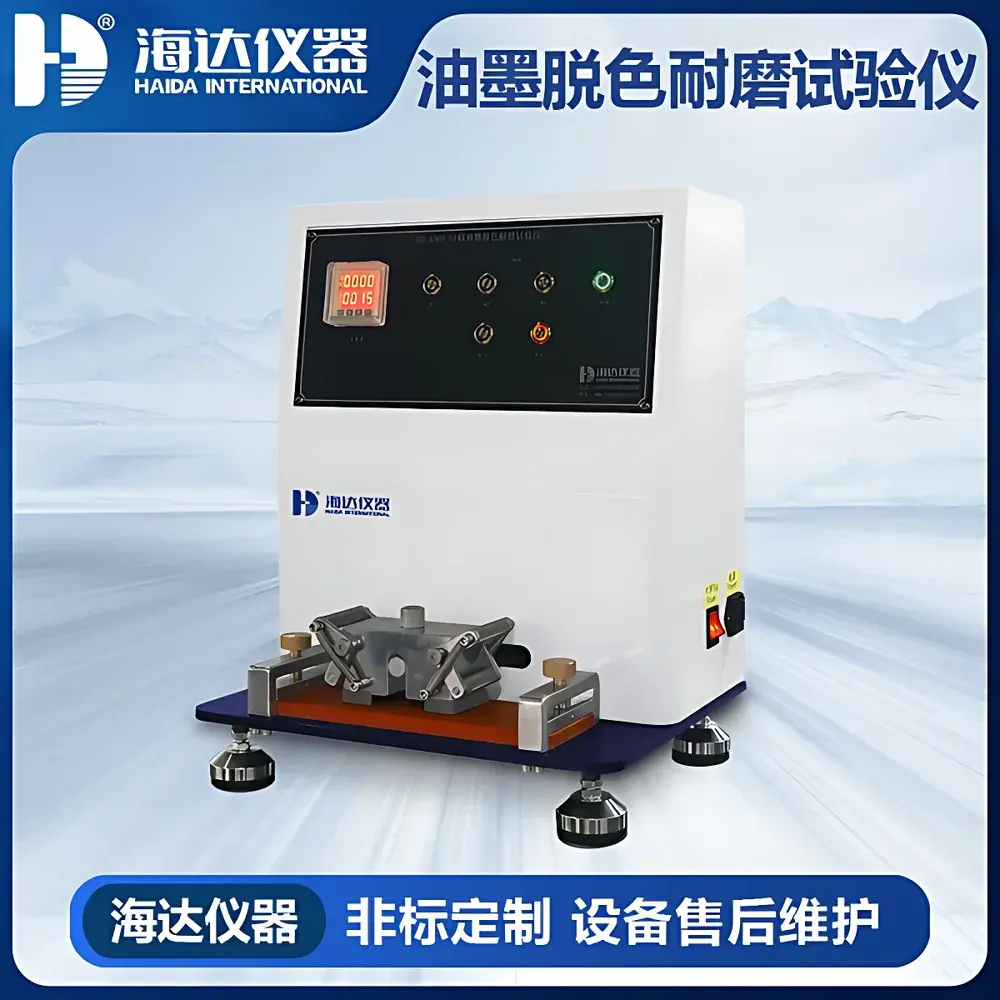
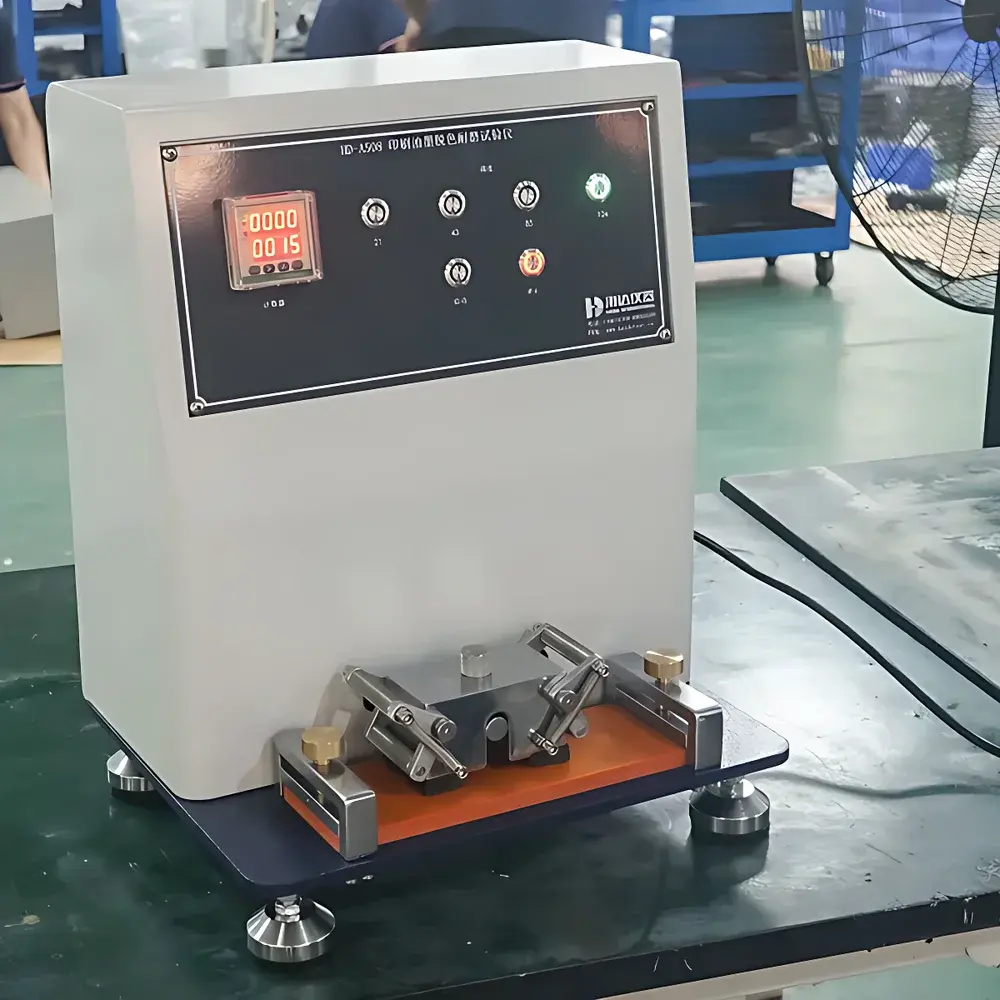
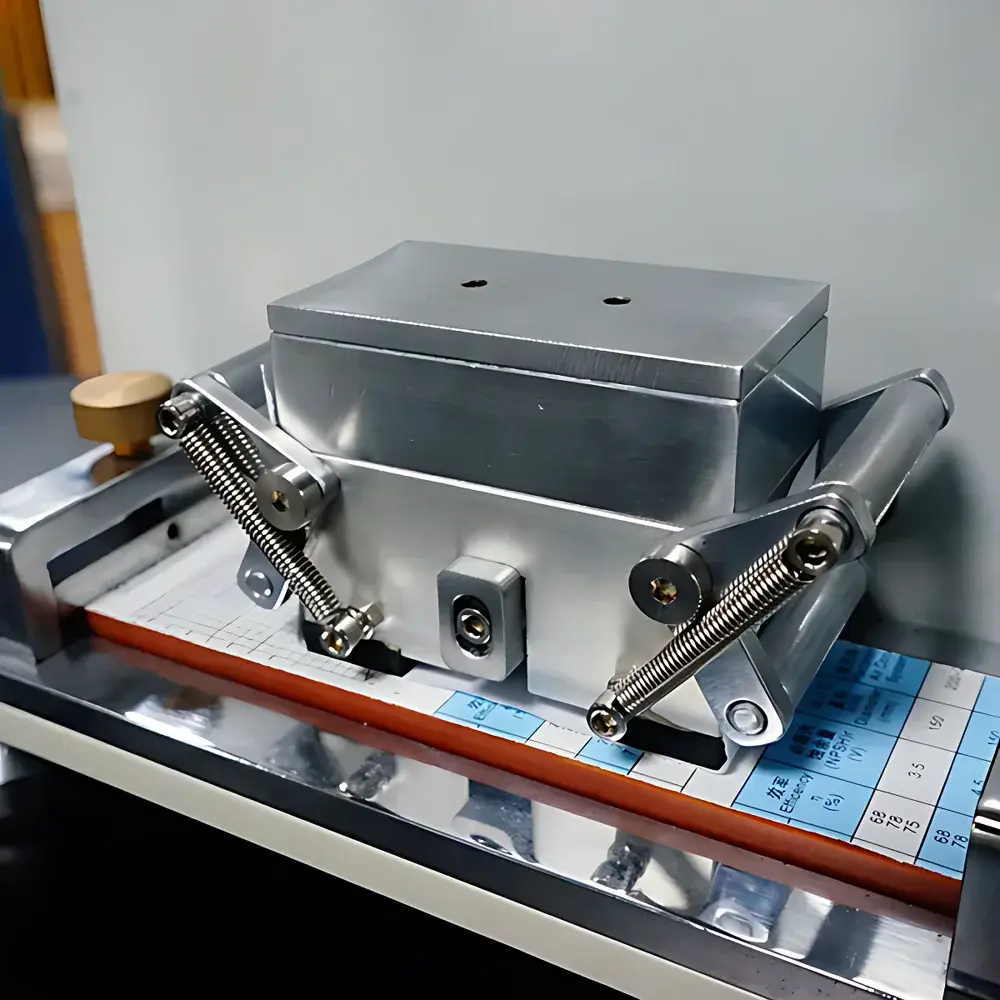
HAIDA HD-A508-A Ink Rub Resistance Tester
| Brand | HAIDA INTERNATIONAL |
|---|---|
| Origin | Guangdong, China |
| Manufacturer Type | Manufacturer |
| Product Category | Domestic |
| Model | HAIDA HD-A508-A Ink Rub Resistance Tester |
| Sample Area Minimum Dimensions | 250 × 80 mm |
| Rubbing Speed | (43 ± 1) cycles/min (adjustable: 21, 43, 85, 106 cycles/min) |
| Normal Load | 908 g (2 lb) and 1810 g (4 lb) |
| Stroke Length | ≈ 55 mm (center displacement of rubbing element) |
| Rubbing Area | 51 × 102 mm (L × W) |
| Cycle Count Range | 0–9999 (auto-stop) |
| Dimensions (L × W × H) | 360 × 290 × 450 mm |
| Net Weight | ≈ 30 kg |
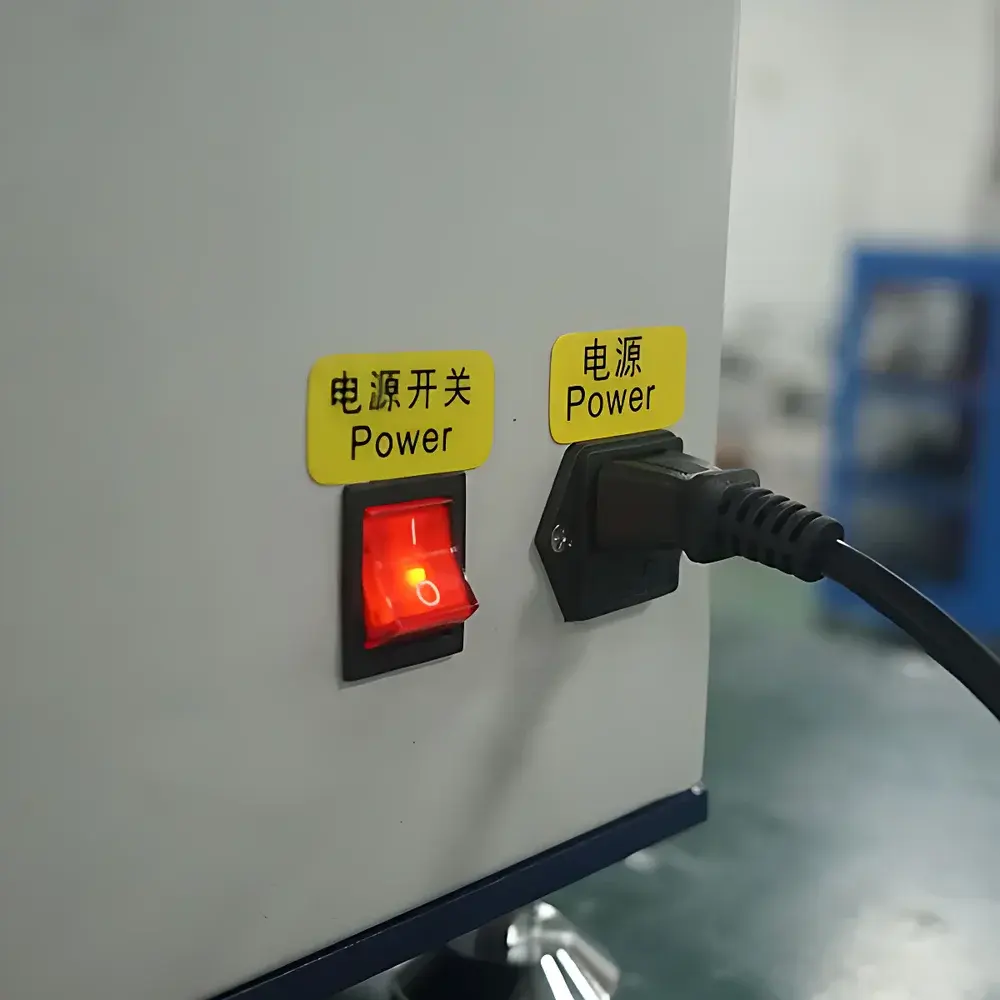
| Power Supply | 1-phase AC 220 V, 60 W |
Overview
The HAIDA HD-A508-A Ink Rub Resistance Tester is a precision-engineered mechanical abrasion instrument designed for quantitative evaluation of ink adhesion and surface coating durability on printed packaging materials. It operates on the principle of controlled reciprocating linear abrasion—applying standardized normal force via calibrated weights while moving a defined abrasive medium (standardized friction paper) across the test surface at regulated frequency and stroke length. This method replicates real-world handling stresses such as stacking, conveying, and manual handling encountered during packaging distribution. The instrument conforms to fundamental tribological testing paradigms used in quality control laboratories across global packaging supply chains, where reproducible quantification of rub resistance directly correlates with print integrity, shelf-life performance, and regulatory compliance for consumer-facing labels and cartons.
Key Features
- Four selectable rubbing frequencies—21, 43, 85, and 106 cycles per minute—enabling precise alignment with multiple international test protocols without manual speed calibration.
- Modular dead-weight loading system with dual standard masses (908 g and 1810 g), facilitating rapid interchange without recalibration and ensuring traceable force application per ASTM D5264 Section 7.2.
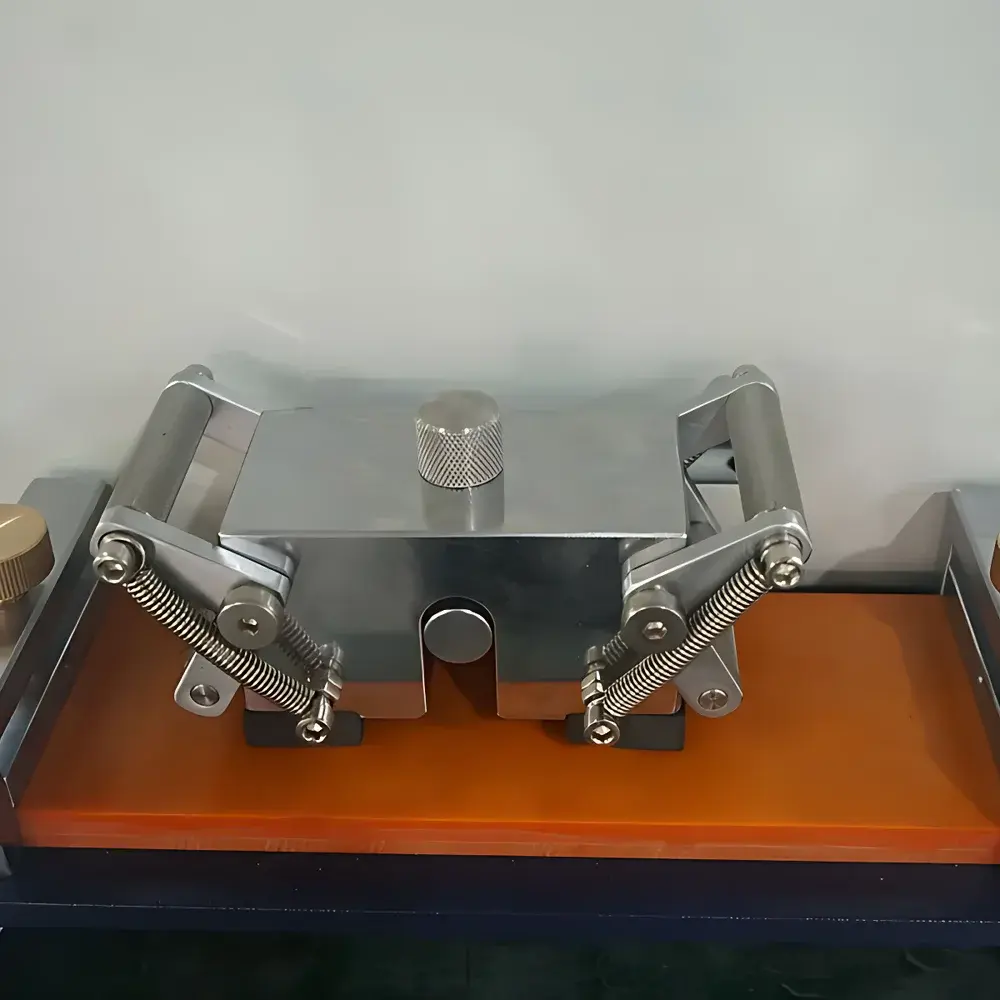
- Integrated friction platform with rigidly mounted abrading head and constrained lateral motion, minimizing eccentric loading and guaranteeing uniform contact pressure distribution over the full 51 × 102 mm active rubbing zone.
- Digital cycle counter with programmable upper limit (0–9999) and automatic motor cutoff, eliminating operator dependency and supporting unattended operation during extended durability assessments.
- Robust steel frame construction with vibration-damped base and ESD-safe housing, optimized for long-term stability in shared QC lab environments with adjacent instrumentation.
Sample Compatibility & Compliance
The HD-A508-A accommodates rigid and semi-flexible substrates including coated paperboard, corrugated fiberboard, metallized PET films, BOPP laminates, and photopolymer printing plates (e.g., PS plates). Minimum specimen dimensions of 250 × 80 mm ensure compatibility with standard press-sheet cutouts and production-line sampling protocols. The instrument supports testing under ambient laboratory conditions (23 ± 2 °C, 50 ± 5% RH) as specified in ISO 12647-7 and TAPPI T830. Its mechanical design and operational parameters are fully aligned with the force, motion, and dimensional requirements outlined in ASTM D5264 (“Standard Practice for Determining the Rub Resistance of Printed Materials”), enabling direct data comparability across certified labs. While not an electronic data-integrity system, its analog-electromechanical architecture meets GLP documentation requirements when paired with manual logbook entries and witnessed cycle verification.
Software & Data Management
The HD-A508-A operates as a standalone electromechanical tester with no embedded microprocessor or digital interface. All operational parameters—including selected speed, applied load, and programmed cycle count—are set manually via front-panel controls and mechanical dials. Test results are evaluated externally using standardized optical density measurement (e.g., densitometer per ISO 5-3), gravimetric mass loss analysis, or visual rating scales (e.g., ISO 105-X12 grayscale assessment). For laboratories requiring audit-ready records, HAIDA provides optional calibration certificates traceable to NIM (National Institute of Metrology, China) and recommends integration with LIMS platforms via manual entry of test parameters and observer-assigned rub-resistance grades. No firmware, cloud connectivity, or FDA 21 CFR Part 11 compliance is applicable, consistent with its classification as a Class I mechanical test apparatus.
Applications
- Quantitative assessment of ink set-off resistance on folding cartons prior to varnish application.
- Validation of UV-curable ink adhesion on flexible packaging films subjected to high-speed filling lines.
- Comparative evaluation of pigment dispersion stability in water-based flexographic inks versus solvent-based alternatives.
- Pre-shipment qualification testing for pharmaceutical blister packaging to verify label legibility after simulated pallet stacking.
- Routine QC screening of offset-printed corrugated shipping containers for compliance with ISTA 3A transport simulation criteria.
FAQ
What standards does the HD-A508-A directly support?
ASTM D5264, TAPPI T830, and ISO 105-X12 for rub resistance evaluation; compatible with test conditions referenced in ISO 12647-7 for process control of printed packaging.
Can the instrument accommodate non-standard abrasive media?
Yes—while calibrated friction paper (e.g., Sutherland Rub Tester paper) is recommended for compliance, the clamping mechanism accepts custom-cut abrasive sheets up to 105 mm width and 0.5 mm thickness, provided mechanical stability is verified.
Is periodic calibration required?
Annual verification of cycle counter accuracy and load mass tolerance (±0.5%) is recommended; HAIDA provides NIM-traceable calibration kits and service documentation upon request.
Does the unit include environmental conditioning capabilities?
No—the HD-A508-A is designed for use in climate-controlled laboratories meeting ISO 17025 ambient specification; external humidity/temperature chambers must be used for conditioned testing.
What maintenance intervals are advised for sustained repeatability?
Lubrication of the cam-driven slider mechanism every 500 operating hours; inspection of friction paper clamps and guide rails for wear every 2000 cycles.





