
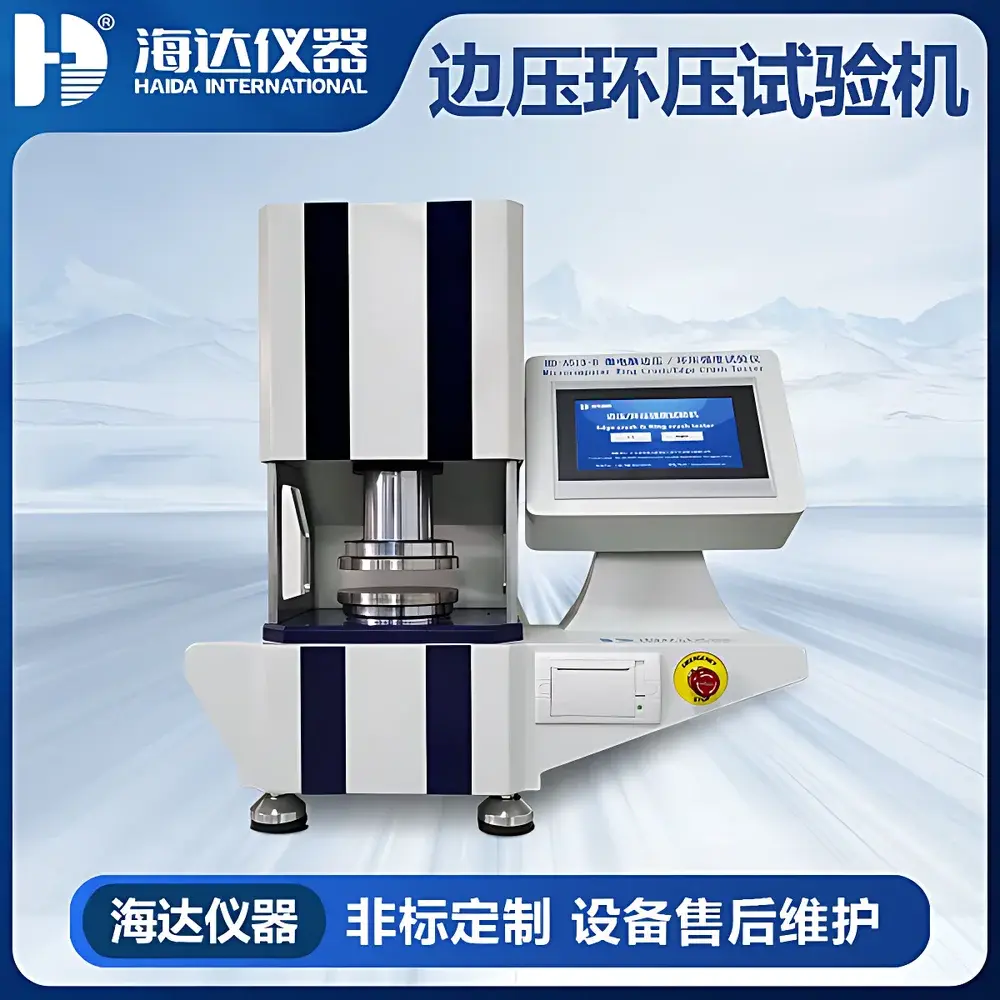
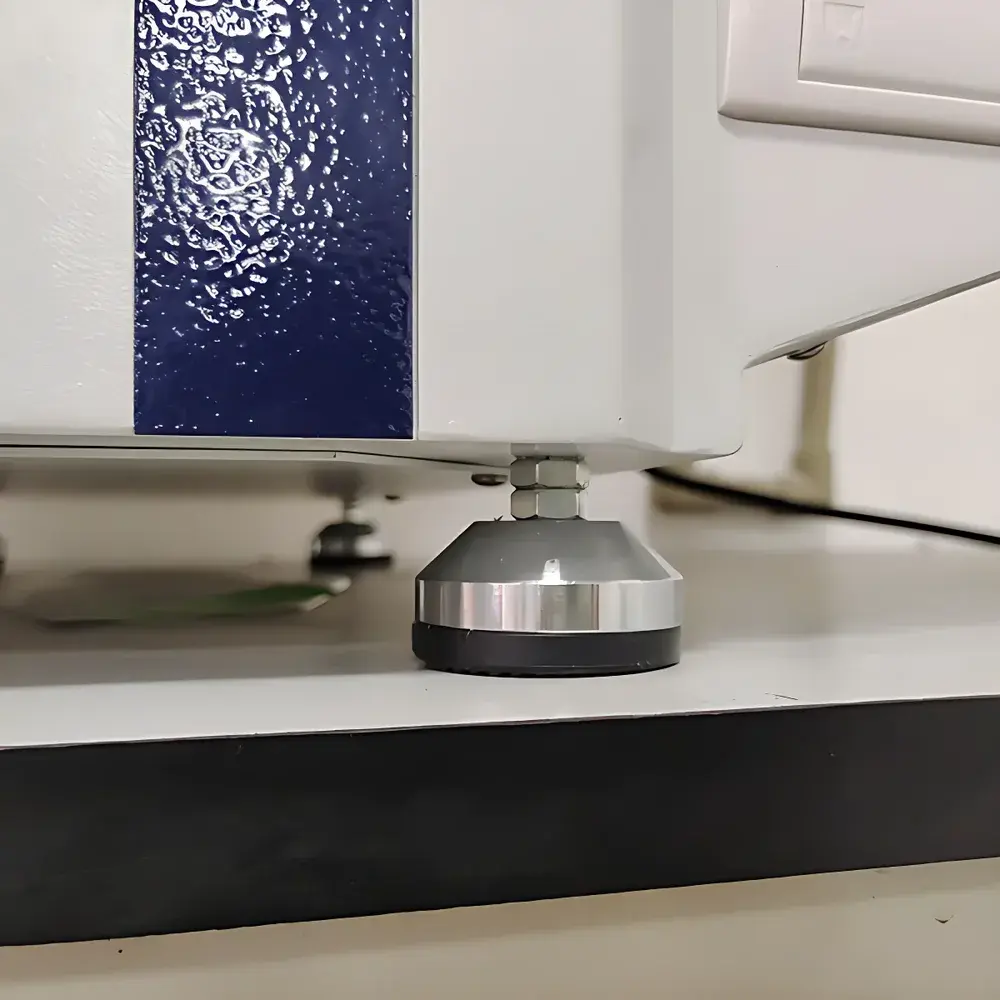
HAIDA HD-A513-B Microcomputer-Controlled Edge Crush Test (ECT) and Ring Crush Test (RCT) Instrument
| Brand | HAIDA INTERNATIONAL |
|---|---|
| Origin | Guangdong, China |
| Manufacturer Type | Direct Manufacturer |
| Product Origin | Domestic (China) |
| Model | HD-A513-B |
| Display | Touchscreen (optional PC interface) |
| Control | Touchscreen (optional software control) |
| Load Capacity | 5 kN |
| Force Resolution | 1/250,000 |
| Force Accuracy | ≤ ±0.5% |
| Max. Applied Load | 4500 N |
| Minimum Force Resolution | 0.05 N |
| Test Speed | (12.5 ± 2.5) mm/min |
| Platen Diameter | 120 mm |
| Platen Travel | 0.1–80 mm |
| RCT Specimen Size | 152 × 12.7 mm (L×W) |
| ECT Specimen Size | 100 × 25 mm (L×W) |
| Flat Crush (CMT) Guide Block | Thickness 12 mm, Ø120 mm |
| Dimensions (L×W×H) | 515 × 566 × 555 mm |
| Weight | ~70 kg |
| Power Supply | 1-phase, 220 V, 50 Hz, 2 A |
| Power Consumption | 300 W |
| Force Units | kgf, lbf, N |
Overview
The HAIDA HD-A513-B Microcomputer-Controlled Edge Crush Test (ECT) and Ring Crush Test (RCT) Instrument is a precision mechanical compression tester engineered for standardized evaluation of corrugated board and paperboard structural integrity. It operates on the fundamental principle of uniaxial compressive loading under controlled displacement rate, conforming to established physical testing methodologies defined in international packaging standards. The instrument applies a continuously increasing compressive force via a motor-driven precision ball-screw actuator until specimen failure (i.e., buckling or collapse), at which point the peak load—recorded as the crush resistance—is captured and quantified. Its dual-mode design supports multiple ASTM, TAPPI, ISO, EN, and GB-compliant test configurations including Ring Crush Test (RCT), Edge Crush Test (ECT), Flat Crush Test (FCT/CMT), Corrugated Compression Test (CCT), and Adhesive Peel Test (PAT), making it a core quality assurance tool for packaging R&D labs, QC departments in carton manufacturing facilities, and third-party certification laboratories.
Key Features
- High-resolution 7-inch color touchscreen interface with real-time force-displacement curve visualization and bilingual (English/Chinese) software navigation
- Calibrated 5 kN load cell with ≤ ±0.5% accuracy and 0.05 N minimum resolution, traceable to national metrological standards (JJG(Guangdong) 018-2014)
- Precision ground ball-screw drive system ensuring repeatable crosshead motion and minimal mechanical hysteresis
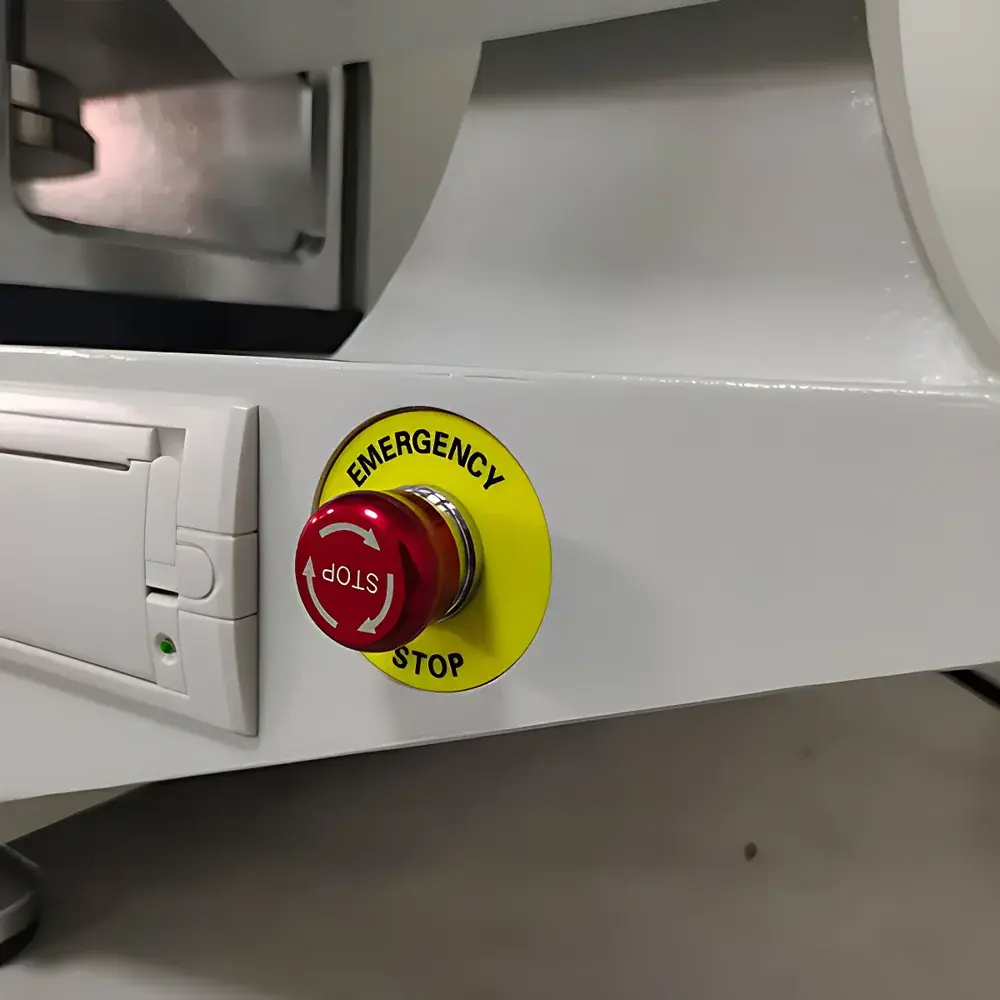
- Dual-limit mechanical end-stop protection combined with electronic overload cutoff to prevent sensor damage during over-travel or specimen jamming
- Automatic post-test return-to-start positioning and intelligent rupture detection algorithm that identifies and logs the exact maximum crush force without operator intervention
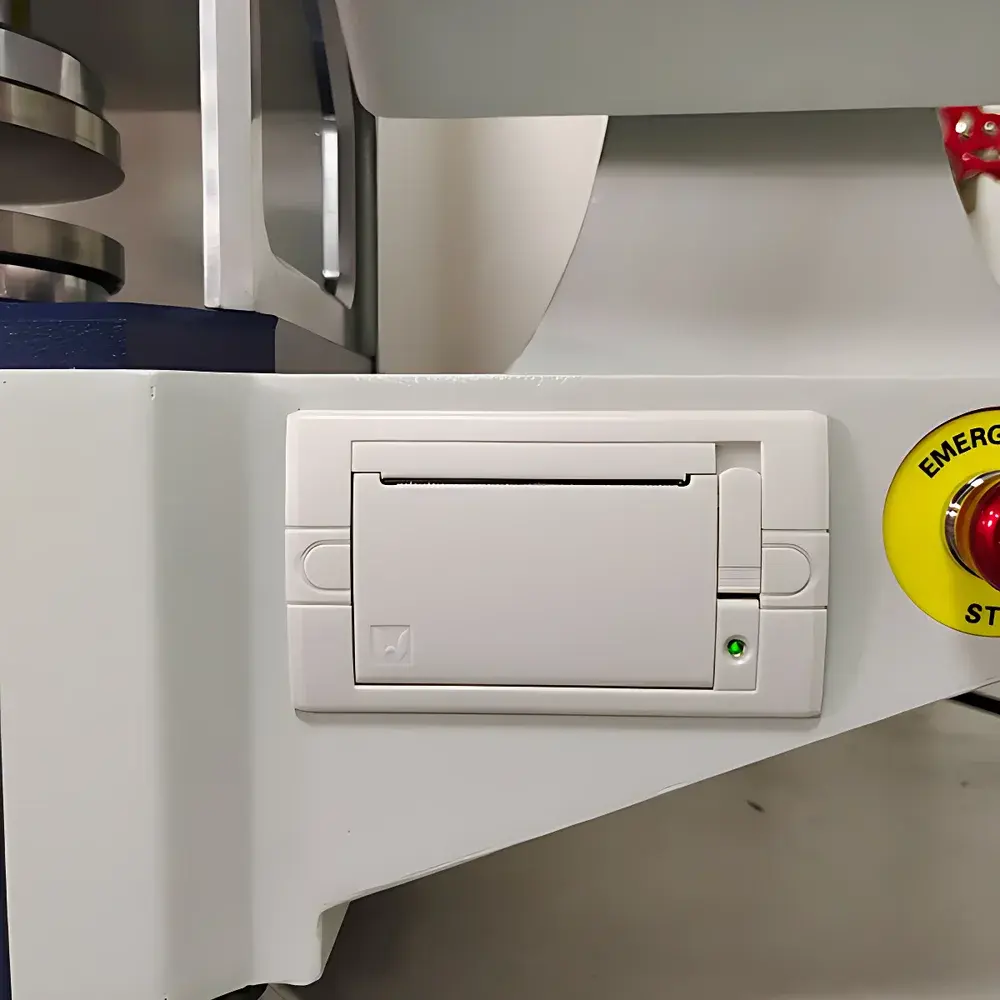
- Integrated thermal printer for immediate hard-copy output of test reports, including date/time stamp, specimen ID, peak load, and calculated strength values (kN/m or N/mm)
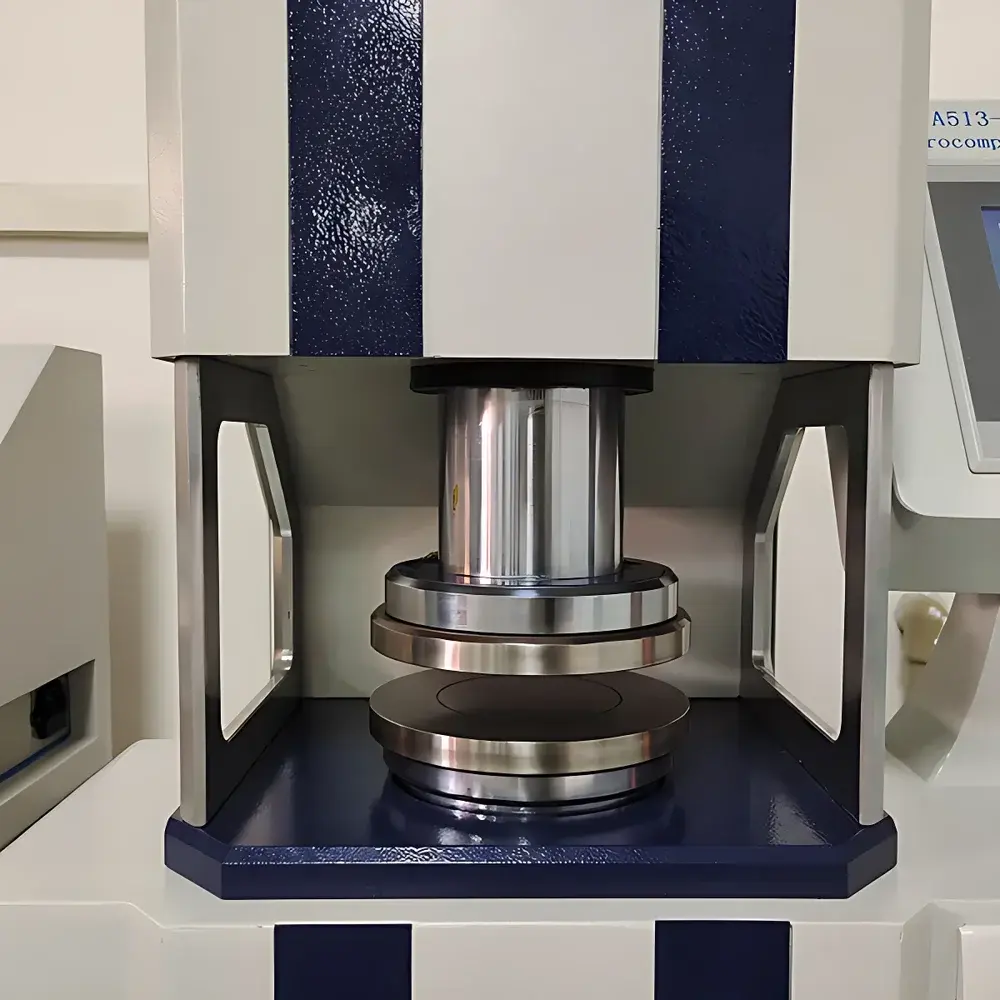
- Modular accessory platform supporting rapid interchange of test fixtures—including RCT centering rings, ECT guide blocks (100 × 25 mm), CMT flat guides (Ø120 mm, 12 mm thick), PAT peel jigs, and CCT compression plates—enabling full compliance with multi-standard workflows
Sample Compatibility & Compliance
The HD-A513-B accommodates standard corrugated board specimens per globally recognized dimensional requirements: RCT specimens measuring 152 mm × 12.7 mm (ASTM D6342, TAPPI T804, GB/T 2679.8); ECT specimens sized 100 mm × 25 mm (TAPPI T811, GB/T 2679.17, GB/T 6546); and CMT specimens aligned with ISO 3035 and EN ISO 7263-2. All test modes comply with GLP-aligned documentation practices, supporting audit-ready data retention for FDA-regulated environments where packaging validation is required under 21 CFR Part 11 (when paired with optional PC-based software with electronic signature and audit trail). The instrument meets electromagnetic compatibility (EMC) requirements per IEC 61326-1 and safety standards per IEC 61010-1.
Software & Data Management
While the embedded touchscreen firmware provides standalone operation with onboard storage for up to 50 test records—including max force, mean value, standard deviation, and calculated strength—the optional Windows-compatible PC software extends functionality significantly. This application enables batch reporting, statistical process control (SPC) charting (X̄-R, Cp/Cpk), export to CSV/PDF/Excel formats, user-level access control (admin/operator), and full 21 CFR Part 11 compliance with time-stamped electronic signatures, immutable audit trails, and role-based permissions. Raw force-time and force-displacement datasets are preserved with millisecond timestamping, facilitating root-cause analysis of material anomalies or process deviations.
Applications
This instrument serves critical functions across the packaging supply chain: evaluating flute integrity and linerboard bonding strength during raw material incoming inspection; validating corrugated box design performance against ISTA 3A/6A compression protocols; supporting sustainability initiatives by correlating crush resistance with fiber source and recycled content; enabling comparative benchmarking between virgin and recycled pulp grades; and generating data for FSC/PEFC chain-of-custody documentation. It is routinely deployed in ISO/IEC 17025-accredited labs performing accredited testing to TAPPI T804 (RCT), TAPPI T811 (ECT), and ISO 12048 (CMT).
FAQ
Does the HD-A513-B support automated calibration verification?
Yes—built-in zero-point and span verification routines allow daily operational checks using certified reference weights; full calibration certificates are issued with NIST-traceable standards.
Can test parameters be locked to prevent unauthorized modification?
Yes—password-protected parameter configuration mode restricts changes to test speed, dwell time, and pass/fail thresholds to authorized personnel only.
Is the thermal printer compatible with external label printers for barcode integration?
The internal thermal printer supports direct label printing; external USB or network-connected label printers can be integrated via the optional PC software using standard Windows print drivers.
What maintenance intervals are recommended for long-term accuracy?
Ball-screw lubrication every 6 months and annual load cell recalibration are recommended; HAIDA provides certified field service or return-to-factory recalibration with documented uncertainty budgets.
Are test method templates preloaded for common standards?
Yes—preconfigured test profiles for TAPPI T804, TAPPI T811, ISO 3035, and GB/T 2679.8 are included, with editable parameters to accommodate lab-specific SOP adaptations.
Related Products





