
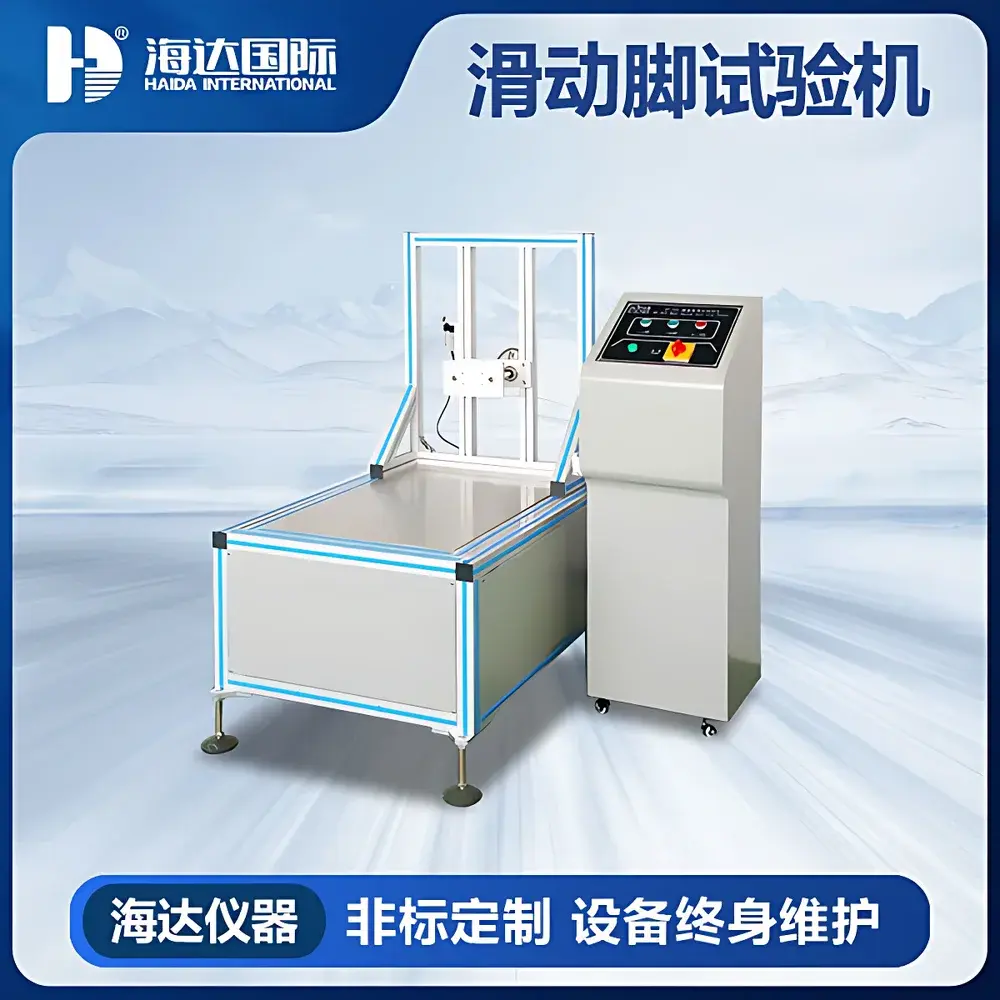
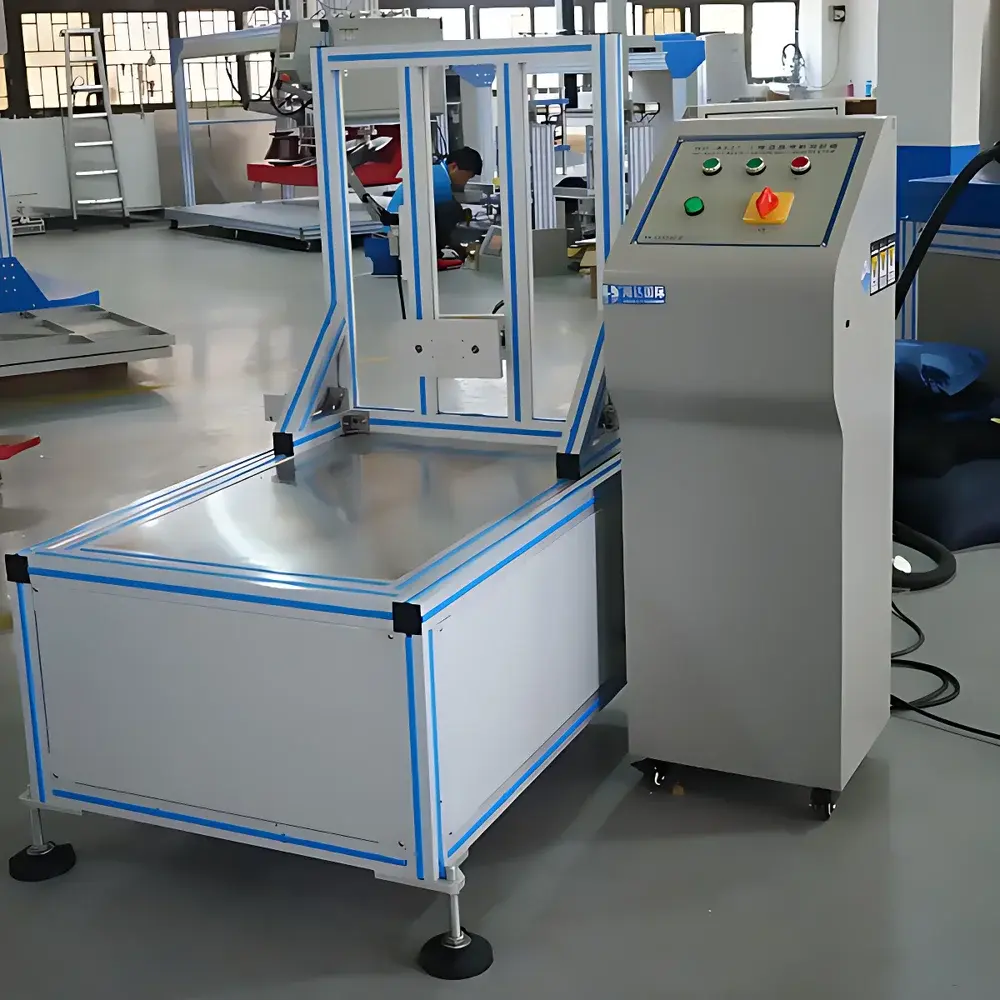
HAIDA HD-A537 Box Sliding Angle Tester
| Brand | HAIDA INTERNATIONAL |
|---|---|
| Origin | Guangdong, China |
| Manufacturer Type | Manufacturer |
| Country of Origin | China |
| Model | HAIDA HD-A537 Box Sliding Angle Tester |
| Measurement Range | 0.1°–35° |
| Angular Resolution | ±0.1° |
| Tilt Speed | 2°/s |
| Test Platform Dimensions | 600 mm × 500 mm (L×W) |
| Overall Dimensions | 1100 mm × 700 mm × 1200 mm (L×W×H) |
| Weight | ~170 kg |
| Power Supply | 1∮ AC 220 V |
| Power Consumption | ~220 W |
| Compliance Standard | DIN 53119-2:1997 |
Overview
The HAIDA HD-A537 Box Sliding Angle Tester is an engineered solution for quantifying the static and dynamic sliding resistance of corrugated cardboard packaging under controlled angular inclination. Designed specifically for packaging R&D laboratories and quality control departments in beverage, logistics, and consumer goods industries, this instrument evaluates the inter-box frictional stability of stacked cartons—particularly critical for beer cases, beverage carriers, and retail-ready packaging subjected to vibration, ramp loading, or warehouse racking conditions. The device operates on the fundamental principle of gradually increasing the inclination angle of a rigid test platform until the uppermost carton initiates lateral displacement relative to the underlying unit(s). The onset angle—recorded at the moment of first observable slippage—is defined as the sliding angle, a direct indicator of surface-to-surface coefficient of static friction (μs) under representative load and environmental conditions. Unlike generic incline testers, the HD-A537 integrates mechanical precision with repeatable kinematics to ensure high reproducibility across multiple test cycles, supporting both ASTM D6252 (Standard Test Method for Measuring Static Coefficient of Friction of Corrugated and Solid Fiberboard) and ISO 874:2020 (Plastics — Determination of coefficient of friction) methodology frameworks.
Key Features
- Robust structural frame fabricated from thick-walled aluminum extrusions, delivering dimensional stability and long-term rigidity under repeated loading cycles.
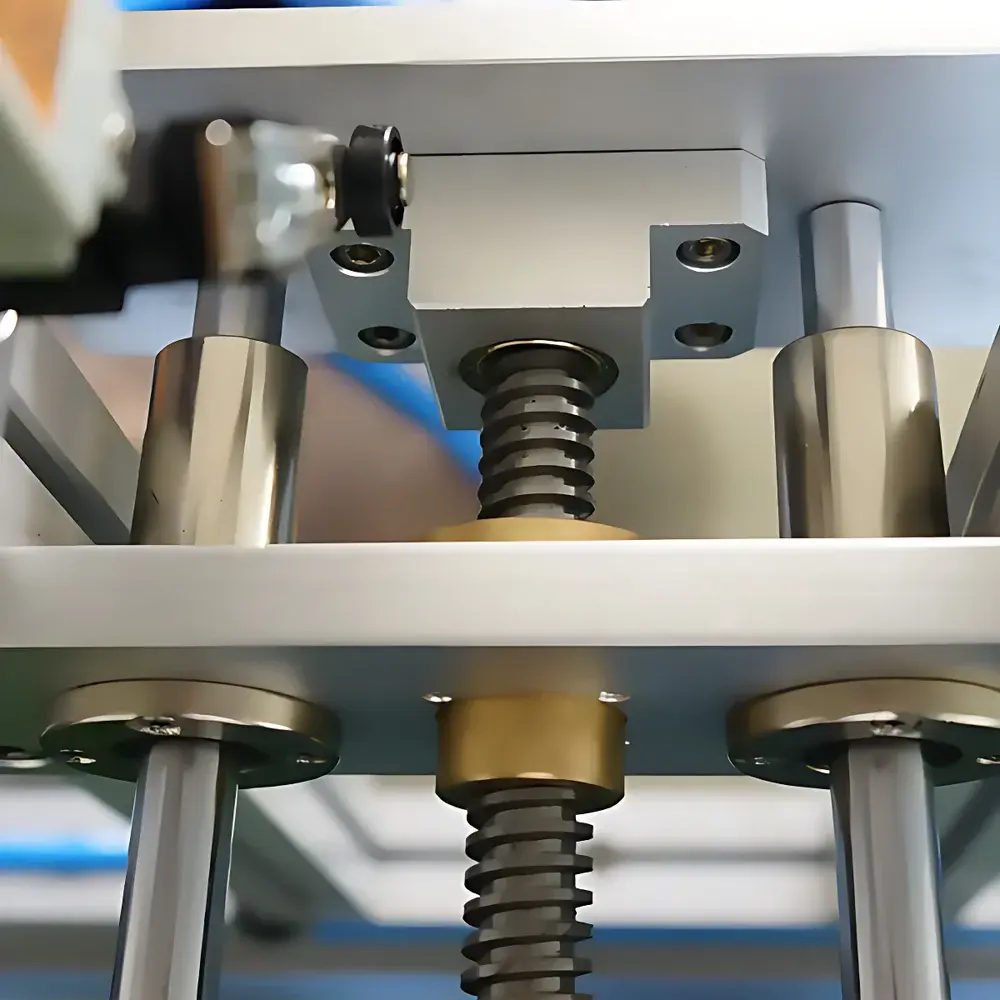
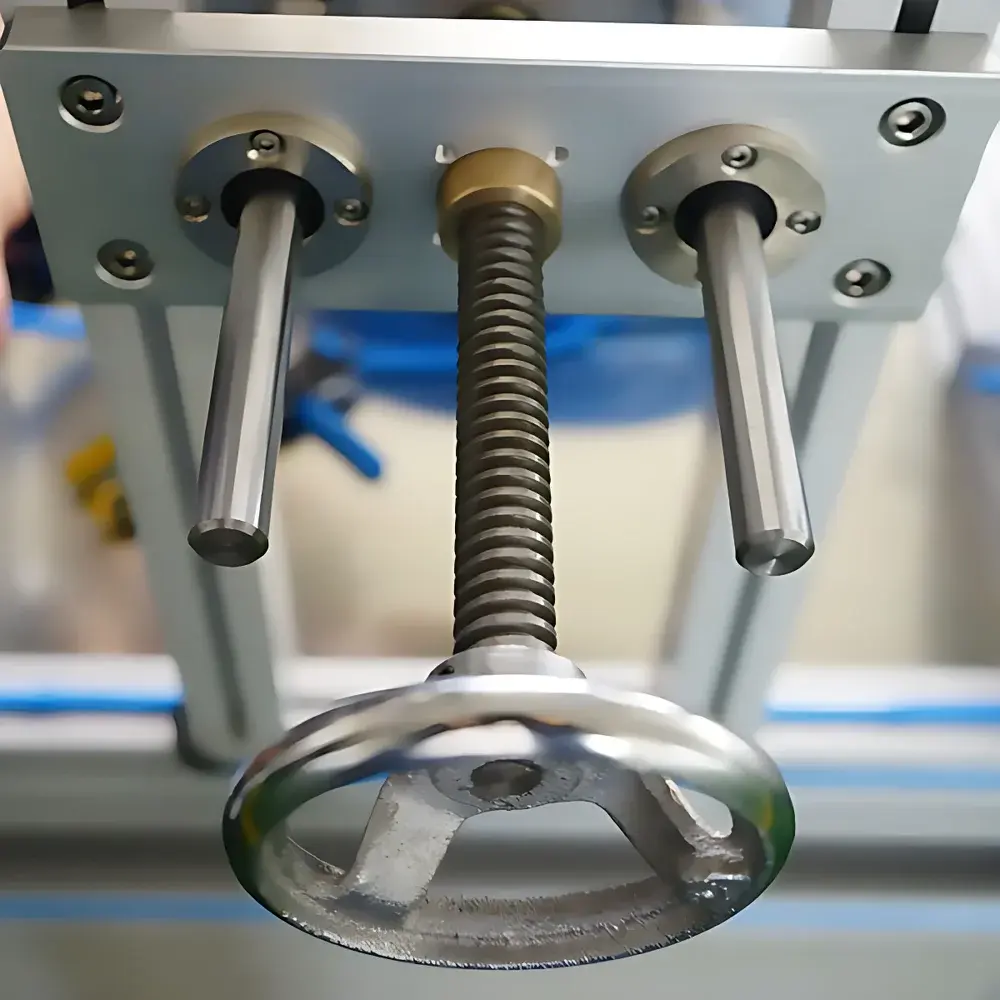
- Precision tilt mechanism driven by a low-noise geared DC motor coupled to a rectangular lead screw and dual hardened linear shafts, ensuring smooth, backlash-free angular motion at a constant 2°/s rate.
- Integrated anti-fall safety system including adjustable stop blocks, programmable limit switches, and a fixed-position sliding guard rail—preventing specimen ejection during abrupt slip events.
- Digital angular readout via high-resolution LCD display with ±0.1° accuracy, synchronized with real-time tilt position feedback for traceable data logging.
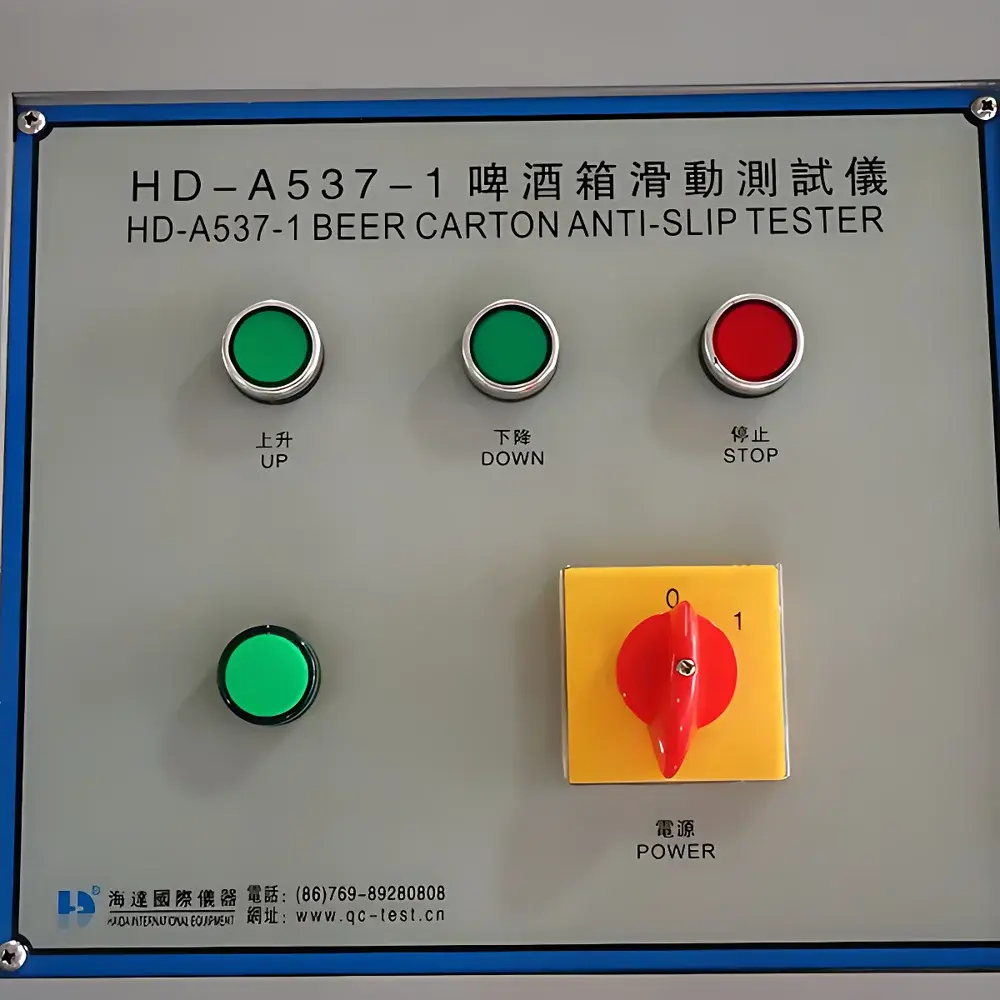
- Modular electrical architecture featuring a detached control cabinet to minimize electromagnetic interference (EMI) with sensor signals and enhance serviceability.
- Leveling-adjustable base feet with vibration-damping elastomeric inserts, enabling precise horizontal alignment on non-ideal laboratory floors without compromising measurement integrity.
Sample Compatibility & Compliance
The HD-A537 accommodates standard and custom-sized corrugated shipping containers (e.g., RSC, FOL, HSC), with internal contents simulated or actual—including filled bottles, cans, or packaged consumer units. Test specimens are placed directly on the 600 mm × 500 mm textured steel platform, which supports up to three-tier stacking configurations per DIN 53119-2:1997 requirements. The instrument meets essential mechanical safety standards per IEC 61000-6-2 (EMC immunity) and IEC 61000-6-4 (EMC emissions), and its operational protocol aligns with GLP-compliant documentation practices. While not inherently 21 CFR Part 11 certified, the system supports audit-ready manual recording workflows compatible with FDA-regulated packaging validation protocols when integrated into validated SOPs.
Software & Data Management
The HD-A537 operates via embedded firmware—not PC-dependent software—ensuring deterministic response timing and eliminating OS-level variability. All angular measurements are captured and displayed in real time; no proprietary drivers or external software installation is required. The digital angle meter includes zero-reset functionality and retains calibration offsets within non-volatile memory. For enterprise integration, analog output (0–10 V) and RS-232 serial interface options are available upon request, enabling connection to SCADA systems or centralized LIMS platforms for automated result archiving. Raw data export is supported via USB flash drive (optional accessory), formatted as CSV files containing timestamp, final sliding angle, and operator ID fields—facilitating statistical process control (SPC) analysis per ISO 9001:2015 clause 8.5.1.
Applications
- Evaluation of corrugated board surface treatments (e.g., aqueous coatings, UV varnishes, silicone sprays) for improved inter-box grip.
- Validation of pallet-stacking configurations prior to containerized ocean freight or over-the-road transport.
- Comparative testing of alternative flute profiles (e.g., B-flute vs. E-flute) under identical content mass and humidity conditioning.
- Quality gate screening for incoming packaging suppliers against contractual COF (coefficient of friction) specifications.
- Root-cause analysis of field-reported case slippage incidents through controlled replication of suspected storage angles and temperature/humidity exposure.
FAQ
What is the maximum weight capacity of the test platform?
The platform is structurally rated for continuous operation with stacked loads up to 150 kg; however, optimal repeatability is achieved within the 20–80 kg range typical for filled beverage cases.
Can the HD-A537 be used for non-corrugated materials such as plastic totes or wooden crates?
Yes—the instrument measures sliding behavior regardless of substrate, provided the specimen fits within the platform dimensions and maintains stable contact geometry during tilt progression.
Is calibration traceable to national metrology institutes?
The angular encoder is factory-calibrated using NIST-traceable inclinometer standards; annual recalibration services are available through HAIDA’s authorized service centers in Asia and Europe.
Does the system support variable tilt speeds?
No—the HD-A537 operates exclusively at 2°/s per DIN 53119-2:1997; variable-speed operation would invalidate conformance to the referenced standard.
How is specimen alignment ensured before testing begins?
The platform features engraved centerlines and orthogonal reference edges; optional laser alignment guides can be mounted for high-precision positioning of asymmetric or irregularly shaped cases.







