
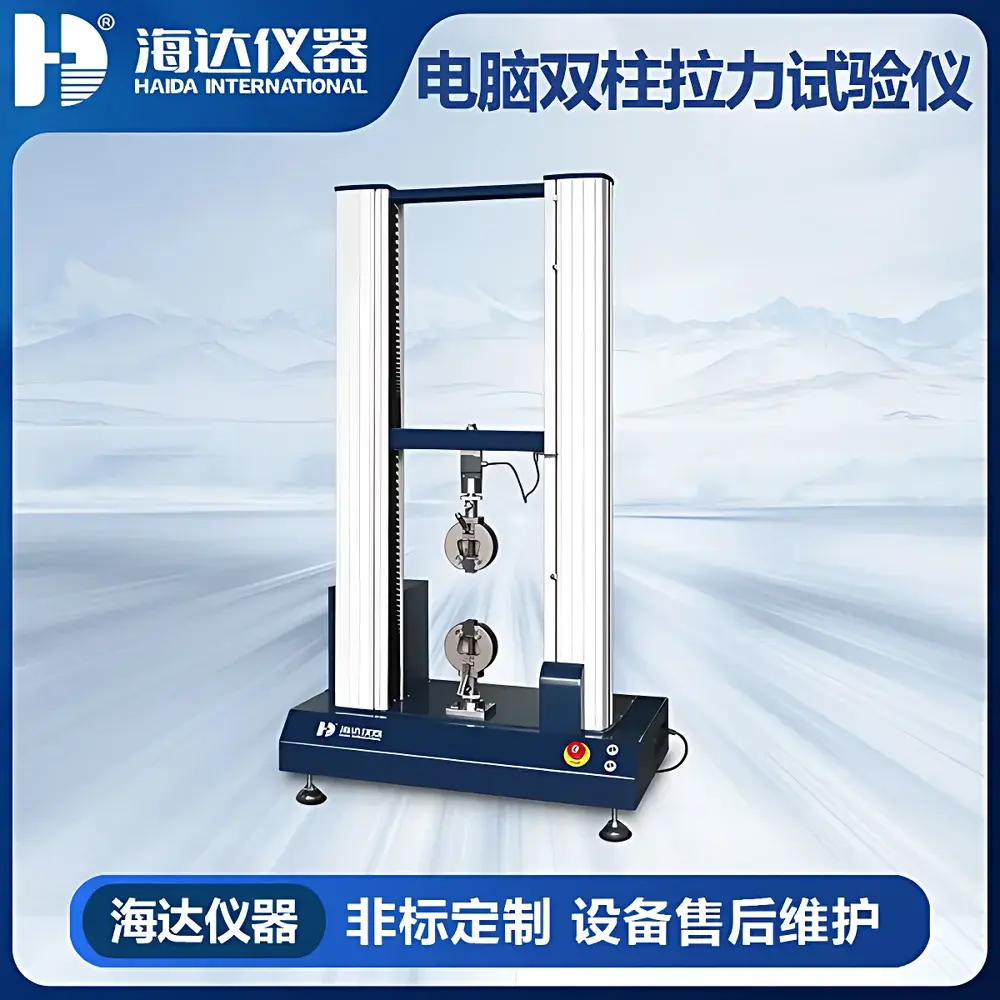
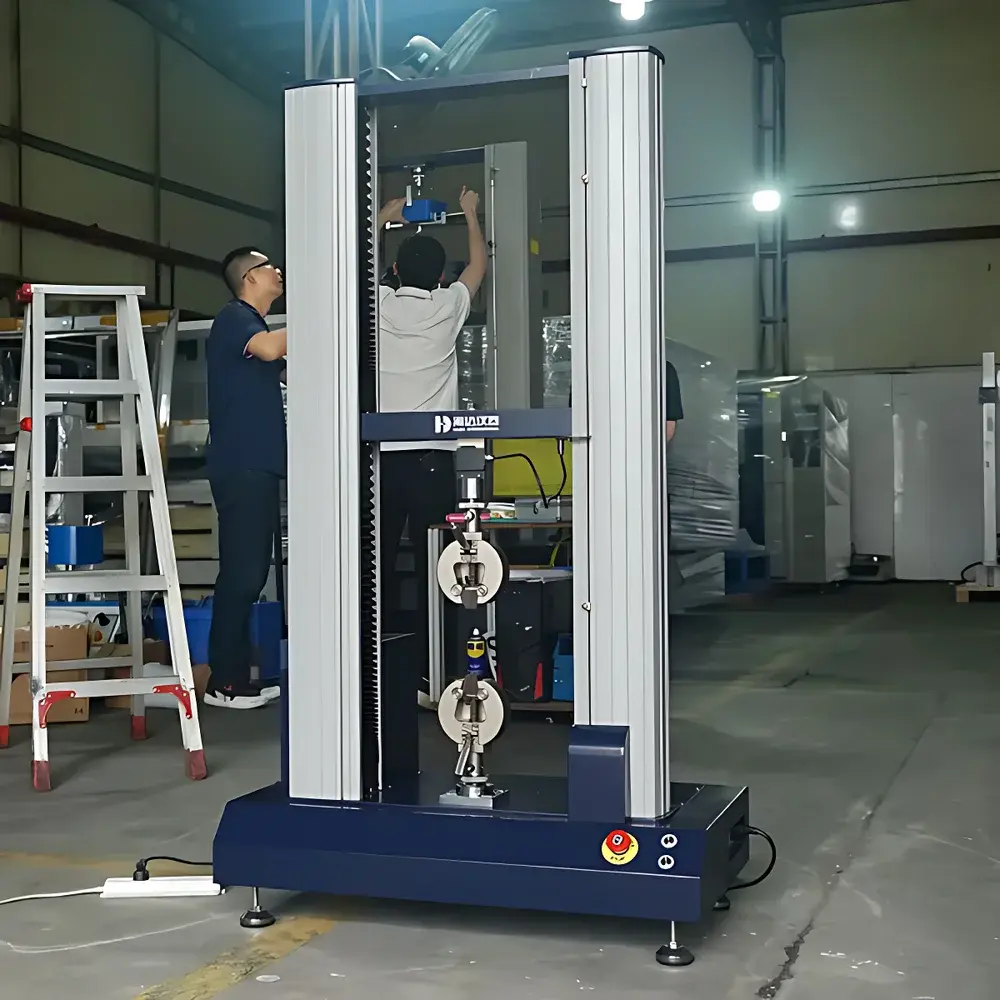
HAIDA HD-B604-S Computer-Controlled Dual-Column Servo Tensile Testing Machine
| Brand | HAIDA INTERNATIONAL |
|---|---|
| Origin | Guangdong, China |
| Manufacturer Type | Direct Manufacturer |
| Country of Origin | China |
| Model | HD-B604-S |
| Instrument Type | Electromechanical Tensile Tester |
| Maximum Test Load Options | 2 kN / 5 kN / 10 kN / 20 kN Load Cells |
| Force Measurement Range | Full Scale (FS) matching selected load cell |
| Force Accuracy | ≤ ±0.5% of reading |
| Crosshead Travel | 1000 mm (excluding grips) |
| Speed Range | 0.1–500 mm/min |
| Load Resolution | 1/250,000 FS |
| Effective Test Width | 400 mm |
| Dimensions (L×W×H) | ≈ 880 × 505 × 1500 mm |
| Weight | ≈ 185 kg |
| Power Supply | 1Ø AC 220 V, ~500 W |
| Compliance Standards | GB/T 16491-2008, JJG 475-2018, GB/T 16825.1-2008, GB/T 228.1-2010, GB/T 1040-2006, ASTM D4833-2007, ISO 527, ISO 6892-1, EN ISO 15112 |
Overview
The HAIDA HD-B604-S Computer-Controlled Dual-Column Servo Tensile Testing Machine is an electromechanical universal testing system engineered for high-reproducibility mechanical property characterization of both metallic and non-metallic materials. Based on the principle of controlled displacement actuation via precision servo-motor-driven ball-screw transmission, the system applies uniaxial tensile, compressive, flexural, peel, puncture, tear, and shear loads under programmable speed, strain, or stress-rate conditions. Its dual-column rigid frame architecture minimizes lateral deflection and ensures axial alignment stability across full travel—critical for compliance with ISO 527-1, ISO 6892-1, ASTM D638, and GB/T 228.1 test protocols. Designed for integration into QC laboratories, R&D centers, and contract testing facilities, the HD-B604-S delivers traceable force measurement within ≤ ±0.5% accuracy across its selectable load cell range (2–20 kN), supporting standardized evaluation of modulus, yield strength, ultimate tensile strength, elongation at break, and energy absorption.
Key Features
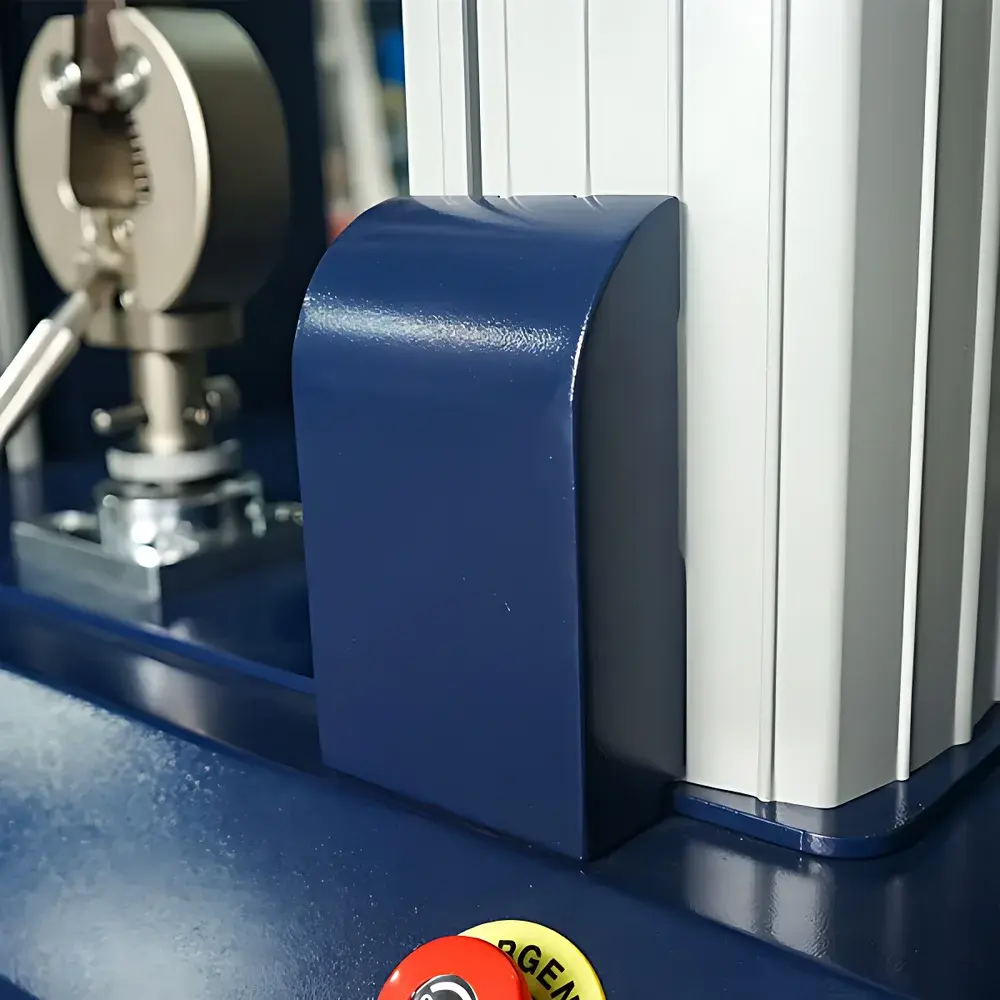
- Dual-column structural design with preloaded ball-screw transmission system for minimal backlash and long-term dimensional stability.
- 400 W high-torque servo motor coupled with matched servo driver enabling precise closed-loop control of crosshead motion from 0.1 to 500 mm/min.
- Integrated load cell options (2 kN, 5 kN, 10 kN, 20 kN) featuring temperature-compensated strain gauge technology and resolution up to 1 part in 250,000 of full scale.
- Windows-based software platform supporting real-time data acquisition, multi-channel synchronization (load, displacement, extensometer if equipped), and automated test sequencing.
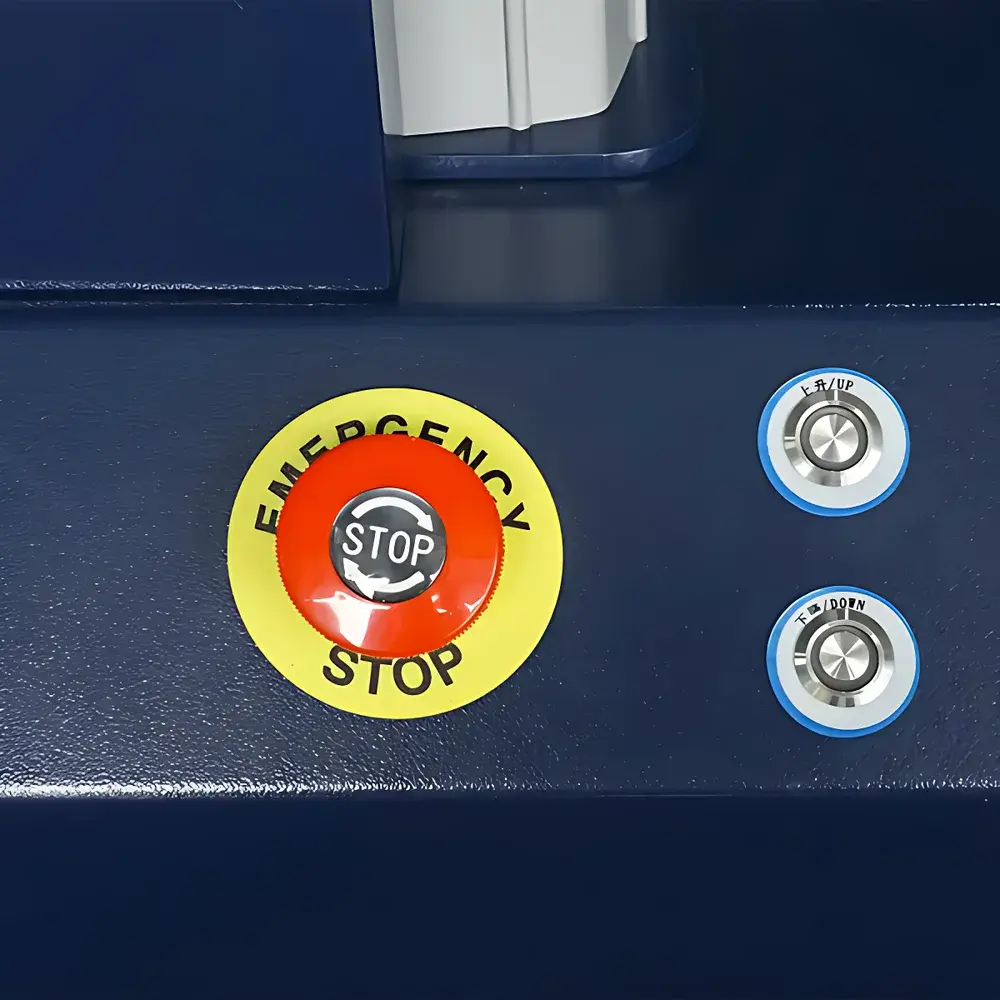
- Comprehensive safety architecture including hardware-based overload protection, mechanical end-stop limit switches, and programmable soft limits per test method.
- Flexible control modes: constant rate of extension (CRE), constant rate of force application (CRF), constant strain rate, constant stress rate, and load-hold or displacement-hold routines.
- USB 2.0 and Ethernet interfaces for secure data export, remote diagnostics, and networked lab integration; compatible with Windows 10/11 and Office 2016+ for direct report generation.
Sample Compatibility & Compliance
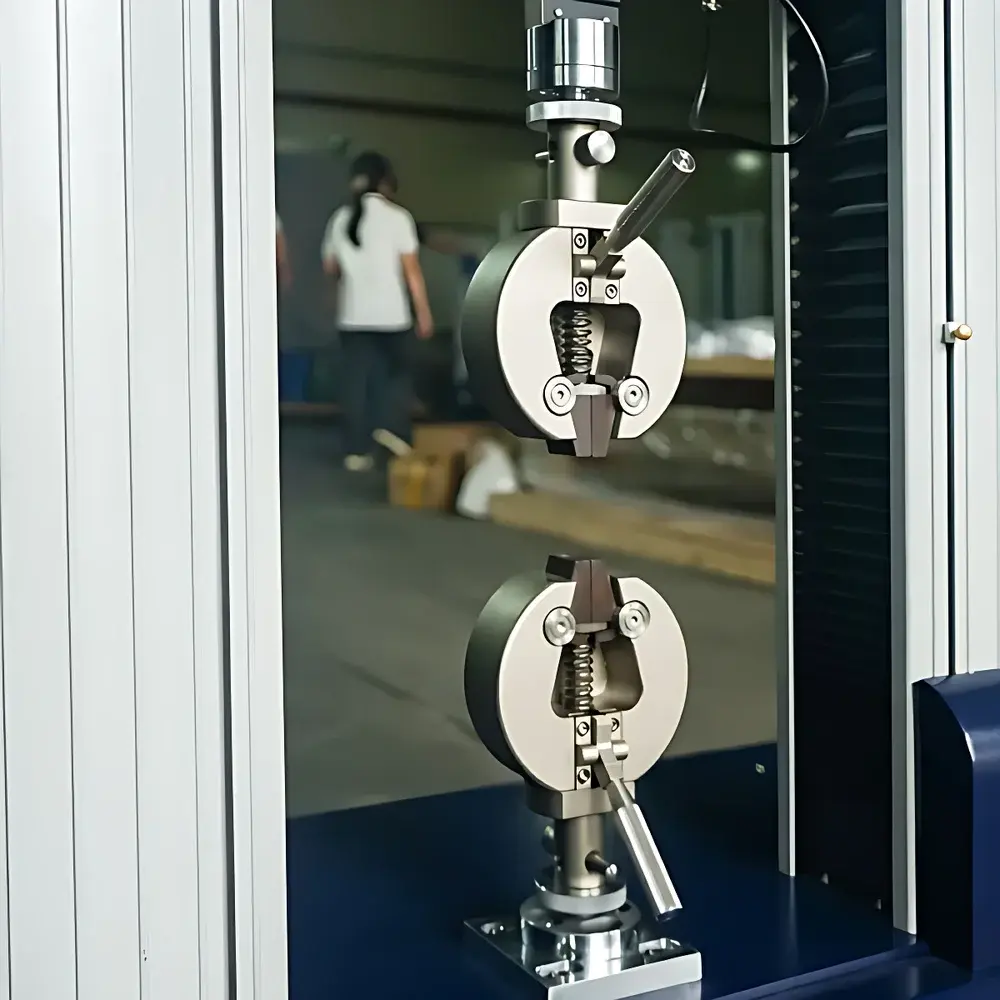
The HD-B604-S accommodates a broad spectrum of specimen geometries and material classes—including thermoplastics, elastomers, composites, textiles, medical device components, adhesives, packaging films, concrete prisms, metallic wires, and structural alloys—within its 400 mm effective test width and 1000 mm stroke envelope. It supports standardized gripping configurations (pneumatic, wedge, vise, custom fixtures) and optional extensometry for true strain measurement. The system conforms to international regulatory and quality frameworks: calibration traceability to national metrology institutes per JJG 475-2018; verification against GB/T 16825.1-2008 (equivalent to ISO 7500-1); and validation-ready operation for GLP/GMP environments. Software features audit-trail logging, electronic signatures, and configurable user access levels—aligning with FDA 21 CFR Part 11 requirements when deployed with validated configuration and procedural controls.
Software & Data Management
The proprietary Windows-native testing software provides intuitive workflow management—from method setup and calibration validation to real-time curve visualization and post-test statistical analysis. Users define test parameters (pre-load, target strain, hold duration, failure criteria) using ISO/ASTM-compliant templates or create custom protocols. All raw data (load vs. displacement, time-stamped) are stored in encrypted binary format with metadata tagging (operator ID, sample ID, environmental conditions). Export functions support CSV, Excel (.xlsx), PDF reports with embedded stress-strain curves, and image capture of test events. Batch processing enables comparative analysis across multiple specimens or material lots, with automatic calculation of mean, standard deviation, coefficient of variation, and pass/fail status against specification limits. Data integrity is maintained through version-controlled firmware updates and periodic calibration certificate import.
Applications
This system serves as a primary tool for mechanical performance validation across regulated and industrial sectors. In polymer laboratories, it executes tensile tests per ISO 527 and ASTM D638 to determine Young’s modulus and ductility of injection-molded parts. For medical device manufacturers, it validates peel strength of sterile barrier packaging (ASTM F88), puncture resistance of IV bags (ISO 11607), and tensile integrity of suture materials (ISO 10993-12). In construction materials QA, it performs compression testing of mortar cubes (GB/T 7314) and flexural testing of fiber-reinforced cement boards. Automotive suppliers utilize it for tensile evaluation of gaskets, hoses, and composite body panels under elevated temperature conditions (with optional environmental chamber integration). Additionally, it supports adhesive bond strength assessment (ASTM D1002), textile tensile breaking load (ISO 13934-1), and wire rope elongation testing (ISO 3108).
FAQ
What load cell options are available for the HD-B604-S, and can they be changed in-field?
The HD-B604-S supports interchangeable load cells rated at 2 kN, 5 kN, 10 kN, and 20 kN. Load cell replacement requires recalibration and software reconfiguration—performed by authorized HAIDA service engineers to maintain traceability and compliance.
Does the system meet ISO/IEC 17025 requirements for accredited testing laboratories?
Yes—when operated with documented procedures, scheduled calibration (traceable to NIM or equivalent NMIs), and validated software settings, the HD-B604-S satisfies technical competence criteria outlined in ISO/IEC 17025:2017 for mechanical testing scope.
Can the machine perform cyclic loading or fatigue tests?
The base HD-B604-S is configured for static monotonic tests. For dynamic or low-cycle fatigue applications, HAIDA offers the HD-B604-F variant with enhanced servo control firmware and higher-frequency data acquisition capability.
Is third-party software integration supported (e.g., LabVIEW, MATLAB)?
Yes—the system provides DLL-based API documentation and TCP/IP command protocol specifications, enabling bidirectional communication with external automation platforms for custom test orchestration and data ingestion pipelines.
What maintenance intervals are recommended for long-term reliability?
Routine inspection every 6 months includes lubrication of ball screws, verification of grip alignment, and functional check of limit switches. Annual full calibration and mechanical verification are advised, with detailed service logs retained for audit purposes.



