
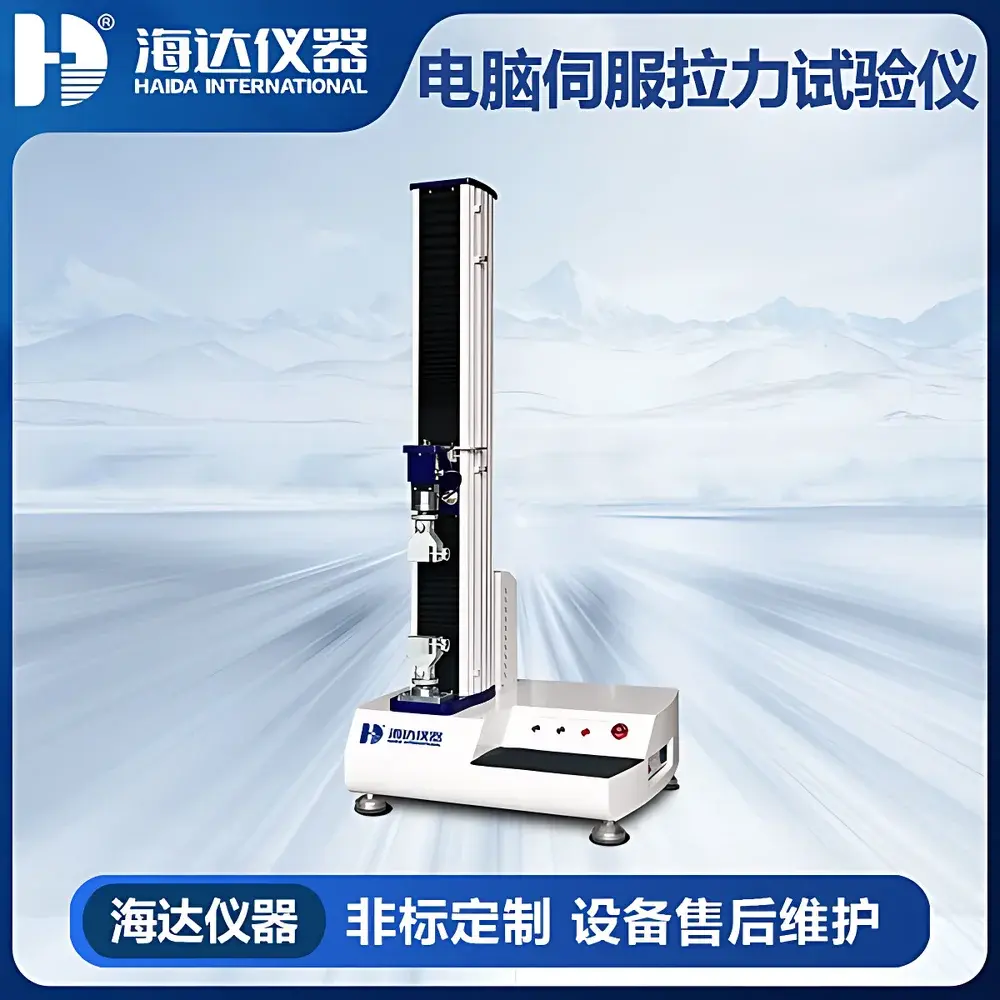
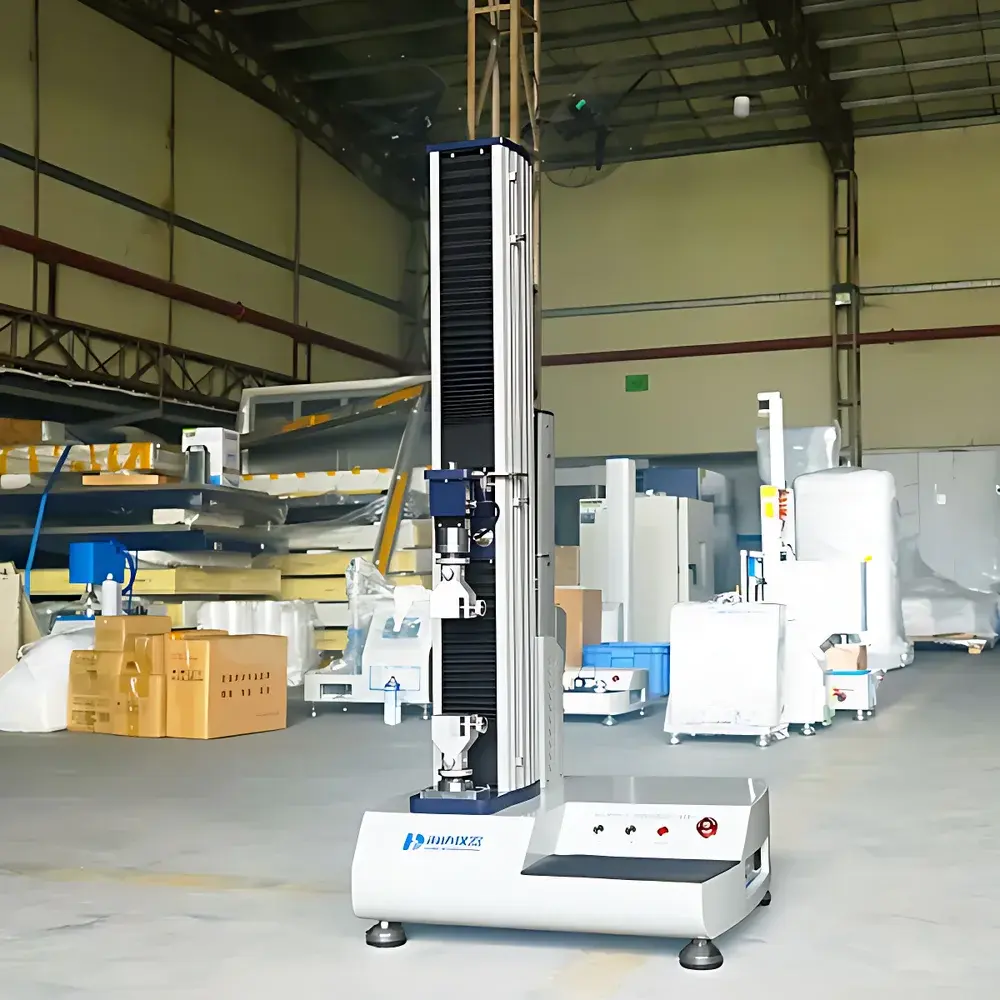
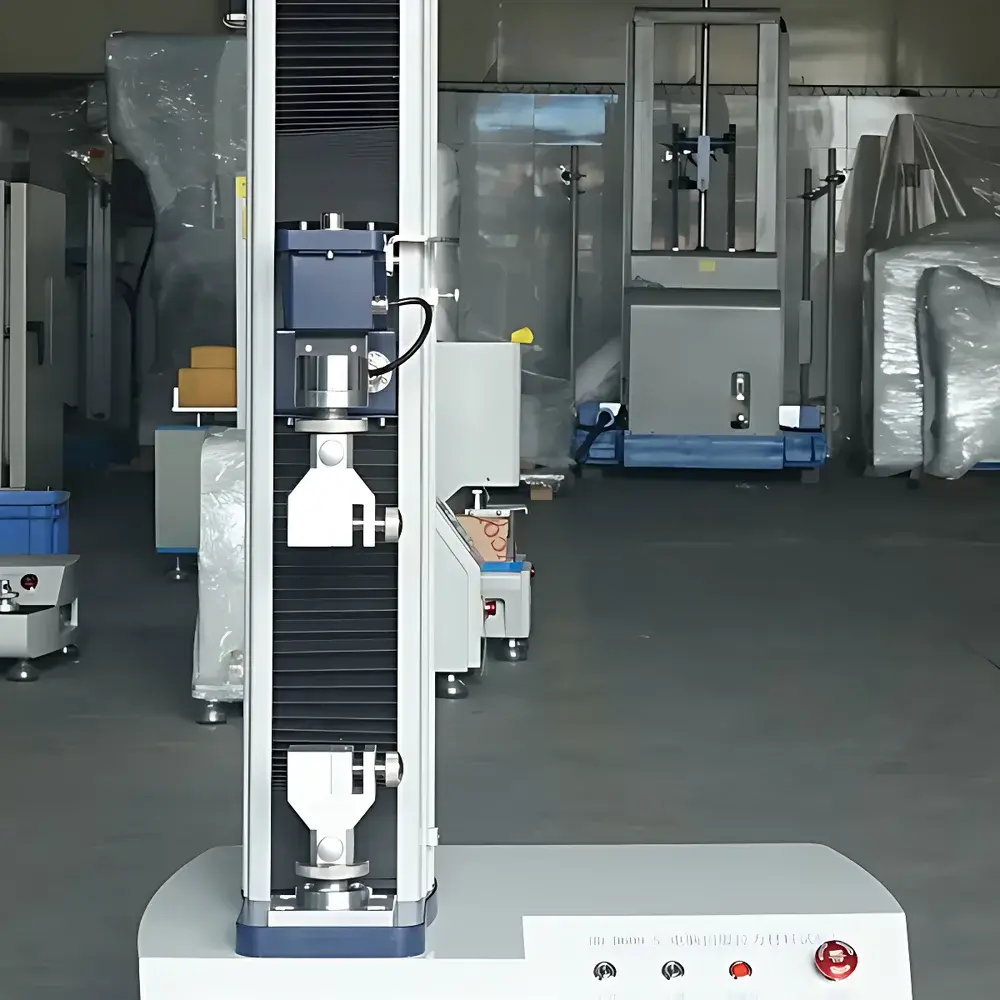
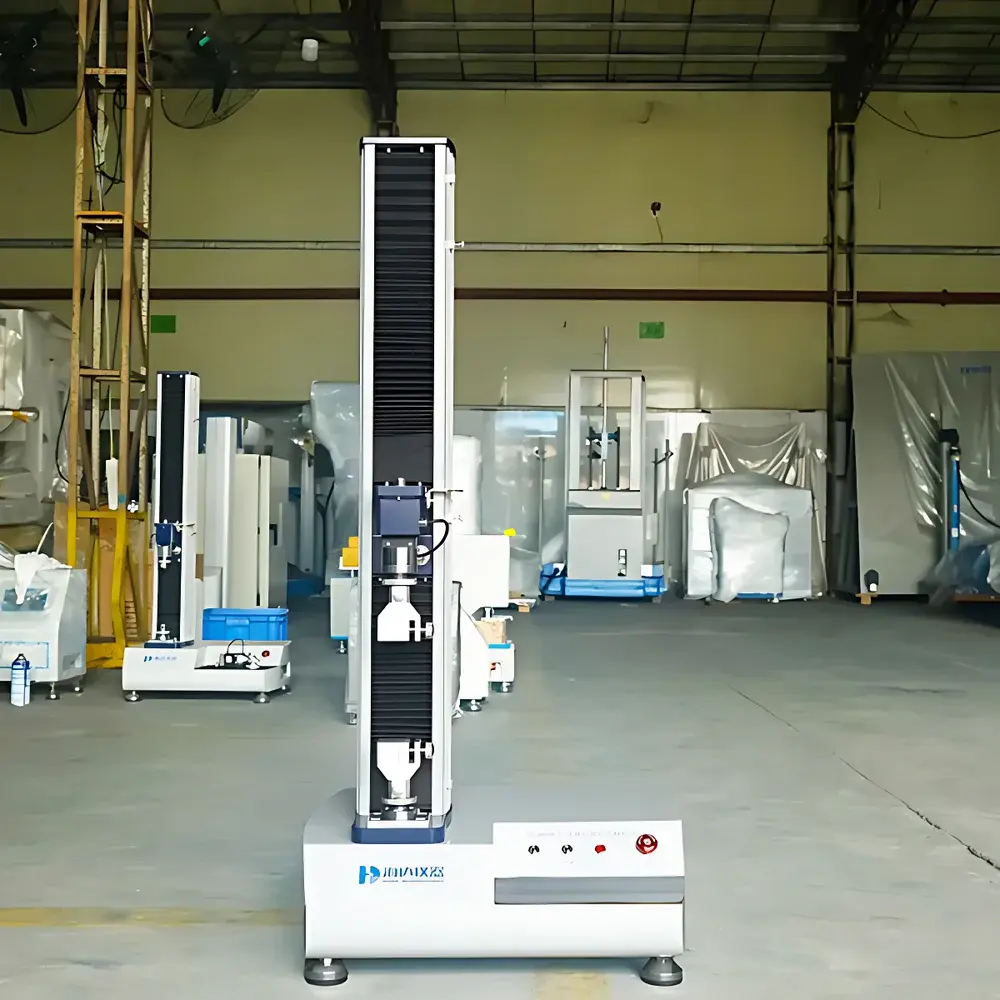
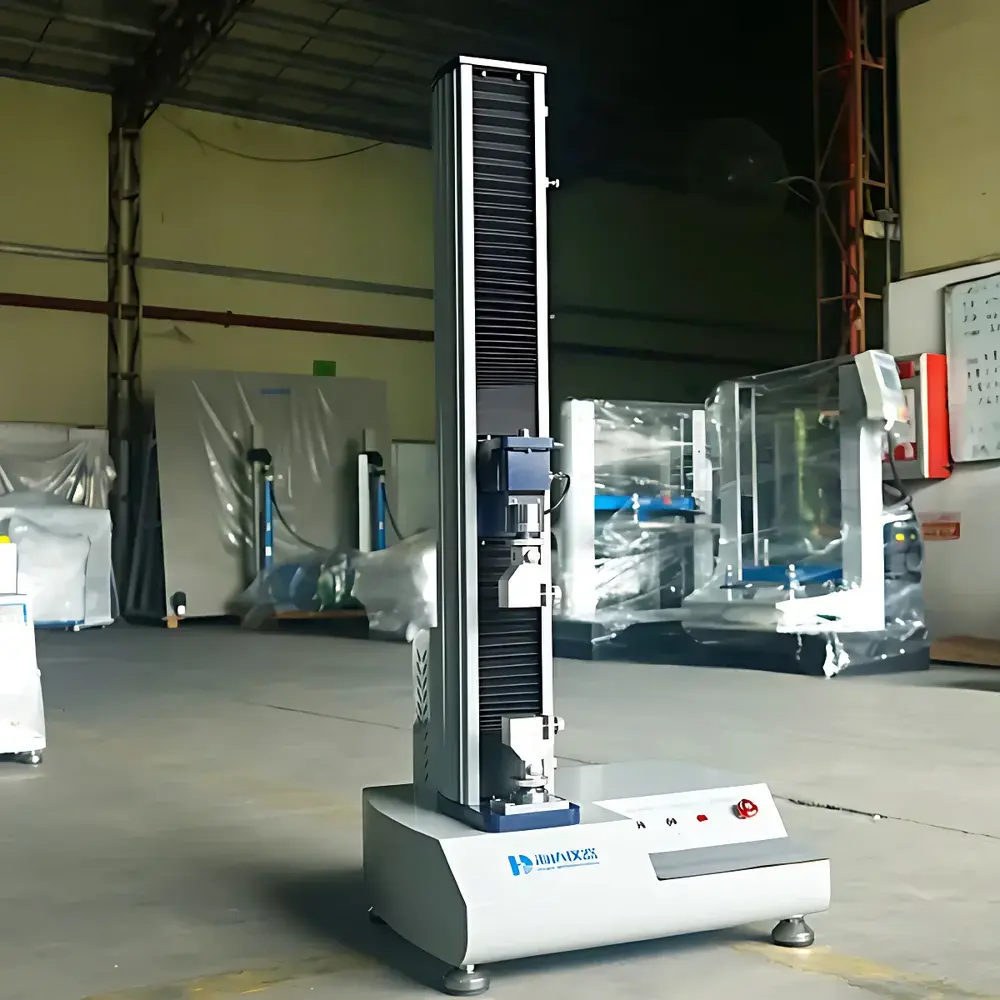
HAIDA HD-B609-S Computer-Controlled Servo-Powered Tensile Testing Machine
| Brand | HAIDA INTERNATIONAL |
|---|---|
| Origin | Guangdong, China |
| Manufacturer Type | Direct Manufacturer |
| Product Category | Domestic (China-Made) |
| Model | HAIDA HD-B609-S Computer-Controlled Servo-Powered Tensile Testing Machine |
| Instrument Type | Electromechanical Tensile Tester |
| Maximum Test Load | 50 N / 1 kN / 2 kN (selectable load cell) |
| Force Measurement Range | 0.05 N to 2 kN (full scale) |
| Force Accuracy | ≤ ±0.5% FS |
| Test Stroke | 900 mm (excluding grips) |
| Drive Motor | 400 W servo motor |
| Drive Controller | 400 W servo drive |
| Control Mode | PC-based Windows software |
| Display & Output | Real-time on-screen data visualization |
| Lead Screw | Precision ground ball screw |
| Speed Range | 0.1–500 mm/min (continuously adjustable) |
| Load Resolution | 1/250,000 FS |
| Effective Test Width (center-to-dust-shield) | 60 mm |
| Dimensions (L×W×H) | ≈ 580 × 550 × 1250 mm |
| Weight | ≈ 70 kg |
| Power Supply | 1-phase AC 220 V |
| Total Power Consumption | ≈ 500 W |
| Unit Conversion | gf, kgf, N, kN, lbf, tonf |
| Compliance Standards | GB/T 16491-2008, JJG 475-2018, GB/T 16825.1-2008, GB/T 228.1-2010, GB/T 1040-2006, ASTM D4833-2007, ISO 527, ISO 178, ISO 1133 |
Overview
The HAIDA HD-B609-S is a high-precision, computer-controlled electromechanical tensile testing machine engineered for static mechanical property evaluation of metallic, polymeric, composite, and fibrous materials. It operates on the fundamental principle of uniaxial force application—applying controlled tensile, compressive, flexural, peel, tear, puncture, or adhesion loads to standardized specimens while continuously measuring load displacement response in real time. The system employs a closed-loop servo control architecture with a 400 W brushless servo motor and precision-ground ball screw transmission, ensuring repeatable motion profiles and minimal mechanical hysteresis. Designed for laboratory and QC environments, the HD-B609-S delivers traceable, standards-compliant mechanical data—including ultimate tensile strength (UTS), yield strength, elongation at break, modulus of elasticity, and fracture energy—without requiring operator interpretation of analog dials or manual chart recordings.
Key Features
- High-resolution force measurement system with ≤ ±0.5% full-scale accuracy and 1/250,000 internal resolution, achieved via calibrated load cells (50 N / 1 kN / 2 kN options)
- Wide dynamic speed range: 0.1–500 mm/min, programmable in 0.01 mm/min increments for precise strain-rate control per ASTM E8/E21 and ISO 6892-1
- 900 mm effective stroke enables testing of long-form specimens (e.g., geotextiles, films, cables) without repositioning
- Multi-mode control architecture supporting constant rate of extension (CRE), constant rate of stress, constant rate of strain, and closed-loop displacement control
- Integrated hardware safety protocols: mechanical stroke limit switches, electronic overload cutoff, emergency stop circuitry compliant with IEC 60204-1
- USB 2.0 interface for direct data transfer to host PC; no proprietary dongles or drivers required—Windows 10/11 native compatibility
- Modular grip interface accommodating standard wedge-action, pneumatic, or custom fixtures (e.g., 90°/180° peel jigs, compression platens, bend fixtures)
Sample Compatibility & Compliance
The HD-B609-S supports standardized test specimens across ISO, ASTM, GB, and JIS material categories. It is validated for use with metals (per GB/T 228.1-2010, ASTM E8), plastics (GB/T 1040-2006, ISO 527-2), elastomers (GB/T 528-2009), packaging films (GB/T 1041-2006, ASTM D882), wood-based panels (GB/T 17657-2013), and medical device components (ISO 11979-6). All firmware and calibration procedures align with metrological traceability requirements defined in JJG 475-2018 and GB/T 16825.1-2008. For regulated industries, audit-ready test reports include timestamped metadata, operator ID, environmental conditions (if externally logged), and digital signatures—supporting GLP/GMP documentation workflows and FDA 21 CFR Part 11 readiness when paired with validated Windows OS configurations.
Software & Data Management
The embedded Windows-based software provides a deterministic, non-proprietary test environment built on .NET Framework 4.8. It features intuitive wizard-guided test setup, real-time dual-axis plotting (load vs. displacement, stress vs. strain), automatic peak detection, and post-test calculation of ISO/ASTM-defined parameters. Raw data exports as CSV or Excel (.xlsx) files compatible with third-party statistical analysis tools (e.g., Minitab, JMP). Multi-sample batch processing allows comparative analysis across up to 32 datasets with overlay graphs, statistical summary tables (mean, SD, CV%), and pass/fail threshold flagging. All test sequences are stored with immutable timestamps and user login records, enabling full traceability for internal audits or external accreditation (e.g., CNAS, ISO/IEC 17025).
Applications
This system is routinely deployed in R&D labs for material formulation validation, in manufacturing QA for incoming raw material verification, and in regulatory submission support for medical devices and packaging. Specific use cases include: tensile characterization of thermoplastic filaments for additive manufacturing; peel strength assessment of pressure-sensitive adhesives per ASTM D3330; compression testing of foam cushions per ISO 3386; puncture resistance evaluation of surgical drapes per ISO 22612; and flexural modulus determination of fiber-reinforced composites per ASTM D790. Its modular design also supports non-standard applications such as low-speed unwind torque measurement (e.g., label liner release) and slow-rate shear testing of gels and pastes using custom tooling.
FAQ
What load cell options are available—and how do I select the appropriate one?
The HD-B609-S supports interchangeable 50 N, 1 kN, and 2 kN load cells. Selection depends on expected maximum force: 50 N for thin films or biological tissues; 1 kN for rigid plastics or small metal coupons; 2 kN for structural composites or thick-section polymers. Each cell is factory-calibrated and includes NIST-traceable certificate.
Does the system comply with international testing standards?
Yes—the mechanical design, control algorithms, and software reporting modules conform to GB/T 16491-2008 (equivalent to ISO 7500-1), JJG 475-2018 (verification regulation), and referenced method standards including ASTM D638, ISO 527, and ISO 178. Calibration intervals and uncertainty budgets are documented per ISO/IEC 17025 Annex A.
Can test data be integrated into an existing LIMS or ERP platform?
Yes—CSV and Excel exports are structured for automated ingestion. Optional OPC UA or Modbus TCP communication modules (sold separately) enable real-time data streaming to industrial SCADA or laboratory information management systems.
Is technical support available outside China?
HAIDA provides remote diagnostics, firmware updates, and application engineering support via secure TeamViewer sessions. Localized English-language documentation, video tutorials, and certified training workshops are available through authorized regional partners in North America, EU, and APAC.
What maintenance is required to ensure long-term accuracy?
Annual recalibration of the load cell and position encoder is recommended. Daily verification using certified reference weights and displacement gauges ensures ongoing compliance. Ball screw lubrication and dust shield inspection are performed every 6 months per maintenance logbook.



