
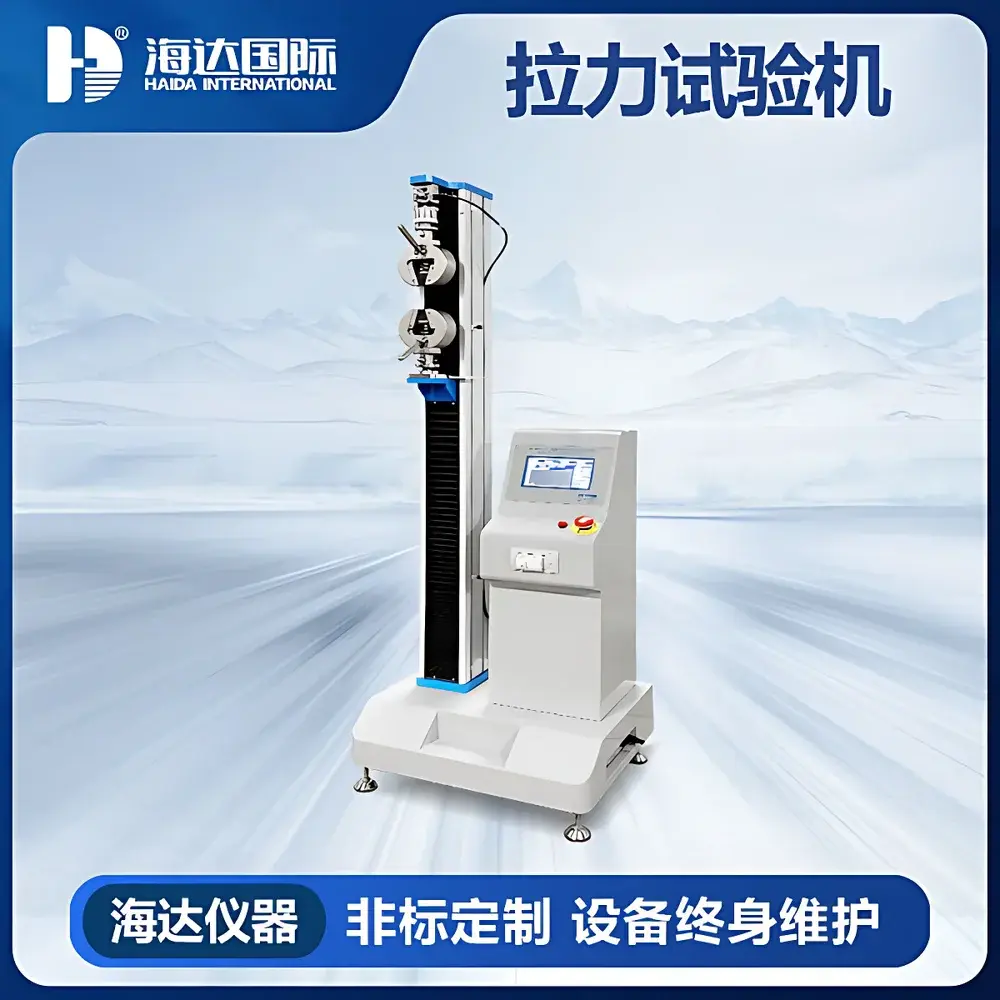
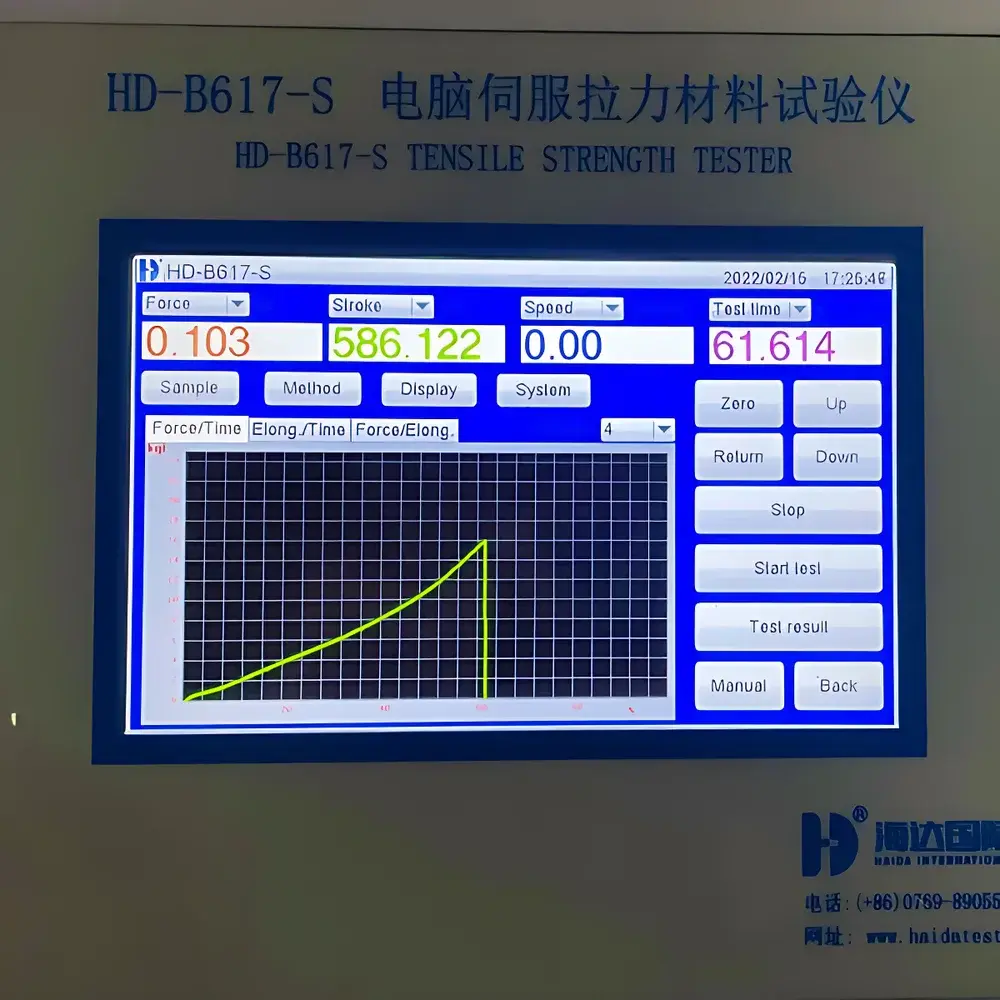
HAIDA HD-B617-S Computer-Controlled Servo-Powered Tensile Testing Machine
| Brand | HAIDA INTERNATIONAL |
|---|---|
| Origin | Guangdong, China |
| Manufacturer Type | Direct Manufacturer |
| Product Category | Domestic |
| Model | HAIDA HD-B617-S Computer-Controlled Servo-Powered Tensile Testing Machine |
| Instrument Type | Electromechanical Tensile Tester (Not Hydraulic) |
| Maximum Test Force | 50 N / 100 N / 500 N / 1 kN / 2 kN / 5 kN |
| Force Measurement Range | 0.1 N to 5 kN (Full Scale) |
| Force Resolution | 1/250,000 of Full Scale |
| Force Accuracy | ≤ ±0.5% of reading |
| Crosshead Travel | 1200 mm (excluding grips) |
| Speed Range | 0.1–500 mm/min |
| Drive System | 400 W Servo Motor + Servo Driver |
| Transmission | Precision Ball Screw |
| Control Interface | Dual-mode — Windows-based PC software + Integrated Touchscreen HMI |
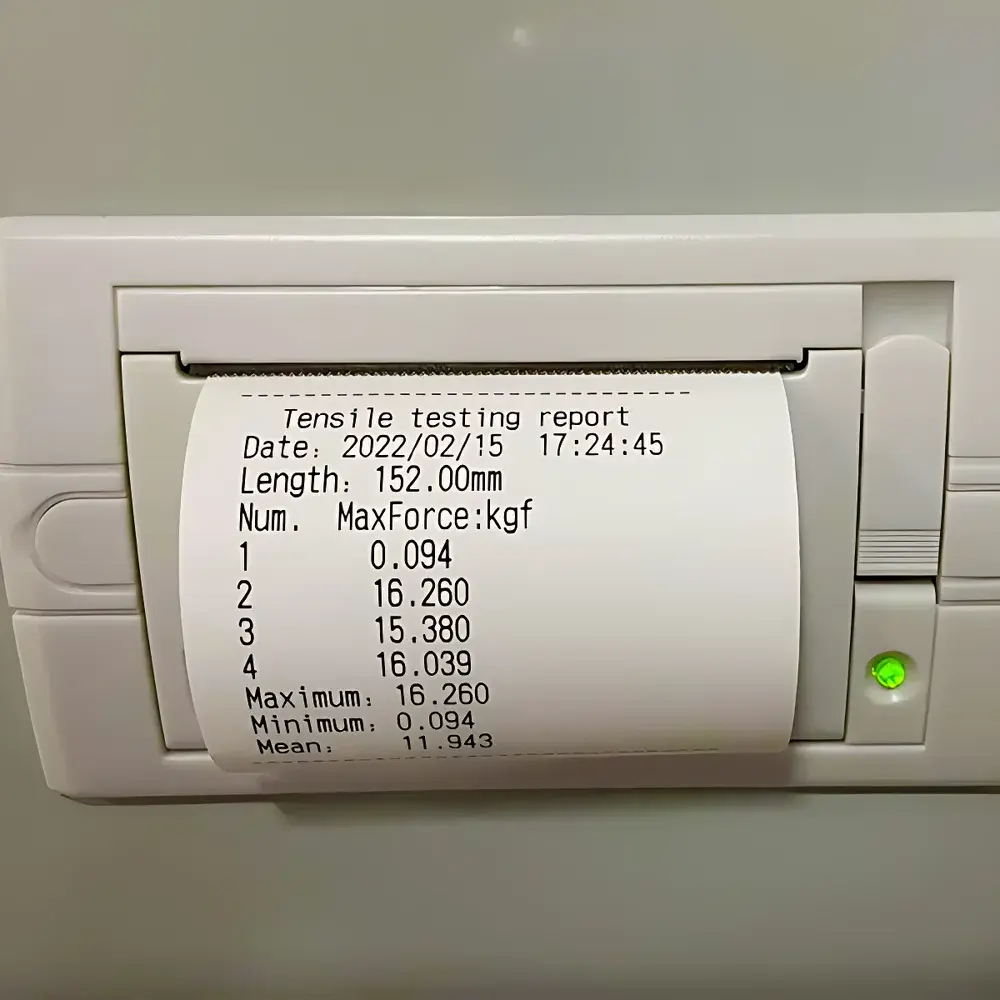
| Data Output | USB, Windows-compatible export (CSV, Excel), thermal printer support |
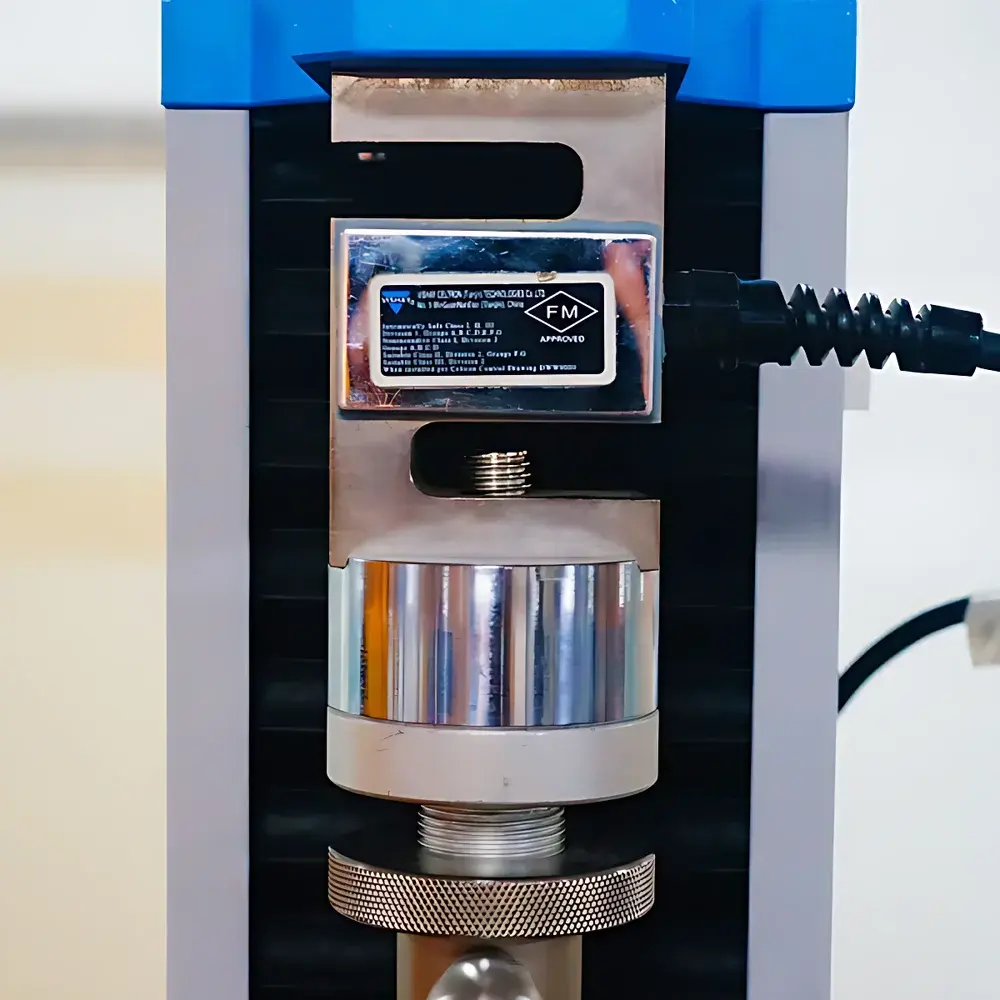
| Load Cell Compatibility | Interchangeable single-range load cells (50 N to 5 kN) |
| Dimensions (L×W×H) | ≈ 430 × 550 × 1750 mm |
| Weight | ≈ 80 kg |
| Power Supply | 1Ø AC 220 V, ~500 W |
Overview
The HAIDA HD-B617-S is a high-precision, computer-controlled electromechanical tensile testing machine engineered for static mechanical property evaluation of both metallic and non-metallic materials. Unlike hydraulic systems, it employs a closed-loop servo motor drive coupled with a preloaded precision ball screw transmission system—ensuring repeatable crosshead positioning, minimal backlash, and long-term dimensional stability. The instrument operates on the fundamental principle of uniaxial force application: a specimen is clamped between upper and lower grips; the crosshead moves at a user-defined rate (0.1–500 mm/min), inducing controlled tensile, compressive, or flexural loading. Force is measured in real time via a calibrated load cell (available in six selectable capacities: 50 N to 5 kN), while displacement is tracked via encoder-coupled screw rotation. All analog signals undergo high-resolution 24-bit A/D conversion, enabling a force resolution of 1 part in 250,000 full scale and compliance with ISO 7500-1 Class 1 accuracy requirements.
Key Features
- Electromechanical architecture with 400 W servo motor and matched servo driver—eliminates hydraulic fluid maintenance, noise, and temperature drift.
- Precision ground ball screw transmission ensures smooth, vibration-free motion and positional repeatability within ±0.02 mm over full stroke (1200 mm).
- Dual-control interface: fully functional Windows-based software (compatible with Windows 10/11) paired with an embedded industrial touchscreen HMI for standalone operation and rapid setup.
- Multi-mode control capability—including constant rate of extension (CRE), constant rate of stress, constant rate of strain, and constant force hold—enabling seamless transition between ASTM D638, ISO 527, ISO 6892-1, and GB/T 228.1 test protocols.
- Integrated safety architecture: hardware-based overload protection, mechanical end-stop limit switches, emergency stop circuitry, and real-time current monitoring prevent damage during unexpected failure events.
- Modular load cell design supports hot-swappable sensor units (50 N to 5 kN), allowing laboratories to maintain one platform across diverse material classes—from thin films (<1 N) to structural composites (>3 kN).
Sample Compatibility & Compliance
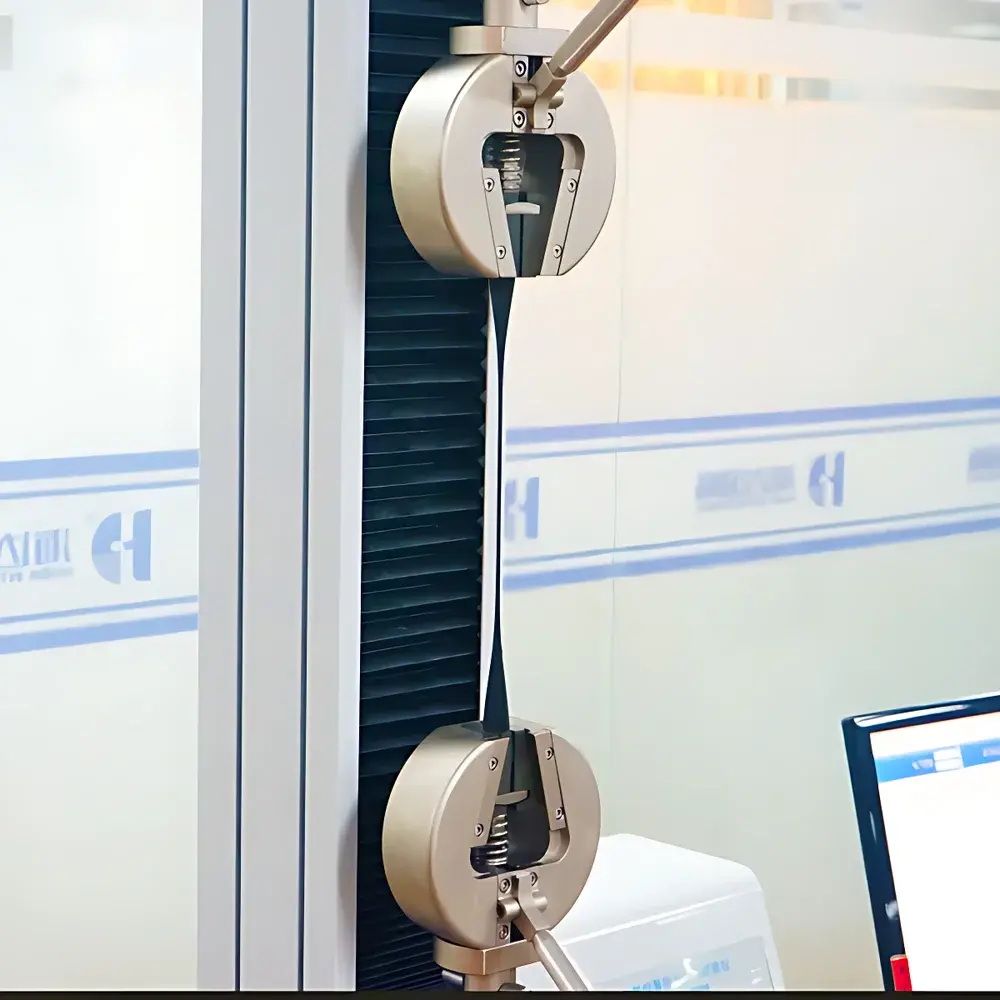
The HD-B617-S accommodates specimens ranging from ultra-thin polymer films and medical device components (e.g., suture threads, catheter tubing) to rigid construction materials including concrete prisms, aluminum extrusions, and steel reinforcing bars. Standard grip configurations include pneumatic wedge grips, vise-type flat grips, and custom-designed fixtures for peel, tear, puncture, and peel-adhesion testing per ASTM D903, ASTM D1876, ISO 11339, and GB/T 7122. The system complies with national and international standards including GB/T 16491–2008 (Chinese equivalent of ISO 7500-1), GB/T 228.1–2021 (tensile testing of metallic materials), GB/T 232–2010 (bend testing), and GB/T 7314–2017 (compression testing of metallic materials). Its data acquisition architecture supports audit-ready reporting under GLP and GMP environments, with optional 21 CFR Part 11-compliant electronic signature and audit trail modules available upon request.
Software & Data Management
The proprietary HAIDA TestSuite software provides ISO/IEC 17025-aligned test method configuration, real-time curve visualization (force vs. displacement, stress vs. strain), and automated calculation of key mechanical parameters—including Young’s modulus, yield strength, ultimate tensile strength, elongation at break, and secant modulus. Data export supports CSV, XLSX, and PDF formats compatible with LIMS integration. Raw data files retain full timestamped metadata (operator ID, calibration certificate ID, environmental conditions if linked to external sensors). USB port enables direct firmware updates and offline report generation. Thermal printer output includes traceable test headers with serial number, date/time stamp, and pass/fail status per predefined acceptance criteria.
Applications
- Quality control of packaging films (peel strength, seal integrity, puncture resistance)
- Mechanical characterization of biomedical polymers (sutures, wound dressings, hydrogels)
- Validation of composite laminates and fiber-reinforced plastics per ASTM D3039
- Tensile and compression testing of civil engineering materials (mortar, grout, lightweight concrete)
- Adhesion strength assessment of pressure-sensitive adhesives and structural bonding agents
- Wire and cable mechanical endurance testing (pull-out force, jacket tensile retention)
- Rubber and elastomer evaluation per ISO 37 and ASTM D412
FAQ
Is the HD-B617-S a hydraulic or electromechanical tester?
It is an electromechanical tensile tester powered by a 400 W servo motor and precision ball screw—no hydraulic oil, pumps, or associated maintenance required.
Can I switch between different load cell capacities without recalibration?
Each load cell must be individually calibrated and registered in the software; however, the system supports plug-and-play recognition of pre-calibrated sensors via digital ID tags.
Does the software support multi-specimen batch testing and statistical comparison?
Yes—up to 99 specimens per test sequence, with automatic calculation of mean, standard deviation, CV%, and confidence intervals; group comparison charts are exportable as PNG or vector PDF.
What is the minimum measurable force and its uncertainty?
With the 50 N load cell, the system resolves down to 0.1 N (0.2% FS); force uncertainty is ≤ ±0.5% of reading across 10–100% of full scale, verified per ISO 376 Annex C.
Is third-party calibration certification included with delivery?
A factory calibration certificate traceable to CNAS-accredited standards is provided; optional UKAS or DAkkS-certified calibration reports are available at additional cost.



