
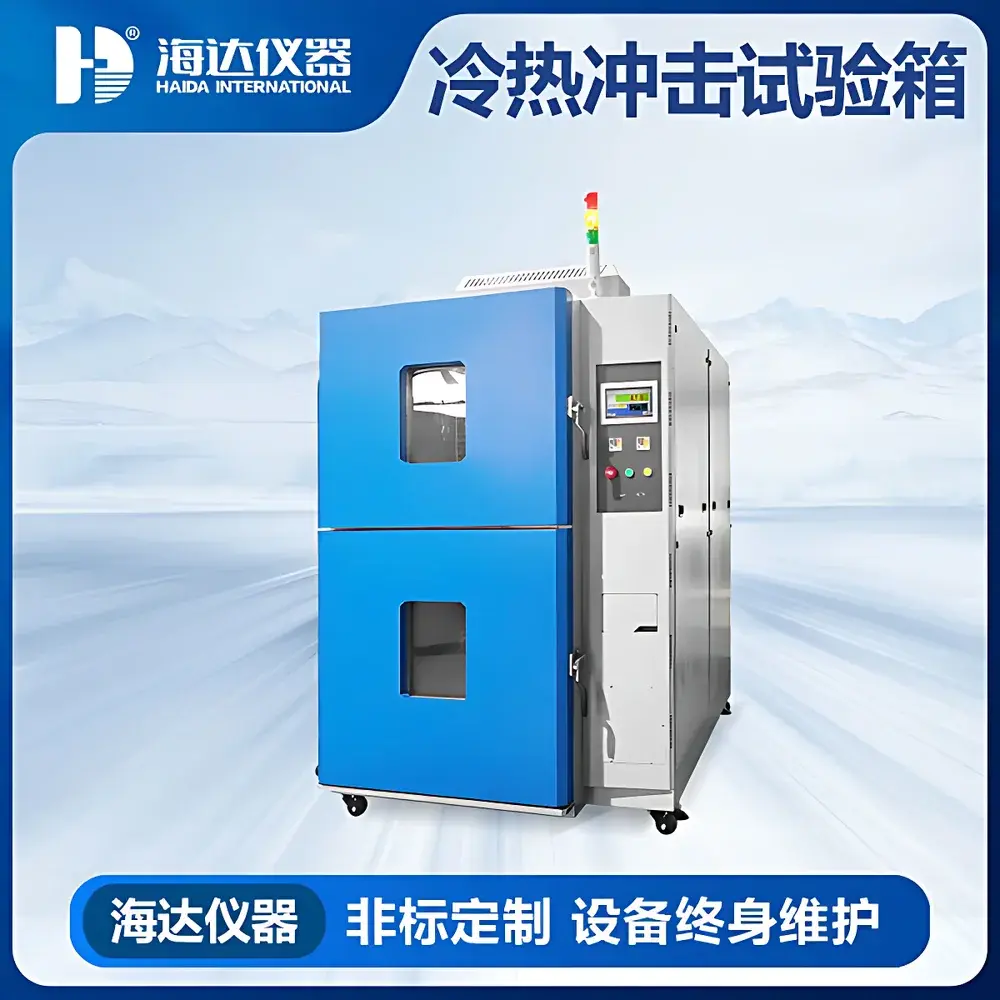
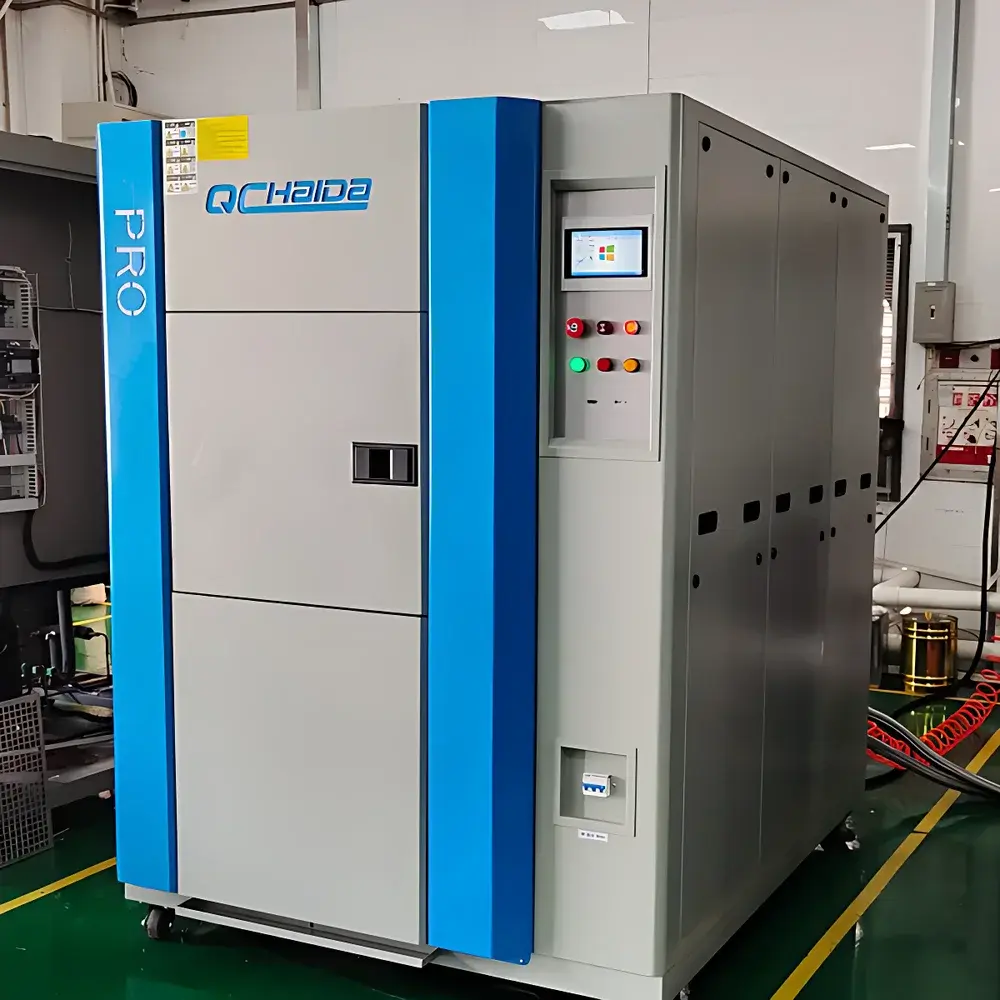
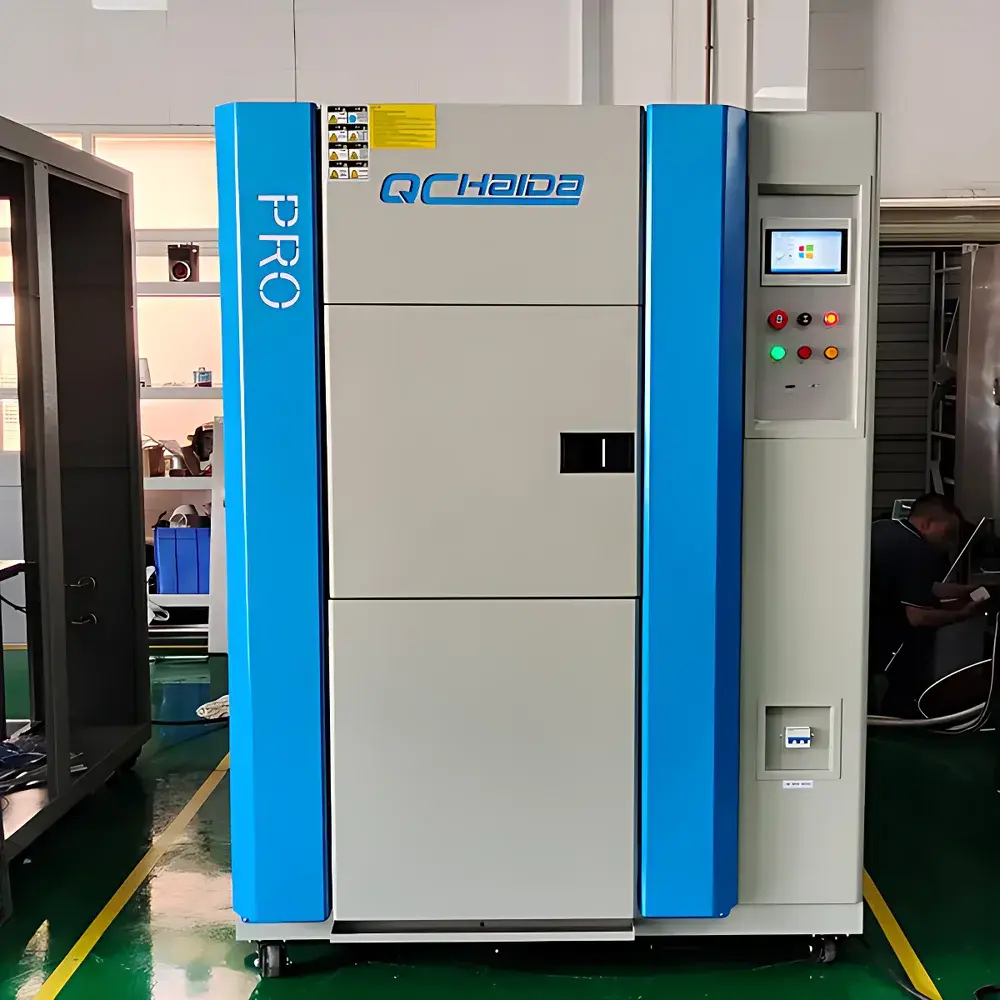
HAIDA HD-E703-100 Programmable Three-Zone Thermal Shock Test Chamber
| Brand | HAIDA INTERNATIONAL |
|---|---|
| Origin | Guangdong, China |
| Manufacturer Type | Manufacturer |
| Model | HD-E703-100 |
| High-Temperature Range | RT to 170 °C |
| Low-Temperature Range | −75 °C to RT |
| Thermal Shock Range | 60–150 °C (hot) / −10 to −65 °C (cold) |
| Temperature Stability | ±0.3 °C, ±2% RH |
| Heating Rate | 2 °C/min |
| Cooling Rate | 0.5–1.2 °C/min |
Overview
The HAIDA HD-E703-100 is a programmable three-zone thermal shock test chamber engineered for high-fidelity, repeatable evaluation of material and component resilience under rapid, extreme temperature transitions. Unlike two-chamber or single-chamber designs, this system employs physically isolated hot, cold, and ambient zones—each thermally insulated and independently controlled—to eliminate thermal inertia and enable precise, reproducible shock profiles. The chamber operates on the principle of rapid air transfer via pneumatically actuated stainless-steel baffles, allowing test specimens to be exposed to pre-conditioned airstreams without cross-contamination between thermal domains. This architecture supports deterministic dwell-to-transfer timing, critical for compliance with MIL-STD-810H Method 503.7, IEC 60068-2-14, and GJB 150.5A-2009. Designed for engineering validation labs and quality assurance departments in aerospace, automotive electronics, and semiconductor packaging, the HD-E703-100 delivers traceable thermal transients essential for failure mode analysis, HALT screening, and reliability qualification.
Key Features
- Three-zone architecture: Independent hot (RT–170 °C), cold (−75 °C–RT), and ambient chambers with dual-wall insulation using polyurethane foam + high-density glass fiber; thermal isolation enhanced by epoxy-resin thermal breaks at all inter-zone interfaces
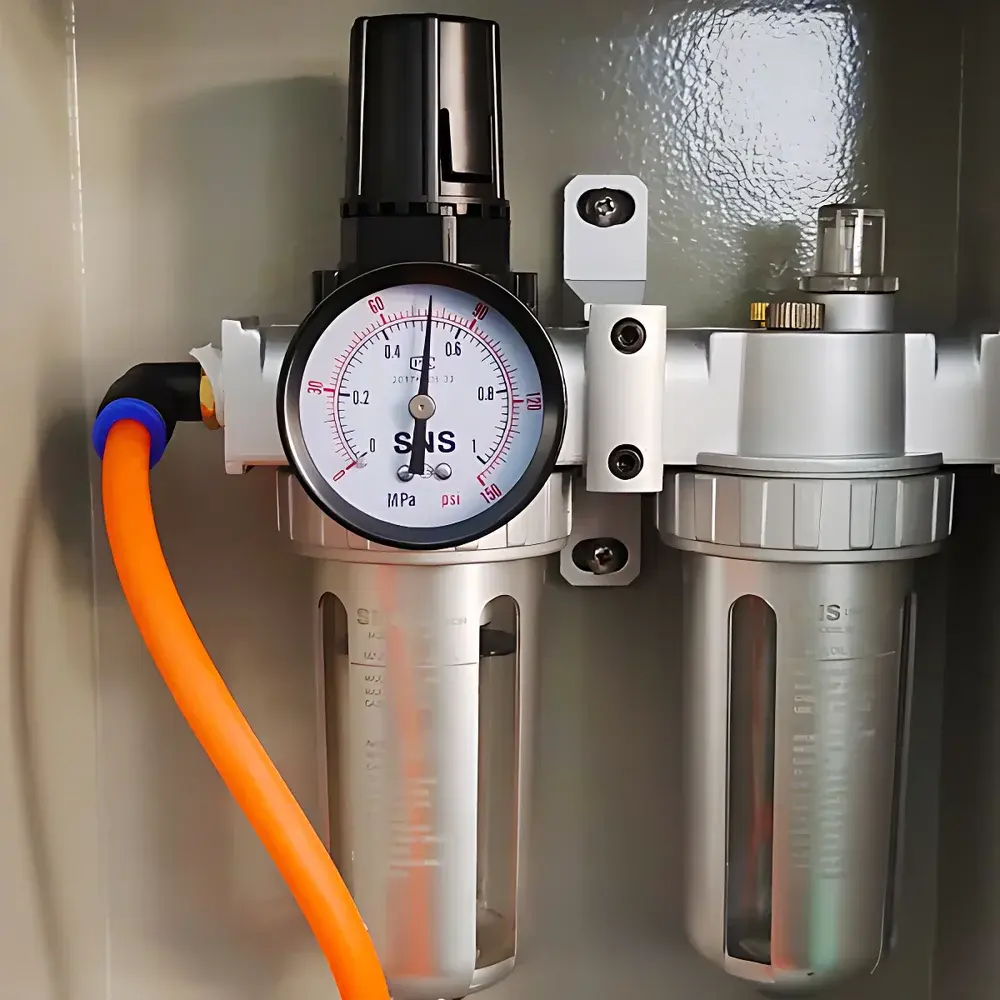
- Pneumatic baffle system: SUS304 stainless steel dampers with silicone gaskets and internal epoxy-resin thermal barriers; actuated by industrial-grade air cylinders for cycle repeatability and zero mechanical hysteresis
- High-stability climate control: PID + SSR coordinated regulation with PT100 platinum resistance sensors (0.1 °C resolution); temperature uniformity maintained within ±2 °C across the 100 L test volume (500 × 450 × 450 mm W×H×D)
- Dual-refrigeration circuit: Two-stage cascade system utilizing R404A/R23 refrigerants with imported Copeland/Tecumseh compressors; stainless steel brazed-plate heat exchangers and finned evaporators ensure stable sub-zero performance down to −75 °C
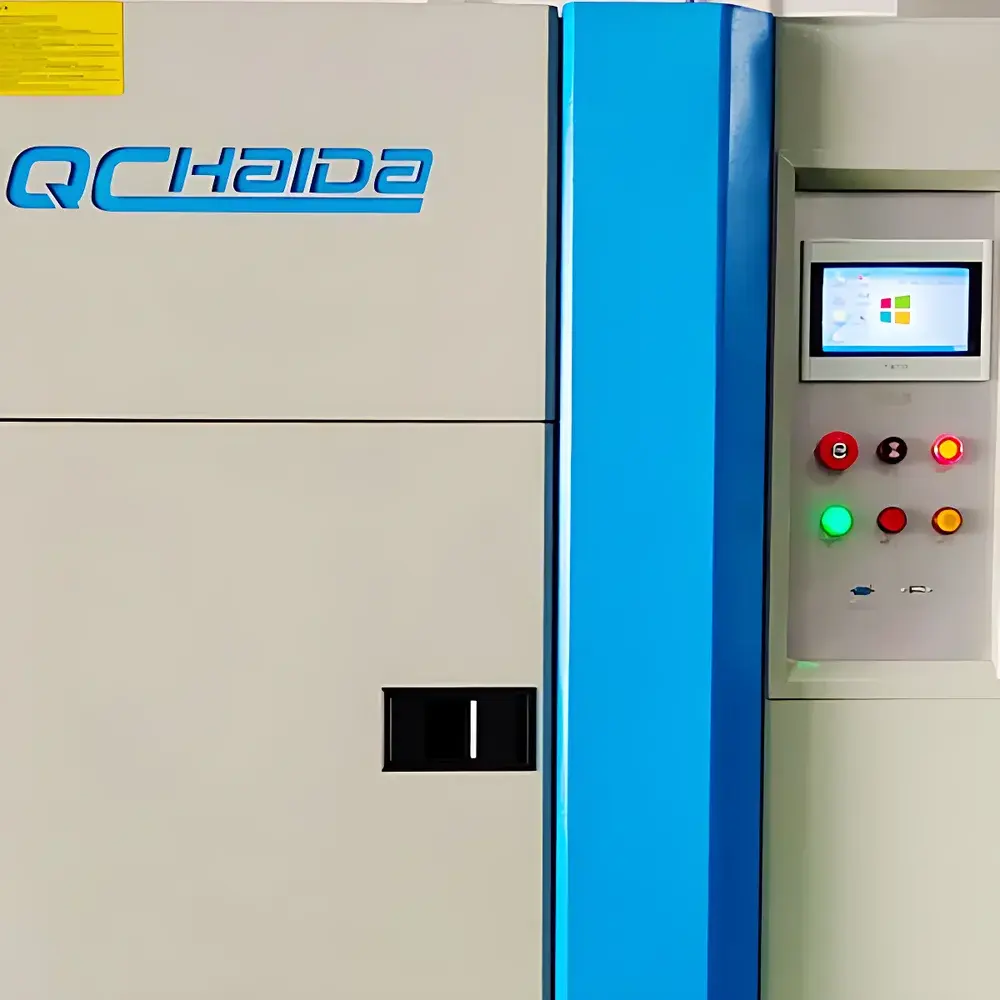
- Intelligent controller: TT-5188T3-7HL touchscreen HMI with multi-segment programmability (up to 999 cycles, 999 segments per program); supports ramp-soak-shock sequences, real-time deviation alarms, and automatic recovery after power interruption
- Comprehensive safety architecture: Dual-layer protection including compressor high-pressure/low-pressure cutouts, phase sequence monitoring, motor overheat detection, door interlock, and independent thermal limiters (±5 °C user-settable)
Sample Compatibility & Compliance
The HD-E703-100 accommodates standard electronic assemblies, PCBs, solder joints, MEMS devices, and polymer-based enclosures up to 30 kg per shelf. Its 50 mm diameter feedthrough port (with silicone plug and thermal collar) enables electrical, optical, or pneumatic interfacing during active cycling. All structural materials—including SUS304 interior, cold-rolled steel exterior with electrostatic powder coating, and non-outgassing insulation—meet RoHS Directive 2011/65/EU requirements. The system is fully compliant with environmental test standards including IEC 60068-2-14:2009 (change of temperature), GB/T 2423.22–2012, GJB 150.5A–2009, and MIL-STD-202G Method 107. Calibration procedures follow ISO/IEC 17025 guidelines, and optional NIST-traceable sensor validation kits are available upon request.
Software & Data Management
Data acquisition and reporting are supported via RS-232 serial interface, USB 2.0 port (for U-disk data export), and optional Ethernet connectivity. The bundled HAIDA TestSuite software (Windows-compatible) enables remote parameter configuration, real-time graphing of up to four channels (test zone, hot zone, cold zone, ambient), automated report generation (PDF/CSV), and audit trail logging per FDA 21 CFR Part 11 requirements—including user authentication, electronic signatures, and immutable change history. All temperature logs include timestamp, setpoint, actual reading, deviation, and alarm status—structured for integration into LIMS or MES platforms.
Applications
- Reliability screening of automotive ECUs, ADAS sensors, and battery management systems under accelerated thermal fatigue conditions
- Qualification testing of avionics hardware per DO-160 Section 4 (temperature variation)
- Solder joint integrity assessment in consumer electronics per IPC-9701A
- Material coefficient-of-thermal-expansion (CTE) mismatch analysis in multi-layer ceramic packages
- Pre-shipment stress screening for military-grade connectors and ruggedized displays
- Research into low-temperature embrittlement of elastomeric seals and adhesives
FAQ
What is the minimum dwell time achievable between thermal transitions?
The system achieves ≤ 10 seconds transfer time between zones under nominal load conditions, limited only by specimen mass and airflow dynamics—not controller latency.
Can the chamber operate continuously for extended HALT profiles?
Yes—continuous operation is supported with integrated water-cooling option (recommended for >8-hour cycles) and redundant compressor staging to prevent thermal overload.
Is third-party calibration certification included with delivery?
Factory calibration with as-found/as-left data is provided; ISO/IEC 17025-accredited calibration certificates are available as an add-on service.
How is humidity controlled during thermal shock cycles?
This model is configured for dry thermal shock only; RH control is not implemented. For combined temperature/humidity shock, consult the HD-E703-HR series.
What maintenance intervals are recommended for long-term stability?
Compressor oil and refrigerant analysis every 24 months; filter-drier replacement every 18 months; baffle seal inspection every 6 months—documented in the included GLP-compliant maintenance logbook.



