
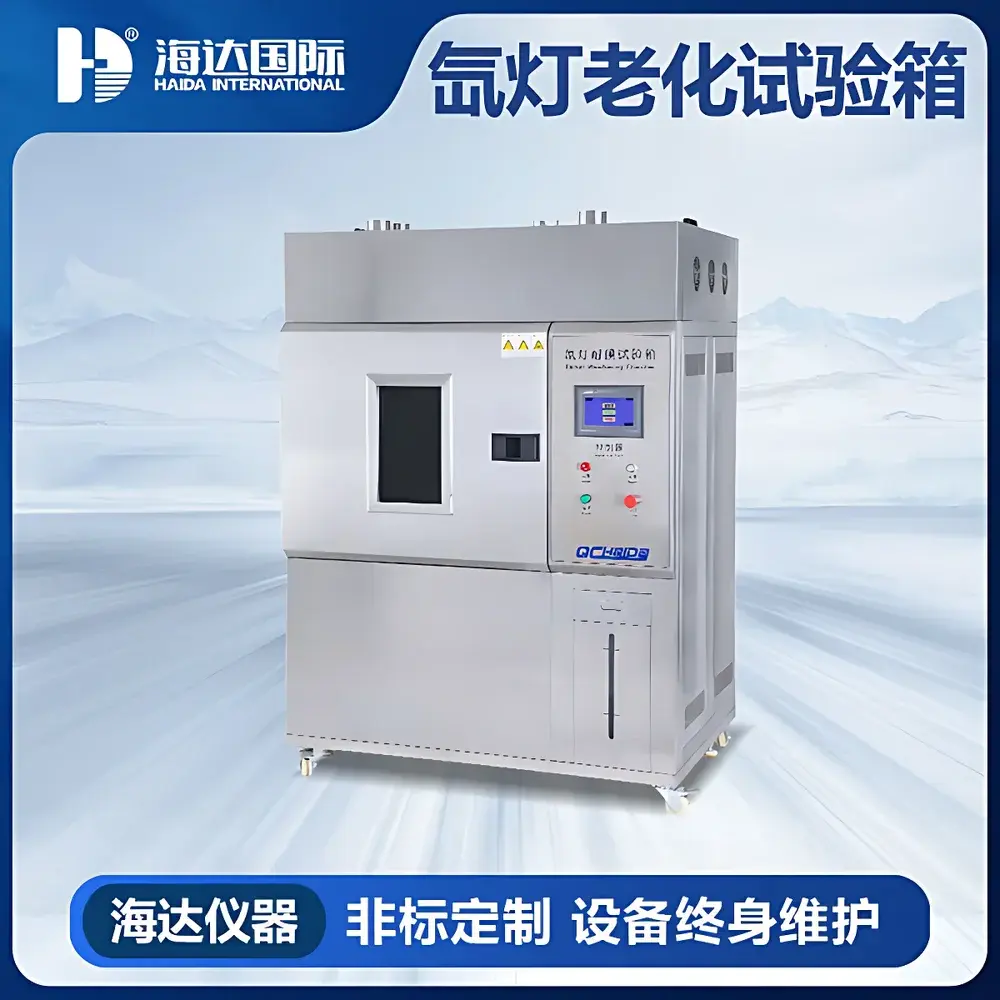
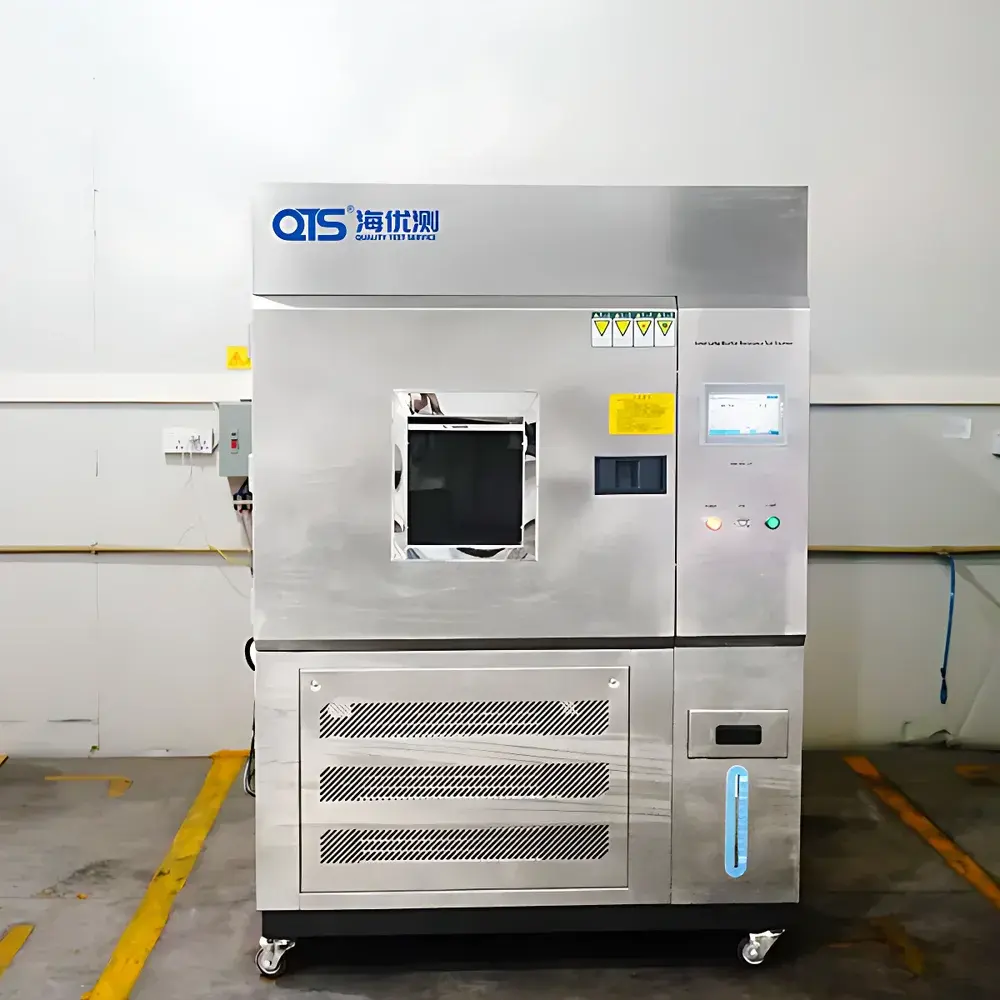
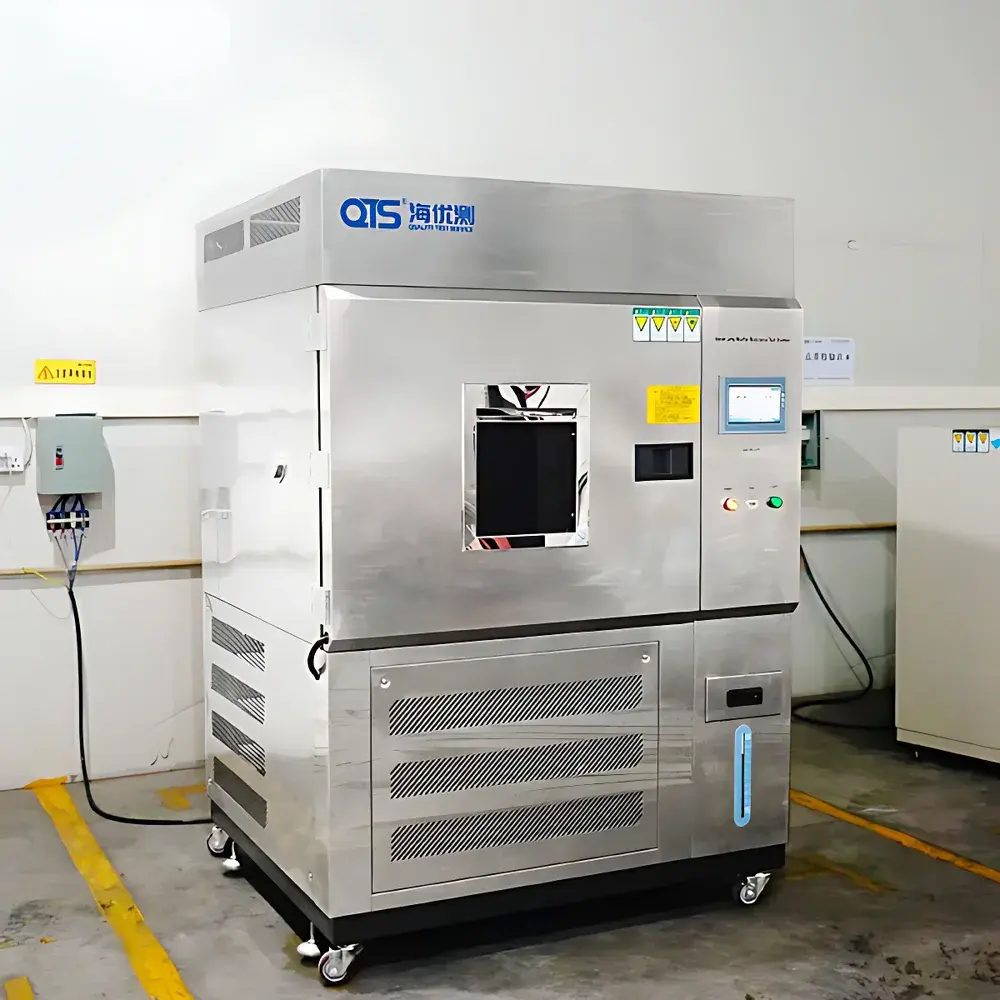
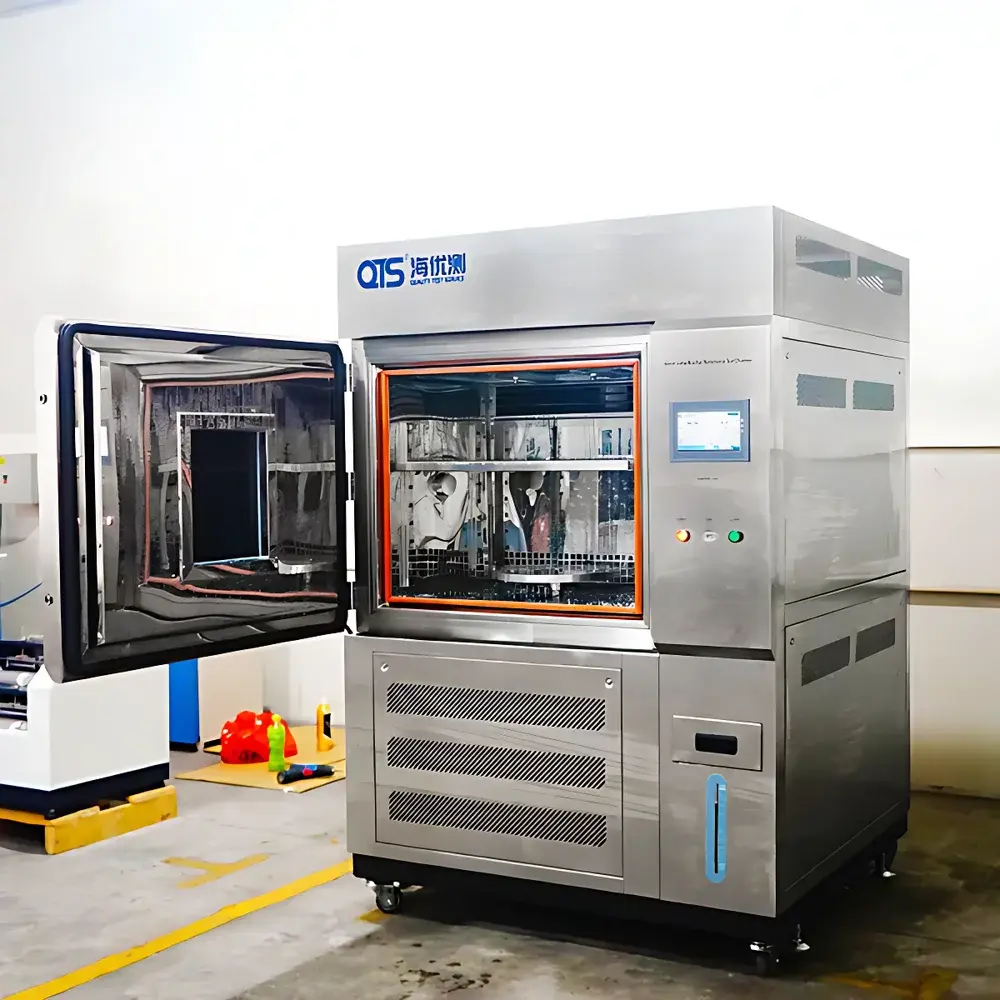
HAIDA HD-E711 Xenon Arc Weathering Test Chamber
| Brand | HAIDA INTERNATIONAL |
|---|---|
| Origin | Guangdong, China |
| Manufacturer Type | Direct Manufacturer |
| Product Origin | Domestic (China) |
| Model | HAIDA HD-E711 Xenon Arc Weathering Test Chamber |
| Xenon Lamp Power | 5.4 kW (3 lamps, 1200 h service life) |
| Irradiance Control Range | 0.3–1.2 W/m² at 340 nm |
| Temperature Range | 0–80 °C |
| Humidity Range | 20–98 % RH (non-irradiated), 30–98 % RH (light cycle) |
| Black Panel Temperature | 85 ± 3 °C |
| Chamber Dimensions (W×D×H) | ≥600 × 500 × 750 mm |
| Spectral Range | 290–800 nm |
| Water Spray Pressure | 0.12–0.15 kPa |
| Spray Nozzle Diameter | Ø0.8 mm |
| Rainfall Duration | 1–9999 min (continuous or interval mode) |
| Spray Cycle | On/Off time adjustable from 0 to 99 h 59 min each |
| Sample-to-Arc Distance | 350–380 mm |
Overview
The HAIDA HD-E711 Xenon Arc Weathering Test Chamber is an engineered environmental simulation system designed to replicate the full solar spectrum—including UV, visible, and near-infrared radiation—using three high-intensity, air-cooled xenon arc lamps. Based on the fundamental principle of accelerated photodegradation, the chamber subjects materials to controlled irradiance (calibrated at 340 nm), temperature, humidity, and periodic water spray to emulate real-world outdoor exposure conditions. This enables quantitative assessment of photochemical degradation mechanisms such as polymer chain scission, pigment fading, surface chalking, and loss of mechanical integrity. The system complies with internationally recognized test standards including ISO 4892-2, ASTM G155, SAE J2527, and GB/T 16422.2, making it suitable for R&D validation, quality assurance, and regulatory conformance testing in industries where long-term durability under solar stress is mission-critical.
Key Features
- Triple-lamp xenon arc source delivering stable, spectrally matched irradiance across 290–800 nm—with real-time monitoring and closed-loop feedback control at 340 nm (0.3–1.2 W/m²).
- Integrated black panel temperature sensor (85 ± 3 °C accuracy) ensures precise thermal load simulation aligned with ASTM D7869 and ISO 4892-2 requirements.
- High-fidelity humidity control (20–98 % RH) with dual-mode operation: light-cycle humidity (30–98 % RH) and dark-cycle humidity (20–98 % RH), independently regulated via PID-controlled steam generator and condensation management.
- Programmable water spray system featuring adjustable rainfall duration (1–9999 min), interval cycling (1–240 min), and precision nozzles (Ø0.8 mm) operating at 0.12–0.15 kPa—fully compliant with cyclic corrosion and wet/dry exposure protocols.
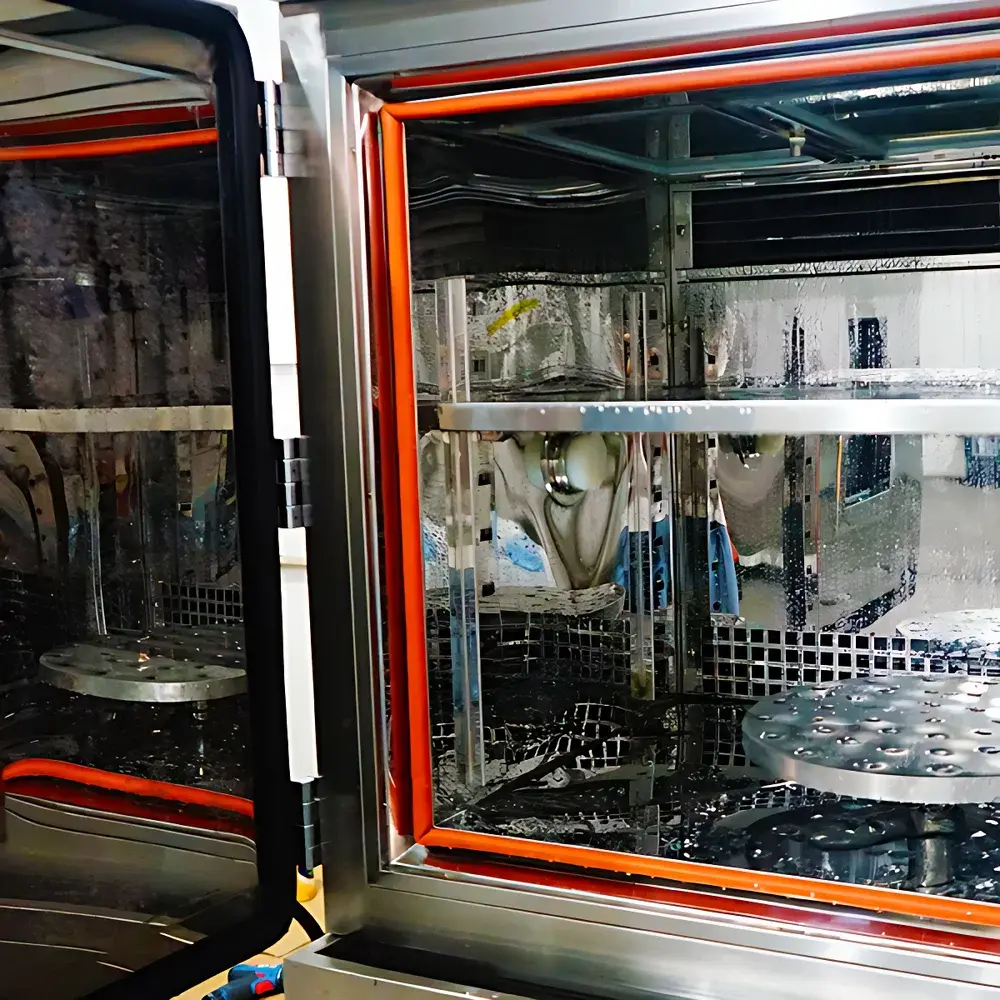
- Robust stainless-steel interior chamber (≥600 × 500 × 750 mm W×D×H) with quartz-filtered lamp housing, forced-air convection, and insulated double-wall construction for thermal stability (temperature fluctuation ≤ ±0.5 °C).
- Industrial-grade touchscreen controller with multi-layer interface architecture: real-time monitoring (temperature, humidity, irradiance, black panel, spray status), program editing (up to 5-stage cycles), curve logging, and audit-trail-capable event history storage.
Sample Compatibility & Compliance
The HD-E711 accommodates flat-panel specimens up to 150 mm × 150 mm per rack, with standard sample holders supporting up to 24 specimens simultaneously (depending on geometry). Its uniform irradiance field (±10 % spatial uniformity over central 75 % area) and calibrated spectral output meet the geometric and radiometric requirements of ISO 4892-2 Annex B and ASTM G155 Practice A. All operational parameters—including irradiance setpoints, humidity ramp rates, and spray timing—are traceable to internal calibration logs, supporting GLP-compliant documentation workflows. The system’s architecture allows integration into enterprise LIMS environments and satisfies foundational data integrity expectations under FDA 21 CFR Part 11 when paired with user-defined electronic signature policies.
Software & Data Management
The embedded controller firmware supports export of time-stamped CSV files containing second-resolution records of chamber temperature, relative humidity, 340 nm irradiance, black panel temperature, spray actuation status, and program phase transitions. Historical data is retained onboard for ≥30 days (configurable) with automatic rollover. Remote access via Ethernet enables centralized fleet monitoring and alarm forwarding (SNMP/email). For advanced analysis, exported datasets are compatible with MATLAB, Python pandas, and industry-standard statistical process control (SPC) platforms. Audit trails record all parameter modifications, user logins, and system events—including timestamps, operator IDs, and pre-/post-change values—ensuring full accountability during internal audits or third-party certification reviews.
Applications
- Automotive exterior components: evaluation of dashboard polymers, sealants, and paint systems under SAE J2527-referenced cycles.
- Architectural coatings: quantification of gloss retention, color shift (ΔE*), and chalking resistance per ASTM D4587.
- Textile and geotextile UV stability: correlation of tensile strength loss with cumulative radiant exposure (kJ/m² at 340 nm).
- Photovoltaic encapsulant yellowing: tracking transmission decay in EVA and POE films under IEC 61215-2 MQT10-compliant irradiation profiles.
- Medical device packaging: verification of sterility barrier integrity after simulated shelf-life exposure per ISO 11607-1 Annex C.
- Plastic additive screening: comparative ranking of HALS and UV absorber efficacy using Arrhenius-based acceleration factors.
FAQ
What standards does the HD-E711 comply with?
The chamber is configured to meet ISO 4892-2, ASTM G155, SAE J2527, and GB/T 16422.2. Full compliance requires proper calibration, filter selection, and adherence to specified specimen mounting geometry.
Can irradiance be calibrated in-house?
Yes—the system accepts NIST-traceable radiometers (e.g., Kipp & Zonen CUV5 or equivalent) for field verification at 340 nm. Routine calibration intervals are recommended every 200 hours of lamp operation.
What is the expected maintenance schedule for xenon lamps?
Lamps are rated for 1200 hours under nominal irradiance settings. Output degradation exceeds ±10 % beyond this threshold; replacement is required to maintain test repeatability per ISO 4892-2 Section 7.2.
Is the water spray system deionized-water compatible?
Yes—use of DI water (≤5 µS/cm conductivity) is strongly recommended to prevent nozzle clogging and mineral deposition on specimens or chamber surfaces.
Does the controller support multi-step programmable sequences?
Yes—up to five independent cycles can be defined, each with unique temperature, humidity, irradiance, spray, and rotation parameters. Sequences support ramp/soak profiles and conditional branching based on elapsed time or irradiance dose.



