
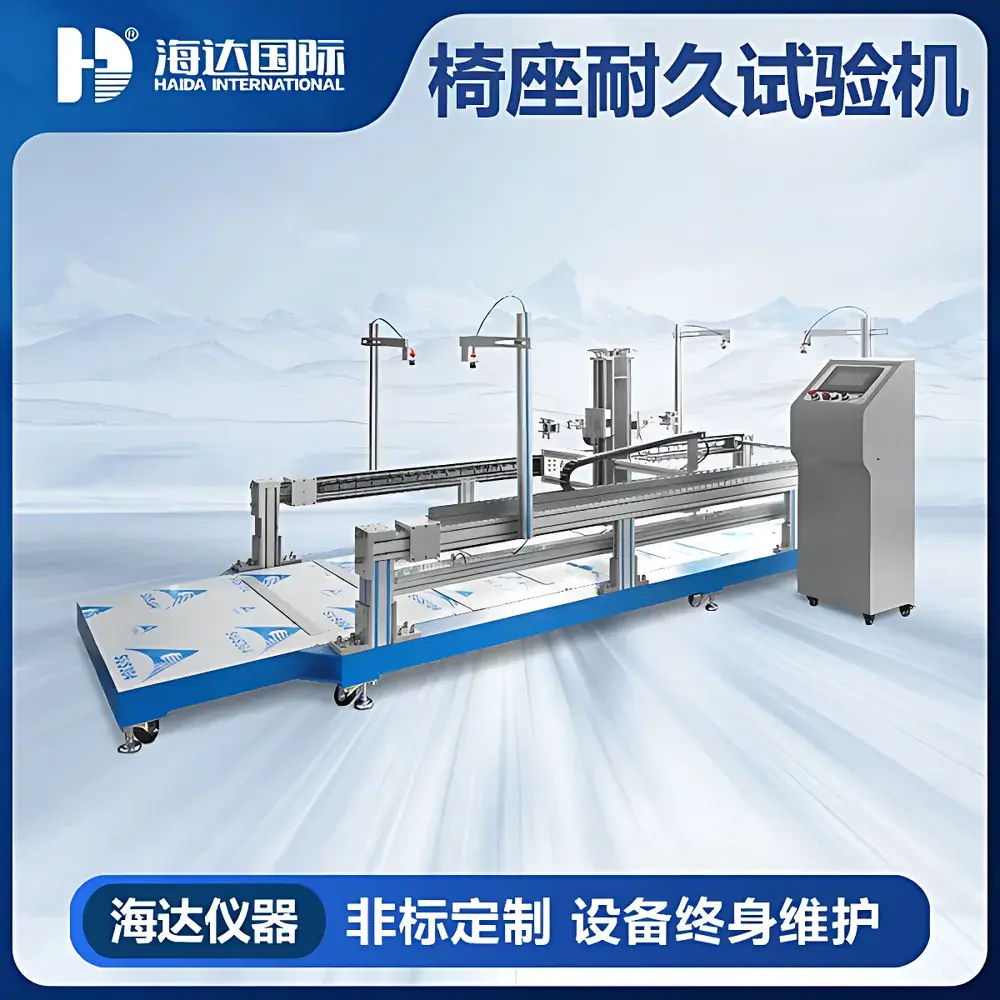
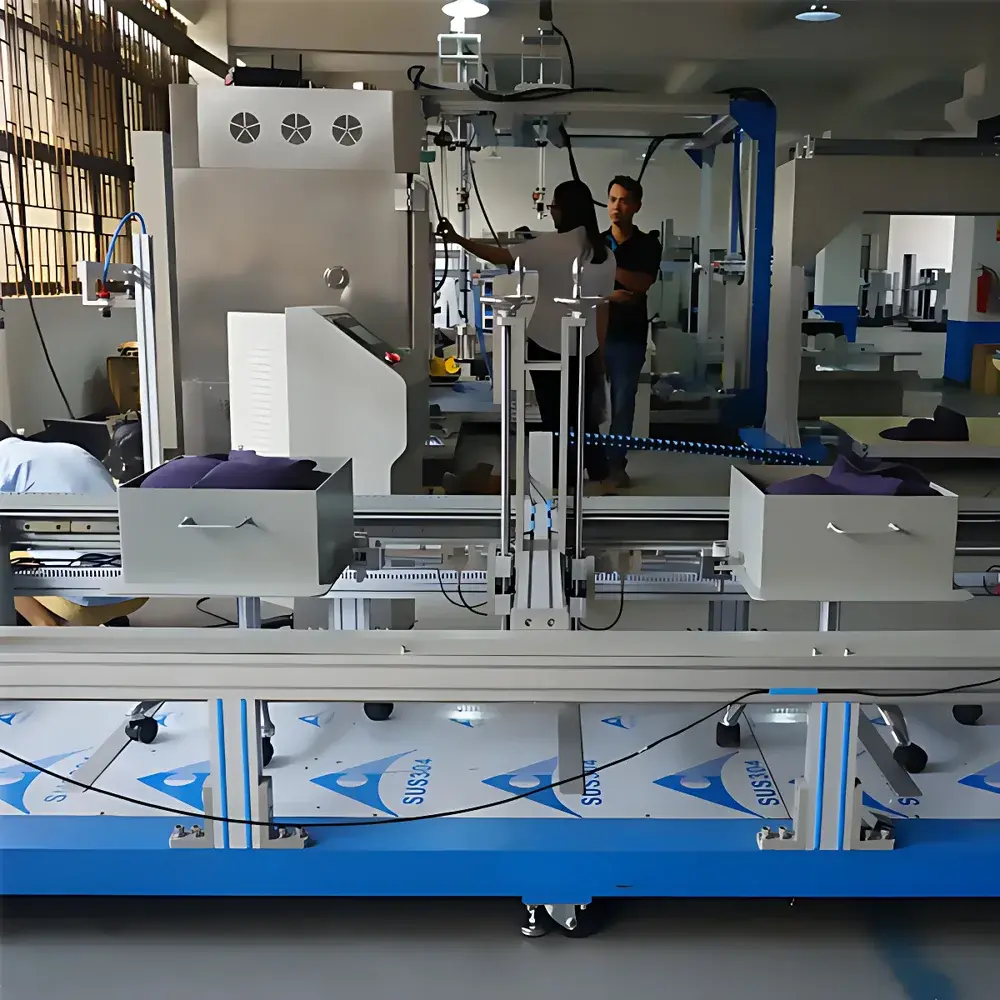
HAIDA HD-F732-1 Office Chair Castor Durability Tester
| Brand | HAIDA INTERNATIONAL |
|---|---|
| Origin | Guangdong, China |
| Manufacturer Type | Direct Manufacturer |
| Product Category | Domestic |
| Model | HD-F732-1 |
| Instrument Type | Reciprocating Tribological Tester |
| Operating Temperature | Ambient |
| Load Capacity | 122 kg (standard weight set) |
| Test Speed | 10 ± 2 cycles/min |
| Cycle Count Range | 1–999,999 (user-definable) |
| Power Supply | AC 220 V, 20 A, 50 Hz |
| Power Consumption | 0.8 kW |
| Dimensions (L×W×H) | 2400 × 1600 × 1300 mm |
| Control System | PLC-based with Touchscreen Interface |
| Motion Mechanism | Motor-driven chain-and-sprocket linear reciprocation |
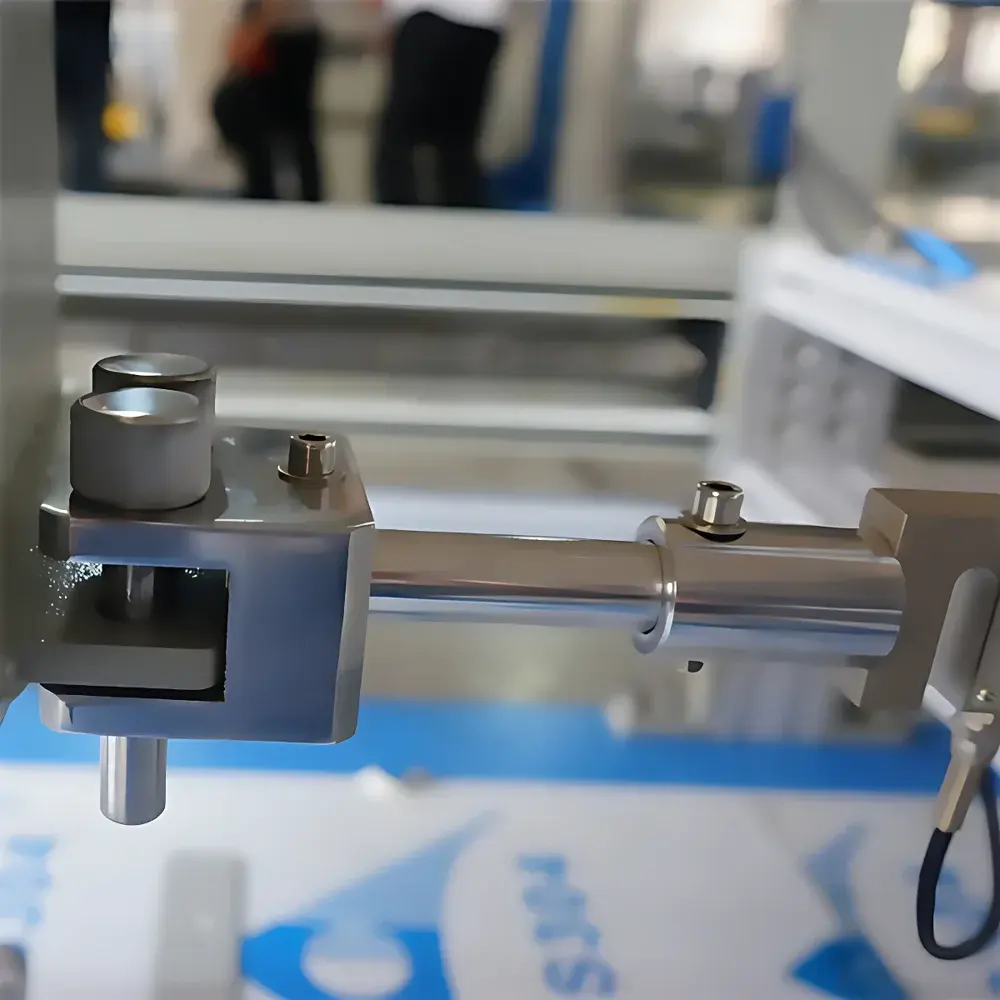
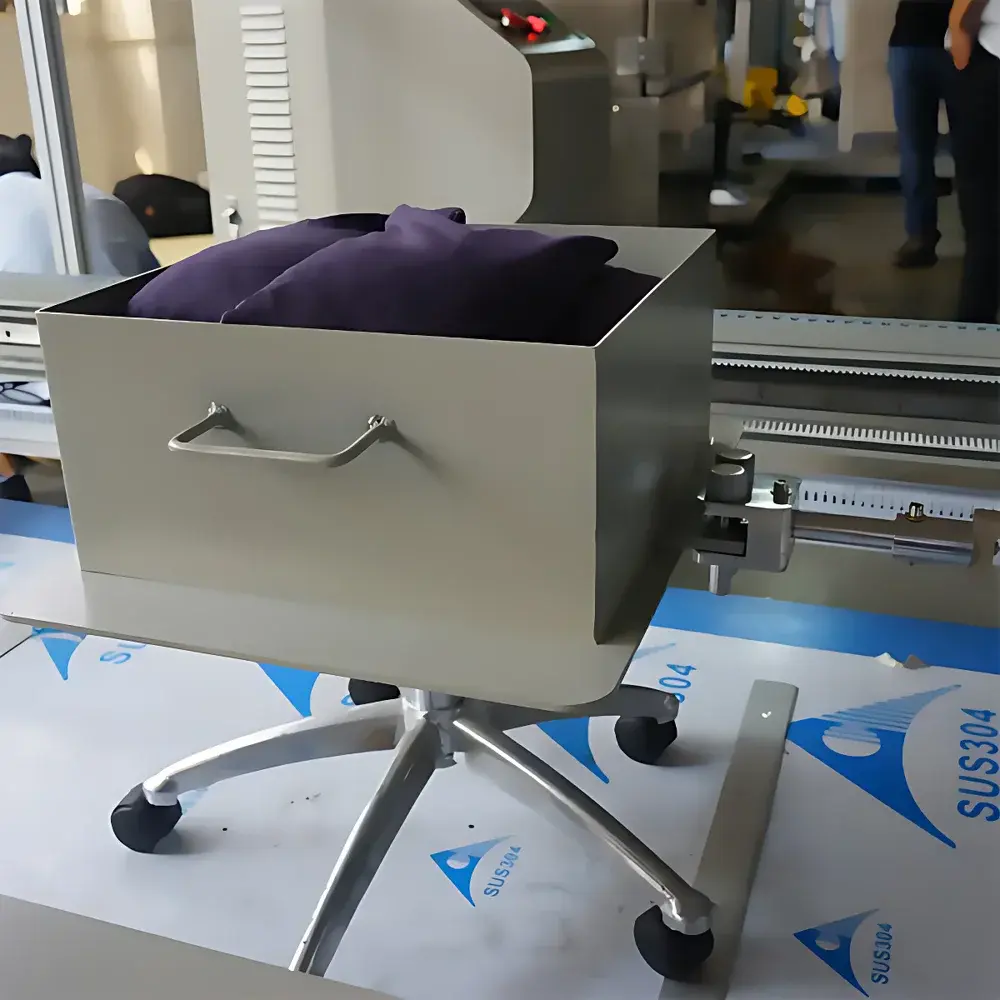
| Weight Loading Method | Pin-mounted砝码 tray with quick-insert safety pins |
| Compliance Standard | BIFMA X5.1-2017 Sections 16.1–16.2 |
Overview
The HAIDA HD-F732-1 Office Chair Castor Durability Tester is an engineered tribological testing system designed to evaluate the long-term mechanical endurance of castors (swivel wheels) and associated chair frames under dynamic, load-bearing reciprocating motion. It operates on a controlled reciprocating sliding principle—where a loaded office chair is subjected to repetitive horizontal push-pull displacement across a defined stroke length—simulating real-world usage patterns such as lateral repositioning, rolling over floor obstacles, or repeated forward/backward movement in ergonomic workspaces. Unlike generic abrasion testers, the HD-F732-1 replicates the complex interplay between vertical load distribution, lateral shear stress, and rotational friction at the wheel-floor interface. Its test methodology aligns with standardized fatigue evaluation protocols for commercial seating systems, making it suitable for both R&D validation and quality assurance laboratories operating under ISO/IEC 17025-accredited environments.
Key Features
- PLC-controlled reciprocating drive system with precision timing and cycle repeatability, ensuring high reproducibility across sequential test runs;
- Touchscreen HMI interface with real-time digital display of cycle count, elapsed time, and operational status;
- Integrated power-loss memory function: retains current cycle count and test parameters during unexpected shutdown or power interruption;
- Modular pin-lock weight tray assembly enabling rapid installation and secure fixation of standardized 122 kg loading mass (comprising calibrated steel ballast bags and auxiliary weights);
- Dual-mode testing capability: obstacle-free baseline assessment and obstacle-integrated fatigue simulation using standardized floor-height obstruction blocks (per BIFMA X5.1-2017 Annex D);
- Motor protection circuitry including overload detection and automatic emergency stop upon mechanical stall or positional limit breach;
- Structural frame constructed from reinforced steel with anti-vibration base mounting, supporting full-size assembled office chairs (including ergonomic, executive, and gaming variants) without disassembly.
Sample Compatibility & Compliance
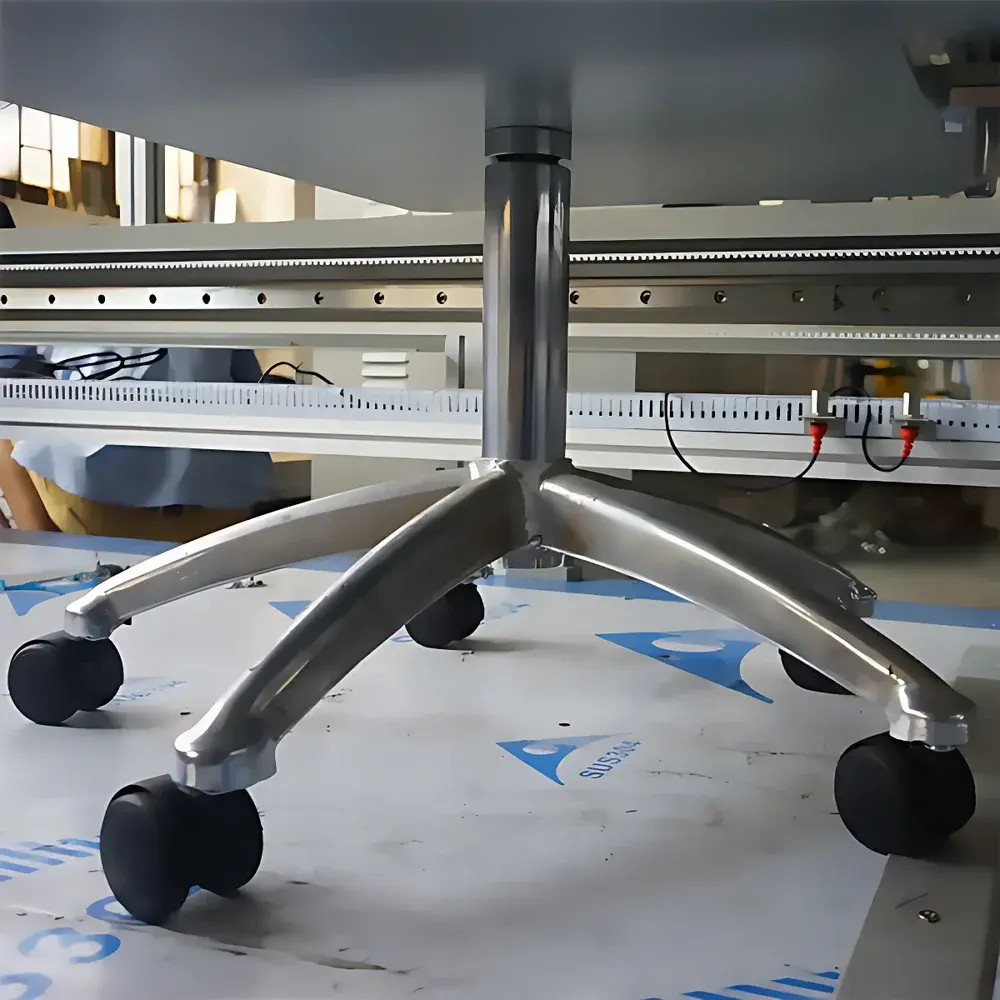
The HD-F732-1 accommodates complete, commercially assembled office chairs equipped with five-star bases and castors—regardless of wheel material (polyurethane, nylon, thermoplastic elastomer, or rubber), diameter (50–75 mm), or bearing type (ball, roller, or plain bushing). It also supports sub-assembly level testing of individual castor assemblies mounted onto standard 5-arm star bases. All mechanical and control functions comply with BIFMA X5.1-2017 Clauses 16.1 (Castor Rolling Durability) and 16.2 (Obstacle Crossing Endurance), including specified stroke amplitude (±75 mm), velocity profile (10 ± 2 cycles/min), and static loading protocol (122 kg total applied mass). The system’s mechanical design conforms to IEC 61000-6-2 (EMC immunity) and IEC 61000-6-4 (EMC emission) standards. Optional calibration documentation includes NIST-traceable verification reports for displacement actuation and load application accuracy.
Software & Data Management
While the HD-F732-1 operates via embedded PLC logic and standalone touchscreen control—ensuring robustness and minimal software dependency—it supports optional RS-232/USB data export for external logging. Test logs include timestamped cycle counts, cumulative runtime, fault event codes (e.g., “limit switch triggered”, “motor timeout”), and manual operator annotations. For regulated environments, the system can be integrated into laboratory information management systems (LIMS) via Modbus RTU protocol. Audit trail functionality—including user login timestamps, parameter change history, and firmware version tracking—is available through optional HAIDA LabSuite™ add-on module, compliant with FDA 21 CFR Part 11 requirements for electronic records and signatures when deployed in GMP-aligned furniture component certification workflows.
Applications
- Validation of castor wear resistance and structural integrity under cyclic lateral loading per BIFMA, EN 1335, and ANSI/BIFMA e3 sustainability criteria;
- Comparative lifecycle analysis of alternative wheel materials (e.g., PU vs. TPE vs. POM) under identical environmental and load conditions;
- Verification of five-star base weld integrity and arm flexural fatigue performance during extended reciprocation;
- Pre-certification testing for office furniture suppliers targeting GREENGUARD Gold, LEVEL®, or Cradle to Cradle Certified™ product listings;
- Root-cause investigation of premature castor failure modes—including tread delamination, axle fracture, swivel mechanism seizure, and lubricant migration loss;
- Supporting ASTM F2181 (Standard Practice for Determining Castor Performance Characteristics) supplementary testing where combined load and mobility metrics are required.
FAQ
What standards does the HD-F732-1 specifically support?
It is configured and validated for BIFMA X5.1-2017 Sections 16.1 and 16.2. Additional test profiles for EN 1335-3 and ANSI/BIFMA e3 can be implemented via parameter reconfiguration and accessory kits.
Can the tester accommodate chairs with non-standard base geometries?
Yes—adjustable clamping fixtures and modular adapter plates allow secure mounting of 4-arm, 5-arm, and 6-arm bases, including asymmetric or reinforced industrial designs.
Is thermal conditioning available for elevated temperature testing?
No—the HD-F732-1 operates at ambient laboratory conditions only (15–30 °C). High-temperature castor evaluation requires integration with external environmental chambers.
How is traceability maintained for calibration and maintenance?
Each unit ships with a factory-issued calibration certificate referencing traceable mass standards and linear displacement verification; scheduled maintenance logs and firmware update records are retained locally on the HMI.
Does the system support automated pass/fail reporting?
Basic pass/fail logic is embedded (e.g., “stop on 100,000 cycles unless fault occurs”); advanced statistical process control (SPC) and Weibull failure analysis require connection to third-party analytics platforms via exported CSV logs.



