
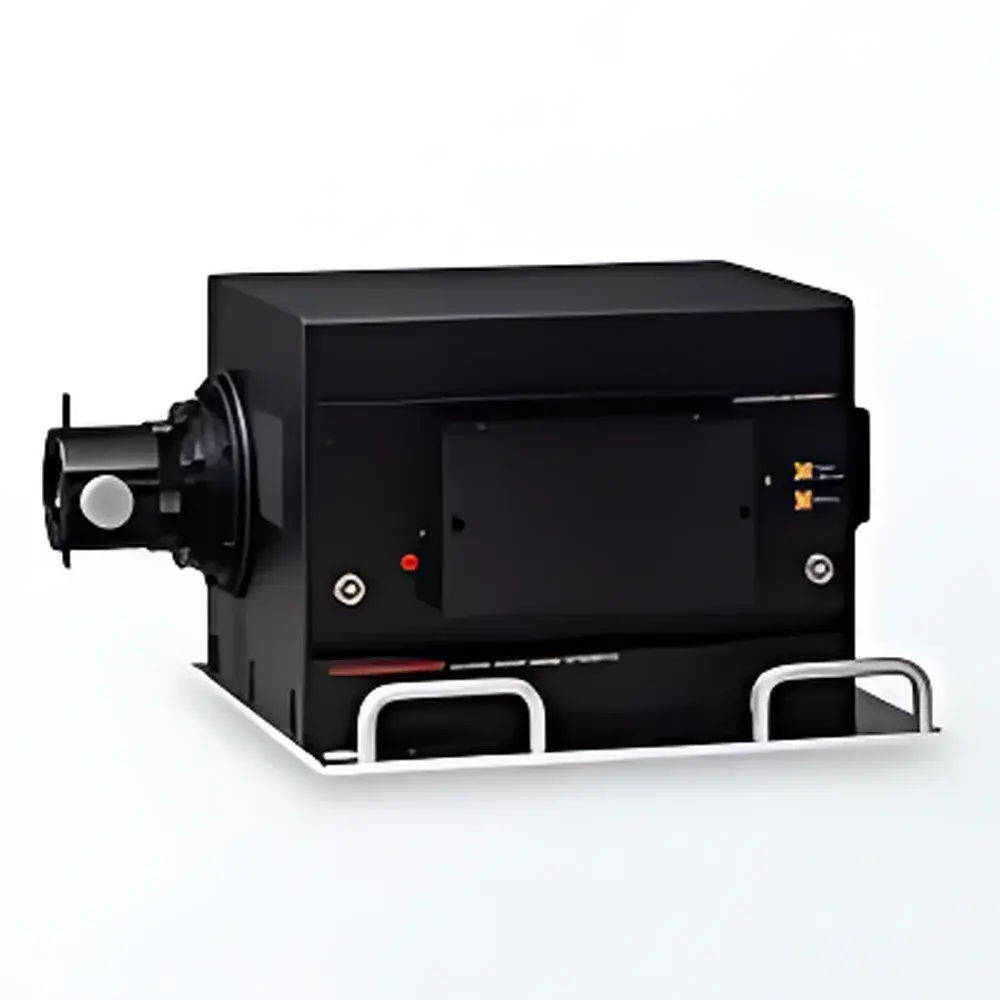
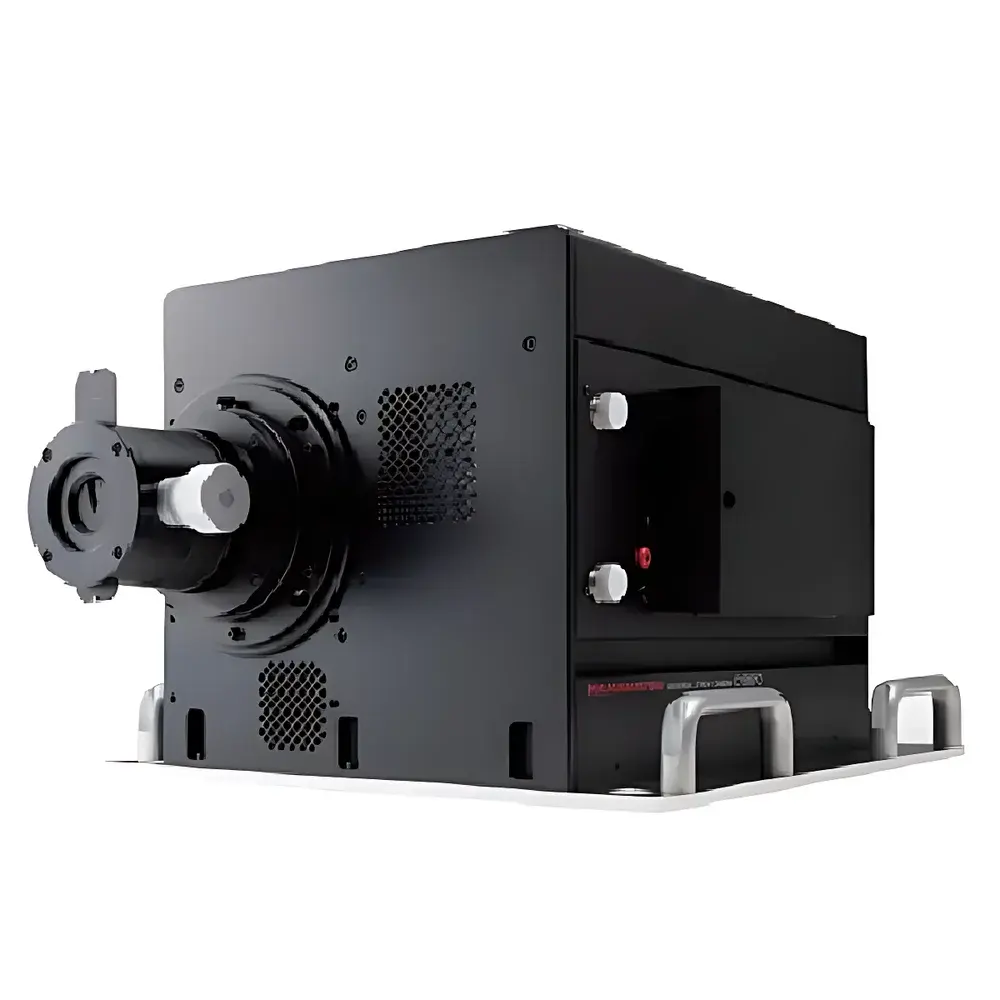
Hamamatsu C16910 Universal Streak Camera
| Brand | Hamamatsu |
|---|---|
| Origin | Japan |
| Manufacturer Status | Authorized Distributor |
| Product Category | Imported Instrument |
| Model | C16910 |
| Instrument Type | Repetitively Scanning Streak Camera |
| Photocathode Materials | S-20 / S-1 / S-20MgF₂ / S-25 / S-20ER |
| Photocathode Active Area | 0.15 mm × 4.5 mm ±5% (with ORCA-Flash4.0 V3) |
| Spectral Response Ranges | 200–850 nm |
| Spatial Resolution | ≥35 lp/mm (at photocathode center, λ = 530 nm) |
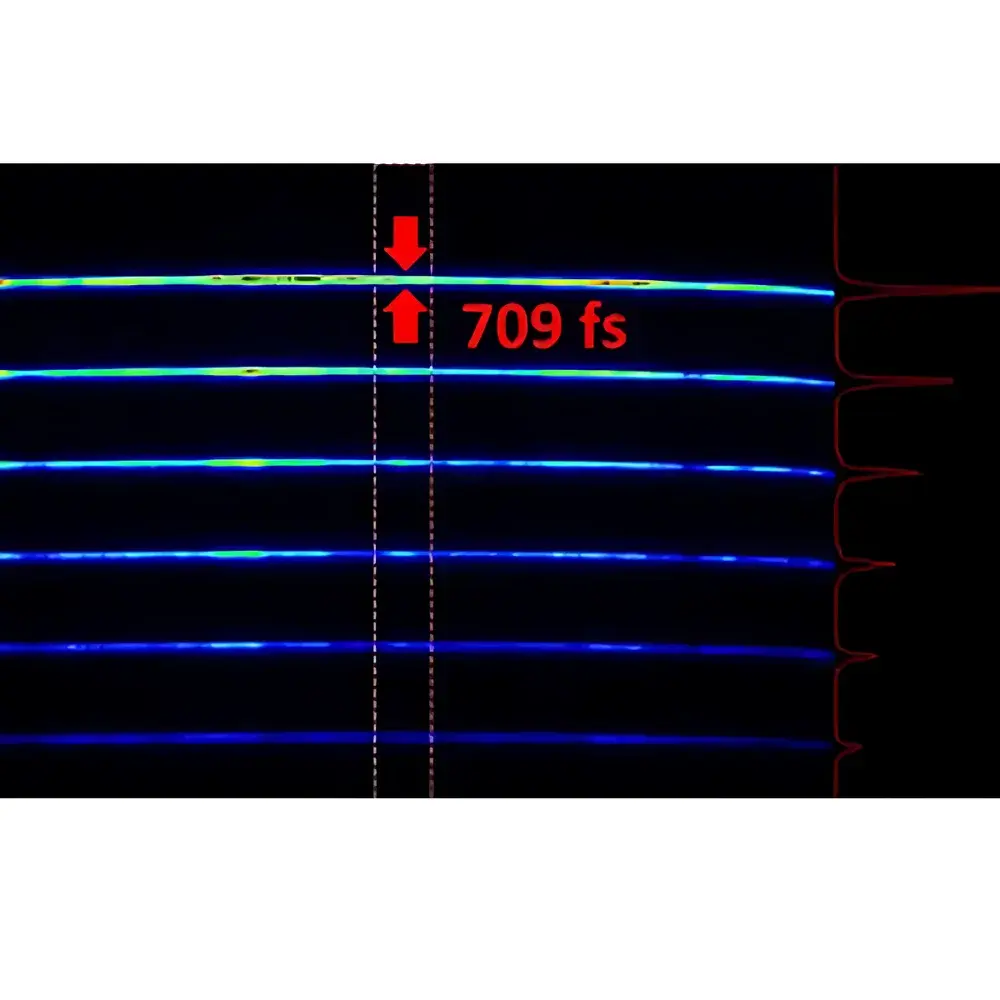
| Temporal Resolution | <800 fs FWHM (M16911-01) |
| Scan Repetition Rate | 74–165 MHz (M16911-01) |
| Scan Duration Range | ~60 ps to 1/6 fs (M16911-01 w/ ORCA-Flash4.0 V3) |
| Power Supply | AC 100–240 V, 50/60 Hz |
| Power Consumption | ~250 VA |
Overview
The Hamamatsu C16910 Universal Streak Camera is a high-performance, repetitively scanning ultrafast optical diagnostic instrument engineered for time-resolved photonic measurements with simultaneous spatial and temporal encoding. Based on the principle of electro-optic deflection in a vacuum streak tube, the C16910 converts incident photons into photoelectrons at a photocathode, accelerates and deflects the electron beam via synchronized high-voltage ramp signals applied to scan electrodes, and records the resulting spatiotemporal distribution on a phosphor screen coupled to a high-sensitivity scientific CMOS sensor (e.g., ORCA-Flash4.0 V3). This architecture enables single-shot or multi-shot acquisition of light intensity as a function of both time (vertical axis) and position/wavelength (horizontal axis), delivering intrinsic three-dimensional data—intensity vs. time vs. spatial coordinate—without mechanical scanning or temporal gating. Its design supports integration with spectrographs for time-resolved spectral analysis, or with imaging optics for transient spatial mapping, making it foundational for experiments requiring sub-picosecond resolution across UV–NIR spectral bands.
Key Features
- Sub-800 fs temporal resolution (FWHM) achievable with M16911-01 scan unit, enabling direct observation of femtosecond-scale dynamics in photoluminescence decay, carrier relaxation, and nonlinear optical processes.
- Modular photocathode selection—including S-20 (200–850 nm), S-1 (300–1600 nm), S-20MgF₂ (115–850 nm), S-25 (280–920 nm), and S-20ER (200–900 nm)—ensures optimal quantum efficiency across vacuum UV, visible, and near-infrared regimes.
- Integrated microchannel plate (MCP) amplifier with gated photocathode and MCP operation delivers extinction ratios exceeding 10⁸, critical for isolating weak signal events amid intense pump-probe backgrounds.
- High spatial fidelity: ≥35 line pairs per millimeter at 530 nm ensures resolvable spectral features when used with grating-based spectrometers.
- Flexible scan timing architecture supporting repetition rates from 4 MHz to 165 MHz and adjustable sweep durations—from picosecond-scale windows (e.g., 60 ps) to millisecond intervals—enabling both ultrafast transient capture and long-duration monitoring within a single platform.
- Ruggedized vacuum-tube construction and precision-aligned electrode geometry ensure long-term stability and measurement reproducibility under laboratory and synchrotron beamline environments.
Sample Compatibility & Compliance
The C16910 is compatible with free-space optical inputs via slit-coupled configurations or fiber-coupled adapters (optional), and integrates seamlessly with standard Czerny–Turner or imaging spectrometers for time-resolved emission or absorption spectroscopy. Its vacuum-compatible housing and low-noise HV supply meet IEC 61000-6-3 (EMC) and IEC 61010-1 (safety) requirements for Class I laboratory instruments. When operated in GLP/GMP-regulated environments—such as pharmaceutical photostability testing or laser-induced breakdown spectroscopy (LIBS) validation—the system supports audit-trail-enabled acquisition software compliant with FDA 21 CFR Part 11 requirements (when paired with Hamamatsu’s HCImage Live or third-party validated control suites). Photocathode spectral calibrations are traceable to NIST-standard sources, and spectral responsivity data are provided per ISO 11146 and ASTM E275 for radiometric consistency.
Software & Data Management
Control and analysis are performed using Hamamatsu’s HCImage Live software, which provides real-time streak image acquisition, parametric sweep automation (e.g., delay-line scanning, wavelength tuning), and quantitative post-processing including temporal profile fitting (multi-exponential decay models), spectral centroid tracking, and intensity normalization. Raw data are saved in TIFF or HDF5 format with embedded metadata (exposure time, scan voltage, photocathode ID, calibration coefficients), ensuring FAIR (Findable, Accessible, Interoperable, Reusable) data principles. API support (C/C++, Python bindings) enables integration into custom experiment control frameworks—such as those built on LabVIEW, MATLAB, or EPICS—for synchronized operation with pulsed lasers, delay generators, or particle detectors. All firmware updates and calibration files are digitally signed and version-controlled per ISO/IEC 17025 documentation standards.
Applications
- Fluorescence lifetime imaging (FLIM) and time-correlated single-photon counting (TCSPC) validation in semiconductor defect analysis and organic LED degradation studies.
- Transient absorption spectroscopy of photoinduced charge transfer in perovskite solar cells and molecular photocatalysts.
- Time-resolved Raman spectroscopy for phonon dynamics in 2D materials under ultrafast excitation.
- Quantum optics experiments: photon arrival time tagging in entanglement verification and quantum key distribution (QKD) receiver characterization.
- Beam diagnostics in accelerator facilities—including electron bunch length measurement at LINACs and synchrotrons—and Thomson scattering plasma diagnostics.
- Laser-induced plasma evolution, combustion front propagation, and detonation wave profiling in shock physics and inertial confinement fusion research.
- Ultrafast lidar and time-of-flight ranging in atmospheric sensing and space-based altimetry prototypes.
FAQ
What is the minimum detectable signal level for the C16910?
The system achieves single-photon sensitivity when operated with S-20 or S-25 photocathodes and MCP gain optimized for low-light conditions; detection limit is governed by dark count rate (<0.1 cps/cm² at 20 °C) and read noise of the coupled camera.
Can the C16910 be synchronized to external laser systems?
Yes—via TTL or LVDS trigger inputs, with jitter <20 ps RMS, supporting synchronization to Ti:sapphire oscillators, Yb-fiber amplifiers, and RF-driven Q-switched sources.
Is vacuum maintenance required by the end user?
No—the streak tube is permanently sealed under ultra-high vacuum (UHV, <10⁻⁷ Pa) during manufacturing; no user-accessible pumping or bake-out procedures are needed.
How is spectral calibration performed?
Hamamatsu supplies NIST-traceable spectral responsivity curves for each photocathode variant; users may perform in situ calibration using calibrated deuterium/halogen lamps or monochromator-scanned sources, with correction applied in HCImage Live.
What are the cooling requirements?
The system operates at ambient temperature (15–30 °C) with forced-air convection; no liquid or cryogenic cooling is required for standard operation.




