
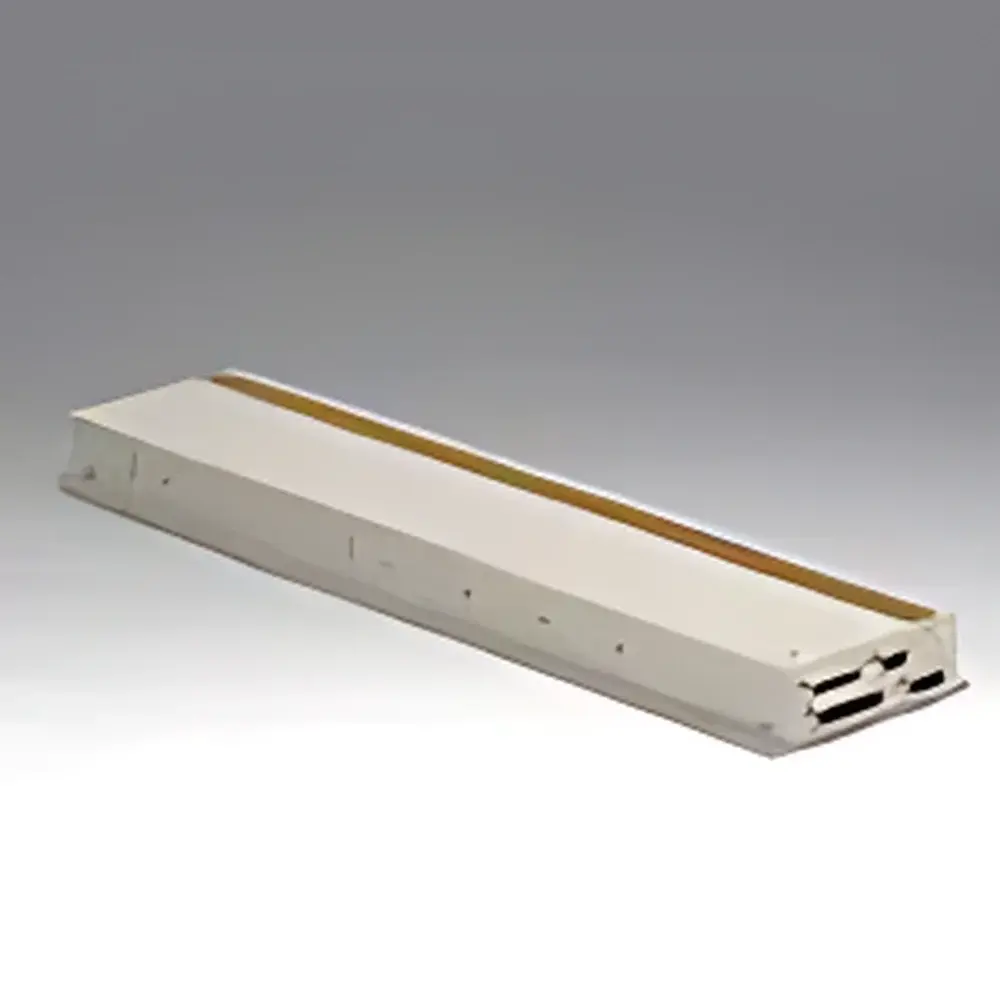
Hamamatsu C9750/C10650/C10800/C12200 Series High-Resolution X-ray Line-Scan Cameras
| Brand | Hamamatsu |
|---|---|
| Origin | Japan |
| Manufacturer Type | Original Equipment Manufacturer (OEM) |
| Import Status | Imported |
| Model Series | C9750, C10650, C10800, C12200 Line-Scan X-ray Cameras |
| Pricing | Available upon Request |
Overview
The Hamamatsu C9750, C10650, C10800, and C12200 series are high-performance, industrial-grade X-ray line-scan cameras engineered for non-destructive testing (NDT) and real-time internal inspection of moving objects. These cameras operate on the principle of X-ray transmission imaging, where a collimated X-ray beam passes through the sample and is converted into visible light by a scintillator, then captured by a highly sensitive linear CCD or TDI (Time-Delay Integration) sensor array. Unlike area-scan detectors, line-scan architecture enables continuous, gapless imaging of objects in motion—ideal for conveyor-based inspection systems in manufacturing, tire production, aerospace component screening, and security scanning applications. Each model is optimized for specific operational demands: the C9750 delivers ultra-high spatial resolution with zero-pixel gap across its 3456-pixel linear array; the C10650 and C12200 integrate TDI technology to enhance signal-to-noise ratio (SNR) at high line rates without compromising sensitivity; and the C10800 implements dual-energy acquisition via rapid kV switching or dual-layer scintillation, enabling material discrimination based on atomic number (Z) and effective density.
Key Features
- Zero-gap linear imaging: C9750-27 variants achieve seamless coverage over full field-of-view (<1 pixel gap), eliminating stitching artifacts in high-precision tire tread and sidewall analysis.
- TDI architecture (C10650 & C12200): Synchronizes pixel charge transfer with object velocity to accumulate signal across multiple rows—enabling stable, low-noise imaging at line rates up to 120 kHz (model-dependent).
- Dual-energy capability (C10800): Supports simultaneous high- and low-energy X-ray detection for quantitative material decomposition—e.g., distinguishing organic vs. inorganic contaminants, or aluminum from steel in recycling sorting.
- High quantum efficiency: Back-thinned, deep-depletion CCD sensors coupled with Gd₂O₂S:Tb or CsI:Tl scintillators deliver >65% DQE at 60 keV, critical for dose-sensitive applications.
- Rugged industrial design: Sealed aluminum housing rated IP54, operating temperature range –10°C to +50°C, and EMC-compliant for integration into automated production lines.
- Flexible synchronization: TTL/RS-422 trigger inputs and outputs support precise coordination with X-ray generators, encoders, and PLCs under deterministic timing constraints.
Sample Compatibility & Compliance
These cameras accommodate a broad range of industrial samples—from rubber compounds and composite laminates to metal castings and packaged goods—with thicknesses spanning 1 mm to 100 mm (steel-equivalent), depending on X-ray source energy (typically 80–450 kV). All models comply with IEC 61000-6-2 (immunity) and IEC 61000-6-4 (emissions), and meet mechanical safety requirements per ISO 13857. For regulated environments—including pharmaceutical packaging inspection and aerospace NDT—the C10650 and C12200 support optional firmware with audit-trail logging and user-access control, aligning with FDA 21 CFR Part 11 and EU Annex 11 expectations when deployed within validated systems. Calibration traceability is maintained to NIST-traceable X-ray reference standards.
Software & Data Management
Hamamatsu provides the dedicated HCImage Live SDK (C++/C#/Python APIs) and GUI application for real-time acquisition, gain/offset correction, flat-field normalization, and line-rate optimization. Raw 16-bit linear data streams are output via Camera Link HS or CoaXPress 2.0 interfaces (C12200 supports CXP-12), ensuring sustained throughput >3.2 Gbps. Integration with third-party platforms—including National Instruments LabVIEW, MATLAB Image Processing Toolbox, and HALCON—is supported via GenICam-compliant drivers. For long-term archival and QA documentation, metadata-rich TIFF or HDF5 files embed exposure parameters, temperature logs, and system configuration—facilitating GLP/GMP-aligned record retention.
Applications
- Tire manufacturing: Detection of cord separation, belt misalignment, and voids in cured rubber under dynamic conveyor conditions.
- Aerospace NDT: Inspection of carbon-fiber-reinforced polymer (CFRP) layup integrity, honeycomb core delamination, and fastener seating.
- Recycling sorting: Dual-energy Z-discrimination for automated separation of PVC, PET, aluminum, and copper in mixed-waste streams.
- Food safety: Identification of bone fragments, metal shards, or dense foreign bodies in sealed pouches or bulk conveyors.
- Electronics manufacturing: PCB solder-joint inspection, BGA void analysis, and battery electrode coating uniformity assessment.
- Security screening: High-speed baggage and cargo inspection with threat-material differentiation (e.g., explosives vs. benign organics).
FAQ
What X-ray source voltage ranges are compatible with these cameras?
These cameras are designed for use with industrial X-ray generators operating between 80 kV and 450 kV. Optimal performance is achieved when matched to the scintillator’s absorption efficiency curve—Gd₂O₂S:Tb for ≤160 kV, CsI:Tl for ≥200 kV.
Do the C10650 and C12200 require external motion encoding?
Yes—TDI operation mandates precise encoder feedback synchronized to object speed. Hamamatsu recommends quadrature encoders with ≥1 µm resolution and jitter <100 ns for sub-pixel registration accuracy.
Is dual-energy calibration performed in real time on the C10800?
The C10800 acquires high- and low-energy frames sequentially within a single scan pass. Material decomposition algorithms (e.g., basis material decomposition) are applied post-acquisition using factory-provided calibration coefficients derived from reference phantoms.
Can these cameras be integrated into existing machine vision architectures?
Yes—all models support standard industrial vision protocols (GenICam, GigE Vision optional via frame grabber), and SDKs include plug-ins for common middleware such as OPC UA and MQTT for IIoT deployment.
What is the typical mean time between failures (MTBF) under continuous operation?
Based on accelerated life testing, MTBF exceeds 25,000 hours at 40°C ambient, with active thermal management and redundant power conditioning circuits.






