
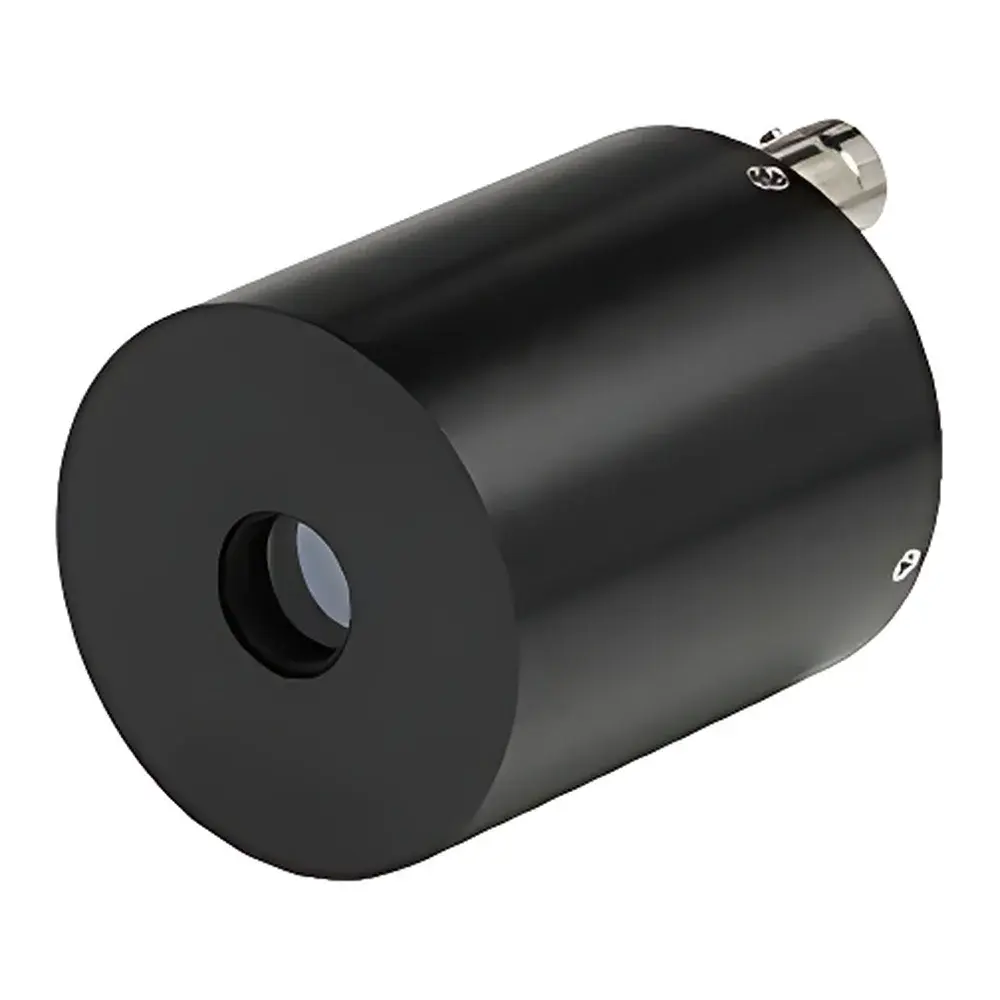
Hamamatsu MCP-PMT Microchannel Plate Photomultiplier Tube
| Brand | Hamamatsu |
|---|---|
| Origin | Japan |
| Manufacturer Type | Original Equipment Manufacturer (OEM) |
| Import Status | Imported |
| Model Series | R3809U / R5916U |
| Pricing | Available Upon Request |
Overview
The Hamamatsu MCP-PMT (Microchannel Plate Photomultiplier Tube) is a high-performance, ultrafast photon detection device engineered for applications demanding sub-nanosecond time resolution, single-photon sensitivity, and exceptional pulse linearity. Unlike conventional dynode-based PMTs, the MCP-PMT employs two or three stacked microchannel plates—each comprising millions of parallel glass capillaries with resistive and secondary emissive inner coatings—to achieve electron multiplication via continuous secondary emission within confined channels. This architecture enables gain up to 10⁶–10⁷ with transit time spread (TTS) as low as 30–60 ps, making it ideal for time-of-flight (TOF) measurements, ultrafast fluorescence lifetime imaging (FLIM), Cherenkov radiation detection, and particle physics experiments requiring precise temporal correlation.
Key Features
- Sub-ns temporal response: Optimized for time-resolved spectroscopy, LIDAR, and coincidence counting
- High quantum efficiency across UV–NIR spectrum: Configurable photocathodes including bialkali (S-20), extended red-sensitive (S-25), GaAsP, GaAs, CsTe, and CsI for tailored spectral coverage (230–850 nm)
- Diameter options: 45 mm (R3809U series) and 55 mm (R5916U series) active area formats supporting standard flange interfaces (e.g., ISO-KF, CF)
- Low dark count rate: Typically <0.1–5 cps at room temperature, scalable via thermoelectric cooling integration
- High spatial uniformity and pulse height resolution: Enables quantitative photon counting without significant gain variation across the photocathode surface
- Robust vacuum architecture: Hermetically sealed borosilicate glass envelope with integrated getter, rated for >10-year operational lifetime under continuous operation
Sample Compatibility & Compliance
The Hamamatsu MCP-PMT is compatible with both pulsed and continuous light sources—including picosecond lasers, synchrotron beamlines, scintillation crystals (e.g., LYSO, LaBr₃), and fiber-coupled optical systems. Its compact form factor and low magnetic susceptibility (<10⁻⁵ T tolerance) allow integration into high-field environments such as MRI-compatible PET detectors or accelerator-based beam diagnostics. All units comply with IEC 60529 (IP54 equivalent for base-mounted configurations), RoHS Directive 2011/65/EU, and meet material traceability requirements per ISO 9001:2015. For regulated life science and diagnostic instrumentation, the devices support design history file (DHF) documentation and can be qualified under FDA 21 CFR Part 11-compliant validation protocols when embedded in Class II/III medical devices.
Software & Data Management
Hamamatsu provides comprehensive driver support for Windows/Linux platforms via its proprietary HCPLib SDK, enabling full control over high-voltage biasing (±1.5–3 kV), gain stabilization, and real-time pulse parameter extraction (arrival time, amplitude, width). Integration with third-party acquisition frameworks—including National Instruments LabVIEW, MATLAB Data Acquisition Toolbox, and Python-based libraries (PyHamamatsu, PyDAQmx)—is standardized through USB 2.0 or LVDS digital output interfaces. Time-stamped photon event data (TDC mode) is exported in HDF5 or ASCII formats, ensuring compatibility with analysis pipelines used in FLIM, TCSPC, and quantum optics research. Audit trails, user access logs, and calibration metadata embedding are supported for GLP/GMP-aligned laboratories.
Applications
- Ultrafast Spectroscopy: Pump-probe transient absorption, time-resolved Raman, and femtosecond fluorescence upconversion
- Nuclear & Particle Physics: Cherenkov ring imaging (RICH), neutrino detection (e.g., Super-Kamiokande upgrade path), and scintillator readout in calorimeters
- Medical Imaging: Time-of-flight PET (TOF-PET), diffuse optical tomography (DOT), and single-molecule fluorescence tracking
- Industrial Metrology: Plasma process monitoring in semiconductor etch chambers, laser-induced breakdown spectroscopy (LIBS), and thin-film thickness measurement via interferometric reflectance
- Astronomy & Space Instrumentation: UV astronomy sensors, atmospheric LIDAR receivers, and spaceborne cosmic ray detectors
FAQ
What is the typical gain stability over 8 hours of continuous operation?
Gain drift remains within ±1.5% under constant HV and ambient temperature (25 °C ±1 °C), provided the unit is operated within its specified anode current limit (≤1 µA average).
Can the MCP-PMT be operated in photon-counting mode with analog pulse output?
Yes—both digital photon-counting (via discriminator + TDC) and analog current-mode operation are supported; signal conditioning electronics must be selected based on required dynamic range and bandwidth (DC–1 GHz).
Is magnetic shielding included in standard configurations?
Standard models do not include integrated mu-metal shielding; however, Hamamatsu offers optional external shield kits (MCP-SH-01 series) certified to reduce field sensitivity by >40 dB below 100 kHz.
How is calibration traceability established for radiometric applications?
Each batch undergoes NIST-traceable spectral responsivity calibration at 10-nm intervals from 200–900 nm using a calibrated deuterium/halogen source and monochromator system; certificates include uncertainty budgets per ISO/IEC 17025.
Related Products





